• The move to the new server is done. There are some software and database maintenance updates in process. This has us passing the hat around to help out. We appreciate any donations. Seriously, even a dollar helps. The payment page may be found here - https://www.audiokarma.org/support.html

PAS 2 - New volume control issues

I have gotten so fed up with the poor tracking and high prices of the supposedly ''high quality'' pots that I've gone to stepped attenuators for most everything.

We're long past the days of the 3'' diameter Switchcraft or CRL 23-position rotary switches that needed a huge amount of space and required so much torque to turn up that you needed a wrench instead of a knob!

For most applications,you really don't need anything better than one of these,they are readily available just about everywhere,and there are easy to use resistor-calculator programs for ladder attenuators on the google-webnet. You just enter the total resistance required,the number of switch steps,db per step,et voila!

This switch is about the same price (and footprint) as the pot you bought,and if you go with 1/4 watt 1% metal film resistors,you'll pay about 5 buck more for those:)
And the best part is that you can retain your loudness function if you wish.Just measure where the tap is on the original pot,and connect the network to the closest position on the switch.

connex_75572.jpg

Yes, agreed modern pots are nowhere near what they used to be. Older good pots like the old Centralabs and good old Clarostats.
 
Keep in mind,the more complicated ladder attenuator was developed long ago,when resistors were much noisier than today. [...] Cost and complexity considerations aside,my thought is that with modern,low noise tight tolerance metal film resistors,any alleged advantage of the ladder over the series attenuator will be nullified by the additional switch contact.

I thought that too, then I thought some more, and did some research into Johnson noise to refresh my faded memory.

Johnson noise in resistors works in such a way that a series of n resistors each of value Rs has sqrt(n) more noise than a single resistor of value (n x Rs). Correct me if I've misunderstood this.

The magnitude of noise voltage for a resistor varies as sqrt(R x K) where K is some constants, temperature, etc. So we can say the noise varies as sqrt(R) since all the other factors are constant for a single vs. string. Each resistor is independent of the others in terms of noise, and its noise is a function of its resistance multipled by some other factors. But it will vary as a f(R).

So that means to compare Rt as a single resistor vs Rt = R1 + R2 + ... Rn resistors in a string, the maximum effect (all resistors in sequence) is going to be:
[sqrt(Rt)] vs [sqrt(R1) + sqrt(R2) + ... sqrt(Rn)]

In a series string the values are all equal, say Ri. So this reduces to:
[sqrt(Rt)] vs [n x sqrt(Ri)]

So if the string is, say 250 kΩ built from (25) 10 kΩ resistors then Rt = 250,000 and Ri = 10,000. So the noise would be:
sqrt(250,000) vs [25 x sqrt(10,000)]
500 vs (25 x 100)
500 vs 2,500

So at the maximum value, I think the single resistor has 1/5 of the noise of the string. Noise in a string of n resistors appears to vary as sqrt(n).

The question is how noisy is a 1% metal film resistor. Not very. A carbon composite is very noisy.

Hafler experienced substantial resistor noise with the PAS which delayed shipment:
An Interview with David Hafler, Part 2: The Dynaco Years” by Charles Kittleson, Vacuum Tube Valley, Issue 16

Just about the time we were ordering parts, I noticed a peculiar kind of noise coming from it when it was turned up all the way. The prototype unit didn't have the noise problem. I tried everything that I could think of for weeks, and tried to pin the problem down. I even had Stewart Hegeman come in from New York to analyze the noise problem. He took a look at it and couldn't find the answer (laughter).

I finally resolved the thing by taking the preamp apart, piece-by-piece and interchanged them between my breadboard unit and the pre-production unit. I found that the low-noise resistors were noisier than anybody could have anticipated. They were just no good. It took me all that time to find it because they were consistent. They had the same harsh, rushing, waterfall kind of noise.

That delayed shipping by several months at a time when the demand was really high. So when we started shipping, we had back orders for a couple thousand units.

 
Last edited:
So, sorry to dig up this thread. I bought a pas 2 to accompany my st 70, and from the first time I tried it, the sound was fatiguing. Like the op described. I am starting a refurb project on it and have been scouring these threads. I am going to replace PC5 and pc6. A new rca jack board in the back. I have the power supply sorta upgraded. With just 2 caps, may do more at a later time with that. I was thinking the big thing to do would be to put in a new 100k vol pot. But I hate to do that and be in worse waters as before. I have been looking at the attenuators. But I am in a cloud wondering what the best route to follow from here. I with replace those boards and put in a new led light and test it out then.

But as I stated I have a nice homemade pre amp that works well with my st 70 I wanted to change it up when I found a pair of Altec Lansing model 14's. The fellow who made the preamp said that his could not hold a match to the pas 2. I maybe have 1 hour of use to the pas 2. But I got a wild hair and want to make this puppy sing. Just want to be able to reference this thread in the near future. Thanks
 
Well just not sure if all I have read about the subject is in line with that. Kinda confusing, some swear by 100k others by 250k. And still others choose the attenuators. Or if I should leave it altogether alone. I just know that something needs to change as the performance now is unacceptable. I will have to do some more scouring around here before I decide to make a decision.
 
The tracking tends to get bad on the original volume pots. If yours tracks well, it can stay. Mine was horribly bad so it went.

The phono board is designed with a 250k volume pot as part of the load it works into. It will tend to roll off the lows a bit with a lower value pot in that spot. The other inputs don't care about this, so if you never run the phono, or possibly if its not the stock phono stage, you can run other values. Check the literature with alternate phono stages though, they may specify different stuff than the stock design did.

Whether you use a pot or an attenuator doesn't really matter as far as the circuitry goes, both are "seen" as the same device as far as the electronics are concerned.
 
The only reason I changed mine was because of the tracking imbalance. The original pot sounded fine. The alps pot I installed sounded terrible, and could have been due to me grinding at the shaft so it would fit. Either way, this led me to purchase a premade 250k attenuators on eBay. This has been the best solution so far and allows for you to leave the loudness circuit connected, providing a balanced and nicely stepped volume control.
 
Thank you guys for the replies, I am pretty clueless about these and have been doing research all night long while at work. So I am just reading posts and getting ideas. Not quite sure what step to take next. If I replace the 2 boards and rca jacks and I still have sound problems I may consider the attenuators or maybe use my old board to bypass the tone controls. Both boards do need an upgrade as they still have the old black cat caps, so that may be my problem. Looks like the previous owner did a simple power supply upgrade, but that's about it.

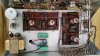
20171022_152819.jpeg
 
You might benefit from new tubes,
Do check that filamanet voltage is within spec.
Changing rca connectors wont help sound, and you might be digging in the wrong lake,
wasting money. A proper PAS will sound good, the more you alter it from original
it might be have less fidelity.
Maybe better to sell it while it's still in usable condition ?
 
Better sell it. ..? Hahaha. Maybe just say hold off on the rca jacks. Apparently I do want to keep it and make it sound good, as right now the highs sound fatiguing and the lows sound a tad muddy.. Maybe I want to fix it up, and not just sell it. But thanks for the options I should be aware of. If I did want to sell it I probably wouldn't be poking around these forums collecting ideas.

Hmm, I am looking back through this here post....and yeah I do not see where you told the op just to drop everything and just sell it.

Maybe it was in a pm, so I can't say that.
 
A new clone line stage board might help? Some of those old carbon comp resistors could be out of spec along with those nasty PEC's. You could rebuild the old boards but a new drop in board would be easier, and no PEC's. I would try different tubes and check voltages first though. The FM3 I rebuilt had a fist full of out of spec resistors. I also replaced the PEC's.
 
I changed my RCA jacks because they were getting loose. A member here kindly sent me a new set of boards for the back with larger spacing so it was a little easier to connect things up. I lost the tape loop but I don't use that anyway. Functionally if the jacks are clean and tight they aren't going to bother anything but big fat RCA plugs aren't going to sit side by side on them.

The boards can be rebuilt as long as they aren't cooked and you're careful. I'm cheap so I rebuild original stuff as long as its possible to do so. CC's off value and leaky caps aren't unexpected at all. Use metal films if you're going to the effort of changing them, they will be quieter. I actually need to do my phono board, its got a bit of hiss to it that swapping tubes doesn't fix. Many of the resistors on that board are original still.
 
You might benefit from new tubes,
Do check that filamanet voltage is within spec.
New tubes might be worse than the old ones. You can use the PAS as its own tube tester. If heater voltages are correct, then just check DC operating voltages against the schematic. If they're within 10% or so, your old tubes are fine.
 
I am listening to the pre right now. Sounds alright in the phono stage. Just seems tinny. I have the bass cranked and treble turned down. Sounds ok, but I believe it could sound better.

I don't want to reinvent this pre amp but don't want it to pierce my ear drums. Just I have time to tinker and want to learn some tweeks to make it sing a touch clearer.

I don't want to sell it because I am a novice. I want to learn.
 
Check the voltages against the schematic to see if that tells you anything.

What are you using it with? In stock form with the tone controls in place it was meant to be used with a 470k input impedance amp. If you're using a low impedance SS amp it will suck the bottom end right out of it.
 
I have an st-70 I use as my main power amp. Last night played my reel to reel through it and it didn't sound so bad (sounded quite nice actually) as the phono stage.
 
ok, ST-70 is the perfect match for it. Just thought I'd mention the impedance thing because it can be a problem on certain combos.

If its just the phono stage that sounds funny, that does have the equalization caps on the selector switch. If that is crusty it could be skewing the eq curve.
 
ok, ST-70 is the perfect match for it. Just thought I'd mention the impedance thing because it can be a problem on certain combos.

If its just the phono stage that sounds funny, that does have the equalization caps on the selector switch. If that is crusty it could be skewing the eq curve.

I am going to have to do some more reading up on this and know what to check for. Like I said, pretty new to all this lingo and checking voltages and stuff. Thanks for all your replies. I may start a new thread when I receive my new boards and consider installing them. Probably easy for you guys but kinda nerve racking for me. just don't wanna make anything worse you know.
 
I am going to have to do some more reading up on this and know what to check for. Like I said, pretty new to all this lingo and checking voltages and stuff. Thanks for all your replies. I may start a new thread when I receive my new boards and consider installing them. Probably easy for you guys but kinda nerve racking for me. just don't wanna make anything worse you know.

Label wires before desoldering. Pretty much plug and play then.
7E04F364-3FB7-4BDE-A353-6D645AA78EF6.jpeg
 
Back
Top Bottom