It’s funny you guys should mention the volume pot. I’ve actually been wondering about the condition of it. Changing the filament supply greatly improved the channel imbalance, but after several more listening sessions I noticed the right channel still has just a little more juice. Also, it seems like the volume barely increases from the 10 to 12 o’clock position on the dial, but 12 to 2 o’clock makes a huge difference. Not sure if that’s normal or related to the problem you are describing.My PAS2 had a bum control, but it was more of a bad tracking thing than an across the board channel imbalance. The left would be low at one point, at other points the right would be low. It moved back and forth. Its a common issue with old carbon volume pots. The two sections drift at different rates and things go funny.


You are using an out of date browser. It may not display this or other websites correctly.
You should upgrade or use an alternative browser.
You should upgrade or use an alternative browser.

The volume pot is a common problem. It was never a high-quality pot only "just right" for the time. As this pot is
the most exercised component it will gradually grind away the carbon track and start to be more and more
uneven. Dust and "cleaning fluid" will accelerate the process, scratch and unbalance is the result.
Replacement is the only viable solution. Original pots are not available, we are stuck with similar "dual type" pots
with a loudness tap.
This was no problem 20 years ago, several brand of pots were available. Today it's harder to find but i have
found one source :
https://www.ebay.com/itm/ALPS-Volume-control-27-Type-Dual-Potentiometer-50K-100K-500K-Round-shaft-PCB/173490642668?ssPageName=STRK:MEBIDX:IT&var=472512944674&_trksid=p2057872.m2749.l2649
These will work fine, and with the supplied circuit board makes it easy to connect the wires. Unfortunately it
might be a pirate copy, which have been a source of violent discussions here, but as long as alps refuses to
restart production i feel it justifiable to bye and mount these. These is several distributors who delivers
seemingly identical pots so i guess there is a factory somewhere, maybe even at alps japan, that makes them.
The only culprit might be the shaft, it might not fit well , some work may be needed, depending on which
model of dynaco you are replacing ( dynaco has solid and split shafts with accompanying wheels)
Note that PAS needs a 250k pot, not more not less for the riaa equalization to be correct. The distributor
in my link is out of them but there is other that will supply 250k pots.
Balance and tonecontrol for the 3X is another problem. They are made special where part of the track is
conducting and the rest a carbin track. This will in the balance control case make zero losses in the
middle position, which is not possible with a classical pot technology. Be careful with these !
the most exercised component it will gradually grind away the carbon track and start to be more and more
uneven. Dust and "cleaning fluid" will accelerate the process, scratch and unbalance is the result.
Replacement is the only viable solution. Original pots are not available, we are stuck with similar "dual type" pots
with a loudness tap.
This was no problem 20 years ago, several brand of pots were available. Today it's harder to find but i have
found one source :
https://www.ebay.com/itm/ALPS-Volume-control-27-Type-Dual-Potentiometer-50K-100K-500K-Round-shaft-PCB/173490642668?ssPageName=STRK:MEBIDX:IT&var=472512944674&_trksid=p2057872.m2749.l2649
These will work fine, and with the supplied circuit board makes it easy to connect the wires. Unfortunately it
might be a pirate copy, which have been a source of violent discussions here, but as long as alps refuses to
restart production i feel it justifiable to bye and mount these. These is several distributors who delivers
seemingly identical pots so i guess there is a factory somewhere, maybe even at alps japan, that makes them.
The only culprit might be the shaft, it might not fit well , some work may be needed, depending on which
model of dynaco you are replacing ( dynaco has solid and split shafts with accompanying wheels)
Note that PAS needs a 250k pot, not more not less for the riaa equalization to be correct. The distributor
in my link is out of them but there is other that will supply 250k pots.
Balance and tonecontrol for the 3X is another problem. They are made special where part of the track is
conducting and the rest a carbin track. This will in the balance control case make zero losses in the
middle position, which is not possible with a classical pot technology. Be careful with these !
Hey, so I decided to order a new volume pot and just received it in the mail. Any chance you could help me with wire identification before I get started on the project? Any help would be great. Thanks.The volume pot is a common problem. It was never a high-quality pot only "just right" for the time. As this pot is
the most exercised component it will gradually grind away the carbon track and start to be more and more
uneven. Dust and "cleaning fluid" will accelerate the process, scratch and unbalance is the result.
Replacement is the only viable solution. Original pots are not available, we are stuck with similar "dual type" pots
with a loudness tap.
This was no problem 20 years ago, several brand of pots were available. Today it's harder to find but i have
found one source :
https://www.ebay.com/itm/ALPS-Volume-control-27-Type-Dual-Potentiometer-50K-100K-500K-Round-shaft-PCB/173490642668?ssPageName=STRK:MEBIDX:IT&var=472512944674&_trksid=p2057872.m2749.l2649
These will work fine, and with the supplied circuit board makes it easy to connect the wires. Unfortunately it
might be a pirate copy, which have been a source of violent discussions here, but as long as alps refuses to
restart production i feel it justifiable to bye and mount these. These is several distributors who delivers
seemingly identical pots so i guess there is a factory somewhere, maybe even at alps japan, that makes them.
The only culprit might be the shaft, it might not fit well , some work may be needed, depending on which
model of dynaco you are replacing ( dynaco has solid and split shafts with accompanying wheels)
Note that PAS needs a 250k pot, not more not less for the riaa equalization to be correct. The distributor
in my link is out of them but there is other that will supply 250k pots.
Balance and tonecontrol for the 3X is another problem. They are made special where part of the track is
conducting and the rest a carbin track. This will in the balance control case make zero losses in the
middle position, which is not possible with a classical pot technology. Be careful with these !
A picture of the pot would be of value.Hey, so I decided to order a new volume pot and just received it in the mail. Any chance you could help me with wire identification before I get started on the project? Any help would be great. Thanks.
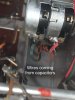
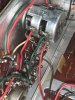


I assume you bought the one from ebay ?
They have a small card attatched. The text on the card actually is a clue of the connections.
First i think you should solder the card to the pot. Make sure to solder with the text up against the pot,
then you will have ( pot pointing with axle from you and the backside with the alps label agaoins you.
Loudness will be to the left, then comes "L in R" , "L out R" and finally Grnd
Starting with the sole wires on the "back". They are loudness, and will be connected
to "loudness on the card. Red wires closest to front.
Then comes the wires in groups 3 by 3.
AT one side comes what should be connected to "L in R" red towards front of amp ( axis side of pot)
The middle ones connects to "L out R", Red toward front.
Finally the black ones connects to grnd.
You might need to file down a small knob at the front of the pot to give it a tight fit as there
is no corresponding hole in the mounting plate ( in most cases)
Take it easy, check each step .
They have a small card attatched. The text on the card actually is a clue of the connections.
First i think you should solder the card to the pot. Make sure to solder with the text up against the pot,
then you will have ( pot pointing with axle from you and the backside with the alps label agaoins you.
Loudness will be to the left, then comes "L in R" , "L out R" and finally Grnd
Starting with the sole wires on the "back". They are loudness, and will be connected
to "loudness on the card. Red wires closest to front.
Then comes the wires in groups 3 by 3.
AT one side comes what should be connected to "L in R" red towards front of amp ( axis side of pot)
The middle ones connects to "L out R", Red toward front.
Finally the black ones connects to grnd.
You might need to file down a small knob at the front of the pot to give it a tight fit as there
is no corresponding hole in the mounting plate ( in most cases)
Take it easy, check each step .

audioregen
Pacific Audio Regenesis
Perhaps a little off topic - but I'm wondering about the age of this PAS. The volume pot is a type I have not yet seen in a PAS, and I've seen a few over the years. Trying to make out the mfg. code from the photos, and looks like it might be 140, which would make it a Clarostat. So far, I've only seen Centralab, of two different versions, and CTS pots used in the PAS, with the CTS appearing in early units. Perhaps the volume pot was replaced at some time, but who knows, maybe it's original and I just haven't encountered it yet. Comments?
The reason this caught my eye is that I'm currently working on an article covering issues with PAS volume potentiometers. Part of my technical series on the PAS. Naturally, I'd like to have the information as complete as possible. The Centralab and CTS pots I know about have considerable differences in construction and performance, which I have measured and documented. Tracking has always been an issue, even when these pots were new, ranging from respectable to awful and I've experienced them all. The tendency for a sudden jump in volume past the 1/2 volume point is often not a worn pot, rather a byproduct of the loudness compensation implementation. To what degree it will be experienced can depend upon which pot the particular PAS contains, as well as a number of other factors such as source drive level, PA sensitivity, speaker efficiency, preferred listing level, etc.
The reason this caught my eye is that I'm currently working on an article covering issues with PAS volume potentiometers. Part of my technical series on the PAS. Naturally, I'd like to have the information as complete as possible. The Centralab and CTS pots I know about have considerable differences in construction and performance, which I have measured and documented. Tracking has always been an issue, even when these pots were new, ranging from respectable to awful and I've experienced them all. The tendency for a sudden jump in volume past the 1/2 volume point is often not a worn pot, rather a byproduct of the loudness compensation implementation. To what degree it will be experienced can depend upon which pot the particular PAS contains, as well as a number of other factors such as source drive level, PA sensitivity, speaker efficiency, preferred listing level, etc.
Wow! You’re really diving in deep. I have no idea about the production date of the unit, but the code on the pot is HR-4040 140-6248.Perhaps a little off topic - but I'm wondering about the age of this PAS. The volume pot is a type I have not yet seen in a PAS, and I've seen a few over the years. Trying to make out the mfg. code from the photos, and looks like it might be 140, which would make it a Clarostat. So far, I've only seen Centralab, of two different versions, and CTS pots used in the PAS, with the CTS appearing in early units. Perhaps the volume pot was replaced at some time, but who knows, maybe it's original and I just haven't encountered it yet. Comments?
The reason this caught my eye is that I'm currently working on an article covering issues with PAS volume potentiometers. Part of my technical series on the PAS. Naturally, I'd like to have the information as complete as possible. The Centralab and CTS pots I know about have considerable differences in construction and performance, which I have measured and documented. Tracking has always been an issue, even when these pots were new, ranging from respectable to awful and I've experienced them all. The tendency for a sudden jump in volume past the 1/2 volume point is often not a worn pot, rather a byproduct of the loudness compensation implementation. To what degree it will be experienced can depend upon which pot the particular PAS contains, as well as a number of other factors such as source drive level, PA sensitivity, speaker efficiency, preferred listing level, etc.
I assume you bought the one from ebay ?
They have a small card attatched. The text on the card actually is a clue of the connections.
First i think you should solder the card to the pot. Make sure to solder with the text up against the pot,
then you will have ( pot pointing with axle from you and the backside with the alps label agaoins you.
Loudness will be to the left, then comes "L in R" , "L out R" and finally Grnd
Starting with the sole wires on the "back". They are loudness, and will be connected
to "loudness on the card. Red wires closest to front.
Then comes the wires in groups 3 by 3.
AT one side comes what should be connected to "L in R" red towards front of amp ( axis side of pot)
The middle ones connects to "L out R", Red toward front.
Finally the black ones connects to grnd.
You might need to file down a small knob at the front of the pot to give it a tight fit as there
is no corresponding hole in the mounting plate ( in most cases)
Take it easy, check each step .
What are the sole wires? Are they the two red wires not coming from the line board the loudness wires? Also, what are groups 3 by 3 and AT?
Last edited:
audioregen
Pacific Audio Regenesis
Wow! You’re really diving in deep. I have no idea about the production date of the unit, but the code on the pot is HR-4040 140-6248.
Thanks for the code. Going by that number, it's a Clarostat pot made in the 48th week of 1962.
The earliest confirmed original PAS volume pot I have seen was a CTS with a date code of 1959. As I recall, the PAS 2 was introduced around 1960, so going right back to the beginning. As to the pot in your PAS, I have no idea if it's original. It may well be or someone may have changed out a poorly tracking original way back when. Some of the CTS pots were awful in that regard. I'm assuming your PAS also has the brass faceplate?
What are the sole wires? Are they the two red wires not coming from the line board the loudness wires? Also, what are groups 3 by 3 and AT?
That’s some pretty cool info. It does indeed have the two tone brass plate with textured brown strip at the bottom.Thanks for the code. Going by that number, it's a Clarostat pot made in the 48th week of 1962.
The earliest confirmed original PAS volume pot I have seen was a CTS with a date code of 1959. As I recall, the PAS 2 was introduced around 1960, so going right back to the beginning. As to the pot in your PAS, I have no idea if it's original. It may well be or someone may have changed out a poorly tracking original way back when. Some of the CTS pots were awful in that regard. I'm assuming your PAS also has the brass faceplate?
I was refering to the wires connected to the old pot.What are the sole wires? Are they the two red wires not coming from the line board the loudness wires? Also, what are groups 3 by 3 and AT?
Hey, I don’t mean to be a pain, but could you please break this down a little more for me? I made this diagram which could help me understand a little better.I was refering to the wires connected to the old pot.
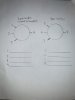
Ok,
The sole wires 4 and 8 is the connections for loudness function.
3 and 7 ( i assume they are black ) are ground
1 and 5 should be "in"
2 and 6 is the "out"
Sides are colored green and red, keep them on the same side, i think green is left and red is right.
Do solder the card on the pot first, then move the cables one by one.
The sole wires 4 and 8 is the connections for loudness function.
3 and 7 ( i assume they are black ) are ground
1 and 5 should be "in"
2 and 6 is the "out"
Sides are colored green and red, keep them on the same side, i think green is left and red is right.
Do solder the card on the pot first, then move the cables one by one.

tech01audio
New Member
The volume pot is a common problem. It was never a high-quality pot only "just right" for the time. As this pot is
the most exercised component it will gradually grind away the carbon track and start to be more and more
uneven. Dust and "cleaning fluid" will accelerate the process, scratch and unbalance is the result.
Replacement is the only viable solution. Original pots are not available, we are stuck with similar "dual type" pots
with a loudness tap.
This was no problem 20 years ago, several brand of pots were available. Today it's harder to find but i have
found one source :
https://www.ebay.com/itm/ALPS-Volume-control-27-Type-Dual-Potentiometer-50K-100K-500K-Round-shaft-PCB/173490642668?ssPageName=STRK:MEBIDX:IT&var=472512944674&_trksid=p2057872.m2749.l2649
These will work fine, and with the supplied circuit board makes it easy to connect the wires. Unfortunately it
might be a pirate copy, which have been a source of violent discussions here, but as long as alps refuses to
restart production i feel it justifiable to bye and mount these. These is several distributors who delivers
seemingly identical pots so i guess there is a factory somewhere, maybe even at alps japan, that makes them.
The only culprit might be the shaft, it might not fit well , some work may be needed, depending on which
model of dynaco you are replacing ( dynaco has solid and split shafts with accompanying wheels)
Note that PAS needs a 250k pot, not more not less for the riaa equalization to be correct. The distributor
in my link is out of them but there is other that will supply 250k pots.
Balance and tonecontrol for the 3X is another problem. They are made special where part of the track is
conducting and the rest a carbin track. This will in the balance control case make zero losses in the
middle position, which is not possible with a classical pot technology. Be careful with these !
Thanks for the link I need one. I have a tracking issue on one of my PAS 3. I do have an original alps I bought some years back but it eliminates the loudness switch. Honestly I don't really use that switch, probably not an issue for me. I was going to install the alps I have until I ran across this thread, Think I'll wait and compare the 2 alps when the one from china arrives. I'll have to take the sanitizer to it 1st ;-)
Thank you. Just to clarify, do the two caps and one resistor stay with the wires they are paired with when inserted into the card? Can multiple wires, caps, and resistors be inserted into one hole on the card? For instance, point 7 on the diagram has I believe 3 black wires and a resistor going to it. Do they all go into one ground hole on card? Sole wire terminals both have caps soldered in as well.Ok,
The sole wires 4 and 8 is the connections for loudness function.
3 and 7 ( i assume they are black ) are ground
1 and 5 should be "in"
2 and 6 is the "out"
Sides are colored green and red, keep them on the same side, i think green is left and red is right.
Do solder the card on the pot first, then move the cables one by one.
Last edited:
You might have to solder them together, with a forth wire connected to the new pot, all stuffed in crimp isolation.Thank you. Just to clarify, do the two caps and one resistor stay with the wires they are paired with when inserted into the card? Can multiple wires, caps, and resistors be inserted into one hole on the card? For instance point 7 on the diagram has I believe 3 black wires and a resistor going to it. Do they all go into one ground hole on card? Sole wire terminals both have caps soldered in as well.
No the card to the pot accepts one item in each hole.
Having only one wire in each hole also makes it easier to redo if a mistake is done.
No need to cure wires short, better to be comfortable when mounting. This is
high level thus crossfade is less of a problem.
Do check that the pot fits well before starting soldering!
You’re the man! Thank you!You might have to solder them together, with a forth wire connected to the new pot, all stuffed in crimp isolation.
No the card to the pot accepts one item in each hole.
Having only one wire in each hole also makes it easier to redo if a mistake is done.
No need to cure wires short, better to be comfortable when mounting. This is
high level thus crossfade is less of a problem.
Do check that the pot fits well before starting soldering!