• The move to the new server is done. There are some software and database maintenance updates in process. This has us passing the hat around to help out. We appreciate any donations. Seriously, even a dollar helps. The payment page may be found here - https://www.audiokarma.org/support.html

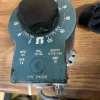
Pathetically dumb question here, how do I wire up this variac?

You can use it to bump voltage, useful if your mains are abnormally low. Mine is wired to do 0-100% of mains because i don't want to have an oops moment by winding the thing full open and giving something 140 volts instead of 120. I just don't trust myself to not do stupid things, mostly because I find myself having done something stupid way too often.
 
As was eluded to previously, operating with a DBT of a given wattage at a given load will typically result in a lower device voltage (downstream of the DBT). To compensate, and still have sufficient current limiting for safety, a higher voltage to the lamp is about the only solution.
 
yeah if you're using it with a dim bulb it probably makes more sense. I don't use mine with a DBT so if I wired it to give 140, I risk it going full stupid if I bump the control.
 
I'd also like to add small panel mount digital volt meter and digital ammeter. Anybody want to spec those units out for me?
Here is one that will work:
Even though I prefer analog meters here so I can look at the charge deflection contour of the power supply. 7.5A is a lot. But what I would do is run a 4A isolation transformer in front of it and then a 3.5A circuit breaker on the output. Dim bulb option isn't bad, but I would reserve that for troubleshooting and have a way to switch it out. I would also put a 0-200mA meter from neutral on the mains power cord side with a banana jack to stick a probe to and a push button switch to reference the output of the variac temporarily to the mains neutral so I would have an AC leakage tester.
 
I use one of these on my variac to monitor the voltage, about $12

LED Digital Voltage Meter DM55-1 AC 110-220V US Plug Voltage Tester Voltmeter​

 
Need to remember that you give up some available current to gain voltage. Nothing is free, even with electricity.
It's rated 7.5A output. I'd think it wouldn't really matter to the point of 120V or 140V as long as you don't exceed 7.5A (at least not more than briefly).

As side note 140V @ 7.5A would be more watts than 120V @ 7.5A.
 
It's rated 7.5A output. I'd think it wouldn't really matter to the point of 120V or 140V as long as you don't exceed 7.5A (at least not more than briefly).

As side note 140V @ 7.5A would be more watts than 120V @ 7.5A
If it's rated at 7.5 amps at 120VAC. It'll be derated to 6.43 amps at 140VAC. That is, it should have the same maximum output wattage rating at either VAC setting.

I think you should look at any electrical equipment this way, for safety's sake. Right?
 
Definitely not a dumb question. I've wired quite a few Variacs (the General Radio Corp. tradename for line level autotransformers) and still triple check my docs and thought process before proceeding. When testing power amps, they often pull the line voltage down slightly and the results will be in error if it isn't brought back up to what's specified. Thus, I wire mine to go over the input voltage. And yes, you want the voltage to increase when the knob it turned clockwise! A voltmeter and ammeter are desirable and even better if you can find one of the old RCA voltmeters with the expanded scale.
 
If it's rated at 7.5 amps at 120VAC. It'll be derated to 6.43 amps at 140VAC. That is, it should have the same maximum output wattage rating at either VAC setting.

I think you should look at any electrical equipment this way, for safety's sake. Right?
I do not agree. It says 7.5A.

Wire is rated for current so to speak not voltage... obviously with consideration of common sense on the insulation aspect re. voltage.

E.g. 14ga wire is typically rated for 15A service in house wiring. At 120V that's 1800 of power. You can use 14ga wire @ 15A in a 240V circuit too but then it 3600W power.
 
Last edited:
Okay... So you're saying it's okay for 7.5 amps at 120 and 140VAC?

Thanks!

It's rated for 7.5A. I think that means whether it's 1V or 140V.

By your logic if it has to be derated to 6.4A for 140V would you extend that to say it would be uprated for lower than 120V output, or that it's 7.5 up to 120V then less above?
 
Last edited:
It's rated for 7.5A. I think that means whether it's 1V or 140V.

By your logic if it has to be derated to 6.4A for 140V would you extend that to say it would be uprated for lower than 120V output, or that it's 7.5 up to 120V then less above?
I use the rated power (wattage) to calculate the rated current (and voltage)

power (wattage) = (voltage) X (current)

So if the voltage increases, the current must decrease to keep the power (wattage rating) the same.

To me, this means that if you run the Variac at 140 VAC, to stay within the rated power (120 × 7.5 = 900 W), you'll need to lower the current limit from 7.5 A to 6.42 A.
 
Last edited:
I use the rated power (wattage) to calculate the rated current (and voltage)

power (wattage) = (voltage) X (current)

So if the voltage increases, the current must decrease to keep the power (wattage rating) the same.

To me, this means that if you run the Variac at 140 VAC, to stay within the rated power (120 × 7.5 = 900 W), you'll need to lower the current limit from 7.5 A to 6.42 A.

On a general Staco 120V variac the kVa rating is higher at 140V because the rating is 10A constant current, e.g. 140V @10A is more kVa 120V @10A.
 
Current rating is mainly set by the output contact brush; most of the coil isn't carrying as much. Exception is when a step-up (120-240) is used - we had those on each bench in a radio shop so that we could test at 120 or 240V. Output should always be fused on a Variac - start turning up the voltage into a short circuit and you can burn out the winding and/or brush contact as output current can be very high without drawing much input current.
 
I do not agree. It says 7.5A.

Wire is rated for current so to speak not voltage... obviously with consideration of common sense on the insulation aspect re. voltage.

E.g. 14ga wire is typically rated for 15A service in house wiring. At 120V that's 1800 of power. You can use 14ga wire @ 15A in a 240V circuit too but then it 3600W power.
My thoughts on the topic - I will agree that it is a current limit, but need to consider the whole picture. The unit is an autoformer - that implies to me that the max current through the primary windings will be 7.5 A, which will mean 140 volt current will be less. It also means that for lower output voltages, the max current on the output side will be 7.5A, so input side will be correspondingly lower. Fortunately autoformers are relatively low loss, as almost never have heat issues due to losses.
My two nickels.
 
There is no derate for 140V vs 120V.

The OPs unit is 7.5A so set up for 120V power capacity would be 120V x 7.5 = 900VA or set up for 140V out would be 140V x 7.5A = 1050VA.

You will note in the attached image a rating showing exactly what I just described (albeit a 10A rated current model). Doesn't matter if it's 0-120 or 0-140, it's rated 10A and power is listed as 1.4kVA which is 140V x 10A. At 120V setting it would be rated 1.2kVA based on 120V x 10A.

s-l1200.webp
 
Last edited:
The contact brush (and the section of winding it touches) is the point which determines the current rating. Usually only a small part of the winding is carrying the output current; remainder carries the difference between input and output. Example: 120V in, 2A, 80V out, 3A. The section between the input and wiper carries the full 3A, the remainder of the winding carries 1A. This is oversimplifed, as the winding draws a small amount of current even with no load (magnetizing current) and the winding has resistance, so has losses - but it's a very close approximation.
 
Back
Top Bottom