• The move to the new server is done. There are some software and database maintenance updates in process. This has us passing the hat around to help out. We appreciate any donations. Seriously, even a dollar helps. The payment page may be found here - https://www.audiokarma.org/support.html

Philips GA212 Toggle Switch Mod

You have the wrong switch and cannot use it.

try this one
http://www.ebay.com/itm/Computer-Ca...tton-Switch-/321634842096?hash=item4ae2ee35f0

or do a search for AT computer power switch on ebay, I've bought from a few sources and they all work the same, the one for $2.99 + $2 shipping via epak? from china arrives in like 5 days, the seller is fast!

works fine but follow the rest of this threads instructions, AND once you get your switch, check back here to make sure you wire it correctly!
 
Last edited:
Thanks. I should have given more info.

I acquired this table with no power switch and, when opened, was surprised to see 4 leads that go to the switch (Blue Green Yellow Grey)...thought it would be 2 wires.

In order to verify whether the switch is the only problem, how do I connect the 4 wires to see if the table lights up, turns, etc.

Again, thanks to those who've replied.
 
I don't have my cheat sheet in front of me, but I think the 120v power leads are the yellow/grey, but when you access the switch area you can double-check by following the power cord all the way to the existing switch.

So, assuming my memory is correct, the 2 power leads go to the top 2 positions, and the others go to the bottom clips.

NOTE: Before you do this use a meter to make sure the switch you have works such that two clips on the left are switched when you move the switch from on to off, and of course that means the two on the right work the same way.

That is what is meant by wiring it correctly, the two power leads cannot be switched to connect together when powering on, or WOW! The switch connects each power lead to a transformer lead.

Another NOTE: If no power switch, before you add a switch, take the platter off and see if the belt is melted? If so clean it up, order a belt, but you can do the switch while waiting for a new belt.
 
Belt is fine.

Thanks again for the guidance.

Yes, the power leads are yellow/grey.

So I can connect yellow to blue and grey to green.......................or..................yellow to green and grey to blue.

Either set of connections will work?
 
correct!
The intent is to allow the 120v to get to the transformer which is what happens when the switch is wired correctly. I have done all my replacements placing the power leads to the top, and the transformer leads to the bottom clips...BUT

as I said, you need to make sure the switch you have keeps the left side switched and the right side switched. You need to make sure the power leads will not be switched to each other, or you will either blow a fuse or melt a bunch of wires :-)

I only repeat this because I do not know exactly which switch you now have. In theory they are all the same, but who knows!
 
Thanks. This is a garage sale find...beautiful cosmetics; sound is fine; just no power switch...the owner said he fried something trying to put in a new switch (he'd lost both switches).

The turntable is brain dead after jumpering to check...I do not see any melted wires or anything else that looks burned.

The transformer leads measure 100 Ohms.

You say there is a fuse?
 
No, No fuse that I know of.
Before you plug it in, you can jumper one power lead to one transformer lead; then jumper the remaining two.
Then power it up using a power strip with an on/off switch.

Do any bulbs glow when the switch is turned on?
If you press either 33 or 45, does the motor/platter spin?

Start there, and then post.

Have you ordered a new switch?
 
It does not power up regardless of how i jumper it...so it must be the transformer. I have a electronics repair knowledge deficit so I don't have the know-how to proceed. and, candidly, don't want to put money into it ($25-30 for a cartridge carrier before I start buying parts). I borrowed a cartridge on a sled and the sonics are perfect so the arm is good. I have made the decision to sell if for a bit as "parts or repair". I am going to part it out. Anyone interested....? It's reassuring to know I'm not going to be parting out an easily repairable unit. Thanks, CT Jim.
 
This is the perfect opportunity to learn! Get a Digital Multi Meter (DMM) and lets get this thing figured out! I have one and love it. Pm me for help.
Step one. Do you have power going into the transformer?
Step 2. If yes to step one do you have power coming out of the transformer?
 
RESOLUTION (so few of them get posted, eh?): a guy that's starting a record store called to buy some vinyl and said he also had a 212 (of course, with issues but powers up) he would throw in.

So I pulled the transformer from it and put it in the dead unit and it powered up (power switch jumpered)...this done, I put in a power switch I pulled from a salvage computer. Works great and it's in remarkable cosmetic condition...plus I have a parts unit.

Never satisfied, I have a 312 that keeps cueing up after a few seconds...fixable? Looks like the 312 cueing mechanism is different than the 212 (of course).
 
Whoohoo! Glad you didnt give up! These things are fairly simple but take a little practice......now you got a 2nd cartridge sled.....
 
Hi everyone! I just inherited a Philips 312 GA from my grandfather, and it looks like it is in a good condition. The belt is working, the power switch is doing fine and the stitch is good. The only problem is the knob that you press to bring the stitch down to the vinyl. When I press that knob, it doesn't stay down but goes up automatically.
I, therefore, can only play a record if I physically hold down the knob or place something heavy or a piece of tape over it.

Is there any easy and cheap way I can fix this? I appreciate all tips and comments!

Also, I don't have any amplifiers or speakers attached. Any recommendations on what I should get that is fairly cheap and okay quality?

Apologies if my terminology is off, I had no previous knowledge of turntables what so ever, so trying to read up now that I have gotten one of my own.

Thanks!
 
Although it might have been best to post a new thread here in the turntables forum for this specific problem, you can start by getting the service manual and owners manual from Vinylengine. Just join and download, they don't send junk mail. The diagram shows the parts associated with the cuing that raises and lowers the needle (cartridge and tonearm). Maybe something isn't adjusted right or something has come loose inside. While you are looking at those manuals, I'm sure others will drop in with help.

Welcome to AK.
 
Although it might have been best to post a new thread here in the turntables forum for this specific problem, you can start by getting the service manual and owners manual from Vinylengine. Just join and download, they don't send junk mail. The diagram shows the parts associated with the cuing that raises and lowers the needle (cartridge and tonearm). Maybe something isn't adjusted right or something has come loose inside. While you are looking at those manuals, I'm sure others will drop in with help.

Welcome to AK.
Hello Karoline. I second the advice from Blue Shadow. My Phillips 312 GA had the same problem. After downloading the manual from Vinylengine, I read it and learned about the cueing mechanism. There is a piece that acts as a stop for the cuing toggle switch. I had to "get under the hood" of the turntable and physically bend the piece so that the cueing mechanism would engage then allow the switch to return to the neutral position without having to hold it down. It took a while to figure it out, but it worked.

As far as recommendations for an amp/receiver and speakers: I find a lot of very good vintage stereo gear at estate sales and garage sales. Look for a receiver from the 70s or 80s by Pioneer, Kenwood, Sansui, Sony, Realistic, etc. Make sure that the input selector switch has PHONO as one of the choices. The other choices on the selector would be TUNER, TAPE, AUX. If it has PHONO on the selector switch, it has a built in phono pre-amp so you can plug your turntable in and it's ready to play. Look for a good pair of two-way bookshelf speakers too by POLK, Realistic, etc.. You should pay $10 - 30 for the receiver and same for the pair of speakers. Make sure the foam surrounds on the speakers are intact and not rotted out or they won't perform well.

Hope this helps. Good luck!
 
I don't have my cheat sheet in front of me, but I think the 120v power leads are the yellow/grey, but when you access the switch area you can double-check by following the power cord all the way to the existing switch.

So, assuming my memory is correct, the 2 power leads go to the top 2 positions, and the others go to the bottom clips.

NOTE: Before you do this use a meter to make sure the switch you have works such that two clips on the left are switched when you move the switch from on to off, and of course that means the two on the right work the same way.

That is what is meant by wiring it correctly, the two power leads cannot be switched to connect together when powering on, or WOW! The switch connects each power lead to a transformer lead.

Another NOTE: If no power switch, before you add a switch, take the platter off and see if the belt is melted? If so clean it up, order a belt, but you can do the switch while waiting for a new belt.


Hi Jim, or anyone who's still paying attention to this old thread, I have a Philips 222 (very similar model to the 212) with a broken on/off switch. I bought one of the recommended eBay switches mentioned in this thread and have modified it. I am ready to solder the wires and get this beauty back up and running but this is where I need a little confirmation from you guys. There are 4 leads. 2 to transformer and 2 power leads.
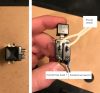
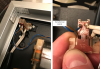
Heres a photo of the old plastic switch (currently soldered) and a mockup of how I think the new switch should be soldered. Does my mockup photo look correct?
I would appreciate any help on this.


New Switch Mockup.png Old Switch.png
 
Back
Top Bottom