• The move to the new server is done. There are some software and database maintenance updates in process. This has us passing the hat around to help out. We appreciate any donations. Seriously, even a dollar helps. The payment page may be found here - https://www.audiokarma.org/support.html

phono stage - huge input capacitance (?)

I don't see it in your images, but those are low res and not too detailed. I think I see a J101 connector, try to follow that and find a "C101" capacitor mark on the silkscreen. If it's not there - it's not too surprising. It's often enough you see one thing in the service manual schematics and another in reality. Things change between design time and production and it's not always reflected in documentation. If you can't find it - it's possible it's not there. It would also help explain why you hear nothing unusual. We are usually looking for a solution to a problem, but sometimes, it turns out the other way around and we end up looking for a problem to fit a solution. I don't think there's a problem.

C101 & C102 are small green capacitors seated in front of C102 & C202 and closest to the back of the PHONO interface. C101 & C102 have no nomenclature.

C102 & C202 are seated behind. They read 50v 47uF.

C103 and C203, larger tube shapes are behind and read 25v 220uF on each part
 
I'm not sure if ART DJPre II is sold in Japan. I lobbed a query into the company. So, my choice of action is as follows: bypass the PHONO Preamp with a 3rd party preamp, and I have my choice of most any cartridge and then buy speakers. OR purchase a Denon DL-110 and try it out with the existing onboard preamp. If I get a demonstrable sound improvement, go on to speakers. If I want to try out other cartridges, get 3rd party preamp.
Perhaps another option for your list....I do know that the Grado Prestige cartridges have a very low internal inductance of 45mH and I have calculated (using the Vinyl Engine tools) that even with a 1200pF capacitive load, the resonance frequency peak is at 21.7 kHz, which is beyond the hearing of most people. They tend to be warm cartridges anyway.
 
Sorry, I was under the wrong impression you couldn't locate them. So it seems C101 (left channel) and C201 (right channel) loading capacitors are very common mylar capacitors. By the schematics they should read "102" (1000pF) followed by a tolerance code (J=5%,K=10%,M=20%) so it's likely "102J" on the back or front. You could swap them in for 100pF (100J) if you want to.
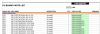
Just to close on this with you, there is nothing on the schematic for C101 and C102 other than 1000p(M), and the parts list does not list either of these capacitors by name. It's a truncated list. Maybe you can't see it, but for audio only, the list begins with C157 and ends with C408. Screen Shot 2019-10-25 at 17.15.08.png
 
Perhaps another option for your list....I do know that the Grado Prestige cartridges have a very low internal inductance of 45mH and I have calculated (using the Vinyl Engine tools) that even with a 1200pF capacitive load, the resonance frequency peak is at 21.7 kHz, which is beyond the hearing of most people. They tend to be warm cartridges anyway.[/QUOTE

Thanks for the tip on the Grado Prestige. I will add it to my list. In Japan, there are many listings for new and used cartridges. It seems like a lot of discontinued cartridges and floating on the market, unused. There are also people selling used cartridges, with selling points such as "used for tens of hours".
 
We're not talking C101 and C102 we're discussing the C101 and C201 load capacitors (each for a different channel) that are between 'hot' and ground.

Schematics is not a parts list - it's the circuit diagrams as they appear for the phono section on the main PCB in the service manual.

Neither type of documentation has to be in synch with the other, nor complete. It seldom is.

FWIW, those 'tube' like can capacitors are electrolytic, the green are mylar (metalized polyester). You're looking for mylar.
 
We're not talking C101 and C102 we're discussing the C101 and C201 load capacitors (each for a different channel) that are between 'hot' and ground.

Schematics is not a parts list - it's the circuit diagrams as they appear for the phono section on the main PCB in the service manual. Neither type of documentation has to be in synch with the other, nor complete. It seldom is.

A typo on my part; C101 and C201 only say 1000p(M) and that is is only reference I could find in the service manual.
 
I'm betting it's the closet pair of mylar caps to the RCA phono inputs. They should say "102J" or "102K" somewhere and the silkscreen should mark them C101/C201. If you're not gonna swap them, I don't see the point, unless there's no issue.
I gotta tell you, this isn't exactly a good example of Japanese hi-fi (to say the least), so if you're planning to spend more $$$ on some mid-fi phono pre-amp and hook it in to the Onkyo on account of a whim invoked by a post somewhere on the www,
you'll be wasting your money with a marginal to none existent added value. If you're not noticing an issue - live with it! If you do notice a degradation in performance - try to swap the load capacitors for normal values, examine the differece, then do whatever it is you want.
 
Had a Denon midi-amp a few months ago which had 220pf loading caps which with the cable absolutely killed the treble of a shibata tipped Empire cartridge - just snipped out the caps with no ill effect.
If you can't hear a problem just leave alone.
 
If you remove it, be careful that the phono stage doesn't oscillate or have some other problem.

I actually wonder if the overly high load cap wasn't a bodge to fix an oscillation problem, and they just figured nobody would really notice or care.
 
Nothing to say they actually tested the phono stage ,both reviews are very superficial - but then as said 1000pf may actually be 100pf and it is simply a print error.
 
Unless that chassis has an easy to open bottom plate to get access to the circuit board, replacing those 2 caps will be a royal pain in the arse. If there's no access to the under side of the board, you either pull the whole thing apart, or cut the cap leads and tag on to them, tho not much space to work in there. It's prolly do-able, but gonna be a pain if no easy access to the bottom of the board.
 
I'm betting it's the closet pair of mylar caps to the RCA phono inputs. They should say "102J" or "102K" somewhere and the silkscreen should mark them C101/C201. If you're not gonna swap them, I don't see the point, unless there's no issue.
I gotta tell you, this isn't exactly a good example of Japanese hi-fi (to say the least), so if you're planning to spend more $$$ on some mid-fi phono pre-amp and hook it in to the Onkyo on account of a whim invoked by a post somewhere on the www,
you'll be wasting your money with a marginal to none existent added value. If you're not noticing an issue - live with it! If you do notice a degradation in performance - try to swap the load capacitors for normal values, examine the differece, then do whatever it is you want.

C101 Mylar Capacitor reads A102J with leads going into numbers 5 & 2 on the CB.
C201 Mylar Capacitor (cannot read nomenclature) has leads going into number 4 on the CB and the other lead is not named on the CB.
 
Don: Actually I wouldn't be surprised at all, if EMI-related regulations would have also become more strict in the rest of the world in the meantime. I mean, sure, Europe has already been pretty densely populated for a pretty long time, but it's not the only densely populated area in the world, and even if one looks at countries, which aren't that densely populated on the whole, one will usually notice, that the majorities of the populations today will typically concentrate in and around major cities. Combine that with the huge number of pieces of consumer electronics, that people nowadays tend to have and use, and even more so, with how much more of that stuff may radiate on all sorts of frequencies compared to older electric and electronic equipment, and it would seem no wonder, that there also is a need for more EMI blocking in the rest of the world.

And of course that doesn't only apply to blocking interference of other stuff on our hifi equipment, but also to blocking interference of our hifi equipment on the other stuff, if one considers, how hifi equipment has changed. I mean, just look for example at a classic stereo integrated amp or receiver compared to a current model, which may not only sport microprocessor control, but also a DAC section as well as Ethernet, WLAN & Bluetooth and quite possibly also a USB port - and in addition it might even make use of a switched-mode power supply instead of a conventional one.

Hence I'm not surprised at all to see pretty massive EMI blocking not limited to European model variants any longer. And that Onkyo definitely isn't the only example for that trend. However, some other manufacturers like for example Marantz in the meantime would seem to rather apply combinations of capacitve and inductive blocking in order to avoid all too excessice capacitive blocking on their phono inputs.

Greetings from Munich!

Manfred / lini
 
Back
Top Bottom