The JVC is the one to go for.
They are similar turntables, except that the JVC has a far superior tonearm, and was also a leader with quartz lock direct drive performance, since they invented the first quartz lock turntable in 1974. The tonearm on the JVC greatly improves distortion, resonance, wow and flutter, noise, resistance to physical shocks, trackability and stereo separation, compared to the same physical tonearm operating without its electronics.
All conventional tonearms, including the one on the Pioneer, are a long way behind in performance. So for a 25% higher price, you are getting a performance increase in a lot of different areas, to easily justify the difference. There was an article about the JVC QL-Y5F, and its tonearm, in the August 1980 edition of Radio Electronics (pages 56-58), which is available for download from here
http://www.americanradiohistory.com/Archive-Radio-Electronics/80s/1980/Radio-Electronics-1980-08.pdf .
A similar article about the very similar Sony Biotracer tonearm appeared in the January 1979 edition of Popular Electronics (pages 20-23), which can be downloaded from here
http://www.americanradiohistory.com/Archive-Poptronics/70s/1979/Poptronics-1979-01.pdf . Both articles contain with and without measurements to show why these electronic tonearms were so vastly superior to conventional ones. Note that the Sony Biotracer electronic tonearm control wasn’t called Biotracer in those days, but ‘Velocity Feedback’.
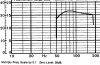
I’ve compiled a list of the measurements for over 160 different tonearm/cartridge combinations, and the average resonance was 8.5dB (maximum 21dB – good luck with that one!), while all electronic tonearms (Denon, JVC or Sony) were 3dB or less – that makes quite a difference to distortion and tracking. Here’s a measurement of the resonance of the JVC QL-Y5F and the JVC cartridge fitted as standard in many parts of the world. It’s been damped to just 3dB at 8Hz, which is much better than most conventional tonearms.
View attachment 718266