Hello again everyone!
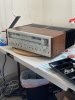
First off, I'd just like to thank everyone for their input and suggestions on my other forum post! Your knowledge and expertise have helped me resurrect my 1280 from the dead. I've gone through about every board on this thing. Power supply board, protection board, pre-amps, output boards and have replaced most if not all of the components on each of them. I have also replaced the un-obtanium output transistors with some NJW3281G and NJW1302G. Are these the right ones?? I found those suggestions on another thread. This is the issue I'm having. This morning I finished up rebuilding the last pre-amp board. Got the idle current and DC offset dialed in and In spec. I had it playing some music for the first time in a decade! Exciting! This thing is a monster! Had it playing some Led Zeppelin at a moderate volume level for about 5 hours. I had two meters hooked up on both pre amp boards so I could monitor the Idle current. All was well. A neighbor came over and we cranked it to a little below 1/2 volume and it was jamming! Shaking just about everything in the garage.Then about 5 minutes later, complete shutdown. Traced to a shorted output on the right channel. Replaced the transistor, and the 12A fuse and re-checked everything on the output and pre amp boards to make sure nothing else was damaged and reinstalled. Had it playing for another couple of hours then cranked it up again, and complete shutdown again. It plays for about 5-7 minutes at a volume in between 1/4 and 1/2 then shutsdown. What causes the outputs to just meltdown like that? and its only on one channel too. left channel hangs in there just fine. The highest I saw the idle current go was maybe 600mv? and that was when it was cranked. At moderate listening levels its hovers between 50-90 mv and plays there all day long. I'm at a loss here as I want to crank it up but can't! You'd think it would trigger protection mode before blowing the outputs ha! If anyone who has had this issue or knows what could be causing this issue could chime in that would be great. I've checked just about everything I know how to check so some ideas would be great!! Thanks for reading, and thanks for your time!
First off, I'd just like to thank everyone for their input and suggestions on my other forum post! Your knowledge and expertise have helped me resurrect my 1280 from the dead. I've gone through about every board on this thing. Power supply board, protection board, pre-amps, output boards and have replaced most if not all of the components on each of them. I have also replaced the un-obtanium output transistors with some NJW3281G and NJW1302G. Are these the right ones?? I found those suggestions on another thread. This is the issue I'm having. This morning I finished up rebuilding the last pre-amp board. Got the idle current and DC offset dialed in and In spec. I had it playing some music for the first time in a decade! Exciting! This thing is a monster! Had it playing some Led Zeppelin at a moderate volume level for about 5 hours. I had two meters hooked up on both pre amp boards so I could monitor the Idle current. All was well. A neighbor came over and we cranked it to a little below 1/2 volume and it was jamming! Shaking just about everything in the garage.Then about 5 minutes later, complete shutdown. Traced to a shorted output on the right channel. Replaced the transistor, and the 12A fuse and re-checked everything on the output and pre amp boards to make sure nothing else was damaged and reinstalled. Had it playing for another couple of hours then cranked it up again, and complete shutdown again. It plays for about 5-7 minutes at a volume in between 1/4 and 1/2 then shutsdown. What causes the outputs to just meltdown like that? and its only on one channel too. left channel hangs in there just fine. The highest I saw the idle current go was maybe 600mv? and that was when it was cranked. At moderate listening levels its hovers between 50-90 mv and plays there all day long. I'm at a loss here as I want to crank it up but can't! You'd think it would trigger protection mode before blowing the outputs ha! If anyone who has had this issue or knows what could be causing this issue could chime in that would be great. I've checked just about everything I know how to check so some ideas would be great!! Thanks for reading, and thanks for your time!