• The move to the new server is done. There are some software and database maintenance updates in process. This has us passing the hat around to help out. We appreciate any donations. Seriously, even a dollar helps. The payment page may be found here - https://www.audiokarma.org/support.html

Pioneer SX-2500 KSC3503D vs. KSC3503E

KeithD

AK Subscriber
Subscriber
I'm doing some repair on an SX-2500 I picked up. It had been running ok with a couple of issues. One was with the auto-tuning, but fixed that. The other is a constant background hum.

Following the thread here: http://www.audiokarma.org/forums/index.php?threads/sx2500-main-amp-unit-w23-004.412024/

My first fix was to recap the power supply, main amp, and protect boards, in that order. The hum got a little better, but did not go away.

Next thing I did was re-flow all of the solder joints on the main amp board. Figured there could be a bad connection/bad ground somewhere. The hum is much less, but now I have a new issue - static/static bursts on both channels, though more so on the right channel. I thought maybe re-flowing the solder on one or more transistor connections may have been enough to push an old transistor over the edge. Decided to replace Q1 and 2 (2SC458) with KSC1845F, since 2SC458 is on the bad transistor list anyway. This did not cure the static issue.

Now, I'm wondering what should be next? Q3 and 4 are 2SC627. Replacement from the above mentioned thread is KSC3503ES. However, I have KSC3503DSTU on hand. Looking at the spec sheets, these seem almost identical; however, KSC3503DSTU lists a maximum DC collector current as 0.6V, whereas KSC3503ES does not list this value. Can I use the KSC3503DSTU I have on hand, or do I need KSC3503ES in the repair thread I referenced? OR, is something else suspect?
 
Last edited:
Register to hide this ad
exclusively answering the D versus E question: yes, it's OK to use.
Verifying that that particular circuit position calls for or needs a ksc3503 I have NOT looked, nor can I go any deeper for now.
 
Thanks Mark, will give those two a try unless something else would be better?

Here is the full list from the other thread of replacements the OP used on the Main amp board:

Main Amp Unit W23-004:
C1 1µF/50V -> 1µF/63V ECQV
C2 1µF/50V -> 1µF/63V ECQV
C7 4.7µF/50V -> 4.7µF/100V UKL + 1µF/63V ECQV paralleled
C8 4.7µF/50V -> 4.7µF/100V UKL + 1µF/63V ECQV paralleled
C9 47µF/35V -> 47µF/63V UKL
C10 47µF/35V -> 47µF/63V UKL
C11 100µF/50V -> 100µF/63V UKL
C12 100µF/50V -> 100µF/63V UKL
C11 100µF/3V -> 100µF/63V UKL
C12 100µF/3V -> 100µF/63V UKL

VR3 220ohm -> 500ohm 25-turn (bias current)
VR4 220ohm -> 500ohm 25-turn (bias current)

Q1 2SC458 -> KSC1845F
Q2 2SC458 -> KSC1845F
Q3 2SC627 -> KSC3503ES
Q4 2SC627 -> KSC3503ES
Q5 2SC984 -> KSC2383Y
Q6 2SC984 -> KSC2383Y
Q7 2SC484 -> KSC2073TU + heatsink
Q8 2SC484 -> KSC2073TU + heatsink
Q9 2SA484 -> KSA940TU + heatsink
Q10 2SA484 -> KSA940TU + heatsink
Q11 2C1079 -> MJ21194 (on heatsink)
Q12 2C1079 -> MJ21194 (on heatsink)
Q13 2C1079 -> MJ21194 (on heatsink)
Q14 2C1079 -> MJ21194 (on heatsink)

I actually did not replace C7 and 8, since I don't know why he added the 1 µF caps in parallel with the 4.7 µF caps in those locations. Are those needed? What is the purpose?
 
Panasonic ECQ-V stacked film caps are discontinued, you can use other film types that fit, use long leaded types or ones with 5mm lead centers
You do not need the films to be in parallel with UKL types, wima.kemet.avx all make good quality caps
 
OK, so it would be all right to just use 4.7 µF UKL caps for C7 and 8 and NOT put the 1 µF caps in parallel? Still wonder what the purpose of that is?
 
C7 and C8 are inter stage coupling caps that carry the audio from one stage of the power amp to the next stage, while isolating different DC voltages on the two stages from each other.

Film caps ( 1µF/63V ECQV) have a different internal construction that results in shorter LINEAR distances from the component connections to the capacitor plates.
That results in less parasitic inductance that interferes with the higher frequency information that carries a lot of what we are sensitive to to detect "presence", crispness, position and a whole host of what we call "great audio".

The INTENT is that the lower frequencies that are in the bass region pass through the 4.7uf "toilet paper roll" with it's inherent inductance un attenuated, while the film caps make the amp "sparkle".

Takes some GOOD ears (and trained brain) to recognize the difference.
 
Having owned and repaired a few of those... bought one brand new from Olsen Electronics in Whittier California years ago... assuming hum in both channels, I think that unit has grounds on some of the boards through a pad on the underside of the board which is secured to the chassis with a mounting screw.. those develop ground issues because the solder on the pad squishes out causing a bad connection. Also, check for wire wrap connections on any grounds... solder them if in doubt.. solder them anyway. Attractive units.
 
Thanks for the explanation, Mark. That puts the suggestion for two caps at each position in context. His list has two caps in some other positions as well, including the three large caps. I do have 1 µF 50V WIMA film caps, which I assume will work, since the original spec was 50 V.

Will also do the Q3 and 4 replacements with KSC3503DSTU.

Spicer, thanks for the direction on grounding. Will take a look at all ground positions.
 
Replaced Q3 and 4, and checked ground connections on main amp.

Hum is nearly all gone, but static remains. Also, after playing the receiver for about 5 minutes, both channels suddenly loose power, volume drops to near zero. Turned it on the next day, and same cycle repeats. Any suggestion of what to look at next? Working my way down the circuits, Q5 and 6 would be next (2SC984). Suggested replacement is KSC2383Y. However, is this the most likely issue?

The Protector board (AWM-004) is also in circuit after the main amp. I've recapped that, but it has 5 2SC945s, and two 2SK30s. Are either of those suspect? As I recall, there is no replacement for the 2SK30, correct? I was thinking the Protector board was not the problem because the static began after I re-flowed the solder joints on the main amp board.
 
Replaced Q5 and 6, no change in static. Q7-10 need heat sinks according to restoration thread mentioned earlier. I’ll have to see if I can scrounge some of them. Have the replacement transistors on hand, but no spare heat sinks. I do have four of the correct replacement output transistors, so might end up just replacing all transistors on the main amp. Sure hoping the static disappears with one of these replacements. At this point the static is primarily on the left channel.
 
Swapped Q9 and 10 just to see if that moved the static from one channel to the other. Not really, but the static reduced substantially; however, still a bit in the background. So, decided to replace with the recommended KSA940TU. No change in static. So, went ahead and replaced Q7 and 8 with recommended KSC2073TU. Again, no real change, though static is now limited to just the right channel. Does not change with volume or source.

Is my next step the output transistors? I've never done these before. Any way to check them before removing and replacing?

The only other board in the signal path is the Protect board. However, looks like the signal only goes through a couple of capacitors in each channel (which I already replaced) and a 2SK30 in each channel, but my understanding is there is no equivalent replacement for those, correct?
 
Wackamolly
first determine where the hiss/noise is coming from, test the pre-amp and power amp sections separately.
As for 'both channels suddenly loose power," does this still happen? if so trace the signal thru to figure out where it stops/why?
with power off, switch rear main power amp input to "main external inputs", ground both L/R inputs, power on, speakers on, do you hear any hiss/noise?
if yes issue is power amp or power supplies.
if no then it is coming from the pre-amp, wiring/grounding
if you suspect 2sk30, swap them between channels to verify, I see one guy on ebay selling them, you can use 2sk117 as well. what printed on the top of them should be either "GR" or "Y"
did you change out the 2sc458LG on control (W15-050)? recap?
Do you get hum/hiss in FM? in FM muted condition?
 
Update: turned the receiver on today, and no static at this point. Will continue to test.

Wackamolly
first determine where the hiss/noise is coming from, test the pre-amp and power amp sections separately.
As for 'both channels suddenly loose power," does this still happen? if so trace the signal thru to figure out where it stops/why?
with power off, switch rear main power amp input to "main external inputs", ground both L/R inputs, power on, speakers on, do you hear any hiss/noise?
if yes issue is power amp or power supplies.
if no then it is coming from the pre-amp, wiring/grounding
if you suspect 2sk30, swap them between channels to verify, I see one guy on ebay selling them, you can use 2sk117 as well. what printed on the top of them should be either "GR" or "Y"
did you change out the 2sc458LG on control (W15-050)? recap?
Do you get hum/hiss in FM? in FM muted condition?

Yes, I forgot to mention, that I did move the pre-out/power-in button, and this did not affect the static/hum. Also, switching Q7 and 8 on the main amp lessened the static, so there was clearly an issue there.

No more channel dropout after swapping Q7&8 or after replacing Q7-10, so that issue is solved.

I don't specifically suspect 2SK30, but after the main amp, those are the only silicon left before speakers, so before going to the hassle of replacing the 4 output transistors (Q11-14) I thought I'd ask about 2SK30 on the protect board. I have the Y version of 2SK30.

Yes, 2SC458 (Q1&2) were the first two I replaced as they are on the bad transistor list. I then worked my way up the circuit to where I am now, so not really "whakamolly", but using the logic of the circuit from observational data to guide me. Sorry I was not clearer about what I had done in order.
 
After further testing, this seems to be a dirty function selector issue and/or pre-out/main-in switch issue. Did another round of Deoxit on both, and the static has cleared up.

Man, this receiver is really worth the effort if you like the early Pioneer warm sound, AND it has the super cool auto-tuning feature. This may be the best Pioneer I have heard. The SX-2500 is not very common, but I think it is definitely a sleeper, and fairy easy to work on.
 
yes the old switches are the Achilles heels. i have a qx-9900 same /similar design and issues.
sometimes hard to follow whats been done in these threads. thx for the update
the auto tuning was unique.
 
the auto tuning was unique.
Yes, of the major brands I think only Kenwood had an auto-tuning receiver (KR-7070) in the era of analog tuning. If you read more about the auto-tuner, Pioneer claims to have the best one. From the description of how it works, it seems believable. The SX-2500 was TOTL in '70 and '71. The x2x series was introduced in 1972, but the SX-2500 and SX-9000 were still cataloged and the 72 wpc of the 2500 was not surpassed until the SX-1010 (the 828 is 60 wpc.)
 
Hey @KeithD, really appreciated finding this thread, lots of great troubleshooting that could help specific to the SX-2500 I just picked up. I likely overpaid for the unit but I was fascinated with the autotune, power and reputation of this unit, so, I went for it. I have a couple questions for you and I know this is an old thread, so any insights are certainly appreciated!

Ironically, and based on your first post in this thread, upon first testing it has some hum, and the autotune has a mind of its own. For more context, when I first powered it up most of the lights were burnt out. The few that were still working were the meter and signal lamps, one of the dial lamps and the AM function light. Signal strength meter works, tuning meter is frozen with the needle in the middle. After replacing the dial lights I hoped that by replacing the tuning pointer the stereo function would kick in again, and thankfully it did. So now I have stereo and the needle lamp only kicks on when in stereo, awesome. I've used Deoxit on the pots and pulled the pushbutton sections for cleaning. The only remarkable find there was that the two gang high/low filter buttons must have been bumped pretty hard at one point, so the high filter button will not click in and out, plus, the brown button housings have a fracture across both of them just past the mounting bracket. They're still intact and well connected to their board, and I can hear both are working, but will need to replace those. Honestly, I'm used to little 20 watt systems so this feels like I'm in big boy territory, may be over my head with this one. That said, I'm keeping it and will chip away a the issues, it's just too cool.

Specific to the autotune, in your first post you skimmed over the fix, just curious what the issue was and how you fixed it? When I power up the unit I can manually tune in stations at will even with being in a super remote location (I'd heard these had a sensitive tuner, but wow, impressive!), but if I engage the autotune, in either direction, it just takes off searching for stations, but never stops.... Just back and forth, passing stations I know to be in stereo and strong enough to grab, and no function/button manipulation impacts or stops its roaming. The only way to stop it is to power down the unit. My issue may be totally different than yours but thought I'd ask.

Also, when @spicer mentioned the grounding issues, were there any specific tweaks you made that more significantly impacted the hum issue?

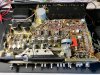
IMG_0168.jpg
 
Hey @KeithD, really appreciated finding this thread, lots of great troubleshooting that could help specific to the SX-2500 I just picked up. I likely overpaid for the unit but I was fascinated with the autotune, power and reputation of this unit, so, I went for it. I have a couple questions for you and I know this is an old thread, so any insights are certainly appreciated!

Specific to the autotune, in your first post you skimmed over the fix, just curious what the issue was and how you fixed it? When I power up the unit I can manually tune in stations at will even with being in a super remote location (I'd heard these had a sensitive tuner, but wow, impressive!), but if I engage the autotune, in either direction, it just takes off searching for stations, but never stops.... Just back and forth, passing stations I know to be in stereo and strong enough to grab, and no function/button manipulation impacts or stops its roaming. The only way to stop it is to power down the unit. My issue may be totally different than yours but thought I'd ask.

View attachment 2461931
The Autotune issue I had is documented in this thread. I was having a similar issue to yours, where it would miss stations. If I recall correctly, when you look at the circuit, there is a feedback loop so that when a Stereo station is coming in, it stops the motor in which ever direction it is going. It then alternately applies power in either direction to home in on the signal, then stops. Pretty neat! Seems to me like that circuit has a fault in your unit such that it is not cutting power to the dial motor, then applying power in the revers direction. I think mine was cutting power, but then not applying power in the reverse direction, so it would just "glide" past a station then stop.
 
  • Like
Reactions: JB8
Thanks, Keith! Appreciate the additional context and link to the other thread. I've been combing threads hoping to find more details, super helpful, thanks again! Wish me luck, ha!
 
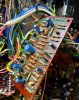
Welp, did it again, essentially shotgunned the head amp board hoping that by swapping out all six 458's, including your notorious Q& Q5, it might miraculously fix the auto-tune and maybe reduce the hum. Nope. No change, ha! Not surprised. It's been my MO over the last year, replace a bunch of perfectly sound components whilst keeping my fingers crossed. Good times! I'll learn someday to take my time and find the actual problem first before getting so jiggy with these beauties.

I'll keep poking around to try to identify the fault you suspect might be the culprit specific to the dial motor, I'm in no hurry, if I end up fixing it, great, if not I won't be terrible upset. Quick question, should the FM mute adjustment be apparent regardless of the FM Stereo Stereo and Local Station button position? When turning the FM Mute knob it doesn't seem to impact anything at all. Wondering if it's part of the problem.

Thanks again, have a great week!

IMG_0171.jpg IMG_0174.jpg
 
Last edited:
Back
Top Bottom