• The move to the new server is done. There are some software and database maintenance updates in process. This has us passing the hat around to help out. We appreciate any donations. Seriously, even a dollar helps. The payment page may be found here - https://www.audiokarma.org/support.html

Polishing Thorens bushings

ajcoates

New Member
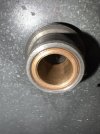
Hey all - I purchased a TD-160 last week from an acquaintance for a high-side-of-fair price. I was disappointed to find that, while the unit was untouched from a mechanical standpoint and very clean, the bearing well was completely dry. Unsurprisingly, the bronze bushings were a bit worn and scratched.

I cleaned the well and decided it wouldn't be a bad idea to polish some of the marks with a felt tip/compound/low RPMs on my Dremel, just to see if I could salvage the existing bushings. They certainly cleaned up visually, but after a couple IPA flushes and oiling with the blue 3-in-1, I got a nasty grind when giving it a test spin. Attached a video of this below!


Have any of you guys successfully polished your Thorens bushings? If so, what polish and method did you use? I'm hoping this isn't a lost cause - thanks so much.
 
Register to hide this ad
Hey all - I purchased a TD-160 last week from an acquaintance for a high-side-of-fair price. I was disappointed to find that, while the unit was untouched from a mechanical standpoint and very clean, the bearing well was completely dry. Unsurprisingly, the bronze bushings were a bit worn and scratched.

I cleaned the well and decided it wouldn't be a bad idea to polish some of the marks with a felt tip/compound/low RPMs on my Dremel, just to see if I could salvage the existing bushings. They certainly cleaned up visually, but after a couple IPA flushes and oiling with the blue 3-in-1, I got a nasty grind when giving it a test spin. Attached a video of this below!


Have any of you guys successfully polished your Thorens bushings? If so, what polish and method did you use? I'm hoping this isn't a lost cause - thanks so much.
From the sound, it doesn't seem like the noise is made by the shaft rubbing against the bearing , especially if there is enough oil. Are you sure it's not touching anything else? Whatever the cause is, it's not lost, you can get new bearings. Pictures of the shaft and the inside of the bearing would be helpful if possible.
 
If the bushing is Sintered Bronze (Oilite), I don't think it can't be ground or polished. That would damage the self oiling pores.
 
From the sound, it doesn't seem like the noise is made by the shaft rubbing against the bearing , especially if there is enough oil. Are you sure it's not touching anything else? Whatever the cause is, it's not lost, you can get new bearings. Pictures of the shaft and the inside of the bearing would be helpful if possible.
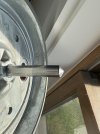
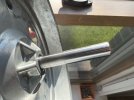
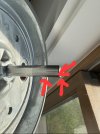
Here are a few pics - shaft looks pretty good, bearings look a touch rough to me. I get the same noise while dropping the shaft down into the bearing well, so I’m pretty confident it’s coming from the bearing!
 

Attachments

  • IMG_6061.jpeg
    IMG_6061.jpeg
    119.8 KB · Views: 36
  • IMG_6055.jpeg
    IMG_6055.jpeg
    113.9 KB · Views: 37
  • IMG_6052.jpeg
    IMG_6052.jpeg
    98.5 KB · Views: 36
If the bushing is Sintered Bronze (Oilite), I don't think it can't be ground or polished. That would damage the self oiling pores.
This is what I was a bit worried about - there was a guy named Joel a while back who used to work for Thorens, and his guide highly recommended polishing the bearings and spindle to eliminate noise. That was the only reason I gave it a shot!
 
Porous bushings are visibly rough looking. its just a side effect of their construction. They are made from bronze powder which is packed around a form, then baked at a high temperature to set. The voids are what hold oil, and why they look messed up but they are actually quite smooth in stock form. Polishing them will smear bronze over the holes which makes them less able to lubricate. Also it makes them oversize which is not good if you don't want the spindle to be able to flop around.

Honestly the spindle looks rough but your fingernail will tell you if it is or not. If you can't catch anything with a nail its probably fine. If the well was completely dry I'd be concerned about the state of the thrust plate down bottom. Its not something that can be changed but if its got a dimple worn in it, there are plates available to drop in there which will restore a smooth surface. Not sure what the fix is for the end of the spindle if its damaged, but its a pretty hard chromed steel and less likely to be damaged than the mild steel bottom or bronze bushing on the side.

if the bronze is trashed, they probably should be replaced. Likely have to come up with an internal puller that can get below the bushing and push against the outer part of the bearing well to extract it. I don't remember if there is a lower one in there or not. been a while since I actually looked closely at the bearing assembly of my 160.
 
Sounds like a butchered bushing. They call that restroying a component. Restoring to the point of destruction.
 
As far as I can see from the pictures, the bearing looks good, I suspect that the one in the picture is the upper one. If the lower one looks the same, that wouldn't be the problem, but from what I can see, if I look closely, the axle has big scratchesat the bottom end, it seems destroyed to me. I would change the axle, put the appropriate oil up to under the upper bearing and try again. Only then install new bearings since the noise if the noise doesn't go away. Ideally, the first time would be new axle and bearings, oil of the correct viscosity and up to the correct level. If the axle is as I see it in the pictures, I doubt the lower bearing is in good condition.IMG_6055.jpeg
 
Last edited:
If an abrasive was used (compound) on those bushings, you'll never get it all cleaned out. Those are now trash.
 
Sintered bushings are press moulded into exact dimensions, never to be manipulated afterwards.

Damaged surfaces can possibly be touched up using a lathe, but that level of service is much more expensive than replacing the bushings, even if you could find somebody actually able to do it, not only saying so. Of course, this would only increase the play in your bearing.

Your attempt might at best have only clogged the entire point of the sintering, the microscopic network between the bronce grains the bushing is made of. It is this porous structure that enables the bushing to store oil internally, to be pulled into the surface by the heat from the rotation. Any polishing, grinding or other manipulation of the surface with anything else than a very narrow and sharp lathe cutter at high speed is bound to make an end to this flow of oil.

What you should have done was use a thicker oil than what the bearing is designed for. Unless the bushings are too worn out, a thicker oil may compensate for the lost tolerances from wear. This is also what you could try now, at least while you read up on how to replace the bushings. It is a bit tricky, but it can be done. I think you can also replace the old and probably worn thrust plate after removing the old bushings.

This can never be repeated too often: Never take a vintage turntable into regular use without at least adding a drop of oil into its bearings! Mostly anything is better than running precision bearings dry; you can always come back later for a proper cleanup and reoiling, but seldom salvage bearings once they are damaged.

At least you were lucky having a Thorens, for which you can easily source replacement bushings.
 
Last edited:
Back
Top Bottom