• The move to the new server is done. There are some software and database maintenance updates in process. This has us passing the hat around to help out. We appreciate any donations. Seriously, even a dollar helps. The payment page may be found here - https://www.audiokarma.org/support.html

"Pro Gear" vs Home Audioee

I don't have any experience with those but they seem to get favorable reviews. I wouldn't hesitate at all to try one out in one of my systems. Very nice, enjoy.

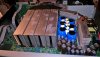
Here is my favorite Pro amp that I'm currently using in a tri-amped system.
20160925_111100_zpsmhvyxmda.jpg
Yep - always liked those 9440s!
 
Depends on the amp. Pro amps typically are built to withstand the rigours of the road, are rack mountable, typically they incorporate forced cooling, they also sometimes lack some of the protection circuitry and speaker on delay found in home audio equipment, sometimes the distortion ratings and or sensitivity won't be as good as home audio but then sometimes the amp comes in a home and pro version with very minor differences. Do your homework and if it looks good give it a try. One of the best surprises I've ever had came in the form of the Yamaha p2201, imho a fantastic amplifier originally designed for the pro market.

error there. pro gear will have more protection circuity than the avg home amp. try running a near dead short on a yamaha m65/85 and see what happens. now run same dead short on a crown and it'll keep running and running. even well famed krell amps were known to bucket under extreme basically near dead short loads.
 
absolutely the difference in power amps is the voltage "waiting" to be received at the pro audio levels, qsc, crown exc pro amps inputs need approx. 1.25 v to sound natural and produce advertised wattage,......your receiver or home audio pre amp is approx. .75 volts . ......a pro audio mixer or any other pro equipment is 1.25v feeding the full input sensitivity of the pro power amp. most pro amps are always running below voltage in a home stereo situation, you may not hear this diff, but your gain knobs are turned further than should be ,sound is well......ok check the amps sensitivity match to what is feeding it. how do you fix this. pretty cheap, a dual channel ART studio tube pre amp 1-$200 I used to fine tune sensitivity between pre amp and pro amp, you don't know what ur missing if voltage to pro amp is weak.

In the vast majority of cases, there is no need for any sort of level boost. The input sensitivity of "consumer" amps, on average, is not much different than typical pro amps. As well, the amp is not running below voltage. The rated input sensitivity is only to produce rated output. In normal operation (presuming your normal operation is not running the amp on the verge of clipping) the voltage will always be lower, usually much lower, than the rated input sensitivity.

What the device like ART Cleanbox does is simply change the gain structure so it seems like the amp more powerful because it will be louder at a lower volume position...but the amp is not more powerful, it's simply an illusion due to the lower volume setting it takes to get loud.

Matter of fact, I once made an average of input sensitivity for all the consumer amps I have and an average of all the pro amps I have.

Guess what? The average of the pro amps was slightly (but immaterially so, IMO) lower voltage/higher input sensitivity.
 
Last edited:

Easier to blow a tweeter with too little power than it is with too much! If it sounds bad, turn it down!


Well, I'm not an engineer, so don't trust me: http://www.jblpro.com/pub/technote/lowpower.pdf

Too much power blows tweeters, not too little. That "too little power" blows speakers is simply poor semantics. The coils will be burned, too little power does not cause burning of coils. The tweeter doesn't care much if too much power is from distortion or from clean power - it only knows its too much and dies.

I like Rod Elliott's take on it. Which, paraphrased, is that if you crank it high enough to burn out a tweeter with a small amp, chances are you're going to crank it just as high or higher with big, clean power and kill it just the same or perhaps even sooner.
 
My apologies for shifting us off topic . . . it's just an old wives tale. I've seen the JBL write-up on it in the past. Todd's explanation is simple enough and correct, so I'll leave that stand for now.

BWCCA - btw, this wasn't a dig at you. Carry on.
 
WP_20161017_21_29_05_Pro.jpg
In the vast majority of cases, there is no need for any sort of level boost. The input sensitivity of "consumer" amps, on average, is not much different than typical pro amps. As well, the amp is not running below voltage. The rated input sensitivity is only to produce rated output. In normal operation (presuming your normal operation is not running the amp on the verge of clipping) the voltage will always be lower, usually much lower, than the rated input sensitivity.

What the device like ART Cleanbox does is simply change the gain structure so it seems like the amp more powerful because it will be louder at a lower volume position...but the amp is not more powerful, it's simply an illusion due to the lower volume setting it takes to get loud.

Matter of fact, I once made an average of input sensitivity for all the consumer amps I have and an average of all the pro amps I have.

Guess what? The average of the pro amps was slightly (but immaterially so, IMO) lower voltage/higher input sensitivity.
If the signal is .775 - 1 volts and the amp was built to run full on at 1.25 v that is not really minimal, that could be almost half the gain, So a 300 wpc is now unlively 150 wpc with the amp gain maxed. My 80 watt onkyo stereo amp (with the matching sensitivity) can sound more immediate and powerful than a pro amp that is running lazy. I use some patience to adjust the signals, first I set the Art tps ii output gain to +4 (pro level) on the led meters, so there is the unity to match the qsc class h amps input. (The ART pre, ......does a super clean sound at 20kh-20khz)...... then...... adjust the home stereo signal up to +4 on the ART input side. I pulled this amp from the bottom of my rack last pm. Amazing what this amp has gone through for 10 years running live sound ,this was used as a sub amp, pounding 3100 bridged mono watts @ 4 ohms for hours and hours hundreds of jobs in the sun, stored in -20 deg in winters then fired up for the job, This QSC plx 3102 is only 13lbs and still sounds looks like new. I Am inquiring on a buying a set of the epi 1000 towers, hope this amp will retire duty to these speakers and a Marantz 4400. All about comparing, and listening for days, tried everything was a big difference getting the stereo, up to a clean mixing board unity level. Pro amps run on super unleaded to perform at the levels they are required to, but will run on anything. Just a extra step 99% of people don't check on.
 
View attachment 806258
If the signal is .775 - 1 volts and the amp was built to run full on at 1.25 v that is not really minimal, that could be almost half the gain, So a 300 wpc is now unlively 150 wpc with the amp gain maxed. My 80 watt onkyo stereo amp (with the matching sensitivity) can sound more immediate and powerful than a pro amp that is running lazy. I use some patience to adjust the signals, first I set the Art tps ii output gain to +4 (pro level) on the led meters, so there is the unity to match the qsc class h amps input. (The ART pre, ......does a super clean sound at 20kh-20khz)...... then...... adjust the home stereo signal up to +4 on the ART input side. I pulled this amp from the bottom of my rack last pm. Amazing what this amp has gone through for 10 years running live sound ,this was used as a sub amp, pounding 3100 bridged mono watts @ 4 ohms for hours and hours hundreds of jobs in the sun, stored in -20 deg in winters then fired up for the job, This QSC plx 3102 is only 13lbs and still sounds looks like new. I Am inquiring on a buying a set of the epi 1000 towers, hope this amp will retire duty to these speakers and a Marantz 4400. All about comparing, and listening for days, tried everything was a big difference getting the stereo, up to a clean mixing board unity level. Pro amps run on super unleaded to perform at the levels they are required to, but will run on anything. Just a extra step 99% of people don't check on.
WP_20161017_19_06_17_Pro.jpg
 
Variable signals like pre out and amp in are not really classified as pro level vs consumer level. The frequently misused pro vs. consumer level is relative to line level signals, e.g. tape in/out.

To have only .7 to 1 volt max available from a pre out would be most unusual. Heck, a CD player often hits 2V, even an iPhone does 1V or more. My Yamaha consumer preamps will do 8.5Vrms max from the pre outs.

The only issue with a "lazy" signal is failure to turn the volume knob more.

As far as familiarity with using pro amps at home, yeah, I have a dozen, at least. I use two QSC PLX3402 and two QSC PLX2402 in my HT system alone. The amp gains are set at only 22dB gain, and I have no trouble pushing them to full rated using a consumer pre and no boost box.

index.php
 
Last edited:
My apologies for shifting us off topic . . . it's just an old wives tale. I've seen the JBL write-up on it in the past. Todd's explanation is simple enough and correct, so I'll leave that stand for now.

BWCCA - btw, this wasn't a dig at you. Carry on.

No worries. Y'all can believe what you want. FWIW, I've owned JBLs with the 075 ring-radiator for over 50-years. I blew one over 45-years ago, sent it back to JBL under the then Lifetime Warranty, and they repaired it at no cost but sent it back to me with a note suggesting I should look into a possible "high-frequency oscillation" in my amplifier which, at that time, was a low-level Kenwood receiver. I replaced the receiver with a Mac C20 and Fisher SA1000 amp and a few years later (1971?) replaced the Fisher with a brand-new Crown D150. I've used Crowns pretty much exclusively now for over 45-years, playing much louder, including outside using the same speakers, than the Kenwood would ever go. Never had an issue with a JBL component since. As we say in the car biz: Your mileage may vary.
:dunno:
 
Depends on the amp. Pro amps typically are built to withstand the rigours of the road, are rack mountable, typically they incorporate forced cooling, they also sometimes lack some of the protection circuitry and speaker on delay found in home audio equipment, sometimes the distortion ratings and or sensitivity won't be as good as home audio but then sometimes the amp comes in a home and pro version with very minor differences. Do your homework and if it looks good give it a try. One of the best surprises I've ever had came in the form of the Yamaha p2201, imho a fantastic amplifier originally designed for the pro market.
Double ditto on this. I have both the 2201 and the 2200 - AWESOME amps.

M2200 Specifications
  • Dynamic Power 340W + 340W
  • Continuous Output 240W + 240W (both channels driven)
  • Frequency Characteristics 5Hz - 100kHz (+0 -1dB at 8 Ohms 1W)
  • Power Band Width 10Hz or less, 100kHz or more
  • Total Harmonic Distortion 0.01% or less (8 Ohms 1W - 200W, 20Hz - 20kHz)
  • Crosstalk 75dB (20KHz)
  • Cross Modulation Distortion 0.01% or less (8 Ohms 100W 70Hz: 7KHz=4:1) 0.1% or less (16 Ohms 100W)
  • Damping Factor 350 or more (8 Ohms 1KHz); 150 or more (8 Ohms 20KHz)
Specs on this amp.
 
Double ditto on this. I have both the 2201 and the 2200 - AWESOME amps.

M2200 Specifications
  • Dynamic Power 340W + 340W
  • Continuous Output 240W + 240W (both channels driven)
  • Frequency Characteristics 5Hz - 100kHz (+0 -1dB at 8 Ohms 1W)
  • Power Band Width 10Hz or less, 100kHz or more
  • Total Harmonic Distortion 0.01% or less (8 Ohms 1W - 200W, 20Hz - 20kHz)
  • Crosstalk 75dB (20KHz)
  • Cross Modulation Distortion 0.01% or less (8 Ohms 100W 70Hz: 7KHz=4:1) 0.1% or less (16 Ohms 100W)
  • Damping Factor 350 or more (8 Ohms 1KHz); 150 or more (8 Ohms 20KHz)
Specs on this amp.
That only happens with the right sensitivity feeding the power amp, please look up the input sensitivity of the amp, I am curious and love them !!
 
Variable signals like pre out and amp in are not really classified as pro level vs consumer level. The frequently misused pro vs. consumer level is relative to line level signals, e.g. tape in/out.

To have only .7 to 1 volt max available from a pre out would be most unusual. Heck, a CD player often hits 2V, even an iPhone does 1V or more. My Yamaha consumer preamps will do 8.5Vrms max from the pre outs.

The only issue with a "lazy" signal is failure to turn the volume knob more.

As far as familiarity with using pro amps at home, yeah, I have a dozen, at least. I use two QSC PLX3402 and two QSC PLX2402 in my HT system alone. The amp gains are set at only 22dB gain, and I have no trouble pushing them to full rated using a consumer pre and no boost box.

index.php
All you need is adapters , there it is.
 
Variable signals like pre out and amp in are not really classified as pro level vs consumer level. The frequently misused pro vs. consumer level is relative to line level signals, e.g. tape in/out.

To have only .7 to 1 volt max available from a pre out would be most unusual. Heck, a CD player often hits 2V, even an iPhone does 1V or more. My Yamaha consumer preamps will do 8.5Vrms max from the pre outs.

The only issue with a "lazy" signal is failure to turn the volume knob more.

As far as familiarity with using pro amps at home, yeah, I have a dozen, at least. I use two QSC PLX3402 and two QSC PLX2402 in my HT system alone. The amp gains are set at only 22dB gain, and I have no trouble pushing them to full rated using a consumer pre and no boost box.

index.php
You have $7k worth of power amps and 15k watts that could run Giants stadium, playing at 102 db total, yes it works, plug it in, guess I am bowing out. put a db meter on that rig. sorry I am over heads, 10 years from now you will understand.
 
You have $7k worth of power amps and 15k watts that could run Giants stadium, playing at 102 db total, yes it works, plug it in, guess I am bowing out. put a db meter on that rig. sorry I am over heads, 10 years from now you will understand.

Sorry that I offended your sensibility with a few facts.
 
All you need is adapters , there it is.

Actually in that rig I'm using custom (as in I made) balanced interconnects with the mighty fine Belden 1800F cable and Neutik XLR connectors. No adapters, per se.

But, yeah, I use RCA to 1/4" TS adapter cables to connect unbalanced consumer gear to the pair of parallel-mono strapped Crown Microtech 1200s that I sometimes use to drive my Thiel CS3.6s. Works great, other than the fan noise you can hear at low volume. Too bad those Microtechs and the Macrotechs use those fanformer cooling fans. There are no good low noise replacements like the mods I did to the QSC fans.

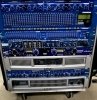
Here's the stack in my garage I use for running the pair of JBL SR4719X subs off two of the bridged CE4000s and SR4732A tops in biamp from the QSC PL3.4 and PL236. I've run that too with a consumer preamp. Works just fine, but I do tend to use a Yamaha mixer most of the time because I just leave that in the garage with all the rest of that stuff. Made for a great party system, but I don't do that much big partying anymore.

index.php
 
Last edited:
not really offended , Crown may be wrong with one of the best amps ever , the 150II but they thinks like i do lol, they added a internal sensitivity switch to adjust for input signal. WP_20161018_20_07_25_Pro (1).jpg
 
Last edited:
Actually in that rig I'm using custom (as in I made) balanced interconnects with the mighty fine Belden 1800F cable and Neutik XLR connectors. No adapters, per se.

But, yeah, I use RCA to 1/4" TS adapter cables to connect unbalanced consumer gear to the pair of parallel-mono strapped Crown Microtech 1200s that I sometimes use to drive my Thiel CS3.6s. Works great, other than the fan noise you can hear at low volume. Too bad those Microtechs and the Macrotechs use those fanformer cooling fans. There are no good low noise replacements like the mods I did to the QSC fans.

Here's the stack in my garage I use for running the pair of JBL SR4719X subs and SR4732A tops in biamp. I've run that too with a consumer preamp. Works just fine, but I do tend to use a Yamaha mixer most of the time because I just leave that in the garage with all the rest of that stuff. Made for a great party system, but I don't do that much big partying anymore.

Actually in that rig I'm using custom (as in I made) balanced interconnects with the mighty fine Belden 1800F cable and Neutik XLR connectors. No adapters, per se.

But, yeah, I use RCA to 1/4" TS adapter cables to connect unbalanced consumer gear to the pair of parallel-mono strapped Crown Microtech 1200s that I sometimes use to drive my Thiel CS3.6s. Works great, other than the fan noise you can hear at low volume. Too bad those Microtechs and the Macrotechs use those fanformer cooling fans. There are no good low noise replacements like the mods I did to the QSC fans.

Here's the stack in my garage I use for running the pair of JBL SR4719X subs off two of the bridged CE4000s and SR4732A tops in biamp from the QSC PL3.4 and PL236. I've run that too with a consumer preamp. Works just fine, but I do tend to use a Yamaha mixer most of the time because I just leave that in the garage with all the rest of that stuff. Made for a great party system, but I don't do that much big partying anymore.

index.php
plug it in, i can tell how it should sound by the crown amp owner knowing the frequency of the vocals and guitar competing for space in the mix.

 
Back
Top Bottom