• The move to the new server is done. There are some software and database maintenance updates in process. This has us passing the hat around to help out. We appreciate any donations. Seriously, even a dollar helps. The payment page may be found here - https://www.audiokarma.org/support.html

PWK's Dope from Hope Speaker Placement Guide

I met Paul a couple of times and he was a great personality. He preferred to talk about other things than speakers. A book he was reading, the new Bousendorpher piano he just bought or what was happening at NMSU and which professors had been my mentors. I have a PWK belt buckle and some other stolen items. In one house we placed the The korner horns and Cornwall in the billiard /sound room. In the Den were a pair of built in Concert Grands. He walked into the pool room for a few minutes and spent hours in the the family room. The Grands were the wife's speakers. It could of been we were listening to classical music in the family room and New Orleans Dixieland in the Klipsch room. He did take the time to explain that the seating area should be behind the intersection of the axis of the corner horns for best realism. We talked about whether to use the some of the left and right for the center speaker or the difference. He much preferred the sum, and was surprised that Davie O'brien from Mcintosh was recommending the difference for some installations, especially from from point source speakers, which Mac was building at the time.
 
True, but the theory also works with Cornwalls, La Scalas, Belles and a lot of JBL's and Altecs too. Even Bozak owners twist their Symphonies and Grands to optimize the listening area for a larger stereo foot print. I met Paul a few times in the 70's and he really came across quite conservative in mixed company. But that said he always had that sparkle in his eye and when ever an opportunity presented itself he could let loose with some real zingers. But what was more revealing was how broad is wealth of knowledge was out side the field of sound. Sound was just one of his passions among many others. If you wanted to wind him up just make a remark about his choice of Pianos at home. He also said LPs were a great compromise in producing sound. Just the slightest tracing error would totally "Screw up" the imaging. He much preferred 2 track tapes at the time. I never got to here him speak about digital reproduction. By then he couldn't hear thunder anyway. Most people don't realise how bad his hearing really was. He had to depend on test equipment and others to get the sound he wanted correct. Surprising! That was Paul, Surprise, was his true middle name with a drop of levity and a strong dose wit.
 
When I started placing my speaker like in fig 2 (except 2 feet out from the back wall) , it was then I had what must have been a similar experience the Japanese had when it was proven their Emperor was not God incarnate after WWII as I had with my opinion of PWK as an advisor on speaker placement. You do not need a center channel speaker to get 3D holographic stereo imaging and soundstaging if you place your speaker like in fig 2. AND who in the hell is that guy sitting in listen position B, and who cares about him anyway?

I placed my Cornwalls like fig 3 and NEVER got proper imaging or soundstaging no matter where I sat! Now I place all speakers, including any Klipsch speakers like fig 2 (except 2 feet from the back wall), never going back to "toe-in" or corner placement again, no not even against the wall placement for me thank you.
 
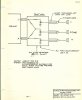
In one of the 'Dope from Hope' papers, he published a simple circuit that would take stereo line inputs, and output stereo plus a summed signal for the center amp. I believe that it was four 47 kohm resistors that went from left in -> left out, left in -> center out, right in -> center out, and right in -> right out. It went inline between preamp and power amps.

BudBox.jpg

Capture.PNG
 
Last edited:
As far as whether or not to put speakers in corners it all depends on what you are after. If you really want a wide image similar to sitting in the front rows centered on a large symphony then you will have to rotate the speakers for sure and have a center channel, If you want the image as if your were sitting back a 100 ft or so I can see why two speakers will be ample and may only need to be pointed inward just a bit. The further you sit off axis with a Klipsch system the predominant midrange is muted a bit especially with the old horns of the Series I and II heritage speakers. With the newer and latest designs of the Cornwall, Hersey and Forte the response is more uniform off axis compared to the La Scala and Klipsch horn that still use the old horn design for the midrange. Now if you want to really be serious about imaging you will rid your self of your Klipsch speakers. The arrival times of the different drivers in a Klipsch Heritage 3 way speakers is so different an accurate image is impossible. Now I am not saying what you are hearing isn't enjoyable; because, it can be. But Its just an illusion. Go find your self some Urei 813 monitors using either Altec or JBL 15 in. coax speakers with a supplemental 15 woofer to support the low bass down to below 30 HZ.

So you have choice accurate dynamics, which Klipsch does very well, or accurate imaging. I know panel speakers have the best imaging but you have to supress the rear wave down to 200 hz or so but below that you need the extra output to support the bass. And let's face it their dynamics are pretty poor. Above 90 db or so.

All speakers are a compromise, no matter how much you spend! I know what you need the big Magico M9's. But then you need four 500 watt plus per channel amps to bi- amp the speakers. What's $800,000.00 more or less if you have it. If not just win the lottery.
 
Last edited:
"After all, you couldn't hear the rest of the band if you had your head in the tuba."

I'm really, really sorry I never had the chance to meet him. He must have been a hoot. I do have his biography, and it's a great read.

I've read just a few of the "Dope from Hope" newsletters, and they're always informative as well as interesting.

Thanks for posting!
I spend an entire day with him (9-7, August 1985) in his Lab and Office in Hope, then at his private club for lunch, then his home for a listen and a shot of Glenlivit Schotch, then he chauffered us in his Mercedes to the Pioneer Kitchen (the lady opened her Restaurant, just for 4 of us, PWK, me, and our wives), then back to our hotel. Treated us like his long lost grandkids, as he was the same age as my Grandmother, born the same year. My Avatar is PWK and I in front of his original building in Hope, converted to a Museum across from the Plant. A genius and a true gentleman. Everything he wrote in the Dope From Hope, he actually did!
 
In one of the 'Dope from Hope' papers, he published a simple circuit that would take stereo line inputs, and output stereo plus a summed signal for the center amp. I believe that it was four 47 kohm resistors that went from left in -> left out, left in -> center out, right in -> center out, and right in -> right out. It went inline between preamp and power amps.
He used one himself, as well as False Corners, in his home (I was there). I built a hybrid of the 2 schematics, with a potentiometer on only the resultant mono center channel. I had 2 Khorns with a LaScala in the center for 30 years until I graduated to the Pro Klipsch and HT in the new Millenium.
 
Bridged Center Speaker

Yes, I have a Belle Klipsch as the bridged center speaker between my Klipschorns.
I, originally, purchased my Klipschorns in '79, and, out of necessity, placed them along the short wall of my family room. I then moved to a home with a suitable long wall of 22 feet. I decided that Paul Klipsch must have known what he was talking about, so I made the investment and purchased the Belle. I have never had a moment's regret. The sound stage opened-up before my very ears, and the result was a three-dimensional image of wall-to-wall sound. If the bassoonist is a little behind and to the right of the flutist, that is where he appears in the sound stage.
If memory serves me correct, I think I recall that Paul Klipsch stated that the ideal set-up is two corner speakers, placed as far apart as possible (the further, the better), with a bridged center speaker to fill-in the hole.
Anyway, I have, over the years, heard many great speaker systems, and I always felt that, in comparison, my system held-up quite favorably, indeed.

I was 13 years old when I first saw Khorns, riding my bike to my Detroit Newspaper Route by a Klipsch Dealer (the backs were visible in the store window). It took me 10 years before I could afford them. I had the 2PH3 setup for 30 years. Got "Klipsch Papers" autographed by PWK and joined the Audio Engineering Society via his urgings. Spent a full day with him at the Hope Factory and at his House. Everything he wrote about he did. He played some of his Symphony recordings on tape at his home for me while we had a shot or two of Glenfiddich Single Malt Scotch. Treated me like his long lost grandson, as he was born the same year as my paternal grandmother. My dad was named Paul too, and I named my only son after him. PWK was the real deal!
 
As far as whether or not to put speakers in corners it all depends on what you are after. If you really want a wide image similar to sitting in the front rows centered on a large symphony then you will have to rotate the speakers for sure and have a center channel, If you want the image as if your were sitting back a 100 ft or so I can see why two speakers will be ample and may only need to be pointed inward just a bit. The further you sit off axis with a Klipsch system the predominant midrange is muted a bit especially with the old horns of the Series I and II heritage speakers. With the newer and latest designs of the Cornwall, Hersey and Forte the response is more uniform off axis compared to the La Scala and Klipsch horn that still use the old horn design for the midrange. Now if you want to really be serious about imaging you will rid your self of your Klipsch speakers. The arrival times of the different drivers in a Klipsch Heritage 3 way speakers is so different an accurate image is impossible. Now I am not saying what you are hearing isn't enjoyable; because, it can be. But Its just an illusion. Go find your self some Urei 813 monitors using either Altec or JBL 15 in. coax speakers with a supplemental 15 woofer to support the low bass down to below 30 HZ.

So you have choice accurate dynamics, which Klipsch does very well, or accurate imaging. I know panel speakers have the best imaging but you have to supress the rear wave down to 200 hz or so but below that you need the extra output to support the bass. And let's face it their dynamics are pretty poor. Above 90 db or so.

All speakers are a compromise, no matter how much you spend! I know what you need the big Magico M9's. But then you need four 500 watt plus per channel amps to bi- amp the speakers. What's $800,000.00 more or less if you have it. If not just win the lottery.
Your assessment is only half true. The of the PWK Heritage, LaScala and Heresy's drivers (except for the tweeters) are within 1/4 wave at their crossover points, woofer to midrange, so they pass the "reasonable" Phase Coherence test. Many of the models from Gary Gillum, Jim Hunter, in the 80's, and Roy Delgado (especially the Jubilees in the new millenium) and the KPT series are phase coherent. The Jubes have always had Acrive Crossovers with Time Delays. So the points you made are relative and not absolute to a company that has been making loudspeakers since before your were born or still in diapers!
 
Yes I know the Jubilees are time aligned due to the electronic crossover. But I was talking about the other older Heritage speakers. Especially the La Scala, Belle and Klipsch horn. I still think the Cornwall is my favorite Klipsch speaker, as I have not heard the Jubilee.
 
Yes I know the Jubilees are time aligned due to the electronic crossover. But I was talking about the other older Heritage speakers. Especially the La Scala, Belle and Klipsch horn. I still think the Cornwall is my favorite Klipsch speaker, as I have not heard the Jubilee.
So basically you were wrong about the LaScalas and Heresy's time alignment issues (OK, maybe right about the less audible tweeter). LaScalas and Heresys were over 60% of sales when they were created (excluding the Pro Stuff). Your opinions, masquerading as facts, about Klipsh Products, and Line Arrays, are either incomplete, with zero data, and/or totally wrong. Keep up the good work, I'm sure there are many here who love to be misguided in too general terms of opinions. For one, I'm impressed with your tenacity and consistency of opinion, however wrong it may be 2/3 of the time.
 
Last edited:
So basically you were wrong about the LaScalas and Heresy's time alignment issues (OK, maybe right about the less audible tweeter). LaScalas and Heresys were over 60% of sales when they were created (excluding the Pro Stuff). Your opinions, masquerading as facts, about Klipsh Products, and Line Arrays, are either incomplete, with zero data, and/or totally wrong. Keep up the good work, I'm sure there are many here who love to be misguided in too general terms of opinions. For one, I'm impressed with your tenacity and consistency of opinion, however wrong it may be 2/3 of the time.
Anyone else ever sometimes miss the somewhat off-axis musings of @ClaudeJ1…?
 
Back
Top Bottom