• The move to the new server is done. There are some software and database maintenance updates in process. This has us passing the hat around to help out. We appreciate any donations. Seriously, even a dollar helps. The payment page may be found here - https://www.audiokarma.org/support.html

Radiola Grand

faber12

Addicted Member
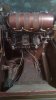
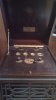
My cousin gave me a Radiola Grand yesterday. It is missing the tubes and has other issues I am sure. My uncle bought it at a garage sale when he was a kid, and it sat in his mother's (my grandma's) basement until she died. When they cleaned put the house, my uncle gave the radio to my cousin, and now it has passed to me.

I have contacted a local antique radio collector/tinkerer, and he seems eager to check it out. If possible, I will restore it to working order, and get it looking good again.

Anybody here have one? It looks really cool.
 

Attachments

  • IMG_20160121_190218_578.jpg
    IMG_20160121_190218_578.jpg
    29 KB · Views: 85
  • IMG_20160121_202545_254.jpg
    IMG_20160121_202545_254.jpg
    38 KB · Views: 83
  • IMG_20160121_190230_300.jpg
    IMG_20160121_190230_300.jpg
    78.1 KB · Views: 84
Register to hide this ad
That is way cool, love the horn, the way it folds to fit into the enclosure. I don't know much about antique radios but I do believe that one is a keeper and highly collectible. I can only imagine that the local guy is dying to see it, probably wants it for his collection.
Take it slow and easy, some parts of that are going to be easy to break because of the age. Maybe join the local antique radio club, the members will usually be more and happy to help and give advise.
Good luck and keep us posted.

BillWojo
 
Will do BillWojo. I will see if there is a local group, if not, I may have to start one. I have managed to find a few enthusiasts around here, but not many.

This should be a fun restore project, I think my guy has the tubes even. It is circa 1922, a real piece of history.
 
I think the tubes in them were lightly stressed and hardly ever fail. They don't bring the kind of money you would think they should. Your local guy should be able to tell you what clubs if any are around.
When you get into it, post plenty of pics.
Thanks

BillWojo
 
I will try to document the process. My guy told me when we met, that if I ever needed any tubes or help, to just give him a call.

I found the schematic easily enough, interesting that it ran off 4 'A' size dry cell batteries.
 
Back when it was made few people had electricity. I picked up 2 old radios at an estate sale recently that run off of batteries. They are about the same age as yours, cool as hell to look at. The owner had schematics tucked inside on the battery hookups. This place was a big old house with 3 floors of old radios like this, shelves full of them in every room. I went on the last day and picked up 2 radios for about 50 bucks. Some of the fancy ones were in the thousands. Cool wood boxes with dials on the front, interstage transformers, complete with tubes. Just amazing build quality. They are called farm radios and used batteries because at that time there was no electrical distribution network except in large city's.

BillWojo
 
This one is in good shape, other than some wiring issues and needing a good cleaning/refinish. Museum piece when I am done maybe.
 
Will do BillWojo. I will see if there is a local group, if not, I may have to start one. I have managed to find a few enthusiasts around here, but not many.

This should be a fun restore project, I think my guy has the tubes even. It is circa 1922, a real piece of history.

Fantastic score. I have a couple of late-1920s radios, and they are a lot of fun, especially if you're a baseball fan (there is nothing quite like listening to a game on an antique radio). I highly recommend the forums at http://antiqueradios.com. Also lots of great info on http://www.nostalgiaair.org. Those sites, as well as folks here on the AK tube audio forum, were quite helpful when I restored my 1928 Sparton. I would also recommend checking out http://www.radiolaguy.com/radiola.htm for some specific info on that family of radios.

Good luck with it!
 
This one is in good shape, other than some wiring issues and needing a good cleaning/refinish. Museum piece when I am done maybe.

I guess that is a battery set... Antique Electronic Supply has a really nice battery eliminator kit with A (filament), B (high voltage), and C (bias) supplies that will work with a pretty wide variety of radio configurations. The A and C supplies are variable and regulated, and the B supply has multiple taps for common voltages, provided by a zener string. If you're decent with a soldering iron, it's pretty easy to build.
 
Iirc, one of these was featured in an episode of Boardwalk Empire.
I think this whole series of variometer sets was made for RCA by Westinghouse, one of the co-members of RCA, and used WD-11 tubes with perhaps a WD-12 output tube (WD= Westinghouse Device+#).
http://www.radiolaguy.com/Showcase/Radiola/RadiolaGrand.htm
The entire series was basically a retread of the budget entry level Westinghouse Aeriola Sr regenerative radio, a decent well made performer for its time and nothing more. The immediate future was to be the Neutrodyne TRF (Radiola 25, 17, 18) and of course, RCA's own Superheterodynes, which they were working furiously to get ready for the public market. Once that occurred, these rather primitive variometer tuned regenerative variants were withdrawn from production and quickly obsolesced for their obvious technical limitations. Modern collectors love them for their obsolescent "funkiness" and technological link to the wireless era of radio, you have a very nice example.
 
Last edited:
The "a" batteries were for the filaments only. It needs a "B" battery as well. probably 90V.

Yah, this radio uses WD-11 tubes... extremely rare! An uncommon base (UV4 -- one large pin, 3 small pins). 1V DC filament, and commonly using a 90V plate supply. It's a regenerative set, one tube being used for the regenerative detector, and 3 tubes for audio amplification.

If you replace the sockets in the radio with the commonly-available UX4 type, you can use RCA-12 tubes instead. The Wikipedia article for the WD-11 states that one can use inexpensive 1A5s as well: Using UV4 tube bases and octal sockets to make adapters, connect the elements of the 1A5 to the corresponding WD-11 elements (paying close attention to filament + and filament - ... not sure which pin is which on the WD-11, but you should be able to work that out from the socket), connect a 5.1 ohm resistor between the filament pins, connect the 1A5 screen to the plate (the 1A5 suppressor is internally connected to the filament - pin).

Apparently, a danger of the WD-11 tubes is that if the filament of one tube burns out and breaks, it can contact the plate, sending B+ though your filament supply and frotzing your other tubes.

Here's a link to a reproduction of the manual, including a schematic, if you don't have the manual already: http://radiolaville.com/graphics/docs/Radiola Grand.pdf
 
Thank you all. I am sure that I will build a power supply for it, as dry cells seem to be less common 94 years later. :idea:

I am actually at the hospital with my wife in recovery right now. She is sleeping after having her gallbladder removed.

I will try to take better and more thorough pictures after I get home tomorrow. I have of course not had much time to do anything with it since acquiring it yesterday evening.
 
Last edited:
That is cool!
and old
Looks like Marconi himself built it.
(Before you correct me, that was meant as a joking quip).
 
Very nice, thats a real oldie. Probably 1924ish if I had to guess. These real old sets are extremely cool. The other handy thing about them is that they were generally built like tanks, and are extremely simple circuits. Quite often if you put the right power to them they will work. Be very careful with those WD-11's though, they're hard to get and not cheap when you do find them.
 
Great score!

Two other things that happen to these old sets is that sometimes capacitors go bad or short, and the audio transformers have traces of sulfur in the paper insulation between the windings and this results in open coils, maybe they can be re-wound or replaced with new "made to fit" parts.

Mark T. :music:
 
It used two WD11's and two ballast tube to regulate the filament of the WD11's , the WD11's are rare to ballast tubes are hens teeth .
 
I have one from this era that runs 8 UV-199's. Its not tubed either, they are simply too rare and spendy to justify it. It still looks cool on the shelf tho.
 
Back
Top Bottom