

You are using an out of date browser. It may not display this or other websites correctly.
You should upgrade or use an alternative browser.
You should upgrade or use an alternative browser.
Rare Teac TN-400 turntable - speed control repair


sqlsavior
Lunatic Member
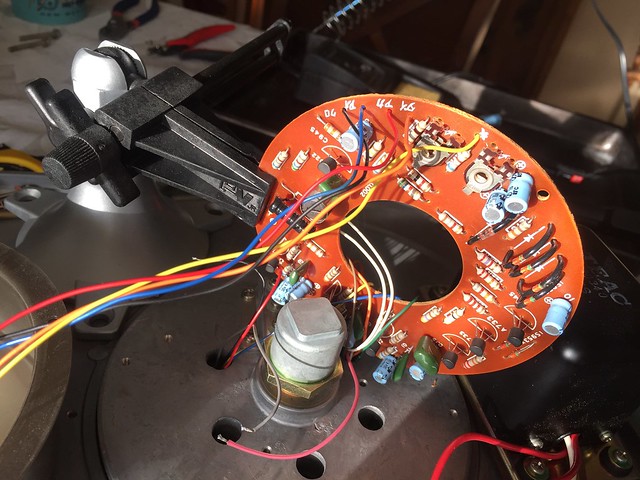
Success! All the electrolytic capacitors on the motor board have been replaced, and the thing still works! The 10 uF ones were all at about 18 uF, and the 4.7 uF ones were all about 7 uF. The 4.7 uF ones were replaced with Wima 5% film caps, and the 10 uF ones were replaced with tantalum 5%. Both the 33 and 45 rpm settings adjust to still on the strobe, near the middle of their range, and the 1.5 Hz pulsing seems diminished, but not gone. Here is a before picture:
I forgot to take an after picture, but I'll be in there again. I would like to get the strobe to stand dead still if I can. I don't believe this is a "quartz locked" table, so I'm not sure if that will be possible. My brother sent me the schematic and I have new pics of it:
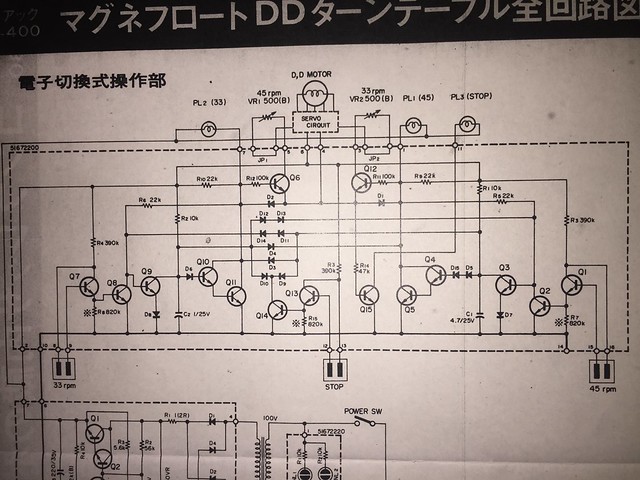
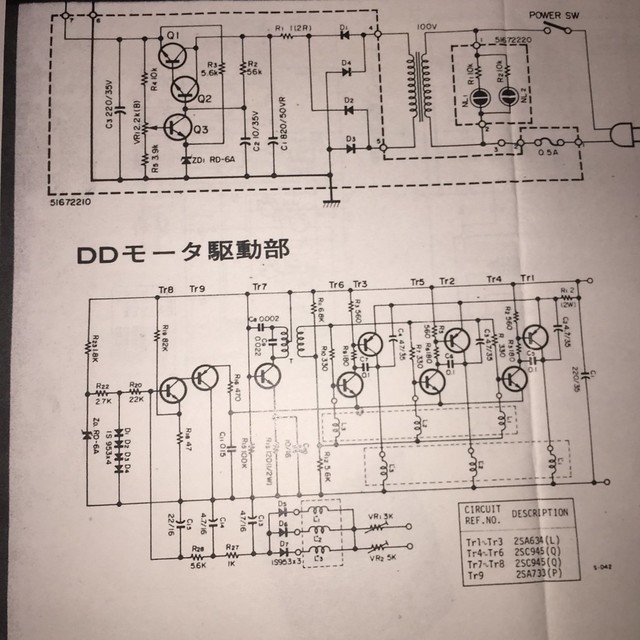
BinaryMike, or anyone, PM me if you would like a full-resolution copy.
Can anyone tell me if paralleling the 820 uF cap (in the top half of the second, square pic, in the middle) with another one would be safe to try? Or are there better ideas? Thanks for all of your replies.
I forgot to take an after picture, but I'll be in there again. I would like to get the strobe to stand dead still if I can. I don't believe this is a "quartz locked" table, so I'm not sure if that will be possible. My brother sent me the schematic and I have new pics of it:
BinaryMike, or anyone, PM me if you would like a full-resolution copy.
Can anyone tell me if paralleling the 820 uF cap (in the top half of the second, square pic, in the middle) with another one would be safe to try? Or are there better ideas? Thanks for all of your replies.

maxhifi
Addicted Member
That 820uf capacitor is the main power supply filter. You could replace it say with 1000uf, paralleling it won't really achieve anything useful.
Why not start by checking the power supply voltage - measure the voltage between terminals 7 and 8 of the power supply board. And make sure it stays constant while the turntable is running.
I would say the next step is taking some voltage measurements to try and locate the problem - the caps were obviously bad but you could still have a bad transistor or even just a worn motor bearing.
One thing working to your favor here, is that the motor has multiple identical windings. The voltages between them should all be the same, and If they aren't it means something is wrong. Studying the schematic this means the voltages on Tr4, 5, and 6 should be identical, and the voltages on Tr 1, 2 and 3 should be identical. (on the motor board). You can go through the whole thing this way, looking for anomalies. Ignore the parts of the circuit dedicated to control, you need to zoom in on the motor drive stuff.
Why not start by checking the power supply voltage - measure the voltage between terminals 7 and 8 of the power supply board. And make sure it stays constant while the turntable is running.
I would say the next step is taking some voltage measurements to try and locate the problem - the caps were obviously bad but you could still have a bad transistor or even just a worn motor bearing.
One thing working to your favor here, is that the motor has multiple identical windings. The voltages between them should all be the same, and If they aren't it means something is wrong. Studying the schematic this means the voltages on Tr4, 5, and 6 should be identical, and the voltages on Tr 1, 2 and 3 should be identical. (on the motor board). You can go through the whole thing this way, looking for anomalies. Ignore the parts of the circuit dedicated to control, you need to zoom in on the motor drive stuff.
Last edited:
sqlsavior
Lunatic Member
That 820uf capacitor is the main power supply filter. You could replace it say with 1000uf, paralleling it won't really achieve anything useful.
Why not start by checking the power supply voltage - measure the voltage between terminals 7 and 8 of the power supply board. And make sure it stays constant while the turntable is running.
I would say the next step is taking some voltage measurements to try and locate the problem - the caps were obviously bad but you could still have a bad transistor or even just a worn motor bearing.
Will do with the voltage check.
I figured it was the power supply cap. Paralleling it with another 820 uF would double the value of the combined caps to 1640 uF, right?
No worn motor bearings here, I don't believe. This is the quietest table I've ever owned, fwiw.
maxhifi
Addicted Member
That 820uf capacitor is the main power supply filter. You could replace it say with 1000uf, paralleling it won't really achieve anything useful.
I would say the next step is taking some voltage measurements to try and locate the problem - the caps were obviously bad but you could still have a bad transistor or even just a worn motor bearing.
Will do with the voltage check.
I figured it was the power supply cap. Paralleling it with another 820 uF would double the value of the combined caps to 1640 uF, right?
No worn motor bearings here, I don't believe. This is the quietest table I've ever owned, fwiw.
Also check that zener diode to make sure the reference voltage is stable, (measure voltage across it during operation). This is not quartz locked, it is servo controlled. The reference voltage which affects speed comes from the zener diode at the very left of the bottom schematic, and then corrective feedback from the servo windings is rectified and then this DC voltage applied to the base of Tr8 which keeps speed constant. That's how I am guessing it works anyhow,
I see no material benefit to increasing the value of the power supply capacitor, however it may be an idea to make sure the rectifiers are all good. I would say an oscilloscope would be very useful in getting this thing working.

BinaryMike
Pelagic EE
I hate to say this, but the last time I saw platter rotation rate wow in a turntable of this type, it was caused by an open winding in the motor. I'm pretty sure you could get the same symptom from a defect in any one of the three phases of motor drive circuitry.
BinaryMike
Pelagic EE
I don't keep an archive any more, since I've been out of the service business for many years, but I'm sure some folks would be thankful if you placed this information in the AK database.BinaryMike, or anyone, PM me if you would like a full-resolution copy.
sqlsavior
Lunatic Member
I don't keep an archive any more, since I've been out of the service business for many years, but I'm sure some folks would be thankful if you placed this information in the AK database.
Thanks for the suggestion. I have submitted them.
sqlsavior
Lunatic Member
My lamp solution:
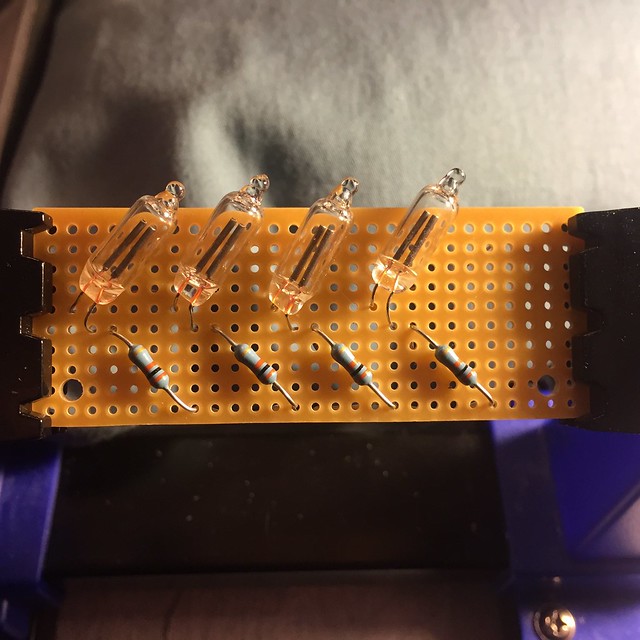
I used four smaller neon lamps, each with a 30K resistor.
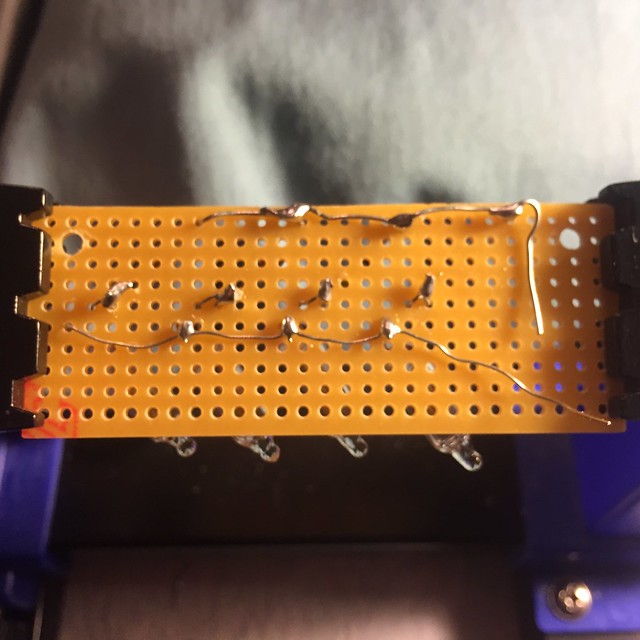
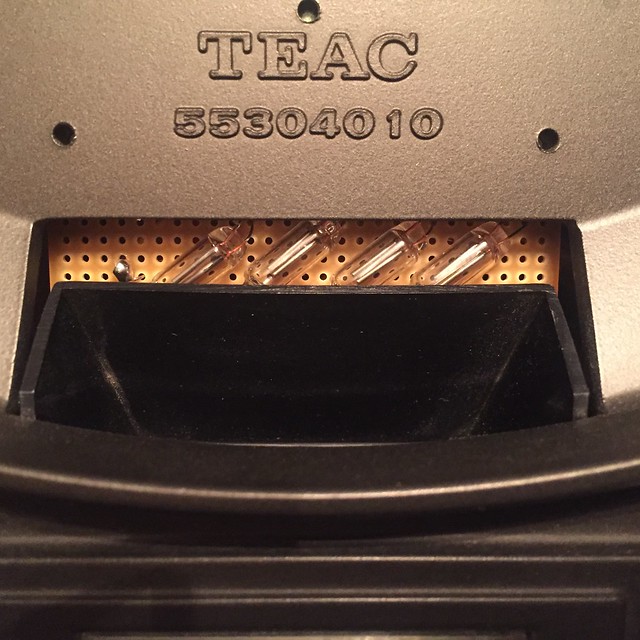
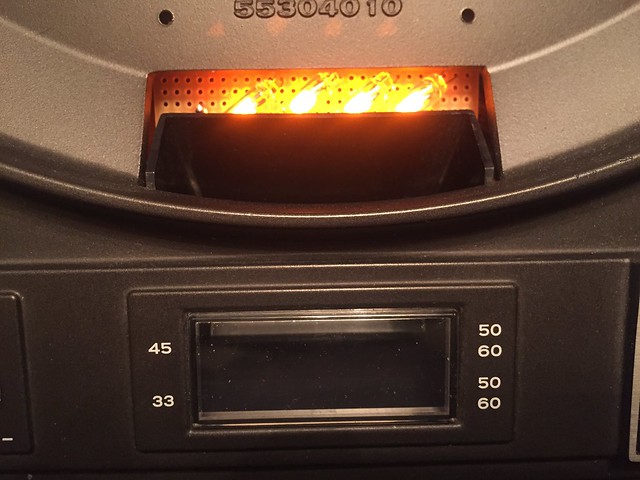
Still:
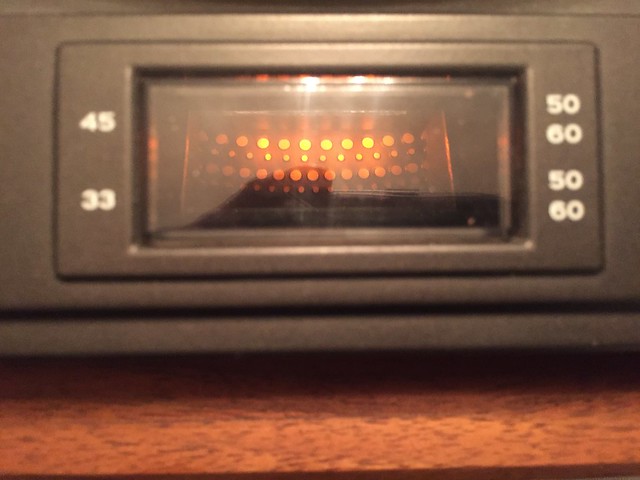
45:
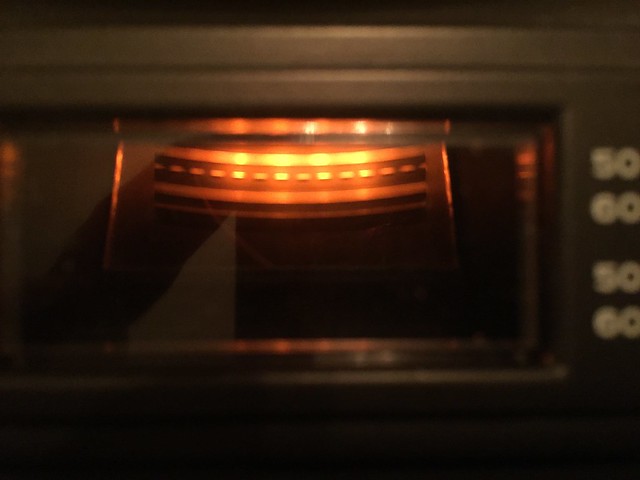
They are much brighter now! Before, I had to be in the dark to make out the display. Now it is readable in a bright room.
The soot had really built up on the inside of the old bulbs, apparently - only their ends lit up - their middles were black. They still work and I'm saving the old board with them, of course.
After a fair amount of fiddling, I got a steady strobe on both 33 and 45. The variation in rectangle position now seems more like a Brownian motion, not a waver or pulse - as good as I've ever seen it do. If it stays that way, I'll probably call it done. I do have a scope coming if I need to go further!
Many thanks to all for your help. I may call on you some more.
I used four smaller neon lamps, each with a 30K resistor.
Still:
45:
They are much brighter now! Before, I had to be in the dark to make out the display. Now it is readable in a bright room.
The soot had really built up on the inside of the old bulbs, apparently - only their ends lit up - their middles were black. They still work and I'm saving the old board with them, of course.
After a fair amount of fiddling, I got a steady strobe on both 33 and 45. The variation in rectangle position now seems more like a Brownian motion, not a waver or pulse - as good as I've ever seen it do. If it stays that way, I'll probably call it done. I do have a scope coming if I need to go further!
Many thanks to all for your help. I may call on you some more.
Last edited:

BinaryMike
Pelagic EE
Well, that certainly guarantees authentic neon color in the strobe window! Thanks for sharing.
Thank you all for these posts. I have the same turntable with similar issues, down to the sooty bulbs. I will update with posts as I can. I will use it as a recipe.
It is in line behind a Sony psx-70 with swollen PSU Caps,(it runs fine but smelled bad), and of course The Mother inlaw visit. Nothing happens fast around here.
Charc.
It is in line behind a Sony psx-70 with swollen PSU Caps,(it runs fine but smelled bad), and of course The Mother inlaw visit. Nothing happens fast around here.
Charc.
sqlsavior
Lunatic Member
Welcome to AK!Thank you all for these posts. I have the same turntable with similar issues, down to the sooty bulbs. I will update with posts as I can. I will use it as a recipe.
It is in line behind a Sony psx-70 with swollen PSU Caps,(it runs fine but smelled bad), and of course The Mother inlaw visit. Nothing happens fast around here.
Charc.
Good luck with your Teac. They are nice tables. I'm not an expert, but you can ask me about issues anyway...

crispycircuit
Super Member
Thx for taking the time to post and w/pics. I haven't had to repair any tables yet, you do nice work.....

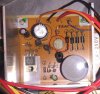
You probably have already done this, but be sure and deoxit VR1.
The plastic cap should pop off making it easier to spray, if it is the
variety I am thinking about.
See circled in pic.View attachment 1220497
Thank you All for your welcoming replies. The under motor speed adjustment pots can't adj. enough, so I pulled out the trusty lCR meter, checked some of the caps and the little ones on the motor board are 50% high at least. PSU caps seem fine but will be replaced because of age. I have not pulled any resistors to check but it is my understanding they usually age well. I will clean vr1, thank you fredjones, I did not see it. I should get parts ordered this week.
Charc