• The move to the new server is done. There are some software and database maintenance updates in process. This has us passing the hat around to help out. We appreciate any donations. Seriously, even a dollar helps. The payment page may be found here - https://www.audiokarma.org/support.html

Recap of Allison speakers - not required yet

Snade

humble AK member
Just an FYI to Allison speaker owners.

There is Yahoo Groups forum dedicated to Allison speakers. Members include former employees of Allison Accoustics and sometimes Roy Allison himself.

A recent post by a former Allison employee stated that Allison speakers from the 1970's have been tested and the original caps are still up to spec. The suggestion was that these speakers do not yet require a recap.

I've got Allison speakers from the 80's and I've looked at the complicated crossover. I'm happy to leave it as it is.

Just an FYI. Snade
 
Register to hide this ad
I just acquired a pair of Fours. Bothe tweeters on one of them were not working. I connected the speaker cable directly to their poles and (TG) they both work. Fortunately I don't have to hunt down replacement tweets but my only other (humble) conclusion is that it could be the crossover. Any thoughts? Thanks!
 
There is a resistor that is in series between the tweeter a and tweeter b maybe your short is there. I would recommend removing the woofer and all the acoustic insulation (stuffing) and looking over your crossover and terminals. Be careful, you can damage tweeters by connecting them to the amplifier directly and bypassing the filters that protect them in the crossover. You are probably OK at very low volume but don't play with fire. You could have a problem with the three position switch on the back, Have you checked it out?
When I got mine the wire wound resistors were crumbling away due to excessive moisture in storage. They still worked but I installed new components in the crossovers just to be safe. It didn't hurt. They sound great.

I still need a tweeter to restore a pair of CD6 that I bought to fix up my fours, if anyone has a spare.
 
Thanks for the suggestion. I will certainly do so - I have to refoam the woofers anyway. Like I said, after reading many painful stories about dead tweeters I was really happy that mine were still working. And yes, the volume was turned waaaaay down when I tested the directly! I will report back as soon as I've checked the the resistors and x-over components. I hope I don't have to replace the x-over components though - I've seen photos of them and they seem rather complicated in build as well as to remove. Sorry I cant help you with the CD6 tweet though.
 
As it ends up, nothing was wrong. When I checked the this copper wires where they have been inesetred into the binding posts I noticed that one of them wasn't inserted property. I corrected the issue and VOILA, problem solved. :banana: It always amazes me how, when confronted with a problem, my nature is to assume the worst and look for the most complex solution. So not all that remains is a refoam of the surrounds and we're good to go.:music:
 
As it ends up, nothing was wrong. When I checked the this copper wires where they have been inesetred into the binding posts I noticed that one of them wasn't inserted property. I corrected the issue and VOILA, problem solved. :banana: It always amazes me how, when confronted with a problem, my nature is to assume the worst and look for the most complex solution. So not all that remains is a refoam of the surrounds and we're good to go.:music:
Cool. My CD7's sound pretty amazing, given the size (small footprint). If there was anything wrong with the xover in mine, I couldn't tell. Range seems pretty smooth to me, though a tad on the bright side for my listening. Would have been nice to have an L-pad to dial them back a little. More amazing is the bottom end, pretty impressive for such a small driver.
 
They used electrolytics (and a fair number of them two, if my memory of looking at the crossover in my Ones is correct). Interestingly, there was a note in the BAS newsletter years ago (when the Allisons were still fairly new) from people who had recapped Allisons and said it didn't make any noticeable difference.
 
EQmeat: Check eBay - when I thought my tweeter needed replacing I found several Allison tweeters that were being sold. None which matched those of the Allison Four though but there were tweeters for sale nonetheless.
 
They used electrolytics (and a fair number of them two, if my memory of looking at the crossover in my Ones is correct). Interestingly, there was a note in the BAS newsletter years ago (when the Allisons were still fairly new) from people who had recapped Allisons and said it didn't make any noticeable difference.

I know this has been beat to death at AK-

Electrolytic caps that are 30-40 years old are probably no longer within spec. They have a finite life, typically around 20 years. If you believe all your electrolytic caps in 70's era speakers are still within mfr's specs, you are mistaken.

Even if former employees checked some speakers and deemed them good, that is in no way an indication that ALL of their speakers will do so. And what did they measure? Just the capacitance? There is more to a cap than the one value.

I will step off the lectern now and exit, stage left...
 
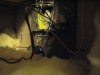
Inside Allison four

Thanks flylooper, I'll be checking daily. I don't want them badly enough to drop a c-note. I am sure they will show up eventually.

The caps did not look like typical electrolytics to me, but I don't know beans about what they are. I replaced the cap and the resistors just for good measure. They sound great to my ears, i recommend 2 pair per room.
 

Attachments

  • Inside Allison Four1.jpg
    Inside Allison Four1.jpg
    75.3 KB · Views: 76
Fasterdammit: As I stated, the BAS article was from years ago, and so was not intended to address the effect of age, rather it was about whether film or whatever alternatives were a worthwhile upgrade to the speaker even when new.
Having said that, and being aware that electrolytics do age, I also don't think its gospel that all electrolytics need to be replaced. If its easy to get at the caps, its easy enough to replace them just on the chance that they are out of spec -- its as easy to replace them as it is to test them. But if the crossover is difficult to get at or to replace, as it appears to be in the One, Two, and Three, and the speakers sound right, then leaving well enough alone has some merit.
I was surprised when I started testing the values of a bunch of caps taken out of crossovers from a bunch of 70s speakers how few were out of spec -- granted, I was only measuring the capacitance, not the ESR or whatever.
And I don't have any problem believing that different caps can sound different (and, of course, that goes both ways -- a new cap may sound worse in a specific application), but I hope that one of the things about AKers is that we don't take the party line as unconditional truth (or as unconditionally wrong either).
 
Fasterdammit: As I stated, the BAS article was from years ago, and so was not intended to address the effect of age, rather it was about whether film or whatever alternatives were a worthwhile upgrade to the speaker even when new.
Having said that, and being aware that electrolytics do age, I also don't think its gospel that all electrolytics need to be replaced. If its easy to get at the caps, its easy enough to replace them just on the chance that they are out of spec -- its as easy to replace them as it is to test them. But if the crossover is difficult to get at or to replace, as it appears to be in the One, Two, and Three, and the speakers sound right, then leaving well enough alone has some merit.
I was surprised when I started testing the values of a bunch of caps taken out of crossovers from a bunch of 70s speakers how few were out of spec -- granted, I was only measuring the capacitance, not the ESR or whatever.
And I don't have any problem believing that different caps can sound different (and, of course, that goes both ways -- a new cap may sound worse in a specific application), but I hope that one of the things about AKers is that we don't take the party line as unconditional truth (or as unconditionally wrong either).
For the most part I agree, good points. I don't completely agree on how easy they are to test as you do have to have the correct DMM or dedicated Cap tester. In either case a tester can be expensive and if you aren't doing enough caps to justify the investment it may be best to play it on the cautious side, after all....

1. You have no idea how much the speakers were misused/abused.
2. You have no idea how little they were used or if they were run 8+ hrs a day 7 days a week, etc.
3. You have no idea if they were inadvertently hooked up to a system that was under powered (leads to clipping), which could be totally by accident.
4. You have no idea if they were hooked up to an overly powerful system and inadvertently over-driven (again not intentionally).

I can only assume that some of my caps may actually be ok, but in total I doubt it, otherwise I wouldn't have "heard" the difference with A/B testing (not my CD7's, other speakers). Then again, I could easily have "convinced" myself the capped speakers sounded better, but not too likely.
 
Allison Caps

I'm in the process of restoring some Allison Fours. I checked the one 4 uf cap in each crossover and it was within specs, so I left it. According to Allision original literature the cap in these crossovers is a "polyester capacitor." Is that an early film cap? I haven't heard of polyester caps before, but then I'm an electronic newbie, basically.

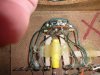
At any rate the speakers sound great. I'm attaching a picture of the crossover. You can see the same type of yellow cap in mine that was pictured earlier in is thread.
 

Attachments

  • P9190003.jpg
    P9190003.jpg
    107.8 KB · Views: 82
Hello Folks. I just scored a mint condition pair of Allison 1 speakers, and began reading up on them.
These are 1980 vintage, so basically 37 years old. Good Grief. Woofers were reconed 6 years back, nicely done.
I carefully removed a midrange to get a look at the crossover.

There are three medium sized electrolytics on the crossover, and one yellow mylar ( polyester) cap.
I have all the replacement film caps, courtesy of ebay...yes, you can get a 60 uf PPE cap there for like 6 bucks if ya spend the time.
Here is the problem, the crossover is on a large square masonite board that is seriously glued to the back of the cabinet, with the terminals protruding through.
There is absolutely no way to reach in there and resolder new caps. Impossible. Bummer, aye ?
A post at the beginning of this thread says the original NPE caps are still within spec., and mine look brand new.
Allison literature says these are computer grade electrolytics, so there ya have it.

Recapping is basically impossible unless you choose to hammer the terminal board off the cabinet from behind, ,
probably break it in half to wiggle it thru the midrange hole, rebuild and then reglue it.
Upgrading to binding posts is likewise un-doable.

I cant even reach 2 of the electrolytics to cut one wire and measure capacitice, then resolder.

So, it is what it is. Hope this helps answer some of the above questions.
That was good advice to get a look see .....before ordering 70 bucks worth of caps. Gosh darn it.
 
Hello Folks. I just scored a mint condition pair of Allison 1 speakers, and began reading up on them.
These are 1980 vintage, so basically 37 years old. Good Grief. Woofers were reconed 6 years back, nicely done.
I carefully removed a midrange to get a look at the crossover.

There are three medium sized electrolytics on the crossover, and one yellow mylar ( polyester) cap.
I have all the replacement film caps, courtesy of ebay...yes, you can get a 60 uf PPE cap there for like 6 bucks if ya spend the time.
Here is the problem, the crossover is on a large square masonite board that is seriously glued to the back of the cabinet, with the terminals protruding through.
There is absolutely no way to reach in there and resolder new caps. Impossible. Bummer, aye ?
A post at the beginning of this thread says the original NPE caps are still within spec., and mine look brand new.
Allison literature says these are computer grade electrolytics, so there ya have it.

Recapping is basically impossible unless you choose to hammer the terminal board off the cabinet from behind, ,
probably break it in half to wiggle it thru the midrange hole, rebuild and then reglue it.
Upgrading to binding posts is likewise un-doable.

I cant even reach 2 of the electrolytics to cut one wire and measure capacitice, then resolder.

So, it is what it is. Hope this helps answer some of the above questions.
That was good advice to get a look see .....before ordering 70 bucks worth of caps. Gosh darn it.
That Masonite board can be pried loose without breaking it if done correctly.
 
Back
Top Bottom