
• The move to the new server is done. There are some software and database maintenance updates in process. This has us passing the hat around to help out. We appreciate any donations. Seriously, even a dollar helps. The payment page may be found here - https://www.audiokarma.org/support.html

Resistor Fail Modes in Vintage Receiver (Marantz)

jorgealk

New Member
Hi All,

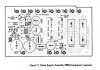
Do you know what might be the most probable failure mode for a resistor within a vintage receiver? The context: I recently opened up my Marantz 2220B for a cleaning and I realized a resistor within the power supply assembly board (R805; 330 ohms, 2W, 5%) looked very discolored with dark spots. The receiver seems to be working well, especially after the cleaning but, I'm afraid the resistor - which is the original since new - may not be in a very good shape. Trying to decide whether proactively change it and solder a new one or just wait until it fails. If the fail mode is that the resistor opens up then, I'm assuming the risk of waiting is very low. However, if the fail mode is for the resistor to act as a wire, then I assume the risk is high.

Any insight/experience is appreciated.
 

Attachments

  • Schematic- Marantz.jpg
    Schematic- Marantz.jpg
    83.7 KB · Views: 18
Register to hide this ad
Welcome aboard.. Resistors heat up / burn up and go high resistance or go " open" ..
 
It probably won't fail. Since it is in the power supply, it is designed to get hot and dissapate 2 watts worth of heat.

As long as it is not smoking, your fine. Besides, how many years has it been doing its job?

I think I would be more worried about what might be causing it to over heat (if it really is) like a capacitor drawing too much current getting ready to short.
 
I realized a resistor within the power supply assembly board (R805; 330 ohms, 2W, 5%) looked very discolored with dark spots. The receiver seems to be working well, especially after the cleaning but, I'm afraid the resistor - which is the original since new - may not be in a very good shape.
So why don't you remove it and check it, and stop being afraid? :)
 
I've seen plenty of toasty resistors that were still working and in the ballpark of being on value. It does tend to indicate its either being over-worked because of some problem, or maybe it was just under-rated to begin with. Maybe replace it with a 3 - 5 watt part and stand it off the board if it isn't already and verify its not being abused more than it should be. Not sure what info the schematic has but if you can work out the voltage drop and know the resistance, its easy to calculate power dissipation. I prefer to keep pdiss at not more than 50% of rating to make parts have an easy life but manufacturers sometimes pushed that a lot harder.
 
Thanks everyone, this is super helpful. I guess based on this, and the fact that seems to be working just fine, I will leave the resistor alone for now.
One more question - you got me thinking about the capacitors. The device still has all the original components, including capacitors. Is there a way to test them without removing them from the circuit? If so, any suggestions for a cost-effective tester? Thanks again!
 
Is there a way to test them without removing them from the circuit?
In my opinion no, you can't properly test capacitors in-circuit, except possibly on the rare occasions that only one end of a capacitor is connected in some switch positions of the unit in question.

Capacitor testers that are good enough to give capacitors a proper test are expensive, however you can buy a basic tester which will test for ESR and value - but nothing else for £84 (GBP or $110 USD). (extra tests are 'leakage' and 'DF' both can be important).

Many people say that if you are opening a unit and will change some (electrolytic) capacitors, you might as well change them all. The assertion being that testing each one for a good or bad reading is a waste of time, as most electrolytic capacitors are 'spent' after 20-25 years, so change them all. Personally, I can't see the point of testing capacitors in this way and agree with this assertion, why? Because you can test some of these 20-25 year old capacitors as 'good' today or tomorrow but what about next week, or the week after? - and if you've heated them up to remove them for testing, why heat them up again to put them back? - change them all and have done with it. :)

The above is a VERY contentious subject on here, and it's just my personal view. Please do some reading around to see what others say before arriving at a decision about this. ;)
 
Most any multimeter $30 and up are fine for general readings of voltages and resistors. Those cheap cheap $10 to $30 meters are horrible at reading below 10 ohms and below 100mv (example, testing a known good 2 ohm resistor on those cheap harbor freight meter read 5.3 ohms). Most cheap meters struggle on really low and high ranges. A meter is a tool you can use for way more that stereo repair and every home should have a decent one. Used mine to test and repair dishwashers, microwave and testing car batteries for example has saved me hundreds if not thousands of dollars. Eventually you will need one anyway unless you like paying the guy $$$$ to fix stuff for you.
 
Gadget is correct.
You toss them in the waste basket and those that make a sound were either bad or going bad...
Recapping in this fashion gets expensive which is people's main aversion to it.
Ordering a dozen different values of cap gets time consuming, so I follow some rules.
On SS equipment order only 63v rated caps.
Replace all the low voltage stuff with 63v rated caps. Forget about stocking every voltage range and go 63v for ss and 450 for tube and you'll be set for 95% of what you'll encounter.
Order enough to hit the first or second price break, that way you'll have stock on hand for the next unit.
Most importantly:
Have fun.
Theres lots of ways to have fun in audio, if you're not having fun, then you're doing it wrong...
 
I usually stock 50v parts but basically the same idea. The prices are usually not much different from 6 - 50 and the physical sizing also tends to be pretty similar.
 
Just an update - which I find a bit ironic - yesterday my 5 y/o subwoofer broke down. Seems like some components fried and now it won't turn on. I have 3 receivers between 45-50 y/o and they are still going strong without any issues. So now, I need to find another subwoofer with speaker level inputs. (btw - I think the sub is just over 5 yrs, so no warranty!)
 
Worth at least a visual inspection. Sometimes the fault is obvious. Some things use poor quality components and they suffer premature failure because of it, but depending on the particulars you may just be able to replace the junk parts and have it run again. Or sometimes the whole thing melts down and becomes impractical to fix, hard to say.

Its easy to fall into the "old things are better" trap but they were generally a bit more robust and the parts seemed to not be run as close to the ragged edge. Also bigger parts, so easier to service when required. There were older pieces of gear that were badly made and used junky parts though, those just haven't survived as much.
 
Most likely I would need to replace voltage regulator and a few caps. I did try to make sense of it but, a lot of the components have a significant amount of some sort of foam/glue to avoid vibration. So, I guess I'll probably take the opportunity to upgrade.
 
Back
Top Bottom