• The move to the new server is done. There are some software and database maintenance updates in process. This has us passing the hat around to help out. We appreciate any donations. Seriously, even a dollar helps. The payment page may be found here - https://www.audiokarma.org/support.html

ReVox B215 will stop unless "pause" was key-in after "play"?

Hi James,

Thanks for your message. I have tried so many times to overbias the machine both with Ferric and Chrome tapes and have tried to overbias with different values of dbs, ranging from 2-6db. Nothing seems to get the auto cal to work so far, it records for about 15 seconds and rewinds the tape almost all the way to the beginning of the test and when i play it back I hear 2 frequencies most of the time. The align sign keeps flashing on the display! I have tested the output of IC7 pin 7 with a frequency meter and it dows detect the 3 different test tones of 18k, 4k and 500Hz during the auto cal procedure. Where the fault is I have no idea, whether I should blame the I/O board, Record board, Dolby board or the System board. It would have been so much more helpful if all Ics were socketed just to try different ones. My A807 has it's ICs all on sockets and it facilitates servicing when things went wrong. Just out of interest I have replaced IC5 on the system board as I have a spare set however that made no difference. I brought back with me from the radio station and extra set of audio cards from another machine just for testing purposes however as they are no recapped they are not of much use to me and made things worse, sound quality-wise.

I have followed the instructions on the manual many times, I have replaced ICs that I felt could be troublesome too but I can't seem to sort out this issue. It's a shame and indeed patience is the game. This deck came from a broadcast station abroad and was stored for years in not very favourable conditions and it arrived to me pretty much dead, apart from rotating capstans. None of the buttons functioned. A recap brought it back to life, I replaced the LCD display with a bright light blue version and it plays back fantastically. The playback head is not an issue and I can't see why the record head would therefore fail.

Have a great Sunday and thanks again

J
 
Okay, this time - do NOT use auto-calibrate.

(1) just set up and proceed to over-bias as per instruction, then
(2) proceed with the playback EQ procedure.

That should give you a flat, or near flat frequency response to at least 10Khz/12/14/16/18Khz etc.

Again - Do not now or later auto-calibrate the system.

Now record and playback and see if you get a decent recording? You should get a good recording, as you've just calibrated for a particular tape, say TDK D Type I.


Remember: do not auto calibrate. ;o)

You may notice that playback is louder or quieter than the recording - that doesn't matter because you can simply adjust the recording level manually to get (say) a peak of 0dB, +2dB, +4dB or whatever you choose. In lesser decks with no calibration facility, this is what we do - we adjust manually the recording level to suit the deck/tape etc.

I think this is worth a try just to get the A721 basically recording properly.

For now, forget Type II or Metal tapes.
 
Hi
Okay, this time - do NOT use auto-calibrate.

(1) just set up and proceed to over-bias as per instruction, then
(2) proceed with the playback EQ procedure.

That should give you a flat, or near flat frequency response to at least 10Khz/12/14/16/18Khz etc.

Again - Do not now or later auto-calibrate the system.

Now record and playback and see if you get a decent recording? You should get a good recording, as you've just calibrated for a particular tape, say TDK D Type I.


Remember: do not auto calibrate. ;o)

You may notice that playback is louder or quieter than the recording - that doesn't matter because you can simply adjust the recording level manually to get (say) a peak of 0dB, +2dB, +4dB or whatever you choose. In lesser decks with no calibration facility, this is what we do - we adjust manually the recording level to suit the deck/tape etc.

I think this is worth a try just to get the A721 basically recording properly.

For now, forget Type II or Metal tapes.

Hi Janes,

I shall try again tomorrow after work however I am pretty confident I went through this procedure already and found that the quality compared to the source was not up to standard expected from such a deck. My Nakamichi 582 gives superb results in comparison and I’m sure this one will too when it’s going as it should.

min general I found that the recordings were quite thinny, treble response on the 10k tone measuring about 6db higher than 500Hz and that’s with the HF pots on the record board fully turned down! It’s quite weird, as if the issue is with the middle frequencies or something.
I shall try again and report back and fingers crossed but thanks again for your thoughts. Much appreciated :)
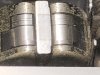
Here’s a closeup of the head. Seems ok?
 

Attachments

  • A79F9332-0D72-445E-BD17-CF6EBBEF0D54.jpeg
    A79F9332-0D72-445E-BD17-CF6EBBEF0D54.jpeg
    85 KB · Views: 5
The thought has just occured to me that when you use your alignment circuit to set the bias preset - it will probably work when 'in circuit', but when removed, the A721 won't 'remember' the setting before it even tries to auto-calibrate. Hmmm ....

The head wear is obvious - however replay is fine, recording is not!

Hmmm .... don't know, I don't suspect that the record head is problematic, and the replay head is not. This looks like a bias memory issue!?

I wouldn't touch the heads for now - resolve the possible issue that the A721 is not remembering the bias, and setting the autocalibration.
 
Sorry to babble on, but -

If a 'digital' solution (in the context of the A721) is not possible, one permanent one maybe (with small circuit mod) - setting up the record bias for one tape only, be it (say) TDK D, AD, Maxell etc. The differences between brands won't be that great, you may have to accept a +-3dB at 10Khz at worst.

The same should apply to Type II?

Jasch, by the way, there is no need to reply to all my comments - I'm just thinking out aloud here, as this is also relevant to me and my B215. ;o)
 
Sorry to babble on, but -

If a 'digital' solution (in the context of the A721) is not possible, one permanent one maybe (with small circuit mod) - setting up the record bias for one tape only, be it (say) TDK D, AD, Maxell etc. The differences between brands won't be that great, you may have to accept a +-3dB at 10Khz at worst.

The same should apply to Type II?

Jasch, by the way, there is no need to reply to all my comments - I'm just thinking out aloud here, as this is also relevant to me and my B215. ;o)

It’s only fair to at least acknowledge your thoughts even though I did not have time to have a look at the deck due to work. Hopefully tonight.
I’m just concerned as to why the quality of the recording is just inferior to the source, sounding as if the heads are magnetised. If you think that it’s not remembering the bias settings could it be the eeprom? It does remember the other settings I must say although I had an issue with it originally as there was a crack on one of the tracks on the system board and I had no 24v supply!
What circuit mod would you suggest please?
Cheers
 
Last edited:
Heads:
  • If the heads are heavily magnetised - the treble should sound duller.
  • If the heads are heavily worn, the output is lower and the treble is also duller.

Circuit mods: I don't know yet, it was just a thought if everything else fails.

  • In the next few weeks, take out the boards one by one, and at lesure inspect the tracks, then replace before inspecting the next board etc. Also check the solder.
  • Look at the circuit and inspect the electrolyic caps - they must be the correct values (typically they are +-20% as labelled) as stated in any service manual. There are exceptions of course.
  • Electrolytics must be soldered in with the correct polarity - unless it's a 'bipolar' cap, which is fine.

Just a sincere friendly note - I have been asked several times would I repair folk's Revoxs? - I always very politely decline. I have spent about 30-40 hours working on
one of my own machines before today. It can really test one's patience - and as they are mine, it doesn't matter if I fail. It's just a hobby. Although so far, I haven't failed ..... yet! ;o)

Unfortunately, repair work can be tedious and works in slow motion only. ;o)
 
Heads:
  • If the heads are heavily magnetised - the treble should sound duller.
  • If the heads are heavily worn, the output is lower and the treble is also duller.

Circuit mods: I don't know yet, it was just a thought if everything else fails.

  • In the next few weeks, take out the boards one by one, and at lesure inspect the tracks, then replace before inspecting the next board etc. Also check the solder.
  • Look at the circuit and inspect the electrolyic caps - they must be the correct values (typically they are +-20% as labelled) as stated in any service manual. There are exceptions of course.
  • Electrolytics must be soldered in with the correct polarity - unless it's a 'bipolar' cap, which is fine.

Just a sincere friendly note - I have been asked several times would I repair folk's Revoxs? - I always very politely decline. I have spent about 30-40 hours working on
one of my own machines before today. It can really test one's patience - and as they are mine, it doesn't matter if I fail. It's just a hobby. Although so far, I haven't failed ..... yet! ;o)

Unfortunately, repair work can be tedious and works in slow motion only. ;o)
I fully understand about not taking in any work to fix someone else’s machine. I know exactly what you mean and I’ve been there! Once someone recommended me to fix his friend’s Tandberg reel to reel and when I saw it I knew that it needed a pinch roller, which is a nasty piece of work to replace! Other times I had equipment brought to me that belonged to a friends and it just took so much time to fix something which is relatively simple and it’s just down to poor design. I usually fix my own stuff too… I have 19 reel to reel machines ranging from professional to domestic and vintage and have fun working on them and I do it too as a hobby just like you.
I have recapped the boards and shall inflect them again just in case but I’m pretty confident they are fine and hade not reversed any polarity of those caps. What worries me is the ICs more than anything. I did find a blown mosfet on the test oscillator circuit 2SK170 and replaced it with a J110 I think (not a direct replacement). I appreciate your help very much as from what I read from your blog you’ve been very successful with your deck and this one is very new to me. I just wish the IXs sit on sockets as to remove them just to fit sockets is really a horrible job. Studer boards are terrible and I recapped both my A807 machines a few years back but luckily I never had to remove any I s as they are all on sockets….by the A721/B215 is a different matter.

From where I got the deck I brought back quite a few spares for it including a new head but because I don’t have one of those M300 gauges I’m not comfortable yet to replace it just to rule out the head. It sounds to me however that it’s fine dive the playback HF is superb. I shall have a go again tonight and see if I strike lucky.

Cherrs
 
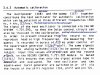
I've been studying the circuits - a long way to go before it become clear in my mind, BUT the calibration tones are 500Hz, 4000Hz, and a whopping 17Khz.
Now, if there is significant wear on the record head side, then 17Khz is going to suffer. Maybe, but only maybe that is a potential source of the problem?

Just some mental notes ...
  • I think the bias circuit is working okay. The 105Khz bias 'carrier' must be working otherwise you'd get a terrible recording, or none at all.
  • I think IC8 is fine: MAB 8440P, otherwise the deck would be stopping after playing normally, or doing some crazy things.
  • IC7 (OP Amp buffer) is probs fine too.

Check these ICs... IC14, IC24.

Auto Calibration Note 2.jpg
 
I've been studying the circuits - a long way to go before it become clear in my mind, BUT the calibration tones are 500Hz, 4000Hz, and a whopping 17Khz.
Now, if there is significant wear on the record head side, then 17Khz is going to suffer. Maybe, but only maybe that is a potential source of the problem?

Just some mental notes ...
  • I think the bias circuit is working okay. The 105Khz bias 'carrier' must be working otherwise you'd get a terrible recording, or none at all.
  • I think IC8 is fine: MAB 8440P, otherwise the deck would be stopping after playing normally, or doing some crazy things.
  • IC7 (OP Amp buffer) is probs fine too.

Check these ICs... IC14, IC24.

I am not exactly getting a wonderful recording as one expects, it’s kind of fuller than the source. I shall try again with a new tape tomorrow morning. I m assured 105khz on one of the record head connections with a frequency meter and it’s present.
I did think of those 2 ICs you mentioned but they are not on sockets so I think I will have to take them out and put sockets on them and test them or replace them. Thanks for the update James.

View attachment 2427775
 
The bias 'carrier' is usually a high voltage: can be 10v ... 60v or more? Careful there! I've not measured my B215's bias frequency voltage, but other
lesser decks vary from about 10v (peak) to about 50v (peak) and even higher for the erase head.

I now desolder all my components using copper braid - it's fantastic stuff. No more solder suckers for me, they are simply too mechanically aggressive,
what's more - the gentle desoldering method with the braid preserves the cct board tracks 99% of the time. It's a 'no brainer'.

Yes, a good idea to insert some DIL units so you can insert/withdraw chips without worrying about the tracks etc.
 
I do like solder braids too and have different types, it's just that the last one I have been using was not doing the job properly so I shall try another type and see. I have also tried unsoldering with either a 10W or an 18W soldering iron, anything more powerful might cause damage to the board perhaps. The I/O board is the worst one to work on, compared say to the capstan board. The best way to remove ICs I think is to cut the legs off and then removing the pins one by one, but have to see if I have a spare 4053 in my spares before I do that.
How did you measure the voltage of the bias? Straight onto the pins of the erase and record heads? Did it give the right readings without additional components? (Capacitor/Diode).
I still have to do the bias test without the autocal but as usual on a single free day it's emails and phonecalls catching up!
 
I use an Antex XS25 25w iron - it's the business, and not expensive. They are very efficient too - much of the heat gets transfered to the job!
Try some flux on the braid, although it sounds to me as if there's not enough heat gettng to the job.

I've not measured the HF bias voltages yet on the B215, so I can't comment. On lesser 'disposable' decks, I usually find room
to measure the peak voltages at the head itself, but use an oscilloscope. If you haven't got a 'scope' you can obtain handheld
scopes for little money. Just make sure they go up to 1Mhz or thereabouts. If you get a full desktop oscilloscope, be aware that one side of
the scope is probably earthed, or at least mine is. My scope is old (1986), but a reliable 'goodie'.

If one side of your measuring equipment is earthed, then you can't do things like - measure the voltage across a components unless one side
is earthed too - otherwise you may cause a short circuit! Yikes! Don't go there!

I have noticed though, that one side of a recording head is usually earthed.

Generally: The best thing to do - is to make a list of the things to do on your A721, tick them off as you work through the tasks. That way you can
leave the work for a week or two, and carry on where you left off later.
 
I use an Antex XS25 25w iron - it's the business, and not expensive. They are very efficient too - much of the heat gets transfered to the job!
Try some flux on the braid, although it sounds to me as if there's not enough heat gettng to the job.

I've not measured the HF bias voltages yet on the B215, so I can't comment. On lesser 'disposable' decks, I usually find room
to measure the peak voltages at the head itself, but use an oscilloscope. If you haven't got a 'scope' you can obtain handheld
scopes for little money. Just make sure they go up to 1Mhz or thereabouts. If you get a full desktop oscilloscope, be aware that one side of
the scope is probably earthed, or at least mine is. My scope is old (1986), but a reliable 'goodie'.

If one side of your measuring equipment is earthed, then you can't do things like - measure the voltage across a components unless one side
is earthed too - otherwise you may cause a short circuit! Yikes! Don't go there!

I have noticed though, that one side of a recording head is usually earthed.

Generally: The best thing to do - is to make a list of the things to do on your A721, tick them off as you work through the tasks. That way you can
leave the work for a week or two, and carry on where you left off later.
I do have a Textronix 453 (?), I use it mainly for head alignments on my tape machines using test tapes or for the record heads using a 12k or so tone. It’s a dual trace scope.

I have other soldering irons that range from 25W up to a 100W which I use for different jobs, depends on the heat needed but I shall try using some flux on the braid and see what happens. I don’t have a temperature controlled iron however and would like to have a proper desoldering tool too one day.
The only job there is to do with the A721 is the bias issue really as I have addressed the rest and a friend of mine from the USA helps me a lot too through private email too as he’s a tech who I met through Tapeheads. I like to get to know people like him and yourself and to connect such people with such knowledge together too. Another very good friend I got to know is perhaps the top expert in Nakamichi cassette servicing and is based in Netherlands.

I hope to to some work on the A721 soon again :)
 
Oh yes there’s plenty of stuff here. To start with I have no less than 1500 reels of tape! I just love the stuff plus I’m a classical musician and I need good sound too if I really want to listen to something properly. I just wish I know more about the technical side of things and I can modify circuits and so on.
 
As per the TH threads about this deck and my B215, the eeprom is easily replaced with a new blank one. I believe you are located in the UK? They are relatively inexpensive. I bought 10 new old stock ones for $20, but one is bad. Two others I have tested work perfectly. The deck WILL fail autocal every time IF, among other things, : L & R channel differ too much in level or bias; any of the 3 cal tones is missing; if the eeprom will not store settings; erase head is not erasing properly; azimuth is off by too much.

There are no default record settings. When a new eeprom is installed, an autocal must be performed for each tape type, and then have the deck powered down & unplugged for a few minutes, then when powered up it should be fine.
 
Thanks for
As per the TH threads about this deck and my B215, the eeprom is easily replaced with a new blank one. I believe you are located in the UK? They are relatively inexpensive. I bought 10 new old stock ones for $20, but one is bad. Two others I have tested work perfectly. The deck WILL fail autocal every time IF, among other things, : L & R channel differ too much in level or bias; any of the 3 cal tones is missing; if the eeprom will not store settings; erase head is not erasing properly; azimuth is off by too much.

There are no default record settings. When a new eeprom is installed, an autocal must be performed for each tape type, and then have the deck powered down & unplugged for a few minutes, then when powered up it should be fine.

Thanks for this info. I have checked alignment and playback levels with a test tape so the head should be all good to go. Erase head seems to erase a tape very well and the finger points at the eeprom. I am based in the UK and I happen to have a couple of spare eeproms, but not sure if they are blank or not. I will try them out and see if I strike lucky. Powering down the unit and so on is a first I hear about so once I try this trick out I shall report back. I still have to get down to do other tests and possibly replace a couple of ICs too that relate to the test oscillator as mentioned above by James. cheers
 
Hi James,
Hope you had a good Christmas. I decided to have another close look at the A721 and have replaced IC14 and put a socket on it. I checked IC24 and it measures fine on my tester.
I focused on 6th Eeprom and during bias I was getting a difference of about 10 db lower on one channel than the other whilst biasing the 10hz tone! hmm. I had another 2 ICs to swap with, one gave me no reading at all on the right channel and the other gives a balanced reading. The problem I see is that apart from perhaps not hearing the 17kHz tone from the autocal playback, I simply cannot get a flat frequency response, strangely though the 10khz compared to the 500hz is higher by about 6db, with the HF presets completely turned down! The odd thing however is that when I do a test recording it still sounds muffled compared to source. It's just not well defined as it should be! My thinking is that if it's the head then surely the HF would suffer, but measurements are showing ,me the complete opposite.
I am very stuck without attempting to try a new head, which I have, the issue of course is aligning it perfectly without the M300 gauge! I can align it with a scope and a test tape but somehow this might not still be accurate enough.
Swapping eeproms gave different readings but I doubt they have anything to do with the quality of recording!
What's next in your thoughts please?

Cheers
 
I've just seen this.

Right now it is too late at night to start thinking about it.

Seriously, my gut feeling is that you need to get the deck seen to by a Revox professional. If it were mine, I would have to allocate many hours and
even days studying the circuit diagram and weigh up all the possibilites. Yes, I could probably fix it, but truthfully, it is very difficult for me assess
the machine 'at a distance' and diagnose online.

In the meantime, search the internet for Revox technicians. There was a guy somewhere in Cheshire (I think?) who ran this as a business
some years ago - not sure if he's still working?

I'm not confident fitting a new head will fix the recording/replay characteristics at this moment. My advice is not to replace the heads -
you will need a full track azimuth tape, a track height tape, and probably a mirror cassette too.

James.
 
Back
Top Bottom