• The move to the new server is done. There are some software and database maintenance updates in process. This has us passing the hat around to help out. We appreciate any donations. Seriously, even a dollar helps. The payment page may be found here - https://www.audiokarma.org/support.html

Rh84 built, first impressions

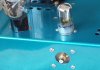
P1010002.JPG If you have a 100K pot in parallel with a 470K R, you have LESS than 100K in effective value. NO, you do not solder 470K , grid to ground, unless you lose - remove entirely, the ugly sounding Pot !!

Yes, put the 470K in between the ground return of the pot, and system ground. It needs to be a good quality R , very audible Jake !!

I'd only do a 470K across the RCA jack, and NO POT at all on the input. Pots degrade, only ONE is needed in a system. Build a system ladder attenuator. I did this in February.

Dowto1000
 
Last edited:
TRY a 0.22uF PIO for the mids. No PIO has worked well enough for me, in recent years. May become too syrupy. Don't know. That value WILL effect the mids Jake !

Dowto1000
Personal preference, totally understandable, I like a little syrup as long as I don't lose too much clarity and detail. PIO have been my go to for a few years now, hence my screen name. I started out by building ss gear and found they def needed a little warming up.
 
If you have a 100K pot in parallel with a 470K R, you have LESS than 100K in effective value. NO, you do not solder 470K , grid to ground, unless you lose - remove entirely, the ugly sounding Pot !!

Yes, put the 470K in between the ground return of the pot, and system ground. It needs to be a good quality R , very audible Jake !!
ok, that's what I thought because in parallel I would see no change expect less impedance. I have some kiwame carbon films, should be ok right.
 
If you have a 100K pot in parallel with a 470K R, you have LESS than 100K in effective value. NO, you do not solder 470K , grid to ground, unless you lose - remove entirely, the ugly sounding Pot !!

Yes, put the 470K in between the ground return of the pot, and system ground. It needs to be a good quality R , very audible Jake !!

I'd only do a 470K across the RCA jack, and NO POT at all on the input. Pots degrade, only ONE is needed in a system. Build a system ladder attenuator. I did this in February.
only downside I can see to adding resistance between the ground is injecting more noise into the grid though too right? I have my rca shield grounded to the ground lugs of the pot as well so is that a problem having a 470k inserted between them and ground?
 
Personal preference, totally understandable, I like a little syrup as long as I don't lose too much clarity and detail. PIO have been my go to for a few years now, hence my screen name. I started out by building ss gear and found they def needed a little warming up.


Just POP a 0.22 PIO across C1, C2 to finals and LISTEN to mids. My real preference is in the PM sent to you, as a budget approach. Do the input resistance first, listen to that..

Dowto1000
 
only downside I can see to adding resistance between the ground is injecting more noise into the grid though too right? I have my rca shield grounded to the ground lugs of the pot as well so is that a problem having a 470k inserted between them and ground?


Having a POT in there is possibly ten times more detrimental to the sound IME, IMHO. Toss the pot, and wire a 470K Kiwame across the RCA female jack, inside the amp. 2.5 inches or less below - deck lead length, RCA female jack to grid pin of Input tube's socket. Big league.

Dowto1000

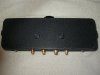
RCA jack.JPG
 
Hi TGP, once you get your amp sorted i am sure you will be very happy with it. I am listening to a high power version of this very same circuit powered by kt90 or kt120 tubes. And this amp can give you that emotional connection to the recorded material, every time you listen to it. This aspect is something that i have always experienced with the RH amps and i am sure with a little adjustment you will have your amp singing too.
 
Just POP a 0.22 PIO across C1, C2 to finals and LISTEN to mids. My real preference is in the PM sent to you, as a budget approach. Do the input resistance first, listen to that..

Dowto1000

Sounds good, I'll give it a try. I was originally going to bypass all of the power supply caps but since the original schematic didn't show the 10uf caps bypassed I figured I would see how it sounded first. I'm sure with the right caps there though they wouldn't need to be bypassed. I do also believe what primo said about the solens mellowing, even the pio caps take a little time to sound "right".
 
Hi TGP, once you get your amp sorted i am sure you will be very happy with it. I am listening to a high power version of this very same circuit powered by kt90 or kt120 tubes. And this amp can give you that emotional connection to the recorded material, every time you listen to it. This aspect is something that i have always experienced with the RH amps and i am sure with a little adjustment you will have your amp singing too.
I'm sure your right primo, I'm already impressed with the black background and clarity just want more of that musicality and emotion with less edge. Does yours have a 3d soundstage or is that not something this amp is known for? It's funny how a 5 watt chip amp I built once had a better more 3d soundstage than a solid state Mcintosh system my wife and I heard at a local dealer. The Mcintosh was a bit smoother and a little cleaner sounding too but wasn't warm enough and was very 2d sounding even with the huge expensive speakers they were hooked up too. My wife confirmed this as well, she was not impressed with the 20 grand set up there.
 
Having a POT in there is possibly ten times more detrimental to the sound IME, IMHO. Toss the pot, and wire a 470K Kiwame across the RCA female jack, inside the amp. 2.5 inches or less below - deck lead length, RCA female jack to grid pin of Input tube's socket. Big league.

Dowto1000

View attachment 1214552
Having a POT in there is possibly ten times more detrimental to the sound IME, IMHO. Toss the pot, and wire a 470K Kiwame across the RCA female jack, inside the amp. 2.5 inches or less below - deck lead length, RCA female jack to grid pin of Input tube's socket. Big league.

Dowto1000

View attachment 1214552
How do you adjust your volume control with no pot somewhere in the system? Do you just use a ladder type attenuator between source and amp?
 
Hi TGP, once you get your amp sorted i am sure you will be very happy with it. I am listening to a high power version of this very same circuit powered by kt90 or kt120 tubes. And this amp can give you that emotional connection to the recorded material, every time you listen to it. This aspect is something that i have always experienced with the RH amps and i am sure with a little adjustment you will have your amp singing too.


Sure, a well-designed two stage amp can outperform a well-designed three stage amp. Less is more. It will be more direct sounding. That is one advantage of a RH type circuit, two stages.

What is missing in all RH amps is ....to make it even simpler. Get rid of any coupling cap in the tube amplifier circuit. Use of a coupling cap, I always find, is a huge sonic degrade compared to a well designed Direct Coupled two stage amp.

The next design move Jake could do would be to replace his 6BQ5 with any 6AQ5.

From your description, what you use now, I'd consider doing a JJ KT-88 DC two-stage DC amp.

Have fun.


Dowto1000.
 
Sure, a well-designed two stage amp can outperform a well-designed three stage amp. Less is more. It will be more direct sounding. That is one advantage of a RH type circuit, two stages.

What is missing in all RH amps is ....to make it even simpler. Get rid of any coupling cap in the tube amplifier circuit. Use of a coupling cap, I always find, is a huge sonic degrade compared to a well designed Direct Coupled two stage amp.

The next design move Jake could do would be to replace his 6BQ5 with any 6AQ5.

From your description, what you use now, I'd consider doing a JJ KT-88 DC two-stage DC amp.

Have fun.


Dowto1000.
Have you tried Teflon capacitors, I wonder if they sound close to having no cap?
 
Yep, posted in photo is above, a Ladder Attenuator. Switchable between two sources, and it can also swap Absolute Phase, so I can hear each source properly as far as Absolute Phase.

Dowto1000
If this amp was for me I most likely would go that route, I was going for an all in one amp for my dad. He doesn't have a turntable or anything so he will probably end up using a computer or dvd player to play cds. I'm wanting to get him a dac though for these reasons, I think a decent amp will be ruined by these sources unless a good dac is used.
 
Sure, a well-designed two stage amp can outperform a well-designed three stage amp. Less is more. It will be more direct sounding. That is one advantage of a RH type circuit, two stages.

What is missing in all RH amps is ....to make it even simpler. Get rid of any coupling cap in the tube amplifier circuit. Use of a coupling cap, I always find, is a huge sonic degrade compared to a well designed Direct Coupled two stage amp.
In fact i have wanted to pursue this avenue, But, not even knowing where to start with selecting an interstage transformer. It seems that implementing an IT is much more complex an issue than a cap.
 
Just POP a 0.22 PIO across C1, C2 to finals and LISTEN to mids. My real preference is in the PM sent to you, as a budget approach. Do the input resistance first, listen to that..

Dowto1000
In fact i have wanted to pursue this avenue, But, not even knowing where to start with selecting an interstage transformer. It seems that implementing an IT is much more complex an issue than a cap.
Which 5965 would you recommend Primo? What do you find them to do different than the 12AT7?
 
I'm sure with the right caps there though they wouldn't need to be bypassed.

Yeohh Jake. No, you have that ( above ) wrong, I already wrote, " there is not a single cap existing, that will do justice to all the audio ranges, optimally", or, something to that effect, in this thread. Realizing this, and getting it linear, is where audio design turns into an ART, and not a science. The final result, is always judged and selected by the artful builder's ear, over several months of living with the system.

Again Jake, there are two ways to build an audio amp,
Have you tried Teflon capacitors, I wonder if they sound close to having no cap?


Sure I have tried teflon. Caps are the worst part in audio. NONE of them, alone, in my experience and opinion, play worth a toot. !!!!!!!!!!!!!!!!!!!!!!!!!!! NONE, Dueland etc.

That is why Jake, I will NEVER use them in an amp, to couple one stage to another. The best sounding couple IS a direct couple, with a good piece of wide band wire. A direct couple musically eats-for-lunch any cap, and any interstage, but particularly coupling caps...badly !! Coupling caps butcher the music. I simply AVOID them in my SE DC amps, except for the power supply, which is all-film, and always multiple bypassed, very costly, get out your wallet. Its usually in the thousands of dollars... to do caps in an amp right. Few know how.

YMMV, and that is perfectly fine with me!! I do what I want to do !!

Dowto1000

 
I'm sure with the right caps there though they wouldn't need to be bypassed.

Yeohh Jake. No, you have that ( above ) wrong, I already wrote, " there is not a single cap existing, that will do justice to all the audio ranges, optimally", or, something to that effect, in this thread. Realizing this, and getting it linear, is where audio design turns into an ART, and not a science. The final result, is always judged and selected by the artful builder's ear, over several months of living with the system.

Again Jake, there are two ways to build an audio amp,


Sure I have tried teflon. Caps are the worst part in audio. NONE of them, alone, in my experience and opinion, play worth a toot. !!!!!!!!!!!!!!!!!!!!!!!!!!! NONE, Dueland etc.

That is why Jake, I will NEVER use them in an amp, to couple one stage to another. The best sounding couple IS a direct couple, with a good piece of wide band wire. A direct couple musically eats-for-lunch any cap, and any interstage, but particularly coupling caps...badly !! Coupling caps butcher the music. I simply AVOID them in my SE DC amps, except for the power supply, which is all-film, and always multiple bypassed, very costly, get out your wallet. Its usually in the thousands of dollars... to do caps in an amp right. Few know how.

YMMV, and that is perfectly fine with me!! I do what I want to do !!

Dowto1000
I guess what I should have said was that with the certain caps it may be passible without bypassing, at least to me. I've used some motor run polyprop in oil caps before and they were nice sounding, but yes closer to perfection I could see multiple bypass caps for impedance of diff frequencies. Someday I'll have a whole audio system that is a work of art. Do you use full range speakers without crossover caps?
 
In fact i have wanted to pursue this avenue, But, not even knowing where to start with selecting an interstage transformer. It seems that implementing an IT is much more complex an issue than a cap.


Hello Primo,

Agree, but why an interstage transformer in lieu of a cap?

Why not a three inch long piece of silver-content wire, and DO AWAY with a added interstage transformer in series with the two tubes ?? KISS rules.

A good DC amp will sound better, actually as best as it gets, two stages, SE, DCed,............................. IMHO, IME..

Dowto1000
 
Last edited:
Back
Top Bottom