• The move to the new server is done. There are some software and database maintenance updates in process. This has us passing the hat around to help out. We appreciate any donations. Seriously, even a dollar helps. The payment page may be found here - https://www.audiokarma.org/support.html

Rogers LS3/5A subwoofer diy dilemma

Andresse

New Member
Hello everyone
I'm planning to build some passive woofers for Rogers LS3/5a replica.
I have already a pair of Kef b139 and a pair of kef b200 which are absolutely more adequate for subwoofer than the b110 which normally use for sub (Ab1).
I would like to to have your inputs, plans, ideas, knowledge about it
Thanks a lot
Andres
 
Register to hide this ad
Build active subs instead. You'll have more control over matching the sub with the satellite speakers. In addition, crossovers usually built into sub woofer amplifiers allow filtering of low frequencies from the satellite speakers and that will improve their mid range performance. As already recommended, Parts Express is a good source for amps, drivers, and kits.
 
The AB1 has a synergy with the LS3/5A which makes it sound like not an LS3/5A with a subwoofer, but rather like a larger speaker. Although it is possible to do, I think this would be a real challenge to achieve with a DIY design.
 
I agree with going active too. I have a pair of 3D Acoustics D22s which are very like the LS3/5a and I'm going active to allow more flexibility with room placement and crossover point.
 
Crossovers usually built into sub woofer amplifiers allow filtering of low frequencies from the satellite speakers and that will improve their mid range performance. As already recommended, Parts Express is a good source for amps, drivers, and kits.
I don't find this correct — most powered subs don't have this feature. And I agree that it's essential with the LS3/5A's. They don't go low but struggle manfully to do so; they even have an artificial "hump" in the nether regions to create the illusion of Bass. I used a pair of Audio Pro subs with mine — "muddiness" was gone from the upper Bass, and the blend was seamless. The Chartwells could play louder, and seemed to reach down to 20Hz.

I should be shot for selling that set-up.
 
The AB1 has a synergy with the LS3/5A which makes it sound like not an LS3/5A with a subwoofer, but rather like a larger speaker. Although it is possible to do, I think this would be a real challenge to achieve with a DIY design.
Thanks alot for your answer. This is exactly my concern
Do you think i can use the AB1 crossover with a B200 or B139 and achieve decent results?
 
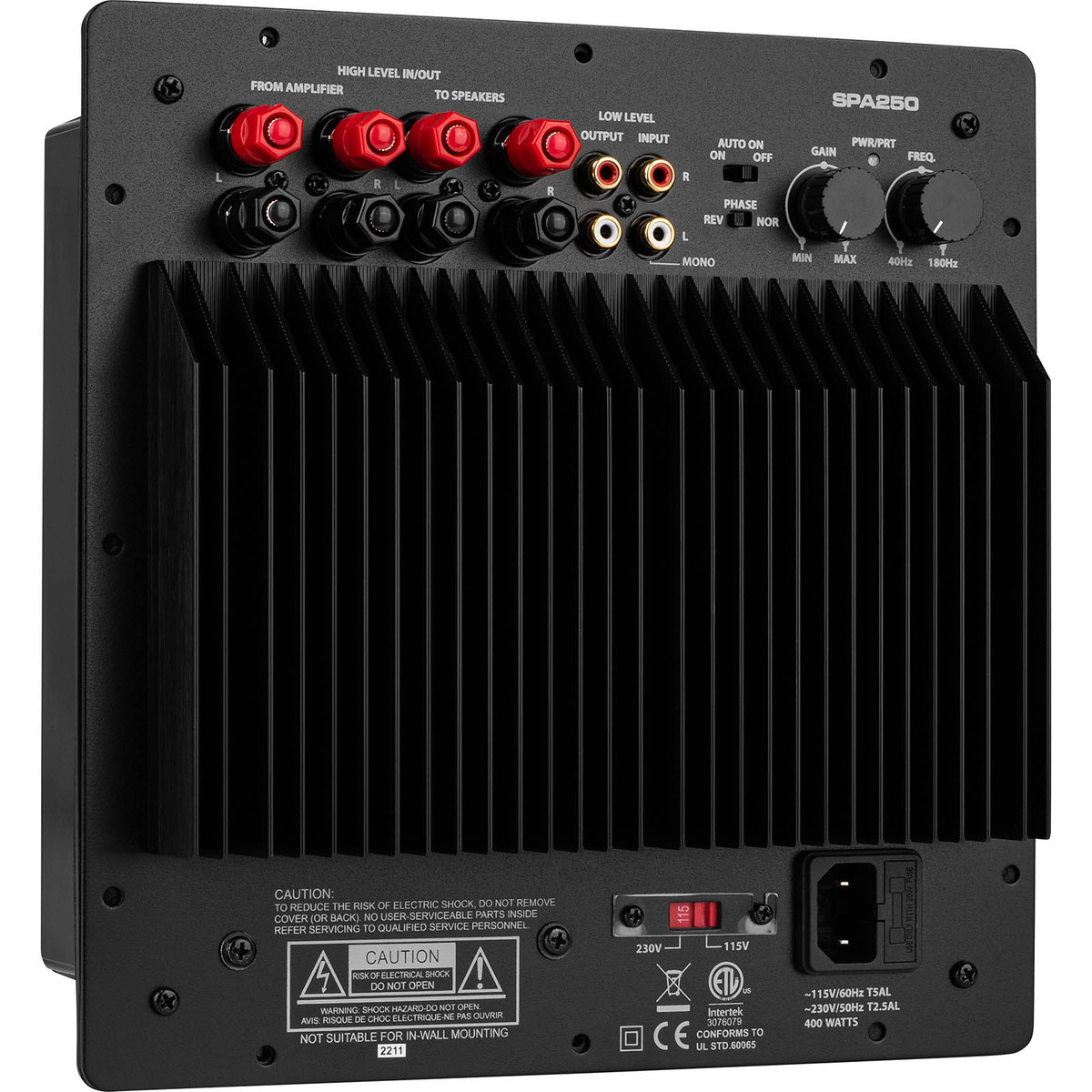
Sure they do.

300-803_HR_0.default.jpg


The one knob for input sensitivity and the other for the crossover point. Passive subwoofer, designed for specific speakers have them built in and are usually (but not always) set at a specific frequency crossover point.
Using a active subwoofer is the last option, the easiest but i believe not the best in this case. As was written here before the AB1 acts with the LS3/5a in synergy as one big speaker system. That's the effect i would like to achieve, hopefully with B200 or B139 drivers.
Im almost sure that after so many years someone already did it with big success
 
Thanks alot for your answer. This is exactly my concern
Do you think i can use the AB1 crossover with a B200 or B139 and achieve decent results?

I can't predict your result, but is my belief that the excellent integration between the LS3/5A and the AB1 is precisely because they use the same bass driver.

The AB1 crossover would require reengineering to be used with any speaker except the B110, anything different would require a new crossover design.

I think using the drivers you have on hand to make an active subwoofer is the most sensible option in the short term, but for best performance it may make sense to keep your eyes open for some AB1s
 
Sure they do

From the Parts Express description of that plate amp:

”• Speaker level high-pass outputs 6 dB/octave at approximately 180 Hz @ 4 ohms, 90 Hz @ 8 ohms (i.e. 220 uF electrolytic capacitor)"

Boy, is that an idiotic way to do it and almost useless! 6dB/oct is far too slow for a crossover to the sub. And the crossover point is entirely dependent on the speaker impedance, which will be anything but a nice constant value through that long crossover region.

There's a reason you don't find many passive high-level XOs on subs- there's no "one size fits all" solution, and they're impractical to make tunable for specific speakers.
 
The B139 seems off on its sensitivity spec, using KEF's parameters it's not as high in reality.

About equal to a 10" driver, a 3 cu ft box tuned to 33Hz keeps excursion under control above about 28Hz, of course below that excursion rapidly runs away.

The B200 has the same Xmax, but much less Sd and also lower power handling, so I wouldn't even consider it.
 
I can't predict your result, but is my belief that the excellent integration between the LS3/5A and the AB1 is precisely because they use the same bass driver.

The AB1 crossover would require reengineering to be used with any speaker except the B110, anything different would require a new crossover design.

I think using the drivers you have on hand to make an active subwoofer is the most sensible option in the short term, but for best performance it may make sense to keep your eyes open for some AB1s
It make sense.. Thank you!
 
The B139 seems off on its sensitivity spec, using KEF's parameters it's not as high in reality.

About equal to a 10" driver, a 3 cu ft box tuned to 33Hz keeps excursion under control above about 28Hz, of course below that excursion rapidly runs away.

The B200 has the same Xmax, but much less Sd and also lower power handling, so I wouldn't even consider it.
Thanks for the your complete answer, i was convinced
 
D

Do you mean parts for building an active subwoofer?
Because i have nice kef woofers to make such a project
I don't have experience with building speakers.
I ment, try them as both an information source for design ideas and parts you might need. Email them with your project and woofer you want to use. Maybe they could help with cabinet design ideas and hardware to match. Optimizing your woofers performance by getting cabinet volume and other specs tuned to that woofer. If you don't have speaker design experience. They likely have design formulas to use.
 
Last edited:
@Andresse When the AB1 was introduced back in the 1980's it did not get good reviews, even though the reviewers really wanted to like it: it was a good idea, and seemed right. But it didn't really add much bass, and cost far too much. That's why they're rare — not many were sold.

DIY is an obvious and fairly easy alternative... but is likely to have the same weaknesses.

@botrytis Thanks for showing that plate amp. It's a great price and I'll need two.

But I have an external active crossover now, with a high-pass to the mains, with a couple of muscle amps to choose from... so I can use passive subs.

I'm not sure which is the best approach. Self-contained active subs are far less clutter, and have that in their favor — I'm already using tri-amped 3-way speakers + 2 "budget" active subs made by Energy. They're excellent, plumb down to 27Hz (which is amazing for 8" drivers) but I'd like to get down to 18-20Hz — which means much bigger subs. The set-up as it is manages to be fairly space-efficient and, in its own way "minimalist", but I prefer not to add any more components, cables and power cords — it's already a jungle back there.
 
Last edited:
Sure they do.

300-803_HR_0.default.jpg


The one knob for input sensitivity and the other for the crossover point. Passive subwoofer, designed for specific speakers have them built in and are usually (but not always) set at a specific frequency crossover point.
I don't see anything in that picture that proves the subwoofer is high pass filtering the main speakers. It looks like the "FREQ." knob sets the low pass frequency for the sub, but does it high pass filter the mains?
 
Back
Top Bottom