OK, so does that mean that it's well beyond a beginners capabilities to fix whatever is going on?
If that's the case I'll just have to bin it. I've already fixed an amp using the help of Mr. Inductor and it's not cheap.
So, sadly, the amp most probably is going to the junkyard.
Sadly, probably. But if you do fix it, you will shed the mantle of beginner - call it a baptism by fire.
Here's what I would do if it were sitting in front of me:
I would remove EVERY transistor for that channel one at a time and
test them. That also involves identifying which lead is emitter, base and collector for each transistor.
I would test every resistor around the removed transistor for correct values.
Then I would reinstall that transistor (if good) and move on to the next one.
I would remove and test every signal diode and at $0.05 ea, probably just replace them.
I would carefully check the 0.22 ohm emitter resistors for damage, I suspect at least one is zapped. THAT comes from a manufacturer in the USA (just a few miles away from me no less..) unfortunately.
Then I would go over the back side of the board with a magnifier, looking for bad solder joints or cracks in the conductors that could have induced your original problem.
That's a long afternoon for me, ........ for you ... ???

In addition to apply this example to your situation - I would also have to find out what parts suppliers there are in the UK and what transistors they have so I can find replacements.
You could sell it on ebay for parts, or contact AK'er Adrock (he's in the UK iiac) by PM, he has a sa-7800 that has a possible arcing in the flouroscan display tube, so you may be able to at least get some of the parts back into use.
btw: the total parts replacement is what SolutionRoom did on his sx-3900 thread (you don't have to do ALL the resistors like he did) to fix a similar (NSA) type amp. That comes down to finding suitable replacements in the UK, or $$ shipping them from the USA (from mouser.com). The shipping costs will probably hurt more than the parts costs.



 ))
))
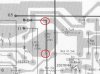

 I now have confidence in your "map reading".