• The move to the new server is done. There are some software and database maintenance updates in process. This has us passing the hat around to help out. We appreciate any donations. Seriously, even a dollar helps. The payment page may be found here - https://www.audiokarma.org/support.html

Sansui AU-717 restoration service recommendation

Skip060

New Member
Hi all,

I am a bit of a newbie on this. I have an AU-717 that looks like it needs some restoration work. For one it appears that a previous owner fused the board that separates the preamp from the amp. The switch on the back does nothing and when I opened up the unit it appears that parts of the board were fused together because a small wire is running between two caps on the back of the board when nothing should be there. Also the tuner and aux knobs produce a loud humming sound.

So my questions are: Would you all advise my sending the unit to a Sansui specialist or going to a local vintage equipment repair shop in Austin, TX to see if it can be successfully restored.

Also , could someone recommend a good Sansui technician that has experience either in the central Texas area, and/or, if recommended, a similar type of tech some where else to whom I can send the unit for repair/restoration.

Appreciate any guidance you can provide on this. Also if you could provide me with an idea of how much I would need to pay for such service, I would be grateful.

Thanks,

Les
 
Register to hide this ad
There is a long list of things that should be done to restore those.
I am sorry to hear that someone hacked it.

To do the job properly, I charge many $100 bills.
Fixing hack jobs costs extra.

If you do not want to spend many $100 bills and find someone that says they can "fix" it for much less, make them give you a warranty. It is almost certain, if you do not do all the restore items, that it will continue to cause problems.
 
There is a long list of things that should be done to restore those.
I am sorry to hear that someone hacked it.

To do the job properly, I charge many $100 bills.
Fixing hack jobs costs extra.

If you do not want to spend many $100 bills and find someone that says they can "fix" it for much less, make them give you a warranty. It is almost certain, if you do not do all the restore items, that it will continue to cause problems.

Thanks blhagstrom. Let me check with local repair shop here first to see what they can do and cost. If I am not convinced they can do a proper job I will get back to you.
 
The connected/separated switch is a known troublemaker. Bypassing it may have been in response to a troublesome switch. You can do the same thing with jumpers between the pre-out/main-in jacks.

Being a music town, I would think there should be someone in Austin that has experience with vintage audio. Please post the serial number for the database. Click on the link in my signature block.

- Pete
 
The connected/separated switch is a known troublemaker. You can do the same thing with jumpers between the pre-out/main-in jacks.
- Pete

The AU-717 pre/main switch cannot be fully bypassed with jumpers. I was schooled on this at one time. Both the pre and main jacks are before the throw of the switch, so in any position the signal passes through the switch. If the throw is good and the #1 pole is bad, jumpers installed and the switch moved to separated will bypass half the switch.

Rob
 
Look at that, it has to go through the switch regardless. I stand corrected.

- Pete
 
Thanks blhagstrom. Let me check with local repair shop here first to see what they can do and cost. If I am not convinced they can do a proper job I will get back to you.

If they don’t come right out and say the power supply must be cleaned because of the glue and that the varistors need to be at least checked (they should be replaced), then they do not know the AU-717 and you should not bother letting them muck with it.

By the time a tech gets access to the power supply to clean up the glue, they are half way into a tear down that should be used to just recap at least all the small e-caps.

By the time you get to the varistors, most of the tear down is done so reworking the phono transistors and getting the rest of the small e-caps is just a smart move.

That covers everything but the filter caps. Doing those completes the restore/rebuild.
 
Last edited:
Hi to all

I am new to Audiokarma even if I have been reading it since long....

I take the chance of this thread by placing my question here:
I am repairing a sansui au717 (not a lot of knowledge with electronics but can solder and do good manual work) and need to replace different resistors in the main supply board due to the corrosive glue :-(

I need to replace resistors R31 and R32; R09 R10; R14 and R13
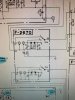
I am looking on the schematics but cannot really found the values.....

I also need to replace resistors R8,7,13,14,12,11 (bloody glue....) and i believe they are 10kohm resistors, but how many watts ???

thanks a lot for answer and support
this is a great forum
 
Hi to all

I am new to Audiokarma even if I have been reading it since long....

I take the chance of this thread by placing my question here:
I am repairing a sansui au717 (not a lot of knowledge with electronics but can solder and do good manual work) and need to replace different resistors in the main supply board due to the corrosive glue :-(

I need to replace resistors R31 and R32; R09 R10; R14 and R13
I am looking on the schematics but cannot really found the values.....

I also need to replace resistors R8,7,13,14,12,11 (bloody glue....) and i believe they are 10kohm resistors, but how many watts ???

thanks a lot for answer and support
this is a great forum

According to the schematic, R31 & R32 are 6.8k , R07,R08,R09,R10,R11,R12, R13 & R14= 10K . they are all 1/4 w.
 
Yes
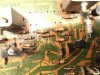
Also diodes zd01 and 02 were almost completely disappeared....

However I believe that R07,08,11,12 are the same
R09,10,13,14 are the same between them but different than previous ones (there is an additional gold band on these)
Then R31,32 again different and R33,34 other value again.

So to me it looks like we have 4 groups of resistors with different values....327B1BEB-D0A8-4B6D-87D9-AA754465C30C.jpegC6A31737-0BA6-4FAB-A171-E6DA9342651A.jpeg
 
Back
Top Bottom