• The move to the new server is done. There are some software and database maintenance updates in process. This has us passing the hat around to help out. We appreciate any donations. Seriously, even a dollar helps. The payment page may be found here - https://www.audiokarma.org/support.html

Sansui BA 3000 Recap

Hi Guys,
Need help!!

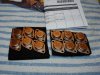
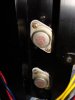
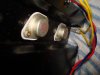
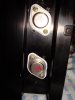
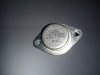
Completed the recap on the BA3000 and upon powering up there was a problem, upon investigation found out that 2 power transistors were busted.

These are Sanken 2SC1585. I am getting a replacement of NOS Sanken 2SC1586 for these and according to the data sheets I downloaded from the Sanken website, the specs are same on paper (as enclosed).

Please advise if I should get 2 of these or replace all 6. The cost is US$35 per pc. Or look for the Onsemi or Toshiba replacements for the (as enclosed too downloaded from Audiokarma)

And will the sonic character change with this replacement? Or will it be same / similar.

Thanks a ton
 

Attachments

Register to hide this ad
There is a problem with this amplifier just replacing one pair (for example), with transistors that are not exactly the same as the existing ones. The OP transistors are connected in parallel, 3 x NPN's and 3 x PNP's per channel, if you replace one pair - you run the risk of inducing 'current hogging' where one or more transistors carry more (or less) current than others connected in parallel. There are measures taken in this amplifier to reduce this effect, but this usually isn't sufficient if the replacement transistor(s) is/are different.

So, if you get one transistor blown in either channel, unless you can find the exact same transistor, you should replace all 6 per channel. I suggest MJ21193/94's as easy drop in replacements.
 
Last edited:
Well I fully disagree with tnsilver on this.
If you can't get the exact same 1585 , same batch , O or Y as sansui recommends Change all of em with the nos 1586 and 909 , or else you have a problem. It's not that you'll have instability but asymmetry , almost same as bad.
Its the HFE that changes , and you don't want to do that in your amp.
 
Thanks Everyone

Thanks for the recommendations, we are on leave this week and will update re the 1586 / 909 or the On Semi's.

Appreciate the help

Regards,
 
Hi Guys,

I am in Indonesia so the options are limited so please help with your advise.

Problem 1 : Output Transistors

1. NPN's 3 x 2ch = 6pcs : Sanken 2SC1585

Had 2 transistors busted and I couldn't get replacement after hunting for 2 months and the only replacements i got were MJ series and they looked as fake as fake can get when compared to the Sankens. Finally chanced upon an old shop who had stock of 24 pcs of Sanken 2SC1586 (NOS) with the same specs except rated for max 150v instead of 200v. Bought 6 of them and have put them into the amp.

2. PNP's 3 x 2ch = 6pcs : Sanken 2SA908

There is only one pc busted and the same shop has the replacement for the same 12 pcs of NOS. The 250v 2SA909's are out of stock so no option here.

Should i buy only 1 and put it in. It will be a different production lot from the balance 5 or should I just get 6 and refresh it totally.

Problem 2 : Main Filter Capacitors

I plan on changing the 2 pcs original Elna 22,000uf 80v capacitors due to age. The options are :

1. Hitachi : 33,000uf 100v
2. Mundorf Mlytic : 33,000uf 100v

The Mundorfs are twice the price of the Hitachi's but re new and have to get them from Singapore when I will go next month. The Hitachi's are Old Stock lying in the shop...maybe around 10 yrs old. Or I should just leave it as is...The original caps date 1973 and are 43 yrs old.

Problem 3 : VU meter Lights

1. The original lights are the glass fuse lights which are unobtanium. Should I just do a modification to Green LED? I will have to change the same to my Preamp CA 3000 too when i work on the Recap.

Problem 4 : Power Cable

The Original Power cable is a bitten on the side by a rat in the past. The exposed copper cable is covered with shrink wrap tubing. I would like to replace this along with the power plug. Please advise. I am not interested in the "Snake Oil" cables. Just want to ask if changing to thicker wire will be better?

Appreciate the help in advance.

Best Regards,
 
Hi Guys,

I am in Indonesia so the options are limited so please help with your advise.

Problem 1 : Output Transistors

1. NPN's 3 x 2ch = 6pcs : Sanken 2SC1585

Had 2 transistors busted and I couldn't get replacement after hunting for 2 months and the only replacements i got were MJ series and they looked as fake as fake can get when compared to the Sankens. Finally chanced upon an old shop who had stock of 24 pcs of Sanken 2SC1586 (NOS) with the same specs except rated for max 150v instead of 200v. Bought 6 of them and have put them into the amp.

2. PNP's 3 x 2ch = 6pcs : Sanken 2SA908

There is only one pc busted and the same shop has the replacement for the same 12 pcs of NOS. The 250v 2SA909's are out of stock so no option here.

Should i buy only 1 and put it in. It will be a different production lot from the balance 5 or should I just get 6 and refresh it totally.

Well, you already know what I think about output transistors, and unless you can be SURE that the transistors you can get are NOT counterfeit, I would not use them, and you should change all on each side with a fault.

Problem 2 : Main Filter Capacitors

I plan on changing the 2 pcs original Elna 22,000uf 80v capacitors due to age. The options are :

1. Hitachi : 33,000uf 100v
2. Mundorf Mlytic : 33,000uf 100v

The Mundorfs are twice the price of the Hitachi's but re new and have to get them from Singapore when I will go next month. The Hitachi's are Old Stock lying in the shop...maybe around 10 yrs old. Or I should just leave it as is...The original caps date 1973 and are 43 yrs old.

Don't get the Hitachi's - they are past their sell-by date by a long way.

Problem 3 : VU meter Lights

1. The original lights are the glass fuse lights which are unobtanium. Should I just do a modification to Green LED? I will have to change the same to my Preamp CA 3000 too when i work on the Recap.

You could, but I would think about contacting AK Member DGwojo - the bulb expert, for replacements.

Problem 4 : Power Cable

The Original Power cable is a bitten on the side by a rat in the past. The exposed copper cable is covered with shrink wrap tubing. I would like to replace this along with the power plug. Please advise. I am not interested in the "Snake Oil" cables. Just want to ask if changing to thicker wire will be better?

Appreciate the help in advance.

Best Regards,

A standard good quality power cable is all you need, thicker is fine if you want to, it doesn't matter if it has 3 cores (if the old was two core), just observe the same wiring as with the old cable (i.e. don't connect earth if it wasn't connected before).
 
Last edited:
Maybe you guys are just taking for granted that the transistors be matched, but...

I think it is absolutely mandatory that if you have a problem in a channel, that all the output TRs get replaced as said above, AND they have to be matched. This requires that you have quite a few MJ_93's and 94's to draw from. Most meters have an HFE function. We mark the TRs on the bottom, and then pull matching gain numbers when they are used in parallel.

If you're not matching sets of paralleled transistors the same thing is happening that Hyperion describes above, one of the transistors "hogging" all the current, and then, likely overheating and burning up.

I consider this to be of utmost importance and if not done, you could be repairing it again soon. Of course, you do need a bin with a lot of power transistors in it... We usually buy 25 at a time. We can provide matched sets if needed.

We use the MJ's in the QRX9001, and 9090 series, as well as many others like the BA3000 and have never had a problem. I'm not too big on the vintage, all original NOS, transistor theory. With tubes, NOS original production can be very high quality, but I haven't seen (or heard) any difference with TRs.
 
Last edited:
Let me add to the above comment.

It is my opinion that the output transistors provide very little of the character (or quality) of sound that an amplifier makes. I'm sure that extreme examples of different spec'd TRs would sound different, but by and large they don't make much difference.

It is my opinion that the character of sound that an amplifier puts out is all contained in the low level parts of the design. The low level input circuitry is what controls the outputs. In a complementary lab amp type design, as being discussed here, my experience is that the differential pair and the circuitry right after that affects sound quality more than anything else.

The reason for this is that the modern complementary amp is not really an amplifier per se. The modern amplifier is really an operational amplifier or op amp, capable of flowing high currents, a virtual amplifier. It operates like an amplifier. That's right, just like one of those little amp modules on a chip, that we all profess to hate so much.

The signal is not really amplified like we see in a normal low level amplifier stage, like in a preamp. The output doesn't follow the input, but is directed by the differential pair to move either up or down at the full open loop gain available until it matches the input. The output devices are controlled and told where to go voltage wise, and when they get there, the differential pair then says halt, until it is time for the output voltage to move again, all on a time scale of tenths of microseconds. It's more than I have the ability to explain. This explanation is pretty good.

http://www.electronics-tutorials.ws/opamp/opamp_1.html
 
.... AND they have to be matched. This requires that you have quite a few MJ_93's and 94's to draw from. Most meters have an HFE function. We mark the TRs on the bottom, and then pull matching gain numbers when they are used in parallel.
.
May I ask you something... about what meters you are talking here?
 
Most multimeters have an HFE function. For example, we use a very cheap meter from Harbor Freight, the current iteration of which is a Centech 61593. You merely hook the Transistor up to the appropriate little slot connector on the meter and it reads the HFE or gain of that particular transistor. The HFE varies tremendously, one transistor to the next, even in the same production run. Even the cheapest of meters seem to have this capability.
HFEmeter.jpg
 
I asked this because that function (hfe measuring) on DMM is not for power transistors, and hfe data given by this is not important for TO3 transistors. Why? Because DMM hfe measuring do this by very low voltages (supply of the most DMM is 9V DC) and very low current. Normal TO3 power transistors working with currents which are much more higher than test currents on DMM, so if you wish get matched transistors, you should put so close working conditions ( currents and voltages) to power transistors, and again you will get matched transistors only for that condition (for example Ic 6A), if you look hfe data for the same complementary pair but this time for Ic 2 A, now they can be not matched! Why ? Because Hfe linearity of NPN and PNP TO3 transistors are not the same!

So, for TO3 transistors is important only hfe rank, and it is important that they are complementary pair, and finally that they are not fake!
 
Interesting. I will definitely set up a test for TO3, comparing to readings gotten from the multimeter. Seems to me they would not be very much different. What's important is not the actual HFE reading, which I would not expect to be accurate on a cheap meter. It's important that they be the same, and I think that for matching, ie. having parallel TRs with the same gain, I bet the multimeter would be fine and give very well matched pairs and triples.

It's like matching resistors, actual reading doesn't matter. But for resistors measured on the same meter, they are likely to match very closely.

I don't think there's much chance of MJ21193/94's from Mouser being fake.
 
Hi Guys,

Finally Changed the Sanken Transistors and got 6 each NPN and PNP original NOS and fired the Amp up.

The main fuse blew and upon checking there was a problem on the main driver boards where there were a few transistors and resistors shorted and blown. Have to get replacements for the same tomorrow.

Any advise on how to prevent this from happening again?

Thanks a ton for the help.
 
Hi John,

Thanks.. tomorrow am going to buy the sacrificial output transistors... and will use them till get it all sorted out.

I am also changing all the small black color transistors and the other transistors on the driver board. Do you think should check the resistors too? Change all to new resistors - taxman carbon type or metal type? Please advise.

Sorry for going a bit overboard.. but want the amp up and running.

And is it wise to change the RCA input jacks to something of a higher quality?
 
My approach to this sort of issue is to change as little as possible to get the thing in working order, with the notable exception of 'trimmers' which I always change on a first pass. Once it is in working order - then, and only then, consider replacement resistors, or other components. For a BA-3000 ordinary good quality metal film resistors are easily good enough for use in this application.

Above all, don't rush, take your time. :thumbsup:
 
Last edited:
Back
Top Bottom