• The move to the new server is done. There are some software and database maintenance updates in process. This has us passing the hat around to help out. We appreciate any donations. Seriously, even a dollar helps. The payment page may be found here - https://www.audiokarma.org/support.html

Schiit Mimir vs Fiio K11 R2R

Scottand365

New Member
Hello everyone,
Yesterday I received the Mimir. I’ve had the K 11 for a little over a month.
Here are some of my initial thoughts and comparisons: (please chime in)

Mimir:
Very open and spacious treble.
Detailed and immersive.
Extended from low to high.
Highlighted presentation of acoustic space.
Certain instruments sound a bit flat and papery, particularly drums.
Sounds more like a recording yet more real as the Sound stage tends to wrap around you.
A little thin in the mids but maybe EQ could supplement.
Instruments and voices sound a little farther away yet clearer.
More refined but more digital-sounding.
Dreamy, liquid sound.

Fiio:
Less extended and airy.
More mid range solidarity.
3-D sound that is impressive but almost more artificial like a pop-up book.
Lacks the wraparound Sound stage, but provides a sense of tangibility of objects in the stereo field, like you could touch them.
Instruments and voices sound closer and more solid.
Less overall fidelity but more analog-like.


So far, I can’t say that either has it all but I’m impressed with what they provide at their respective price points, especially the Schiit being USA made.
The majority of my hi-fi life has been listening to CDs and somewhat vinyl. The DAC game is new for me.
These were compared in my near field system.
I will report back after listening for a few more days.
Looking forward to your reflections as well.

System used:

Wiim Pro streamer
Eico HF-81 integrated amp (recently restored)
Kimber 8TC speaker cable
Falcon LS3/5A Gold Badge speakers
 
Register to hide this ad
Sounds fun. Both of those units have been well accepted in the audio community for sure. $600 for some swapping action doesn't seem like much these days, compared to amps and pres.
 
Give the Mimir a few days to break in. Mine took about a week to settle down and smooth out. Looking forward to your comparisons afterwards.
I saw that you use the Martin Logan ESLs. Great speakers. I'd love to get into electrostats but it's not very practical at the moment. I have Dahlquist DQ10s in the living room and they're just too big for the space, really. I would think the same of ESLs. I've been leaning more into the LS3/5As in the office for the betterment of my domestic situation.
 
I saw that you use the Martin Logan ESLs. Great speakers. I'd love to get into electrostats but it's not very practical at the moment. I have Dahlquist DQ10s in the living room and they're just too big for the space, really. I would think the same of ESLs. I've been leaning more into the LS3/5As in the office for the betterment of my domestic situation.
The Martin Logan ESL's are pretty incredible. Imaging champs. No localization of speakers at all. Accurate, but not ruthless, or overly bright. Very neutral through the lower mids, and upper bass. I feel that's by design, to create a better blend with the stat panel. They seem to work well with receivers and separates.

I've never been lucky enough to hear Dahlquist DQ10's. I've had a lot of time with DQ-20's and Alon/Nola speakers. Incredible with what they're capable of too. The LS3/5A should give a similar frequency balance, as they're very musical speakers. Though, I've only heard the KEF version, it made a lasting impression...! In a good way. :D
 
I have had both.
Of the two I preferred the Mimir.
+1 to break-in.
In the up to $500 tier the Mimir is worth auditioning.
For the money FiiO started the budget R2R craze and did a great job with their .1% precision resistor ladder implementation.
The are some interesting R2R choices in the up to $600 tier
 
The Martin Logan ESL's are pretty incredible. Imaging champs. No localization of speakers at all. Accurate, but not ruthless, or overly bright. Very neutral through the lower mids, and upper bass. I feel that's by design, to create a better blend with the stat panel. They seem to work well with receivers and separates.

I've never been lucky enough to hear Dahlquist DQ10's. I've had a lot of time with DQ-20's and Alon/Nola speakers. Incredible with what they're capable of too. The LS3/5A should give a similar frequency balance, as they're very musical speakers. Though, I've only heard the KEF version, it made a lasting impression...! In a good way. :D
Yes, I auditioned a pair at someone's home and I was blown away with the Martin Logan ESLs. I was actually there to audition some Magnepan 1.7s but I thought the ESLs stole the show in his setup.
It was perhaps the most "floating in air," experience I've ever had with a set of speakers. He was using a Mark Levinson amp with them. Very fast and clear, it really didn't feel much like I was listening to speakers, almost like VR.
This was a brief encounter and I would have liked to hear more music and different amplifiers. The only thing I could perceive as a drawback is the bass cabinets as I'm usually not much in favor of ported bass cabinets but a crossover and external sealed sub could solve that. Very, very cool speakers.

The Dahlquist DQ-10s aren't as fast and transparent but they produce a huge, lifelike soundstage. They have more of a vintage voice but the highs are spacious and sparkling. For small jazz ensembles, it's almost like they're playing in the room. They aren't always an easy speaker to live with. You need a pretty large room to allow them to do what they do. You also need a beefy, high quality amplifier with the right voice. The big, immersive soundstage diminishes considerably (in quality and quantity) otherwise. They have complex crossovers that usually need work and the parts aren't easy to find. If all those stars are aligned, I think they're one of the best at what they do.
Due to space contraints at my current home, I've considered getting one of the smaller sets like the 20s or Alons but I've been advised that I would miss the 10s if I did that.

The LS3/5A is a magical little speaker, especially the Falcon Gold Badge. Beautiful midrange and if you get them set just right, they do a similar imaging thing like electrostats. For an office setup, it's wonderful.
 
I have had both.
Of the two I preferred the Mimir.
+1 to break-in.
In the up to $500 tier the Mimir is worth auditioning.
For the money FiiO started the budget R2R craze and did a great job with their .1% precision resistor ladder implementation.
The are some interesting R2R choices in the up to $600 tier
Thanks. The break in has yielded substantial change so far as my follow-up review will outline.
There are still some attributes in which the R2R seems to inherently shine and visa-versa.
What other R2R DACs did you find of interest?

PS nice Tolkien nod in both your screen name and avatar. I too am a fan.
 
My use case is primarily CDs
I use tube amplification which adds color and tubes don’t have to do that but mine do
My primary focus has become recordings that have great center imaging deep and wide and tall sound stage and I find without a good recording I am not interested.
In R2R I have had Cyan 2 and FiiO K11 and Warner, and LAiV Micro DAC, and LAiV Crescendo Verse, and I just ordered a Denafrips Erato their first post 15th Anniversary release for $549 and it seems to have some trickle down technology like .005 resistor precision and I expect it to be a good match with my amplification if the Erato has the Denafrips house sound which is not warm and won’t be like stacking color. I am looking forward to seeing what the Bifrost 3 brings to the table.
The Cyan 2 was the best DAC technically but stacking warmth and color with SET tube amplification is too much for me and the Cyan 2 is best for those using HQ player and I don’t do that.
The best Delta Sigma DAC I had was in the Node Icon and one night I was listening to some music through my Geshelli J2 4499 Socketed or at least I thought I was, and I was thinking wow this is really sounding incredible and after a hour or so I realized I was playing though the J2 that I forgot to plug in and the Icon was playing though it as the J2 had no power.
If I were to try out another DS DAC it would be the Volumio Preciso which has the same dual mono ESS architecture with the ES9029Q2M Sabre chips. Done right that is a great sound for me.
Right now I am using the Crescendo Verse and very happy with it. It is working well in my system.
 
This was a brief encounter and I would have liked to hear more music and different amplifiers. The only thing I could perceive as a drawback is the bass cabinets as I'm usually not much in favor of ported bass cabinets but a crossover and external sealed sub could solve that. Very, very cool speakers.

The Dahlquist DQ-10s aren't as fast and transparent but they produce a huge, lifelike soundstage. They have more of a vintage voice but the highs are spacious and sparkling. For small jazz ensembles, it's almost like they're playing in the room. They aren't always an easy speaker to live with. You need a pretty large room to allow them to do what they do. You also need a beefy, high quality amplifier with the right voice. The big, immersive soundstage diminishes considerably (in quality and quantity) otherwise. They have complex crossovers that usually need work and the parts aren't easy to find. If all those stars are aligned, I think they're one of the best at what they do.
Due to space contraints at my current home, I've considered getting one of the smaller sets like the 20s or Alons but I've been advised that I would miss the 10s if I did that.

The LS3/5A is a magical little speaker, especially the Falcon Gold Badge. Beautiful midrange and if you get them set just right, they do a similar imaging thing like electrostats. For an office setup, it's wonderful.
I agree, as I'm not generally fond of ported speakers either. I even have some VMPS 6.5" Mega-Woofers, that should work well in the same sized cabinets. Brian Cheney often used those woofers with passive radiators, which is what I plan to do, eventually. I have one spare EM-ESL cabinet, and I'm planning on picking up another soon. Then, I can create mini-Ethos Martin Logan speakers...! Powered with my Aragon 2004 MKII amp, and tube preamp. Should do OK. ;)
 
My use case is primarily CDs
I use tube amplification which adds color and tubes don’t have to do that but mine do
My primary focus has become recordings that have great center imaging deep and wide and tall sound stage and I find without a good recording I am not interested.
In R2R I have had Cyan 2 and FiiO K11 and Warner, and LAiV Micro DAC, and LAiV Crescendo Verse, and I just ordered a Denafrips Erato their first post 15th Anniversary release for $549 and it seems to have some trickle down technology like .005 resistor precision and I expect it to be a good match with my amplification if the Erato has the Denafrips house sound which is not warm and won’t be like stacking color. I am looking forward to seeing what the Bifrost 3 brings to the table.
The Cyan 2 was the best DAC technically but stacking warmth and color with SET tube amplification is too much for me and the Cyan 2 is best for those using HQ player and I don’t do that.
The best Delta Sigma DAC I had was in the Node Icon and one night I was listening to some music through my Geshelli J2 4499 Socketed or at least I thought I was, and I was thinking wow this is really sounding incredible and after a hour or so I realized I was playing though the J2 that I forgot to plug in and the Icon was playing though it as the J2 had no power.
If I were to try out another DS DAC it would be the Volumio Preciso which has the same dual mono ESS architecture with the ES9029Q2M Sabre chips. Done right that is a great sound for me.
Right now I am using the Crescendo Verse and very happy with it. It is working well in my system.
Interesting. As I mentioned, the DAC game is pretty new to me as I mostly used whatever was in my CD players before.
I had never heard of several that you mentioned like Cyan and Gashelli.
How did the K11 compare the Warmer and the Laivs, Denafrips etc.?

I also almost exclusively use tube amps.
 
As promised, here is my updated impressions after spending a little more than week with both units.
The Schiit Mimir did prove to change substantially over the course of a few days but no other changes were noted after that. I left it on the entire time with music playing through it. The thinner, papery quality subsided and sounded much more solid and real after a day or two.
I should also mention that I initially listened to both units in NOS (non-oversampling) mode. After spending some time going back and forth, the K11 was favorable to remain in NOS mode but I actually much preferred the Mimir with the digital filtering (OS mode) on. They really did some magic with the MESH system that widened the soundstage and gave a more magical, 3D impression that made this unit sound much more expensive than it is.

It became apparent that the Mimir was unquestionably the more resolving and refined piece of equipment. The level of detail was very impressive. I know it's cliche to say but I was hearing things that I had never heard before in familiar recordings. The sense of space was far more apparent with this DAC than any other I've had in my home. I was hearing the acoustic spaces of the recordings with reverb tails that I didn't even know were captured on the mics. If you are a fiend for detail, the Mimir might just blow you away.

Now to give my fair criticisms. The sound signature was reminiscent of a horn speaker; the treble was very spacious, wide and incredibly precise. However, it was more prone to fatigue as a result. With a darker sounding system, I could see this DAC really waking things up and giving the system some true hifi quality. My systems are already pretty bright and resolving so I prefer a thicker, more relaxed tone from the source.
I enjoyed it less when listening to music while doing other tasks in my office but more while partaking in the sport of hifi detail hunting.
I listen to a lot of guitar music, namely classical, jazz and rock. For the latter two, I loved the Mimir. However, for classical guitar, it seemed to hollow out the lower midrange and deplete some of the juiciness and bloom in favor of a more clinical sound.
The sense that instruments were farther away led me to generally turn the volume up louder than with the K11 which might have contributed to the perceived fatigue.
The DC brick power supply was unimpressive but they were going for a more affordable price point so this is hardly a fault.

Though I have so much good to say of it, I ultimately decided to return the Mimir and hold out for the Bifrost that would have the refinement of the Mimir (perhaps more) but better power supply and a smoother, more rounded character than what the ESS chip of the Mimir delivers. The Bifrost is more like $700-$800 so that puts it in a different price class with more competition.

In conclusion, I think both the Fiio K11 and Schiit Mimir are a great value but I'm particularly amazed by what Schiit offers in the Mimir for the price. I really look forward to the release of the Bifrost 3 and I expect it to be something special.

(Updated impressions list)

Schiit Mimir:
Very open and spacious treble
Very detailed and immersive
Extended from low to high
Highlighted presentation of acoustic space
Acoustic spaces are brought to light like nothing else I've heard in my home
A little thin in the mids
Can be prone to fatigue in bright systems
Instruments and voices sound a little farther away yet clearer
More refined but more digital-sounding
Wraparound soundstage that seems endless
Dreamy, liquid sound
Made in USA
Attractive build
Very minimalist, no frills
Outstanding value

Fiio K11 R2R:
Less extended and airy
More mid range solidarity
3-D sound that is impressive but almost more artificial like a pop-up book.
Lacks the wraparound Sound stage, but provides a sense of tangibility of objects in the stereo field, like you could touch them.
Instruments and voices sound closer and more solid
Less overall fidelity but more analog-like.
Made in China
Lots of features but most are not useful to me
Very good value but perhaps not as much as the Schiit
 
Thanks for your time and reviews. Early reports that I've read on the Bifrost 3 are very positive and that it is well worth the additional $400.
 
As promised, here is my updated impressions after spending a little more than week with both units.
The Schiit Mimir did prove to change substantially over the course of a few days but no other changes were noted after that. I left it on the entire time with music playing through it. The thinner, papery quality subsided and sounded much more solid and real after a day or two.
I should also mention that I initially listened to both units in NOS (non-oversampling) mode. After spending some time going back and forth, the K11 was favorable to remain in NOS mode but I actually much preferred the Mimir with the digital filtering (OS mode) on. They really did some magic with the MESH system that widened the soundstage and gave a more magical, 3D impression that made this unit sound much more expensive than it is.

It became apparent that the Mimir was unquestionably the more resolving and refined piece of equipment. The level of detail was very impressive. I know it's cliche to say but I was hearing things that I had never heard before in familiar recordings. The sense of space was far more apparent with this DAC than any other I've had in my home. I was hearing the acoustic spaces of the recordings with reverb tails that I didn't even know were captured on the mics. If you are a fiend for detail, the Mimir might just blow you away.

Now to give my fair criticisms. The sound signature was reminiscent of a horn speaker; the treble was very spacious, wide and incredibly precise. However, it was more prone to fatigue as a result. With a darker sounding system, I could see this DAC really waking things up and giving the system some true hifi quality. My systems are already pretty bright and resolving so I prefer a thicker, more relaxed tone from the source.
I enjoyed it less when listening to music while doing other tasks in my office but more while partaking in the sport of hifi detail hunting.
I listen to a lot of guitar music, namely classical, jazz and rock. For the latter two, I loved the Mimir. However, for classical guitar, it seemed to hollow out the lower midrange and deplete some of the juiciness and bloom in favor of a more clinical sound.
The sense that instruments were farther away led me to generally turn the volume up louder than with the K11 which might have contributed to the perceived fatigue.
The DC brick power supply was unimpressive but they were going for a more affordable price point so this is hardly a fault.

Though I have so much good to say of it, I ultimately decided to return the Mimir and hold out for the Bifrost that would have the refinement of the Mimir (perhaps more) but better power supply and a smoother, more rounded character than what the ESS chip of the Mimir delivers. The Bifrost is more like $700-$800 so that puts it in a different price class with more competition.

In conclusion, I think both the Fiio K11 and Schiit Mimir are a great value but I'm particularly amazed by what Schiit offers in the Mimir for the price. I really look forward to the release of the Bifrost 3 and I expect it to be something special.

(Updated impressions list)

Schiit Mimir:
Very open and spacious treble
Very detailed and immersive
Extended from low to high
Highlighted presentation of acoustic space
Acoustic spaces are brought to light like nothing else I've heard in my home
A little thin in the mids
Can be prone to fatigue in bright systems
Instruments and voices sound a little farther away yet clearer
More refined but more digital-sounding
Wraparound soundstage that seems endless
Dreamy, liquid sound
Made in USA
Attractive build
Very minimalist, no frills
Outstanding value

Fiio K11 R2R:
Less extended and airy
More mid range solidarity
3-D sound that is impressive but almost more artificial like a pop-up book.
Lacks the wraparound Sound stage, but provides a sense of tangibility of objects in the stereo field, like you could touch them.
Instruments and voices sound closer and more solid
Less overall fidelity but more analog-like.
Made in China
Lots of features but most are not useful to me
Very good value but perhaps not as much as the Schiit
The Bifrost 3 should be up for pre-order next week. Priced at $699, and shipping in October. It's another Mesh DAC, based on the ESS9039 DAC chip. Greater DSP processing power, more Forkbeard features, and improved 24/384 Unison USB. The new Mesh DAC card will eventually be made available for Bifrost 2 units (2 and 2/64) as well, but the new Unison USB cards are not backwards compatible with Bifrost 2.
 
Give the Mimir a few days to break in. Mine took about a week to settle down and smooth out. Looking forward to your comparisons afterwards.
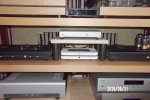
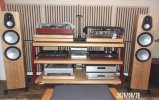
My Mimir took about 35-40 hours to smooth out, it was very bright at first no matter which speakers I was using. Now it really makes my Bluesound Node n132 sound excellent. I like the loudness feature too ! I even made it its own special little shelf to sit upon on my rack (left over parts from a Pangea Vulcan rack):


109_5043.jpg
 
Back
Top Bottom