• The move to the new server is done. There are some software and database maintenance updates in process. This has us passing the hat around to help out. We appreciate any donations. Seriously, even a dollar helps. The payment page may be found here - https://www.audiokarma.org/support.html

School speaker project

Yerg

New Member
Hello! I am a student working on a project for my school. The proposed project is to consider using sustainable methods to creating a low cost, high fidelity speaker. This survey will help me understand how I can better serve the needs of the audiophile community! I would greatly appreciate your participation in this survey.
I am new to this forum, so if there is a better place where I can post this, I would be very welcome to that input.
Thanks!

|
|
|
ˇ
https://docs.google.com/forms/d/e/1...rxg9ntKgW3gFWmfmMJoOL4hA/viewform?usp=sf_link
 
Register to hide this ad
I used to run a speaker building club when I was a teacher, so I think this is potentially an interesting project.
But I'm not clear what is meant by 'sustainable methods to create a low cost, high fidelity speaker'. It seems to me that the three goals are in conflict with each other, which, ironically, may be a plus, since you have been given a serious challenge to try to answer - a simple problem would be easier, but you wouldn't learn much.
The most sustainable speaker is none at all - make music yourself, listen to others, and so on. But for many, this isn't an option.
So then the question is what is sustainable, but that crashes into the low cost and high fidelity requirements - it is simple to make lousy cheap speakers, and not so hard to make fabulously expensive speakers that are (one hopes) better than cheap speakers. And often the solution to the quality/cost demand is very expensive in terms of electronics - if you can use an enormously powerful amplifier, you can get away with smaller and less expensive speaker components - drivers and cabinets.
I would suggest looking at alternative cabinet materials - multilayer corrugated cardboard or expanded foam. Obviously the corrugated cardboard might be more sustainable, but multiple layers make for a bigger cabinet, which makes for more expensive shipping. I built some speakers from six or seven layers of packing boxes, and they were remarkably unboxy sounding, but they were huge. Advent made some very nice sounding speakers (and affordable, too)with expanded foam (Advent II?0) but they didn't look like what people wanted speakers to look like, so the particle board boxes outsold them even if more expensive (if memory serves).
The other factor to think of is full range drivers - fewer drivers mean less manufactured junk, and an easier speaker to drive with the amplifier. No inexpensive speaker can be actually full range, but even modestly priced drivers can sound balanced and full(ish). And since relatively few people actually have real full range systems, it is clear that good enough is fine with most people. So focus on inexpensive drivers that have some bass and treble extension.
Good luck.

 
Last edited:
Welcome to AK!! Survey completed.
Open baffle speakers are one way to go. Using materials which have served their purpose (scrap wood, used automobile tires) is another.
 
Last edited:
Hi there,
I am focusing on high end components and cheap cabinets. I believe the product should serve the function to its fullest and look good doing it, which, I agree will be a struggle, but it will be a fun struggle. Electrical engineering and design is my passion, it’s what I want to go to school for in the future. Because I am in high school, I think that this would be remarkably interesting to figure out designing cabinets and crossovers and finding correct inductors and caps, discovering different ways to combine drivers in a cabinet without distortion, figuring out how impedance combines in a two way system, and more fundamental things like wiring and audio measurements and crossover points. I am greatly inspired by Frank Lloyd Wright and his philosophy of learning by doing. But enough of my own excitement.
A good set of, say, ScanSpeak drivers (tweeter and woofer pairs) with a crossover and wiring and general parts should cost around 700 (not including labor and other additional costs). My goal is not ”low cost“ meaning cheap, my goal is to compete with the companies that use the same components in an over-stylized enclosure. With what I‘ve seen, paying over 5000 is common among speakers featuring these drivers. I would like to make a simple, beautiful, minimal enclosure made from recycled wood scrap, or other. It’s still early in the process.
Thank you for your comment!
 
Welcome to AK!! Survey completed.
Open baffle speakers are one way to go. Using materials which are no longer useful (scrap wood, used automobile tires) is another.

Hi there,
I am focusing on high end components and cheap cabinets.... I would like to make a simple, beautiful, minimal enclosure made from recycled wood scrap, or other. It’s still early in the process.
Thank you for your comment!

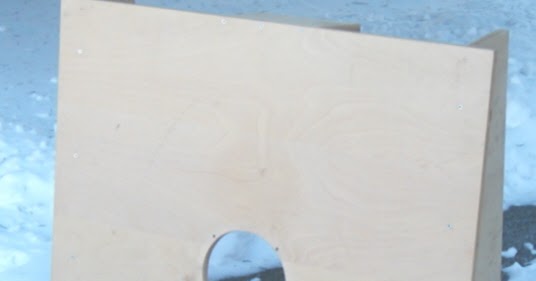
Open baffle might be something you should look into, random pic from the web to give you an idea also a lot folks here on AK swear by them so if you go that direction I'm sure they would be glad to assist, share knowledge etc

Screen Shot 2024-02-22 at 8.48.18 PM.png
 
...A good set of, say, ScanSpeak drivers (tweeter and woofer pairs) with a crossover and wiring and general parts should cost around 700 (not including labor and other additional costs).

If you're just starting out you could spend a whole lot less and should as you learn, tweak etc until you get it right.

There's a LOT of love for old Zenith console speakers that have been used for Open baffle purposes.

The beauty is that they (Zenith) fly under the radar and can still be had for short money comparative to what you're thinking.

No affiliation:


Some design schematics


Finally a must read thread on OB

 
Does an open enclosure mean weaker bass response?
Not necessarily. Plenty of open baffle speakers have great bass.
Im also not sure about how much i want the room affecting the sound as that might be a heightened issue with a fully open box
The room always affects the sound, whether open baffle or sealed speaker or ported speaker. How do you know what an open baffle sounds like if you've never experienced it?
Check out @Dswankey link above thoroughly. You may discover quite a bit you never knew!
If you want to be real adventurous, do a search (top right side or page) for the word "Baffle" in the title.
 
Last edited:
you could spend a whole lot less
My end goal is a sold product by commission, and your right, I will experiment with cheaper components, but I don’t think cost of wood will be too much of a set back as I will be using wood scraps and shavings or other cheap recycled materials, making it more possible to create a larger tower speaker (that is if that is what the people want) without too much of a price difference.
 
So, you only want to build a "sustainable" tower speaker. Why didn't you say so in the first place? It won't be less expensive or equal in sustainability to an open baffle design, but it's your project...:beerchug:
 
So, you only want to build a "sustainable" tower speaker. Why didn't you say so in the first place? It won't be less expensive or equal in sustainability to an open baffle design, but it's your project...:beerchug:
I don’t want to build anything in specific other that my general goal for this project: a speaker (that you will probably be able to buy soon) that is made with cheap sustainable materials. The project prohibits any of my own input. This is not a speaker for me. The class is called “Foundations of Design” or something along those lines. My capstone will follow specific phases in what they call “design thinking”. Currently we are in the empathize stage, or gaining input on a general need from the community (you) on what they (you) want. I, as the designer, think of a problem or void in the community and how I want my design to solve or fill that. I decide mostly how it looks, and I do frankly have quite a bit of artistic freedom, but before it becomes a product it needs to fill the needs of my users and the users have to like it. Size, openness, price… all up to you, that is the purpose of the survey and there will be more in the future. Probably many more honestly.
 
I believe that what you're trying to accomplish isn't anything new. There are scores of speaker designers/manufacturers who've been searching for the same things forever and the results are right in front of us in the marketplace. We now have more low-cost speakers that perform well above their price points than ever before. Unless this is just an industrial design type of project, you've got your work cut out for you. Also, realize that in manufacturing, volume plays a part in how economical something will be. If the manufacturer is only building a limited number of finished units, the parts cost for them will be higher.
 
Last edited:
I don’t want to build anything in specific other that my general goal for this project: a speaker (that you will probably be able to buy soon) that is made with cheap sustainable...

I don't understand the assignment. Which will get you an "A", a one off finished product or a presentation of the whole process from inception to completion?
 
It sounds to me like your original description doesn't mesh with what you actually want to do. Low cost and sustainable do not mean a 700 dollar investment, even if you expect them to sell for 5000 bucks. I do not see a market for expensive speakers with cabinets made from recycled materials - by the time you get above several hundred dollars, you are talking about signalling status, and bling, not virtue is what appeals.
Furthermore, apparently selling the speakers is part of the plan, which is not what one usually expects in a high school project. I thought this was going to be more a science fair kind of thing.
I agree with the poster who noted that there are a lot of companies trying to do essentially the same thing you are hoping to do, and I'm not sure there is any easy guidance as to how to accomplish this.

On further reflection: The above may be too much scolding - It is great to have an exciting plan, and to aim big. But heed the many posts urging you to start simple and cheap before committing to a more expensive and ambitious design. And listen to as many speakers as you can, since you may very well discover that some small and simple speakers are more appealling than you might expect, and many larger more expensive one are no better, and often worse.
 
Last edited:
Sounds like a fun project.
My advice, research speaker design, and find and read about as many different types as you can. Then based on your research, decide on a design concept. Next look for used drivers based on your design, single full range driver, two way, three way. Many listings on fleabay, or look at a seller like Parts Express for example, and look at the drivers they stock. Based on that, then the crossover design and cabinet sizes, or open baffle, what ever your design is, all come into play.
If you’re going traditional cabinet design, look for estate sales, thrift stores, to find cheap speakers to modify and put in your drivers, crossovers etc….
Good luck!
 
Back
Top Bottom