Good to know. ThanksFYI, when questions about pricing are asked, you run the risk of the thread being kicked to the Dollars and Sense forum. It's in the rules, take a look.
And WELCOME to AK, jvanroo!


You are using an out of date browser. It may not display this or other websites correctly.
You should upgrade or use an alternative browser.
You should upgrade or use an alternative browser.
Sherwood S-7100A Receiver
- Thread starter birchoak
- Start date

birchoak
Hi-Fi Nut
Shoot, I'm just seeing this now--I'm on here sporadically--I just bought another S7100A on that auction site for $120. To me it was totally worth it as I know this receiver well and what it's capable of. Also the case was in great shape and the potentially bad OFF/ON/VOLUME knob was fine. You will hear many people balk at paying $100 or more for old receivers; I'm not one of them and I don't wait for the best deals. If I want it, I buy it (within reason). Did you get it?I have a question in response to your comment.
There is an s-7100a for sale in my area for $125. The posting says it works great. I definitely like the look of it and if it sounds as good as you say it does, I may want to add it to my system.
Is this a good price, or should I try and talk him down?
After getting advice from the previous post, I offered $75 for it and the seller ghosted me.Shoot, I'm just seeing this now--I'm on here sporadically--I just bought another S7100A on that auction site for $120. To me it was totally worth it as I know this receiver well and what it's capable of. Also the case was in great shape and the potentially bad OFF/ON/VOLUME knob was fine. You will hear many people balk at paying $100 or more for old receivers; I'm not one of them and I don't wait for the best deals. If I want it, I buy it (within reason). Did you get it?
I kept watching it on the online classifieds for about 6 weeks and then contacted the seller and she accepted my offer of $100.
I have had it for about a month and I am very happy with my purchase. This unit had only one owner—the seller’s father, and it was kept clean and was well taken care of. It looks and sounds great.
I do have a small issue with the selector switch. Sometimes when I turn it on or change the input, I lose or get some crackling in the left channel. But if I move the selector to another input and then back it usually fixes it. I think some Deoxit on the selector switch would fix it, but I haven’t taken the time to open it up yet. And of course, based on the advice of many others, I will keep the Deoxit away from the Power/Loudness knob.
There are a lot of comments about the low output of the 7100A, but it has plenty of power for my needs even when I am using both A and B speakers. I have a big set of speakers (Technics SB-CR77s) and a little set of speakers (Realistic MC-1000s). I have found the best combination is to use both sets of speakers. The Technics have a lot of bass—almost too much, so I usually turn the bass down some. The Realistics have very little bass. The combination of the two sets have just the right balance of high and low—IMO.
tl,dr: I bought the 7100A for $100, and think it is worth every penny; I would have also paid up to the $125 asking price, but was happy to get it for $100.
birchoak
Hi-Fi Nut
You did great, especially for a minty, one-owner unit. I'd pay $125 all day long for a clean, working one. "Low output" isn't a complaint; the thing puts out so much sound I've never felt the need to turn it up past 12 o'clock. That said, I don't like fiddling with the screw terminals (although when used properly, they exert more clamping force on speaker wires than spring terminals do) and a few of the caps are tricky to get to when recapping, but you can loosen the main amp board for better access.
I'm surprised you haven't had to clean any switches! It's not hard on this receiver. Use FaderLube sparingly on the OFF/ON/VOLUME pot and a proven electronics cleaner on the rest of the switches and pots (no WD-40 or lacquer thinner!). I use CRC electronic cleaner on all the pots and switches except the OFF/ON/VOL (red spray can, can be found at Home Depot, etc.) and find it works faster than De-Oxit (a lot less expensive, too)--I'm not putting down DeOxit, just sharing my own experiences with the stuff. You can poke the nozzle right into the switch bodies behind black selector switches and get them super clean (after taking the face plate off, of course). Work the controls a bunch of times to distribute the cleaner but be gentle with that aforementioned switch. I use a clean bath towel to flip the case upside down on so I don't scratch it.
Hands down the best sounding receiver or amp I've ever owned, and the easiest to work on.
I'm surprised you haven't had to clean any switches! It's not hard on this receiver. Use FaderLube sparingly on the OFF/ON/VOLUME pot and a proven electronics cleaner on the rest of the switches and pots (no WD-40 or lacquer thinner!). I use CRC electronic cleaner on all the pots and switches except the OFF/ON/VOL (red spray can, can be found at Home Depot, etc.) and find it works faster than De-Oxit (a lot less expensive, too)--I'm not putting down DeOxit, just sharing my own experiences with the stuff. You can poke the nozzle right into the switch bodies behind black selector switches and get them super clean (after taking the face plate off, of course). Work the controls a bunch of times to distribute the cleaner but be gentle with that aforementioned switch. I use a clean bath towel to flip the case upside down on so I don't scratch it.
Hands down the best sounding receiver or amp I've ever owned, and the easiest to work on.
birchoak
Hi-Fi Nut
You can often up the capacitance of the filter caps 50% and get close in size and since higher voltage is okay, with some receivers similar sized caps can get rather expensive. You don't want a cap too low in voltage rating or it can blow.
On my S-7200 I used strips cut out of foam sheet, can be found in one of the back aisles of my Local Hobby for less than $1. Stuff comes in handy. Helps take up the gap and hold them tight. Replacements were close but not quite enough.
After replacing the electrolytics and a number of transistors with noise issues now my S-7200 is a sweet sounding unit. As-is auction unit when received had DC on one channel about 200 mV and all sorts of odd noises in the background of one channel - after some time playing that way the differential pair on the channel with high DC started to rat-a-tat-tat after about 10 minutes after turning it on. Took some time and sleuthing to get all of its issues ironed out. It paid off. Now you can have it on aux with no source turn it all the way up and its hard to hear anything. Power switch still works.
Have read a lot of good reviews about their low end S-7100 and S-7100A units along with the higher end S-7900A/8900A (believe 8900A is FM only, 7900A is AM/FM). The S-7200 gets talked about a lot relative to the number that come up on the auction sites.
The old Sherwoods are sleepers, get overlooked in the market so prices can be low but when you hear one they are great units. The British site select45rpm.com reviews a bunch of vintage units and had been harsh on the S-7200. I guess last year they finally restored theirs because late last year the very negative review got replaced by a very positive one.
View attachment 1395609View attachment 1395631
dly66, I just got a Sherwood S-7200 and it's a beaut. After some initial recapping, I noticed that the 5W 470ΩK sand cast resistor between the filter caps under the chassis gets freaking HOT--is this normal? I know you did a beautiful mod to cool off the pair on the power supply board; does this one need to be addressed, too?

dly66
Addicted Member
My IR thermometer (the one Harbor Freight has historically had on sale as low as about $25, often more like $30-35) had noticed the heat on that on mine I read about 250-270 F for the two on the power supply board, the 270 and 330 ohm 5W resistors. Created a hot spot on the top of mine and would many times smell like something was burning after it had been on a while. My Kenwood KR-7400 had a pair of power supply resistors that were the same way. Found a way to hang 25 W chassis resistors off the power supply board bracket on that one knocked 250+ F down to around 140 F too. Also ended the burning smell when that one was on for hours. Makes both units seem to run a lot cooler.
I got a pair of 25 watt chassis resistors for the 270 and 330 ohm resistors and used an L plate from I thought I got at Home Depot but apparently actually Lowes because they have a lot in stock and HD has none locally. I can still read the Simpson brand and part number so I could find the same item. Used the top holes for one mounting screw of the chassis resistors and had to drill the other two. Left part of the original wire wound resistor leads to twist into loops with pliers and tie the wires from the chassis resistors into. Carefully located where I put the two machine screws through the chassis so as not to nail anything underneath, particularly the 470 ohm resistor. I loosened the power supply board and tilted it up out of the way to mount the plate on the chassis. The 470 ohm resistor underneath naturally presses against the chassis on mine should help cool it a bit. Used the same thermal paste used with output transistors to help thermally couple the chassis resistors to the plate. Basically end up with two chassis resistors on a heat sink and the whole assembly seems to get about 140 F after being on for extended periods so the top case just feels a little warm now.
https://www.lowes.com/pd/Simpson-Strong-Tie-A23Z-Angle-Z-Max/1115047
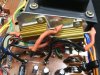
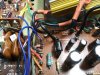
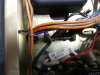
It seems in a number of vintage units they ran power supply resistors toward their upper range so they would get very warm to downright hot. Some power supply transistors can be the same way. I usually try to figure out how I can cool down the hot ones.
Some very nice looking veneer on my S-7200 and appealing sounding amp and tuner section on that one. Actually found the S-7200 more appealing to listen to than its higher line S-8900A cousin. I figured out if you like one a lot you will have it on playing music a lot. If you swap another in and its on a lot less you probably don't like that one as much.
After I finish recapping the old Norwegian Tandberg TR-1055 maybe I will pull apart the S-7200 power switch and see if I can fix it this weekend. Some of the capacitors in it are not known for reliability. Working on the Tandberg something went wrong with at least one filter cap in the past and resistor in the power supply got replaced. The working Tandberg had been sitting out on CL at $100 made a weekend afternoon road trip down to Fort Mill SC to get it. Somone is trying to sell a recapped TR-1020 in the RDU area for $400 right now.
After taking the pictures I am leaving the S-7200 out of its case leaning against something out of the way where I will see it all week to help motivate me to go ahead and fix it. From one thread someone on this site shows fixing it there is a thin plastic disc with tab that triggers the switch on it that apparently will split in two over time. When it splits too much no more power switch action. Looking at their pictures Deoxit treatment or not, with enough power cycles seems destined to fail.
I got a pair of 25 watt chassis resistors for the 270 and 330 ohm resistors and used an L plate from I thought I got at Home Depot but apparently actually Lowes because they have a lot in stock and HD has none locally. I can still read the Simpson brand and part number so I could find the same item. Used the top holes for one mounting screw of the chassis resistors and had to drill the other two. Left part of the original wire wound resistor leads to twist into loops with pliers and tie the wires from the chassis resistors into. Carefully located where I put the two machine screws through the chassis so as not to nail anything underneath, particularly the 470 ohm resistor. I loosened the power supply board and tilted it up out of the way to mount the plate on the chassis. The 470 ohm resistor underneath naturally presses against the chassis on mine should help cool it a bit. Used the same thermal paste used with output transistors to help thermally couple the chassis resistors to the plate. Basically end up with two chassis resistors on a heat sink and the whole assembly seems to get about 140 F after being on for extended periods so the top case just feels a little warm now.
https://www.lowes.com/pd/Simpson-Strong-Tie-A23Z-Angle-Z-Max/1115047
It seems in a number of vintage units they ran power supply resistors toward their upper range so they would get very warm to downright hot. Some power supply transistors can be the same way. I usually try to figure out how I can cool down the hot ones.
Some very nice looking veneer on my S-7200 and appealing sounding amp and tuner section on that one. Actually found the S-7200 more appealing to listen to than its higher line S-8900A cousin. I figured out if you like one a lot you will have it on playing music a lot. If you swap another in and its on a lot less you probably don't like that one as much.
After I finish recapping the old Norwegian Tandberg TR-1055 maybe I will pull apart the S-7200 power switch and see if I can fix it this weekend. Some of the capacitors in it are not known for reliability. Working on the Tandberg something went wrong with at least one filter cap in the past and resistor in the power supply got replaced. The working Tandberg had been sitting out on CL at $100 made a weekend afternoon road trip down to Fort Mill SC to get it. Somone is trying to sell a recapped TR-1020 in the RDU area for $400 right now.
After taking the pictures I am leaving the S-7200 out of its case leaning against something out of the way where I will see it all week to help motivate me to go ahead and fix it. From one thread someone on this site shows fixing it there is a thin plastic disc with tab that triggers the switch on it that apparently will split in two over time. When it splits too much no more power switch action. Looking at their pictures Deoxit treatment or not, with enough power cycles seems destined to fail.
Last edited:
birchoak
Hi-Fi Nut
Dang, your power switch went? I'm sorry to hear that; very frustrating.
I started recapping the 7200 yesterday and the sound is incredible--mine was all original but someone lubed the pots because there was no noise in the controls at all. I did the power supply first, and although it was unplugged I sparked something on the board
Nervous, I switched it on with the DBT and all seemed okay. I played it with regular power and it seemed okay, maybe a touch of noise I'm not sure I heard before. I recapped that board under the chassis (not the tone board) and, same thing--although unplugged, something sparked. I've never had this happen before (on unplugged gear, anyway).
It still sounds good but there is some background noise; I suspect I will have to replace transistors like you did. Thank you for posting such detailed information and great photographs, by the way--it's a huge aid.
The amusing part of all this is I thought it was a cap-coupled receiver and was dismayed to see -20mV and -60mV at the speaker terminals. I'm guessing those trimmers on the power boards only adjust bias and have nothing to do with DC offset. That must be taken care of by the transistors?
I'm glad you say you prefer the 7200 sound to the 8900 as I just about lost my mind trying to fix that one and finally tore it down for parts.
There could be something wrong with my IR thermometer, but I got 140˚ F on the resistor closest to the trafo, about 91 on the one next to it. Then, as the receiver played, the first resistor cooled down and the other one got hotter, like they were swapping temps. The one on the bottom of the chassis reads 140˚ F at times but feels much, much hotter to the touch--I can't keep my finger on it for more than .5 second! I will have to extend the leads and heat-sink it to the chassis like you suggested. I did come up with an extra heat sink like you made using old parts and will install it at some point as I am not a fan of excessive heat, either. I think it's a design flaw and I wish they'd done something different--limitations of the time period? There always seems to be a price for extra power, even the modest 30-40 watts here.
Hope you're doing well, dly66, and staying safe. I always enjoy reading about your adventures and continue to admire your perseverance and skills.
PS: I've always admired those Tandbergs but they always go for crazy money! Great score, sir.
I started recapping the 7200 yesterday and the sound is incredible--mine was all original but someone lubed the pots because there was no noise in the controls at all. I did the power supply first, and although it was unplugged I sparked something on the board
Nervous, I switched it on with the DBT and all seemed okay. I played it with regular power and it seemed okay, maybe a touch of noise I'm not sure I heard before. I recapped that board under the chassis (not the tone board) and, same thing--although unplugged, something sparked. I've never had this happen before (on unplugged gear, anyway).
It still sounds good but there is some background noise; I suspect I will have to replace transistors like you did. Thank you for posting such detailed information and great photographs, by the way--it's a huge aid.
The amusing part of all this is I thought it was a cap-coupled receiver and was dismayed to see -20mV and -60mV at the speaker terminals. I'm guessing those trimmers on the power boards only adjust bias and have nothing to do with DC offset. That must be taken care of by the transistors?
I'm glad you say you prefer the 7200 sound to the 8900 as I just about lost my mind trying to fix that one and finally tore it down for parts.
There could be something wrong with my IR thermometer, but I got 140˚ F on the resistor closest to the trafo, about 91 on the one next to it. Then, as the receiver played, the first resistor cooled down and the other one got hotter, like they were swapping temps. The one on the bottom of the chassis reads 140˚ F at times but feels much, much hotter to the touch--I can't keep my finger on it for more than .5 second! I will have to extend the leads and heat-sink it to the chassis like you suggested. I did come up with an extra heat sink like you made using old parts and will install it at some point as I am not a fan of excessive heat, either. I think it's a design flaw and I wish they'd done something different--limitations of the time period? There always seems to be a price for extra power, even the modest 30-40 watts here.
Hope you're doing well, dly66, and staying safe. I always enjoy reading about your adventures and continue to admire your perseverance and skills.
PS: I've always admired those Tandbergs but they always go for crazy money! Great score, sir.
Last edited:
birchoak
Hi-Fi Nut
So, after delving into a Sansui TR-707A, a Sherwood S-7200, and a Fisher 202, I renew my love for the little S-7100A. I have two of them now, recapped, and they continue to play beautifully and pull in FM. The Sansui keeps breaking down (read, did not survive my attempt at a recap), the 7200 is NOT cap-coupled and I've got a nasty DC offset, and the 202 only plays FM when it feels like it. I feel like a miscreant when I can't fix something or make it worse. I just love how popping new caps into a cap-coupled amp solves the DC offset!
dly66
Addicted Member
Those are not bad numbers for direct coupled DC offset with no adjustment trimmer. Got spoiled with the cap coupled models or ones with DC adjustment. Those numbers are good. If you read the service manual on the S-7200, the official Sherwood view (and of many other manufacturers) a DC offset of more than 200 mV you need to find the offending component. Below 200 mV considered okay. My impression close to zero is ideal, below 100 mV is good, as you work toward 200 mV eyebrows should rise, over 200 mV time to find the problem. Basically on the direct coupled designs if I measure DC offset in the tens of mV its good.The amusing part of all this is I thought it was a cap-coupled receiver and was dismayed to see -20mV and -60mV at the speaker terminals.
Nasty DC offset is when an output has shorted and is putting power supply DC voltage to the speaker. If no protection relay system which goes first, the fuse or the woofer?
I noticed with my S-7200 before the power switch broke that the base noise with FM had been getting louder. Does not seem to be there with other sources. When I fix the power switch I need to find the offender, probably a noisy transistor. Hopefully it is one at the back end of the tuner circuit.
If there is broadband background noise in the S-7200, does it respond to the volume control? If so would go after the 2SC693F on the tone board. If not likely in amp boards. Watch it, all those wires you need to move out of the way to get the tone board out they used some fine stranded wire and I had to keep finding one or two that broke, usually at potentiometer or selector tabs, every time I worked on that board. Try to keep the stress on those wires to a minimum. Would work on that board and be greeted by a dead channel. Not always easy to see which one broke loose. Sometimes had to keep looking before my eyes finally locked on the missing wire.
Last edited:
birchoak
Hi-Fi Nut
dly66, that's great information. I'll ignore the DC offset, knowing it's within safe limits on this machine.
Yes, there is a noise that increases with volume (with no source playing) and I'm grateful you mentioned the wires issue--that would have driven me crazy had I not known about the potential issues. It really is a labor of love with many of these old receivers---so many hours spent probing and soldering and coming back here to read about the trials of others like yourself. I got spoiled working on the S-7100As---both "survived" my recap efforts and both seem to work as intended with no extra problems. The Yamaha CR-800, too, survived although that one is more complex inside and sees more heat than I think is healthy.
Yes, there is a noise that increases with volume (with no source playing) and I'm grateful you mentioned the wires issue--that would have driven me crazy had I not known about the potential issues. It really is a labor of love with many of these old receivers---so many hours spent probing and soldering and coming back here to read about the trials of others like yourself. I got spoiled working on the S-7100As---both "survived" my recap efforts and both seem to work as intended with no extra problems. The Yamaha CR-800, too, survived although that one is more complex inside and sees more heat than I think is healthy.
birchoak
Hi-Fi Nut
dly66, I was super careful with that tone board; thank you for the heads up! All 25V 4.7uF caps in there--that was pretty easy. When the leads are tight to a board I snip all the factory wire ties and I remove all the adjacent pots from the face plate so the wires can move around freely. I replaced all the 693Fs with KSC1845FTAs and it passed an initial DBT. I have to eat dinner with my family now but I'm eager to hook it up to speakers and see if some of the noise has gone away. I may pull those weird ceramic caps on that other board under the chassis--the brightly colored ones that look like clown's teeth--per your recommendation. Do they get noisy; is that why you replaced them?
birchoak
Hi-Fi Nut
Phew, I'm really liking the sound of this receiver but it's a whole different kettle of fish when it comes to maintaining it--that's a lot of gear specified in the service manual to adjust the amp section! I shouldn't have assumed the 7200 was just like the 7100A inside, only with more power--my bad. I recapped the tone board and replaced the transistors on it but I still get noise on AUX that increases with volume. I don't think this is a big deal and I'm guessing the noise you described with your 7200 was much worse--after all, these are nearly 50 year old amps and I'm guessing the original signal to noise ratios weren't stellar. Now that I've recapped most of it I might just put it back together and call it good for now---wait to see if anything weird starts happening--I really do NOT want to have to adjust the amp section as I don't have that gear and wouldn't know how to use it if I did. I know you can approximate bias using a dim bulb tester but I'm not comfortable doing that with such a nice machine--I'll try it on some beater that's got irreparable issues.
dly66
Addicted Member
With the direct coupled speaker protection fuses and using lower power speakers often will put a 2 amp fuse in.If you think the woofer will get toasted before the fuse blows, why don't we put in lower value fuses ---say 1.5A instead of 3A?---to protect our cherished speakers? The 7200 has enough power that I can see myself turning it up!
When working and moving stuff that is tied off I snip the ties too. A lot of times you have to do that to free up the boards. Was that the one it looked like they used fishing line to tie wires off? Then tie wrap back when done.
I have nothing against cap coupled receivers like the S-7100A. It has a good reputation. A cap coupled Pioneer SX-1500TD is pulling living room duty right now. Sounding good after all the work I put into it.
If you want to see what happens to the Sherwood power switch read this thread if you have never come across it before:
https://audiokarma.org/forums/index...tch-volume-pot-repaired.811889/#post-11375394
birchoak
Hi-Fi Nut
dly66, finished up with the 7200 and added a heat sink for the two sandcast resistors on the PS--I must say, this thing sounds big and powerful! Sherwood dialed in the sound with this one, for Sher'. Good sized dent on the top of the case; heated up some water and dribbled it into the scratch--sometimes you can get the wood to swell back out again.
Have you gotten into the Yamaha CR-800 yet? It's a fine machine and a full recap (do the toneboard) will dramatically improve the sound.
Have you gotten into the Yamaha CR-800 yet? It's a fine machine and a full recap (do the toneboard) will dramatically improve the sound.
birchoak
Hi-Fi Nut
Those are not bad numbers for direct coupled DC offset with no adjustment trimmer. Got spoiled with the cap coupled models or ones with DC adjustment. Those numbers are good. If you read the service manual on the S-7200, the official Sherwood view (and of many other manufacturers) a DC offset of more than 200 mV you need to find the offending component. Below 200 mV considered okay. My impression close to zero is ideal, below 100 mV is good, as you work toward 200 mV eyebrows should rise, over 200 mV time to find the problem. Basically on the direct coupled designs if I measure DC offset in the tens of mV its good.
Nasty DC offset is when an output has shorted and is putting power supply DC voltage to the speaker. If no protection relay system which goes first, the fuse or the woofer?
I noticed with my S-7200 before the power switch broke that the base noise with FM had been getting louder. Does not seem to be there with other sources. When I fix the power switch I need to find the offender, probably a noisy transistor. Hopefully it is one at the back end of the tuner circuit.
If there is broadband background noise in the S-7200, does it respond to the volume control? If so would go after the 2SC693F on the tone board. If not likely in amp boards. Watch it, all those wires you need to move out of the way to get the tone board out they used some fine stranded wire and I had to keep finding one or two that broke, usually at potentiometer or selector tabs, every time I worked on that board. Try to keep the stress on those wires to a minimum. Would work on that board and be greeted by a dead channel. Not always easy to see which one broke loose. Sometimes had to keep looking before my eyes finally locked on the missing wire.
dly66, say you and I wanted to lower the DC offset on our 7200s---would this entail replacing transistors in the driver board? I've recapped everything except the FM/AM boards and I did replace the transistors on the tone board per your suggestion.
dly66
Addicted Member
dly66, say you and I wanted to lower the DC offset on our 7200s---would this entail replacing transistors in the driver board? I've recapped everything except the FM/AM boards and I did replace the transistors on the tone board per your suggestion.
With regards to these type amps the numbers you got were good. I would not worry about those numbers. I get the impression some amp designs probably tend to have higher dc offsets than others. I think the Yamaha CR-420 is notorious for high DC offsets, I think around 60 mV may be the best you can get with those guys unless you alter the circuit.
If you wanted to go lower you would probably need to build some kind of test circuit for matching differential pairs for minimum dc. Should be able to find some on the web. I think I have a copy of one I may build in the future around here somewhere.
birchoak
Hi-Fi Nut
Thank you, dly66---I definitely don't want to go to those extremes, so I will run it knowing it's good enough for my ears and speakers. The thing just sounds so powerful! I look forward to hooking it up to some of my good speakers and not the things in the shop (which I literally pulled out of a dumpster about two years ago).
dly66
Addicted Member
Missed that question before so a delay in answering. Working on a few loose ends then should tackle the formerly mouse infested Pioneer SX-9000 next since I am sitting on the caps and transistors. Good bit of money tied up there - my electrolytic/film cap list for it had 87 as the total count for it. Probably after that will finish the Sony STR-7065 since I have already done a good bit on the amp and power supply sections, then it should be time for the CR-800. Might get to it during the winter. Most work during the winter when the days are short and cold weather you spend more time indoors. With Covid-19 even less likely to spend time elsewhere this winter.Have you gotten into the Yamaha CR-800 yet? It's a fine machine and a full recap (do the toneboard) will dramatically improve the sound.
Fixed the S-7200 and swapped it in the workroom for the Tandberg last night. Took the back off the infamous volume/power switch just took the partially broken plastic piece, carefully roughed the surface up some with sandpaper without snapping it in two and did the same to the big nylon one behind it after taking out the thin rubber washer. Cleaned with alcohol swab and bonded it back to the shaft and to the nylon disk behind it with epoxy, in this case JB Kwik. Using a square toothpick worked the epoxy up around the edge and across the top around the end of the rectangular shaft. Let the epoxy cure and put it back together now working like it should. Easier than I thought it would be. Note learned from replacing a badly bent up balance shaft (Ebay donor from an S-7100A - same part #) it is easier to take the balance and volume pots loose and work them out together out the bottom of the chassis. Auto, garbage disposals, and other cases have used JB Weld/Kwik to fixed broken plastic. Most of the time fixes las
Also tweaked the front end so it is doing much better on the FM noise front so don't think I need to chase down noisy transistors.