
• The move to the new server is done. There are some software and database maintenance updates in process. This has us passing the hat around to help out. We appreciate any donations. Seriously, even a dollar helps. The payment page may be found here - https://www.audiokarma.org/support.html

Single ended to balanced solution

StepheK

AK Subscriber
Subscriber
I wanted to note something for the group I have discovered recently: Erhard audio is making these single ended to balanced XLR modules using Lundahl transformers that work fantastic. I've tested these on the input of my 2A3 amp and also on the output of my phono pre-amp and the performance is top notch. Just an FYI for folks looking for a quality way to add balanced input or outputs to tube gear.
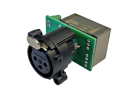

XLR-1544A.png
 
Register to hide this ad
Thanks for mentioning the Erhard modules. Nice little package that would be easy to include on a project.
 
They look great but cost $310/pair. What happens if XLR cable's pin 3 is floated then connected to RCA input of 2A3 SET?
 
They look great but cost $310/pair. What happens if XLR cable's pin 3 is floated then connected to RCA input of 2A3 SET?
Obviously there are cheaper solutions, but these are high quality/performance, I hear no degradation of the signal using them and preserves the advantages of using balanced cables. These also have the option of 1:1 or 1:2 signal gain if needed.

To answer your other question: if you float a signal pin, it's no longer a balanced cable and you lose 1/2 of the signal strength. There is no point in using the XLR out on the source if you're going to do that. Same is true if you use RCA out of a pre-amp to XLR in on an amp. You then also have to keep the ground pin connected on both ends to provide the return signal path, inviting ground loops. That's one nice advantage true XLR provides, you can lift the ground on one end of the cable if needed. Sonically I can't imagine using one side of a balanced signal is a good idea either, but never personally tried it.
 
There is a broader question of "why use balanced interconnects for a tube amplifier." Obviously balanced interconnections are always better in theory due to noise rejection, but given the signal is line-level and tube amplifiers are themselves fairly noisy I doubt it would matter in most applications. Certainly it could be useful for avoiding ground loops and other noise if they're present. Also one could omit the input coupling capacitor since any DC coming from the source is blocked by the transformer.
 
That's a great find, and a proper solution to equipment interconnection issues that one can "run into" from time to time. Another high quality way to handle any equipment RCA out to an XLR input needs is the Orchard Audio RCA-XLR converter. Its a few dollars more than the transformer solution, but avoids a transformer (if you want to do so).
 
if i were to buy anything itd be this
 
if i were to buy anything itd be this
that will do the job just fine, but a truly passive device, such as the modules we sell, can't be beaten! Sometimes simple is far better!
 
I wanted to note something for the group I have discovered recently: Erhard audio is making these single ended to balanced XLR modules using Lundahl transformers that work fantastic. I've tested these on the input of my 2A3 amp and also on the output of my phono pre-amp and the performance is top notch. Just an FYI for folks looking for a quality way to add balanced input or outputs to tube gear.


View attachment 3830555
thank you StepheK!
 
There is a broader question of "why use balanced interconnects for a tube amplifier." Obviously balanced interconnections are always better in theory due to noise rejection, but given the signal is line-level and tube amplifiers are themselves fairly noisy I doubt it would matter in most applications. Certainly it could be useful for avoiding ground loops and other noise if they're present. Also one could omit the input coupling capacitor since any DC coming from the source is blocked by the transformer.
Many sources using balanced outputs give you 4v instead of the more common 2v or less. That can be beneficial on its own. Balanced interconnects also open up the possibility of making a differential amp. Removing the phase splitting stage from the amp simplifies it and can lead to better performance. Lastly, using balanced interconnects also opens up the possibility of using studio gear with home audio.
 
There is a broader question of "why use balanced interconnects for a tube amplifier." Obviously balanced interconnections are always better in theory due to noise rejection, but given the signal is line-level and tube amplifiers are themselves fairly noisy I doubt it would matter in most applications. Certainly it could be useful for avoiding ground loops and other noise if they're present. Also one could omit the input coupling capacitor since any DC coming from the source is blocked by the transformer.
Examples: someone wanted me to build them a tube pre-amp to use with some high end powered studio monitors and the cables were doing to be about 10ft long. Using an XLR out transformer made sense for this as 10ft RCA runs would likely cause problems. For my personal use, I have a bottle head tape head pre-amp. The RCA out gain was too low to drive my 2A3 amp, the XLR out has much higher gain and using one of these modules, it works great!
 
Examples: someone wanted me to build them a tube pre-amp to use with some high end powered studio monitors and the cables were doing to be about 10ft long. Using an XLR out transformer made sense for this as 10ft RCA runs would likely cause problems. For my personal use, I have a bottle head tape head pre-amp. The RCA out gain was too low to drive my 2A3 amp, the XLR out has much higher gain and using one of these modules, it works great!

Would this balance setup preserve the 2nd harmonic (even-order distortion) that single ended has?
 
Audio by Van Alstine has an RCA to balanced XLR converter using op amps: DVA R2X SINGLE-ENDED TO DIFFERENTIAL CONVERTER.
 
Why would 10' long RCA cables be a problem?
It's just going to be more susceptible to picking up noise. Plus RCA single ended has lower signal strength, so is being amplified more, which amplifies any noise picked up more. I'm not saying anyone has to do this. The person buying the pre-amp wanted XLR out to help make sure this longer run of cable was noise free and didn't mind buying these transformers.
 
Audio by Van Alstine has an RCA to balanced XLR converter using op amps: DVA R2X SINGLE-ENDED TO DIFFERENTIAL CONVERTER.
Sure there are boxes that can be used with opamps etc. But then you still have RCA cables going from this box to the amp and are adding another box with a power supply to the equipment rack/introducing SS parts into the signal path as well.

I was just pointing out a high quality compact solution I found that could be used on a DIY amp build if someone wants native XLR connections. If the cost is a problem, sure you can buy some balancing transformers made in China for $15 or op-amp boards for $20 on ebay. I'd be shocked if they sound good though.

I had no idea this was going to be so controversial!
 
Back
Top Bottom