I am using a HAKO iron at 750 and solder joints are no problem however when soldering braided wires back together. After stripping them the solder does not want to adhere to the wires period even after attempting to tint them. I did put flux on the wires as well with no luck. The solder I am using is cheap I am certain so if you have any ideas they are appreciated


You are using an out of date browser. It may not display this or other websites correctly.
You should upgrade or use an alternative browser.
You should upgrade or use an alternative browser.
solder not sticking/adhering or tinning to braided wire
- Thread starter maclvrbr
- Start date
Register to hide this ad


Do the wires show signs of oxidation? Copper rot? Those do not solder well and usually need to be replaced.I am using a HAKO iron at 750 and solder joints are no problem however when soldering braided wires back together. After stripping them the solder does not want to adhere to the wires period even after attempting to tint them. I did put flux on the wires as well with no luck. The solder I am using is cheap I am certain so if you have any ideas they are appreciated.


DesertRatt
All Bark, No Bite!
A picture of the wire would be helpful.

Dip them in some flux paste then solder them.I will try and clean them first, also the wire looks like its aluminum. It wiring inside of a marantz 1977 receiver thanks

Blue Shadow
Waiting for Vintage Gear from this century
It is what flux is for, cleaning the wire to make a good solder connection.Dip them in some flux paste then solder them.

If its aluminum they won't take solder. Tinned copper is more common, but that tins really easily. A look at the end of a clean cut will tell you. Tinned copper is red on the end, aluminum will not be.
Copper clad aluminum is also a thing but that's red outside and silver inside. Usually tins just fine though
Copper clad aluminum is also a thing but that's red outside and silver inside. Usually tins just fine though

arts
Addicted Member
Running your iron at too high a heat setting while using a thinner-gauge solder will cause the flux to vapourize before it can do it's job.
The three things I always refused to cheap out on are Scotch, cigars and solder
Also, there are many grades of solder wire which contain different percentages of flux, and different types of flux.
I prefer the traditional Rosin-type RMA (Rosin, Mildly Activated) flux for use on fresh, clean joints. For use on aged, slightly tarnished or oxidized work I like RA (Rosin, Activated) which provides a higher level of cleaning and usually does not require the use of additional liquid flux to get a good joint.
The three things I always refused to cheap out on are Scotch, cigars and solder
Also, there are many grades of solder wire which contain different percentages of flux, and different types of flux.
I prefer the traditional Rosin-type RMA (Rosin, Mildly Activated) flux for use on fresh, clean joints. For use on aged, slightly tarnished or oxidized work I like RA (Rosin, Activated) which provides a higher level of cleaning and usually does not require the use of additional liquid flux to get a good joint.

restorer-john
Addicted Member
I am using a HAKO iron at 750
Way too hot for anything with 60:40 and even at the top end for some lead free. You'll just burn tips, vaporize flux and generally make a mess of components and joints.
350C (662F) is the top temp with 330C (626F) quite usable for most people and small traces/lands.
I use 350C and rarely ever need to go higher.

RVT1K
Super Member
I recently had to replace the submersible pump in my well and wanted to do it "right" when I spliced the wiring for the new pump. Shrink tubing and soldered connections. Well the existing wire was so tarnished that no amount of flux or extra heat would come even close to getting the solder to stick. It just balled up and was the worst I had ever encountered. I had to scrub the exposed ends with a wire wheel to get them clean enough to take solder.
Way too hot for anything with 60:40 and even at the top end for some lead free. You'll just burn tips, vaporize flux and generally make a mess of components and joints.
350C (662F) is the top temp with 330C (626F) quite usable for most people and small traces/lands.
I use 350C and rarely ever need to go higher.
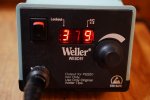
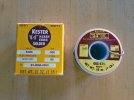
My Weller setting for point-to-point, eyelet-board, or turret-board tube circuits. Using 0.05 or 0.093 Kester "44." 379ºC = 714ºF.

ConradH
Lunatic Member
Too hot just wrecks tips. I've had wire braid get old and oxidized to the point where you can barely solder it. You don't want to use any kind of acid flux paste because you'll never clean it out of the braid and it will corrode forever. Rosin only. If scraping it with a knife or using steel wool (watch for stray pieces that want to make short circuits) or fine sandpaper doesn't work, it might be time to find new braid.
Something I learned not all that long ago. Never use water-washable flux with stranded wire, especially near anything fine pitched. It wicks up the wire and never gets washed out, causing failures later. I like Kester solders with 331 washable flux, but only for new PCB construction where you can really wash it. Should never be used for service, especially on stranded wires. This isn't theory or FUD- I've seen it happen!
Something I learned not all that long ago. Never use water-washable flux with stranded wire, especially near anything fine pitched. It wicks up the wire and never gets washed out, causing failures later. I like Kester solders with 331 washable flux, but only for new PCB construction where you can really wash it. Should never be used for service, especially on stranded wires. This isn't theory or FUD- I've seen it happen!
This is the first time I've heard of water-washable rosin. What is the application for this type of solder rosin?Kester solders with 331 washable flux.
I clean my leftover mess with isopropanol.
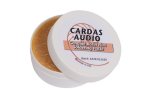
I like Cardas rosin. I don't think water alone works well to clean it.
Thanks!

Lots of speakers have aluminum voice coils, so aluminum tinsels are conceivable:
Solder Wire for Aluminum and Stainless Steel Soldering, 63-37 Soldering Wire for Stainless Steel, Nickel Sheet, Zinc Flake, 1.0mm Dia, 50g - Amazon.com
Solder Wire for Aluminum and Stainless Steel Soldering, 63-37 Soldering Wire for Stainless Steel, Nickel Sheet, Zinc Flake, 1.0mm Dia, 50g - Amazon.com
ConradH
Lunatic Member
No, rosin isn't water washable. The washables are organic fluxes very popular for commercial assembly. You'll often find "no-clean" flux, which is basically minimalist rosin and water washable, which can be corrosive, conductive and HAS to be washed within a day or so of soldering. The upside is it's very easy to wash off and gives you a beautiful clean board. See 331 Flux-Cored Wire for a water washable. They also sell liquid fluxes, both types, but in quantities far larger than any hobbyist needs. I still have a bottle of rosin flux I got decades ago and in all those years it's nearly full. The old stuff really did smell like pine trees!
[Some of those old factory-assembled Dynaco boards were covered in so much rosin you could have cleaned them in alcohol and reused it on more boards!]
[Some of those old factory-assembled Dynaco boards were covered in so much rosin you could have cleaned them in alcohol and reused it on more boards!]
That I can remember - 350 Chevy.......
I use 350C and rarely ever need to go higher.
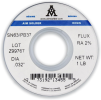
I just bought AIM solder. Supposed to be good, comparable to Kester but less expensive.
The 350 was one of the most reliable V8s that GM made. Just wasn't as sexy as the 327.That I can remember - 350 Chevy.
327 had smaller journals resulting in less friction. 327s revved higher. 377 was the hot ticket, not 383.The 350 was one of the most reliable V8s that GM made. Just wasn't as sexy as the 327.
Sometimes a manufacture just gets it right with the simple basics and without over-engineering. Kinda like the old Magnavox counsel TV I had. 27" screen and huge speakers on each side of screen - that thing sounded great, for a TV. It's on the list of things I wish I kept, along with a '71 Camaro with 350 and 4 speed Muncie transmission.