• The move to the new server is done. There are some software and database maintenance updates in process. This has us passing the hat around to help out. We appreciate any donations. Seriously, even a dollar helps. The payment page may be found here - https://www.audiokarma.org/support.html

Sony ST-J88B service

US7IGN

Active Member
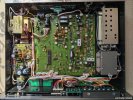
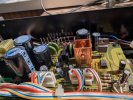
I’ve been asked to service a tuner that has been sitting in its box for years. What would you recommend paying attention to, aside from replacing the electrolytic and tantalum capacitors and performing adjustments?
 

Attachments

  • PXL_20260817_102656140.jpg
    PXL_20260817_102656140.jpg
    178.8 KB · Views: 14
  • PXL_20260817_102706834.jpg
    PXL_20260817_102706834.jpg
    142.9 KB · Views: 15
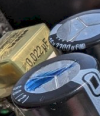
  • PXL_20260817_102725389.jpg
    PXL_20260817_102725389.jpg
    171 KB · Views: 14
Register to hide this ad
First just fire it up and see if there's anything wrong with it. I have an ST-J60 and there was only something wrong in the PLL loop filter. Dunno anymore what it was, I replaced R606 for some reason. Maybe that was what was wrong with it.
 
If it been sitting for a very long time it may be a good idea to bring it up slowly on a variac. Although if you plan on replacing all the caps probably doesn't matter..
 
This is a low power device. Variac is not necessary. Blanket replacement of components same story. Unless you have a thing for that... Note that recapping often introduces faults that were not present before so test it first.

There is no "silver bullet" procedure for tuners (or whatever other equipment for that matter). Sometimes components are so bad blanket replacement is the only option but that doesn't happen very often. This type of Sony tuners won't be needing it.
 
Thanks for the advice. I don't want this unit coming back to me a year later because a capacitor decided to fail after being under voltage. I don't just repair vintage gear; I restore it. I’ve seen bad capacitors like these before, and I always replace them all immediately without even testing them. They aren't worth the cost savings. I see some bad diodes, so I’ll replace those too. I’ll also check for any potentially problematic transistors.
 
This is a low power device. Variac is not necessary.

I will disagree. Not like tube equipment where you reform the caps. I bring them slowly watching the current draw. I've had more than one piece that I set on the shelf working and have it sit for years. Just plug it in and have a failure on power up.
 
What would you recommend paying attention to

Important: Replace these two suppression caps from Rifa before turning the unit on. They will be cracked and ready to explode. If you want, you can just snip them off, power up and replace at a later stage. They are there to stop arcing noises and switch contact erosion.

rifa.JPG
 
Just plug it in and have a failure on power up.
A variac will not help with RIFA Bomben... They WILL explode sooner or later. Prolly sooner. Been there, done that. I missed them once. The owner of the Luxman amp they were in was not amused.
 
Just curious: what do you want to achieve by replacing a gazillion components? Is there an issue with this tuner? BTW- ST-88 is another, much older tuner.
 
A question that surprises me. You don't go to the dentist after your teeth have already fallen out, do you? The owner wants his tuner to be in excellent condition, and I am making that happen. It is called restoration. This must be done at least once every 40 years.
 
You are aware that a full recap also involves careful readjustment of all the circuits you have touched I hope? Also, there are parts that simply cannot be restored because they are not available anymore. Most notorious is the VFD. It always has taken a hit after decennia of use.

Your dental metaphor is lost on me. A tooth is not a capacitor. And I'm about to get several teeth pulled due to trauma. Not fun.
 
I won’t go into the details of what happens to electrolytic and tantalum capacitors over 40 years or how manufacturing technology has evolved, but my experience shows it is far more practical to simply replace them all with new, high-quality ones right away. Following a full adjustment according to the service manual ensures a trouble-free unit for years to come. In some cases, replacing specific transistors can even improve performance beyond the original factory specifications. I have also not yet come across a single device that has not changed its characteristics over so many years due to aging of materials and changes in component parameters and has not required adjustment. Some models have their own specific, inherent issues, which is exactly what I was asking about when I started this thread.

Parts that no longer produce are a real pain. Especially VFETs, which cannot be replaced with anything. As for everything else, even screens can be replaced if you really want to.
 
On varactor tuned units like the the ST-J88B, the C values on the PLL board are important. I would not recommend substituting / increasing values for caps like C513, C517, C518 or C519. I would test the tuner before replacing any of those, and after.
This model uses 6 ceramic filters, so I would look at distortion in wide and narrow separately. If the distortion in either W or N IF path can't meet specs after adjustment, this is likely the place to explore (bad/off spec ceramic filters). People have been buying (hoarding?) ceramic filters for years as they are now out of production, but there are many out there, so likely still available.

 
Back
Top Bottom