• The move to the new server is done. There are some software and database maintenance updates in process. This has us passing the hat around to help out. We appreciate any donations. Seriously, even a dollar helps. The payment page may be found here - https://www.audiokarma.org/support.html

Sound still present even with volume on "zero" position

allanmatters

Active Member
I have a Pioneer A-7 which has undergone repairs twice for the output transistors and other small issues. The last time it got repaired the technician said he could not do anything to get the volume minimized. He said changing the volume pot is the only thing I can do. ow ever I dont believe him.
The sound on the right channel is moderately audible even with the volume control kept on the "zero" position. As I increase the volume gradually it balances on the way all the way up till its maximum output. I tried shifting the balance control t the left but as I raise the volume it gets unbalanced and the left channel becomes louder than the right channel on higher volumes.

I am not sure what to do. Deoxit is super expensive here, about 43 usd . Any other brands I can try apart from Deoxit as I am located in India for now. I read on the forums here about a CRC electronics cleaner. A pricey one too but I may have no other option. I also read that after applying the contact cleaner I need to apply two other liquids (in the case of using CRC cleaner) later.

I even dismantled the volume control from the system to have a look at it and also kept turning the control 180 degrees about 50 times. Checked all wires removed the sockets on the volume board and at the other end and even cleaned those pins. The volume control used to work well before.
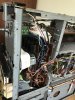
I have attached an image below
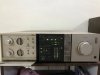
 

Attachments

  • IMG_4538.jpg
    IMG_4538.jpg
    48.3 KB · Views: 46
Register to hide this ad
If the volume pot has some resistance between the center pin (wiper) and ground when it's at zero position, you will here some sound because the signal can't be shunt to ground 100%.

If cleaning the potentiometer didn't solve the problem, I think your tech is right, and replacing the pot is the only solution. A worn potentiometer can do that, never reach zero ohm.

Try connecting the wiper to ground with a wire and alligator clips, and the sound should dissapear.

Disassembling the pot and cleaning any residue that could add resistance would be the last thing to check to confirm if the potentiometer needs to be replaced. You don't need any expensive product to do this. Isopropyl alcohol is ok.
 
If connecting the wiper to ground you still have sound, probably you have another problem (or your amplifier has some not usual topology). Audio signal usually gets out of the wiper at the volume pot, so shunting the wiper to ground makes the signal dissapear ( it goes to zero volt)

Check the ground point you used is really at ground potential. If not, the problem could be the ground connections between boards and the power supply.
 
there are 3 wires arising from each channel from the volume control knob (left and right channels ) black which should be the wiper .Pink and white.
I connected an external wire to the black wire on the left channel and connected the other end to the chassis .did the same for the other channel . Did not notice any difference . Sound was still present
( connected that external wire to the GND screw present at the back of the amp as well)

Do let me know if I am doing it right . Appreciate the tips though .

I have a feeling it could be the ground connections between the boards and power supply as you said.

Here’s something I noticed . I knock the volume control really hard with my knuckles a couple of times and the volume drops a little on the left channel as well as the right . I knock it hard again it returns to the same as per the image I attached here .
 
you need to shunt to ground the center pin of the volume pot, that's where the audio signal gets out of the potentiometer to the rest of the amp. If doing so you still hear sound, there is some problem with the ground (even the ground of the input connectors), or the signal is bleeding by some other path.

EDITED !!: I'm reading the schematic, what you need to shunt to ground are pins 4 and 2 from the "Volume Ass'y A" board.
I realize you have a "Volume Ass'y A" and Volume Ass'y B"


I'd check the resistance between the power supply ground (right at the power supply filter capacitors, where the 2 main filters C1 and C2 join together) and the chassis, and to the volume pot ground pin (should be one of the external pins, pins 15 and 16 of the "Volume Ass'y A"), and also resistance to the RCA inputs. All the grounds should be interconnected. Some amps have a resistor between the circuit ground and chassis ground, but all RCA-volume pot-power supply capacitors should be interconnected, near zero ohm between them.

I see the unit uses a lot of connectors between boards. Chances of a broken solder at a connector are not small, specially if the unit was serviced a couple of times. If you have visual access to the solder side of the connectors, I'd check for broken soldering, or resolder the connectors.
 
Last edited:
Ok so I followed your instructions. On the volume assembly A board. I grounded pins 4 and 2 one at a time (not together )to the GND. The sound disappeared . But when I turned up the volume knob, the sound does not return unless I remove the ground wire from pin 2 for example

So what should I do now ?. I checked the all connectors between different boards thoroughly for possible loose connections
 
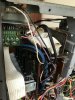
7B58A445-F898-4E2C-A096-84074FACD805.jpeg 00C774EF-7B42-4F01-B4D1-566ED78C6DE8.jpeg

Quick update. So I had discovered pins which had lose solder on the volume assembly A board . There where are around 6 pins (the left channel and right channel 3 pins each connecting to a single grey connector .

All 6 pins were moving from the solder joints as I moved the connecter.

So I removed the socket and re-soldered all the 6 pins . Assembled it back. Closed the system and tested it. There was not much difference. Hopefully I re-soldered it well .

Do have a look at the images, on the left side of the close up image.
 
Hello. Shorting pins 4 and 2 you confirmed that if the signal is completely shunt to ground from the center pins of the potentiometer, the sound disappears. That connection to ground is what the potentiometer does when turned to the MIN position.

You could do some more resistance tests (ALL PASSIVE TESTS , NO POWER, UNIT UNPLUGGED FROM ELECTRICITY) at the volume assembly board: you can check the resistance from the external pins of the Volume potentiometer to chassis or to power supply ground. It must be zero from one end. If not, you can check if the ground pins, (pins 3, 20, 15,16) have some resistance to the chassis, or to the Power Supply ground. It must be zero.

Once you confirmed the connection from the Volume pot and Volume Ass'y to ground is OK (zero resistance), you can confirm the resistance from pins 4 and 2 (those carrying the audio signal) to ground when the volume pot is at minimum.

If the Volume Ass'y PCB is properly grounded, the Volume pot is properly soldered, and you have resistance from pins 2 and 4 to ground when Volume is at minimum, the volume pot is the problem.

All this tests that seem delayed, slow steps, are performed within a minute by a tech at the bench.
 
So I took off the volume control from the board again and decided to check it. Before that I took off the 6 pin socket which was coming from the tone control board and balance out board which also consists of the line straight. Then I tested the volume control. It was the same.

I de-soldered the 8 pin leg of the volume pot and opened the back park of it. I noticed these volume pods have a shaft welded at the end which makes it difficult to put back once opened in my opinion. The right track was quite visible enough and accessible enough to see and clean. So I got a cotton bud and applied some ISO propyl. I cleaned it as much as I could. I re-soldered it to the board at least 3 times to get nearly perfect results. I tried as much as I could for the left channel track. Cleaned the carbon track too gently. Finally the right channel improved significantly but not 100%. It was still audible on a dead position (zero volume). The left channel improved only a little bit.

So I did something different. I de-soldered the volume pot again from the board and managed to change the position of the left channel wiper. I decided to push only the viper for the left channel track a little bit to the end of the carbon, since I noticed the viper is not really set to use the whole carbon track from end to end when assembled in the factory. In this case the wiper of the right channel was at its default position a little ahead of the left channel wiper. I then soldered the pot back again to the board. A great improvement on the left channel. The sound had reduced significantly when the volume was placed at zero, it reduced to almost zero DB (when the volume was set to zero). But it was slightly present, almost as same as the right channel.

This was quite a significant reduction in sound in both the channels now. But the sound is still present when the volume is kept in the zero position. (I guess this is the best I could do) It’s much better than before. It used to be really loud on the right channel like nearly 45 % loud when the volume was set down at zero level.

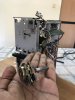
Do check out the pics.
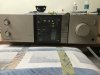
Attached a pic below - That is how low it is now ( the volume )
IMG_9362.jpg IMG_9444.jpg
 
Last edited:
This issue happened to me. A new pot was all that would cure . Took my tech 5 minutes to install. Also a Pioneer.​
 
True. I ordered mine last month on 20th of March but due to the lock down its stuck in the UK. I would gladly replace the volume pot if I had received it ;)
Just restless since we need to stay indoor :dunno:
 
This kind of thing totally doesn't matter. There are plenty of volume controls that don't go to zero volume. This isn't the kind of thing that pot manufacturers worry about.
 
It does matter when you have 109 efficiency speakers.

Why? Do people with very sensitive speakers turn the volume all the way down to listen to how quiet their room can be? If what a volume pot does in the first 15 degrees of it's rotation is that important, you've got one of two problems, and likely both. First, you have entirely too much gain. Second, you're using the wrong pot.
 
Although I use pro audio gear, there was not an over abundance of gain
The unit was a non working Pioneer SX 990. I had it restored. My reliable tech did mention the issue when I picked it up. I figured it wouldn’t be too bad. One side volume was higher than the other and in order to equalize, the volume needed to go nearly to 930. But I don’t want to hear one channel at 0 gain, it isn’t supposed to function that way. Fortunately, and amazingly, there was a 990 pot on eBay for 20 , he got it and installed it. Fixed.

The speaker pair in question was the cs 77. You could hear one in the other room at no volume.
 
Although I use pro audio gear, there was not an over abundance of gain
The unit was a non working Pioneer SX 990. I had it restored. My reliable tech did mention the issue when I picked it up. I figured it wouldn’t be too bad. One side volume was higher than the other and in order to equalize, the volume needed to go nearly to 930. But I don’t want to hear one channel at 0 gain, it isn’t supposed to function that way. Fortunately, and amazingly, there was a 990 pot on eBay for 20 , he got it and installed it. Fixed.

The speaker pair in question was the cs 77. You could hear one in the other room at no volume.

It's generally accepted that most volume pots aren't precision matched devices. The ideas is to get them matched most closely in the middle of their travel where people will use them most. I've never personally seen a volume pot that brought both the channels up simultaneously. Usually it's one, then the other, and they're obviously mismatched until you get an eighth or quarter into their travel. There are some better pots out there, but expecting technically perfect operation from conventional ganged wiper pots is expecting too much. I can't call one "malfunctioning" in such a way a malfunction since it's to be expected.
 
Just to let you all know . I also connected a mini volume pot within the RCA wires to reduce the input sensitivity.
I also read that many people recommend attenuators to reduce this input sensitivity.

So is this a good solution ? Or are the attenuators a better option (when it comes to reduction of input sensitivity of half a volt to the input of the amp ) without hampering quality of sound.
So far I have not noticed any sound quality reduction with my mini volume pot or maybe there is but I can’t notice it.

I also like the fact I can control the input sensitivity with that small volume compared to of I had to buy a 10db attenuator or a 20db attenuator411F578B-3E24-452F-9F30-2035E525CC52.jpeg2C348DC8-18F2-46D5-A2FD-7D46ED8045BE.jpeg
 
So I ordered a volume control. Its a 100k pot. On turning the control more than half way you can feel a tap like effect. Its really tiny as compared to the original ones they made back then.
My only doubt is the old one has 2 extra legs as compared to the new one. I am guessing it may not be very important?
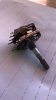
Here are some pics of the old volume pod and the new one
Old vol pod .JPG this is the old faulty one

new pod 1.jpg the new one

new pod 2.jpg

I will have to find some way to extend the knob
 
Works ! but not the loudness Button

Well I fitted the new volume pot. It has only 6 legs in total.

The potentiometer works well cuts off sound at the zero position but sadly the loudness button does not seem to work .

When I switch on the loudness button , nothing happens . No loudness feeling . Only the bass and the rest of the controls work.

I read somewhere here on audiokarma that we should use a potentiometer which has a loudness tap. I am not sure if I understood what that means

I get a tap feeling when I turn the potentiometer until half way . (The new pot) But it’s too loud to reach half the way up to the 12 o’clock Position , anyway it does not seem to work.

The old pot never had a tap feeling but it works better in terms of allowing me to use the loudness button.

what am I missing here
 
Back
Top Bottom