
• The move to the new server is done. There are some software and database maintenance updates in process. This has us passing the hat around to help out. We appreciate any donations. Seriously, even a dollar helps. The payment page may be found here - https://www.audiokarma.org/support.html

Sparkos Labs module measurements

rBuckner

Luv 2 Restore
Subscriber
These modules have come up before and have generated quite a bit of discussion. My view is that I was grateful there was an option to replace the no longer made BA312 inline ICs.

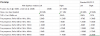
Today measurements were made and compared to another tone control board I had rebuilt just recently. I had just worked on the Sparkos equipped board, upgrading the local filter cap to a better quality part and changing out the film caps for polypropylene. One mod on the Sparkos labs that the owner had installed was a pair of Mundorf 1uF coupling caps. So it's not a correct comparison which would be to do all measurements with BA312's installed then do the Sparkos installation. Here is a snip of the pertinent measurements:
Capture.PNG

To summarize I see just an improvement of about 10dB of noise floor, .05% THD+N and the upper end frequency response is extended above 20kHz. So there you go! Again - a proper comparison was not done "by the book".

@Wire Nut
@Mr Sparko
 
Register to hide this ad
I can only come up with a cropped picture of the whole board, showing the area of the modules. Probably better ones at the maker's website.
DSCN5817_closeup_LI.jpg
 
I should have detailed the measurement system. I used an HP8903B/8903E pair. Connecting the signal output and analyzer inputs with a female to female barrel adapter I got the following measurements:

Noise L/R: -102.7dB / -98.4dB with the 400Hz high pass and 30kHz low pass filters on
Distortion L/R: .0048% / .0095% with the 400Hz high pass and 30kHz low pass filters on
Amplitude with generator level -20dB L/R: -19.95dB / -19.93dB

These have been checked against an in calibration Audio Precision professional $20K+ instrument about a year ago.
 
Ive got two pair of these that I purchased a little less than a year ago. Have been a little apprehensive about installing them.

Appreciate the time and effort that went into the testing Randy!
 
:thumbsup: Nice job, Randy! BTW, did you check rail voltage with the Sparko's in? Sometimes the increased current draw of a modern op amp can have the rail voltage sagging a bit. That said, the Sparko implementation is designed for 35V and you'd have to use a regulator should a modern op amp with a 36V swing be used.
I did not check the supply voltages. The modules were installed by the owner and have been running fine so didn't poke around. I did swap out the generic local filter cap for a low ESR type which would help with instantaneous current demands. But opamps are so low current I wouldn't think this to be an issue - unless I'm missing something. I haven't had my morning tea yet either though!
 
Okay fans, I've had a good long listen. A stock 2275 all recapped properly is a pretty clean and accurate unit. This one has even more clarity to it. Instruments sound much more like you're hooked up right to the mix at the studio. Not earth shattering but a fair bit better. That could very well be the upgraded film caps all over, the Sparkos modules or both. Is it worth it? That's too subjective to put a judgement on it. Again - I'm grateful we have a source of an old out of production part.
 
Okay fans, I've had a good long listen. A stock 2275 all recapped properly is a pretty clean and accurate unit. This one has even more clarity to it. Instruments sound much more like you're hooked up right to the mix at the studio. Not earth shattering but a fair bit better. That could very well be the upgraded film caps all over, the Sparkos modules or both. Is it worth it? That's too subjective to put a judgement on it. Again - I'm grateful we have a source of an old out of production part.

I put these modules in a Sansui 9090db tone board. While I did no testing/comparisons with equipment, my ears did hear a small, but noticeable improvement with no change to the overall "warmth". And like you said, is it worth the cost? To me it was. YMMV.
 
Nice review on the Sparko modules.
I have considered buying them on occasion but have never been motivated enough to pull the trigger.

As an aside, I bought some new BA312 chips from Littlediode a couple of years ago and they still show stock availability.
 
Nice review on the Sparko modules.
I have considered buying them on occasion but have never been motivated enough to pull the trigger.

As an aside, I bought some new BA312 chips from Littlediode a couple of years ago and they still show stock availability.

I still have the original BA312 ICs tucked away for any "just in case" moments.
 
Sparkos has 15% off on the BA312-M right now if you give them your email, total came to $89.92. Thanks for the heads up on this!
Thank you for the information. I need to replace the BA312 for my 2275 receiver that one of the BA312 is bad. How did you get the discount? Just email them? I just checked their website and I didn't see the discount.
 
Got mine today:
mBwXpp9.jpg


bBQ8MBK.jpg


https://sparkoslabs.com/ba312-ic-replacements-vintage-audio/

"About the BA312 IC

The BA312 preamp IC is a now obsolete component that consisted of little more than 3 transistors and some resistors. It was used extensively in many vintage receivers and amplifiers in the line stages and tone control stages. It was not an op amp at all, but rather a single ended 3 transistor gain stage. The original BA312 IC suffered from high output impedance, noise, poor linearity and a less-than-flat frequency response. Installing our BA312 replacement modules will remedy all of these deficiencies in one fell swoop."

"With this upgrade, one can expect a flatter frequency response, a reduction in Total Harmonic Distortion (THD) and a lower noise floor. The measurement plots below illustrate the before and after. The exact measured results will vary slightly depending on which specific model of receiver the modules are installed in, but in every case they gave both a subjective and measured improvement in all units.

The lower end definition will be improved by the transients becoming more dynamic. The mid-range and high end response will have a distinct clarity that they never had before when auditioning everything from Blues, Folk, Rock, and Jazz. Overall, this upgrade will bring the PE01 assembly in the Marantz, or the F2544 assembly in the Sansui to the next level of performance with a distinct improvement in overall dynamic presentation, sound stage, and frequency response across the audible spectrum while retaining their smooth characteristic sound. "
 
Got mine today:
mBwXpp9.jpg


bBQ8MBK.jpg


https://sparkoslabs.com/ba312-ic-replacements-vintage-audio/

"About the BA312 IC

The BA312 preamp IC is a now obsolete component that consisted of little more than 3 transistors and some resistors. It was used extensively in many vintage receivers and amplifiers in the line stages and tone control stages. It was not an op amp at all, but rather a single ended 3 transistor gain stage. The original BA312 IC suffered from high output impedance, noise, poor linearity and a less-than-flat frequency response. Installing our BA312 replacement modules will remedy all of these deficiencies in one fell swoop."

"With this upgrade, one can expect a flatter frequency response, a reduction in Total Harmonic Distortion (THD) and a lower noise floor. The measurement plots below illustrate the before and after. The exact measured results will vary slightly depending on which specific model of receiver the modules are installed in, but in every case they gave both a subjective and measured improvement in all units.

The lower end definition will be improved by the transients becoming more dynamic. The mid-range and high end response will have a distinct clarity that they never had before when auditioning everything from Blues, Folk, Rock, and Jazz. Overall, this upgrade will bring the PE01 assembly in the Marantz, or the F2544 assembly in the Sansui to the next level of performance with a distinct improvement in overall dynamic presentation, sound stage, and frequency response across the audible spectrum while retaining their smooth characteristic sound. "
That's pretty much what I heard when I put these in my one Sansui 9090DB. I'm curious if they finally got rid of the "Schumacher" logo that used to be in the bottom (larger) board. Only one side is showing in the photos. Before you install them, listen carefully to yours first. Then try to "remember" that for after the install so it's "fresh" in your mind. You should hear the difference.
 
That's pretty much what I heard when I put these in my one Sansui 9090DB. I'm curious if they finally got rid of the "Schumacher" logo that used to be in the bottom (larger) board. Only one side is showing in the photos. Before you install them, listen carefully to yours first. Then try to "remember" that for after the install so it's "fresh" in your mind. You should hear the difference.

Or do one channel and compare it to the other.

Tom
 
There are 2 caps per L&R channel, but only one 22 ohm 1/2 watt resistor in the kit. The resistor replaces RE73, a 100 Ohm resistor.

I don't think I could get away with a decent comparison, if I only do one channel first, based on the value of RE73.

EDIT: These don't say Shumacher on them, anywhere I can find:
LVyeHiE.jpg
 
Last edited:
Back
Top Bottom