• The move to the new server is done. There are some software and database maintenance updates in process. This has us passing the hat around to help out. We appreciate any donations. Seriously, even a dollar helps. The payment page may be found here - https://www.audiokarma.org/support.html

Sparks and a volatilized transistor

Sergimm

Active Member
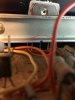
I'm an idiot. I was trying to adjust the idle current for my Marantz 1050 after a full recap. But I slipped and I managed to short a collector leg of the 2SB686 transistor with the metal bar that holds the 4 transistors to the heat-sink. It cracked, sparked, it even dented the metal bar, and the transistor doesn't look like it's in very good shape (notice the cracked lead on the photo) :D

Sooo, have I ruined my amp? What are the next steps? I imagine that at best I need to get new 2SB686s...and at worst RIP the amp :(
 

Attachments

  • IMG_7886.jpeg
    IMG_7886.jpeg
    100.1 KB · Views: 97
Register to hide this ad
Sooo, have I ruined my amp?
No..Check your fuses in the power supply. Shorting the collector to ground probably didn't even damage the transistor other than maybe a scorch mark the collector lead.
 
Last edited:
Highly recommend mini grabber test leads..Amazon has inexpensive sets.
images
 
(notice the cracked lead on the photo)
Did it burn the lead " open" ? I can't tell in your photo.If so. It may need to be replaced. Or a lead extension soldered to the existing damaged lead.
 
Last edited:
If the transistor is still.l good, and very well may be, run a thin bead of solder across the burnt leg if it isn't burned all the way through. Making sure the solder isn't going to short to the heatsink. Or, just replace it.
 
No..Check your fuses in the power supply. Shorting the collector to ground probably didn't even damage the transistor other than maybe a scorch mark the collector lead.

You are right, looks like it blew a fuse. I need to remove the heatsink properly to verify that the transistor is not physically damaged.
 
So, if it turns out that is not physically damaged, can I easily verify that the transistor is still good (with only a multimeter)?

How worth is to just go ahead and replace the four output transistors? I'm aware that some people just go ahead and do it on vintage amps even if there are no known problems. Are there any potential improvements to the amp?

I've seen in an old thread that the modern substitute for my 2SB686 & 2SD716 are 2STA1694 and the 2STC4467 (coincidentally suggested by avionic). Is that suggestion still current? Is it safe to do? I don't usually replace transistors so I'm not familiar with consequences and tradeoffs of doing so.
 
If I find one bad in one channel, and i can find same used originally, I buy a pair for that channel only. But if I have to use a more modern substitute I change all in both channels. It was common though for repairmen to put what ever brand they had or found that matchad the specs of the amp when fixing one channel. Ive seen one brand in one channel different from the other in several amps I've restored. They sounded fine, but I just prefer they are all the same. You can just use a substitute for one channel, but outputs are usually cheap enough I just change them all.
 
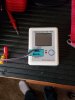
I use one of those cheap Chinese testers to check if a transistor is shorted. I have a transistor checker, but the little testers with LED display is faster. They test caps up to a point, and diodes and resistors.
20200516_145142.jpg
 
So, if it turns out that is not physically damaged, can I easily verify that the transistor is still good (with only a multimeter)?
You didn't short out the transistor. You shorted out the power supply.
 
Thanks so much for your help, I'm learning tons along the way :)

I was about to buy a new fuse but I see I can choose between slow, medium, and fast blow. My service manual doesn't specify what kind is the one that blew. Does it matter which one I choose? After reading a bit about it, by its looks I'd say it should be "fast" blow, but I'm not sure.
 
The 1070 manual (potentially different) indicates a standard time delay curve (fast-blow) in the power supplies. That's usually the safest choice when in doubt.
 
Highly recommend mini grabber test leads..Amazon has inexpensive sets.
images
I purchased my set of mini grabbers after slipping with the big test leads while adjusting bias...and unfortunately destructively shorting an output transistor. I learned as one AK'er said about a dim bulb tester, " you don't need one, until you did." Same holds for mini grabbers.
 
Last edited:
So I finally managed to get a new fuse, put it in place and...nothing. No sound through the headphones, just static. Looks like something got messed up when it shorted. The transistor lead looks ok, so it's not that. I am now a bit discouraged and have no idea of where to look for the problem...do I need to remove and check the transistors?
 
...and it gets worse. Now it does not turn on anymore. No burnt anything, no aparent hot components, it just doesnt turn on. Listening carefully I can hear a very slight buzz that hints that electricity is running somewhere in the amp, but not even the LED turns on anymore. The power button does a small pop when turning it on that I’m not sure it did before.
 
Back
Top Bottom