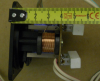
Have just acquired a pair of Technics SB C-250 vintage speakers.
Generally they’re positively reviewed and I’d like to get them performing at their optimum.
I am not familiar with them. So, I have no opinion.
-What is the key quality one should seek in capacitors being used in a loudspeaker crossover (low leakage? or something else?) Please feel free to recommend a brand and series name.
As noted above, crossover caps are non-polarized.
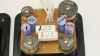
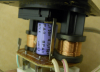
I find it best to visually inspect the crossover before ordering caps. If the original caps are still installed, I replace them with the same capacitance value. The voltage rating must be the same or higher. To get the exact capacitance value, wiring caps in parallel results in an equivalent capacitance of the cap values added together. That is, two 2uF caps in parallel is equivalent to a 4 uF cap. If the resistors and inductors look undamaged (no signs of physical damage or discoloration, such as from overheating), I leave them be and reuse them.
As for the type of caps, that is a divisive topic here. The least inexpensive option is to replace the caps with the same type - generally electrolytic. I only do this for cheap speakers not worth spending money on because of the cost. For example, I got some Radio Shack speakers for free. These particular RS speakers are not known for having high SQ, so I am recapping with electrolytic caps.
The next option is to recap with metalized polypropylene caps. I use poly caps for all caps, even the larger value caps if the speaker is worth it. Poly, film, and foil caps range from the inexpensive Dayton metalized poly caps up to those costing >$100 each. Some advocate adding a 0.3 to 0.5 ohm resistor in series with poly caps to account for the ESR difference from the original electrolytic caps. This is not necessary if the speaker has mid/tweeter attenuation control.
Decide how much you want to spend and shop accordingly. Parts Express is my go-to source for caps.
-Also, has anyone changed the caps in this particular speaker or any others and heard a clear improvement?
In almost every case I hear a significant difference when recapping vintage speakers. Generally, I recap one speaker and then compare how it sounds to the other, un-recapped speaker. Out of dozens of speakers, there have been only two times where I could not hear a difference from recapping.