• The move to the new server is done. There are some software and database maintenance updates in process. This has us passing the hat around to help out. We appreciate any donations. Seriously, even a dollar helps. The payment page may be found here - https://www.audiokarma.org/support.html

Stepdown transformer value/size VA

GrisPato

Super Member
I am waiting for a purchase to arrive from Japan. Sansui au d707 and d907.
I need a stepdown transformer. I've been preparing, reading about the topic.
What I've got up to now is:
1. Same VA / wattage works good
2. Double VA / wattage minimum
3. Triple VA/ wattage needed

I am not trying to save €20 but I would prefer to put the money in the amp instead of in front of it.
What is common sense.
The arguments for bigger sound a lot like bigger is better but no numbers.
I mean: au d707 has a transformer rated 360 VA, rated consumption (au 819) 465 watt. So 500 VA should do it? Take an extra 20-30% margin, 600 VA, or not.
Some people say at least three times rating of equipment. But I understand that this is for equipment with electromotors. That have a crazy high startup current and after that a constant load for your transformer. Unlike audio amplifiers.
So what is wisdom?
 
Register to hide this ad
You mention motors and start up load, what do you think is happening in an audio amplifier on bass peaks? - well I'll tell you, LOTS of current demand. Which is why figures of at least Double, but 3 to 5 times rating for step downs is not unusual. Do you really want to spend all that money on a 'to die for' amplifier only to throttle it with a cheap step down transformer? - but its up to you and what you want to spend. ;)

Plus, if you are buying more JDM units do you want to be forced to buy Another transformer to power it because you 'cheaped out' on the first one?

The rating plate on my AU-X1 says 400W, so I bought a 1.5kW step down, but I was seriously considering the 2kW model. :)
 
Last edited:
I would be very comfortable with a transformer of double capacity. However, if your interest in 100V equipment expands you will get into the situation where you need a second transformer. Instead you could of course decide to power up your additional devices sequentially but you would need to remember to do that...
 
LOTS of current demand
Yes, yes. I understand that. . .
But this is really dynamic ( short bursts ) not constant and I would think within the power rating of the OP transistors and installed transformer. So if this transformer inside the amp is 360 VA, with 4 outputtransistors rated 120 watt how is it going to task the stepdown up to 1,5 kVA?
I don't say it isn't, just want to understand.
 
Yes, yes. I understand that. . .
But this is really dynamic ( short bursts ) not constant and I would think within the power rating of the OP transistors and installed transformer. So if this transformer inside the amp is 360 VA, with 4 outputtransistors rated 120 watt how is it going to task the stepdown up to 1,5 kVA?
I don't say it isn't, just want to understand.

Yeah, I don't see much point in one that's way bigger than the capacity of the supply itself. Like you mentioned, the average current draw is much, much less than maximum and a transformer doesn't mind some occasional peak demand even past the rating.
 
Same with an electric motor
Depends of the use in the equipment. The example I read was for an kitchen mixer. When this is rated 1200 watt and I am going to knead some dough for bread for 10 minutes it is going to draw that 1200 watts all 10 minutes every second. That is not what is happening in an audio amplifier.
Like whoaru99 says for short bursts a transformer can deliver well above rating ( not that I want to go there with an autotransformer) and is commonly happening in audioamplifiers.
The rating plate on my AU-X1 says 400W
This I was not referring to, I understand this is some Japanese requirement. The au d707 says 260 watts on that plate.
Looks in the end then we ar not thinking so differently. I was considering getting 1500 VA to be sure I can power a X1 or alpha later on to.
But for an d707 an 1000 VA should do it than? I also understand that you should never task an autotransformer above rating.
Thanks for the replies.
 
The thing is there is not really a consensus in this. That's why I started this thread, because I would find advice ranging from the same rating as your amp up to 5 times. It would be nice to be able to leave some advice for other people to find here.
I think it is clear that if you can afford and have the space you could get up to 5 times rating of your amp.
On the other end of the spectrum you could say if you never play loud or task your amplifier you could savely get away with the same rating, just be sure you NEVER do task it, even for safety reasons. ( I understand that although your amps transformer can deliver short busrst of up to 30% more this does not apply to an autotransformer. And because there is just one winding this will be dangerous with breaking down)
So what is in between?
At least double the rating up to triple to feel sure?
And what is the rating. For sure not the one on the plate on the back of the Japanese Sansui's. The va of the transformer? The power consumption given in the service manual?
 
Keep in mind that you are constrained by the max ampacity of the circuit you are plugging the stepdown into as well. Most US homes are wired with branch circuits of 15 or 20 amps at 120VAC, thus the maximum power (watts that can be drawn) is 1800 and 2400 respectively.

Also figure there are other loads on the same circuit unless a dedicated breaker and outlet have been installed, and you are further limited in how much can be drawn without the risk of tripping the breaker.

Point being if your amp is pulling enough to require nearly the full output a 2kW stepdown - even if on a transient basis - then you are running a 15A branch circuit at or over design limits and are likely to trip the breaker. A 20A circuit give you more breathing room, but you are still limited to a stepdown of 2400W max, and in reality the closest sized stepdown to that without going over is 2000W. If you need more than that then you are into having to use multiple step downs on seperate circuits.

Finally, how many people are running these amps wide open? For household listening - even if you like it pour - I imagine it is very seldom most are drawing anywhere near max rated current from an amp of 150-300WPC output class which is where you get into really serious power requirements.

I can't turn most of my mid to large size amps past 50% of max gain without it getting painfully loud to be in the same room, so who is really thumping well over 100WPC sustained output on the regular? For commercial sound reinforcement or just for periodic grins maybe, but for routine listening? I'm not buying it.

A stepdown with double the amplfiers max rating should be fine unless you are trying to start earthquakes. A big amp does have large inrush currents and transient demands based upon particular use, but an AC motor is a huge inductive load requiring start - and often run capacitors - to get to speed and keep rotating. Amplfiiers are not generally so demanding a load as that.

And think about it, even without a stepdown, if you are using an amp at a native line voltage of 120VAC and it has a max rated consumption of say 1200W and your branch circuit is only capable of 1800W total (which is still typical in many US homes), you don't have even double the capacity to start.

Keep in mind that all Sansui's gear was designed with the intent to be for household use, even the BA-5000 and B-2301. Further, who here can claim they have personally clipped an amp (or repaired one that has been) due to insufficient input power as the definitive cause? Because I'd like to know how often that actually happens in practice versus speculation that it may.
 
It Happens that i own B2301 and B2302 , along with BA 5000's and BA 3000's.
B3201's and B2302's draw a huge ammount of power, when they are pushed.
I live in greece , 230vac out of the socket , having a fully active three way system.
Sometimes i can see on the power panel (installed am meters and voltage meters ) draws arround 17 amps , while having the system on two channel stereo , not on home cinema version .
These amps are drawn from my amps . B2301 bass, B2302 mid ,AU-X911DG treble . C2301 preamp , CD 10 active cross.
Now c2301 and cd 10 together draw around 80 watts , and the sony cd player draws another 20watts . So the amps drawn are from the power amps.
B2302 is a 100v ac japanese version. The other two are EU models running on 230 Vac .
All those amps are drawn from the power amps ONLY.
17 Amperes is a haevy load to run a stereo only.
Guess what , almost 70% is on bass and the other 30% on the rest.
Both 2300's have a 1,4KVA transformer inside, identical to each other.
17amperes is a really huge ammount of current to be run on a stereo .
So the more power you have to give to your amp the beter it is.
 
I just gotta ask: how could you stand to be in the same room - or even the same house - at the kind of SPL produced by that amount of power? Especially with highly efficient speakers? The dB level under those conditions would be - no hyperbole here - beyond the threshold of pain for anyone who wasn't near deaf already. That is nearly "jet-engine at 20 feet" sound levels.

Unless you are in a VERY large space (larger than an average home certainly) I really cannot understand how running that much power is enjoyable to listen to. Sure, I've shown off the extreme potential of my setups now and again just for the entertainent value, but 200WPC into speakers of 99-101dB efficiency is beyond the pale for casual listening.

I've run setups like that outside for parties and you had to be 50 feet away from the speakers to have a conversation without screaming. I guess I'm a rank amateur in that I've never habitually run any of my high powered amps at those levels save for brief periods of experimentation or using them outside in more of a PA/commercial sound reinforcement type of application. Think 4th of July, playing the 1812 overture while I'm blowing off about $2000 worth of mortar shells and other assorted pyrotechnics.

If a lot of you guys are routinely pushing those output levels at home for general listening (and you don't live in a concert hall) it's a wonder i don't see more news stories about spontaneous structure failures.

Then again, I detect a faint whiff of embellishment of the sort that usually accompanies stories about catching a record breaking trout with a bamboo fishing pole and some 20 pound line, or the time we took on 8, I mean 12, bikers in a bar fight walked away with only a snag in our favorite shirt. And yeah, admit it, we've all played that card a few times.
 
Last edited:
Coincidentally I just recently posted a similar question trying to find out what size step down transformer to get for a Sonneteer Orton integrated amp to take from the US to Thailand, ie from 120 v amp in a 240 v country.

There was a lot of interesting input but I never did figure out what to get. First, we don't know how much power the amp uses.
I am thinking that I will just buy a new amp and not take the 110 v one with me.

https://audiokarma.org/forums/index.php?threads/step-down-transformer-choosing-size.962457/
 
Moe,

Don't get me wrong here. I enjoy good music played on good gear (spelled: Sansui) and quite often at levels well beyond mere background music. Not AC/DC at the LA Coliseum levels, but at levels one would typically find in a smaller (few hundred seat) venue where you can really enjoy the music. Instead of attending just to walk out afterwards with a case of tinnitus and the stench of skunky...oregano on ones outfit. Yeah ok, I'm a stick in the mud.

But in all seriousness, the kind of listening you are talking about is legitimately painfu, and certainly not likely to benefit one's continued enjoyment of listening to good music on good gear. Entirely at your discretion to do so of course, but is that something a large contingent of members here do routinely?

And if pushing these amps that hard is common practice, then I guess we now know why we see so many badly torched amps around these days. I must lesd a sheltered existence or something.
 
17 Amperes is a haevy load to run a stereo only.
Guess what , almost 70% is on bass and the other 30% on the rest.
Both 2300's have a 1,4KVA
Thanks jomark911, I was hoping you would bring your experience to the table. Your system inspired me to go looking in Japan for a cd10. I would love to go activ with my B 2102 for the low/mid and a d907 limited for the highs. The cd 10 just turned out to be to popular and all went above my set budget. Looking now for a cd5 because I have 2-way only so would be sufficient. Anyway...
I like it you bring some numbers.
So 17 A at 230 V is 3910 watts ( assuming peak). 70% is bass, so 2737 watts for one B2301 with a 1400 VA transformer!!!
This shows the overcapacity the Sansui transformers have but just on peaks. This will never be continues.
I think myself your middriver will use some of this too, depending on crossover setting. Because the B2301 is known to push out over 600 watts a channel not 1300 watts.
But you have really inefficient audiophile loudspeakers? Because having this need for power driven active!? Or they dip easily under 2 ohm at low frequencies?
You will be using at least 2kva stepdown for each, maybe 3.
But you know your system.
I have 3 sets of loudspeakers I change out. One set 8 ohm, never goes under 4 ohm, 86 dB sensitivity, another 4 ohm, 92 dB sensitivity, the third 8 ohm minimum ( Linn Kan )83dB sensitivity. A listening room of 24 m². I pushed the B2102 a little for showing my son up to volumepot sign -28dB ( C2101), was deafening and not a level to enjoy music.
 
Keep in mind that you are constrained by the max ampacity of the circuit you are plugging the stepdown into as well. Most US homes are wired with branch circuits of 15 or 20 amps at 120VAC, thus the maximum power (watts that can be drawn) is 1800 and 2400 respectively.

Also figure there are other loads on the same circuit unless a dedicated breaker and outlet have been installed, and you are further limited in how much can be drawn without the risk of tripping the breaker.

Point being if your amp is pulling enough to require nearly the full output a 2kW stepdown - even if on a transient basis - then you are running a 15A branch circuit at or over design limits and are likely to trip the breaker. A 20A circuit give you more breathing room, but you are still limited to a stepdown of 2400W max, and in reality the closest sized stepdown to that without going over is 2000W. If you need more than that then you are into having to use multiple step downs on seperate circuits.

Finally, how many people are running these amps wide open? For household listening - even if you like it pour - I imagine it is very seldom most are drawing anywhere near max rated current from an amp of 150-300WPC output class which is where you get into really serious power requirements.

I can't turn most of my mid to large size amps past 50% of max gain without it getting painfully loud to be in the same room, so who is really thumping well over 100WPC sustained output on the regular? For commercial sound reinforcement or just for periodic grins maybe, but for routine listening? I'm not buying it.

A stepdown with double the amplfiers max rating should be fine unless you are trying to start earthquakes. A big amp does have large inrush currents and transient demands based upon particular use, but an AC motor is a huge inductive load requiring start - and often run capacitors - to get to speed and keep rotating. Amplfiiers are not generally so demanding a load as that.

And think about it, even without a stepdown, if you are using an amp at a native line voltage of 120VAC and it has a max rated consumption of say 1200W and your branch circuit is only capable of 1800W total (which is still typical in many US homes), you don't have even double the capacity to start.

Keep in mind that all Sansui's gear was designed with the intent to be for household use, even the BA-5000 and B-2301. Further, who here can claim they have personally clipped an amp (or repaired one that has been) due to insufficient input power as the definitive cause? Because I'd like to know how often that actually happens in practice versus speculation that it may.
Here in Europe we have average 230*15 max breaker, so 3910 watts so it would be possible here. But I also doubt this is common.
I like you advice for using double amplifiers rating. But what is the rating?
I would like to have that clear. Because we use these step downs mostly for Japanese equipment, I have the feeling the number they give on the back of the amp is for legal compliance?
So we take what. The size of the transformer is not always given.
For example the d707 says 260 watt on the back, has rating of 360 VA on the transformer and the service manual of the au 819 says 465 watt power consumption.
I would think the minimum to be save would be transformer rating times 2, round of to the nearest above, so 720 will give you 750-800 va depending what you can find.
 
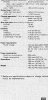
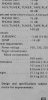
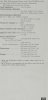
Just for adding to confusion.
Screenshot_20210612-084351_Moon+ Reader.jpg

This is from the service manual of the AU 717!? 85 watts at 8 ohm.

Screenshot_20210612-084633_Moon+ Reader.jpg

This from the AU X1!? Rated 160 watts at 8 ohm.

Screenshot_20210612-084833_Moon+ Reader.jpg

From the B2102, rated 200 watts at 8 ohm.
Sometimes you have 2 numbers for power consumption, like average and maximum, and sometimes an VA rating around 20% above the average but 25% below maximum power consumption.
Let's see about the X1 just having one rating. Assuming this is average power consumption 500 watt, we add 20% for VA rating of transformer, you get 600 VA ( minimum probably) then add another 25% for maximum power consumption, we get 750 watts. Den double that and go to the next up. That would be 1500 - 2000 VA stepdown transformer.
More than enough?
 
Warning: long post incoming.

Ratings can be tricky. Sansui used VA (volt-amps) for rating consumption on most models prior to about 1973-74. As implied by the term, this is simply the product of multiplying volts x amps to arrive at a measure of power consumption.

In more modern terms, power is usually rated in watts, which is still essentially volts multiplied by amps. However, there is the concept of "power factor correction" to take into account, and this is where it gets complicated. This varies by type of load (resistive versus inductive) and other factors in the design of the equipment under discussion. Motor and A/C compressor loads are among the most difficult to start and run. Hence why most larger motors and compressors in large cental air condensing units for a home are run at 240V, which halves the ampacity requirement, is more efficient, reduces the need for excessively heavy gauge wiring and makes for easier load balancing in a dual bus arrangement.

Anyway, Sansui was generally accurate in their stated consumption ratings - whether in VA or W - as given on the rear panel ID tag affixed to most models, so use that as your guideline. For equipment not so marked (as with some tube and very early solid state models) one will need to run the unit through an amp meter to measure consumption at high output level (and under load) to get an accurate idea of what power is being drawn. But then most such models of the era lacking ID plates are under 50 WPC output at 8 ohms. So, the consumption is not going to be anything near the power requirements of a 150-300 WPC amp, even when accounting for lesser efficiency of early designs where being miserly on power usage was not a consideration as it is with so many electrical devices now.

In the US, modern residential electrical services are typically 200 amps at 240 volts (with the 240V comprised of two seperate 120V lines fed in tandem with a common neutral and earth ground). This renders a total potential power consumption of 48KW. In practice, this amount of power is almost never used for any sustained period of time as the distribution grid here is not capable of delivering that full power to every house concurrently at all times. Many older homes still have only 100 or 125 amp services. You figure with electric heat, electric cooking appliances (stove/range/cooktop) electric clothes dryer, air conditioning and a home full of Tv's computers, and all other manner of appliances and devices, you can quickly run up a very large amount of power use. But not, generally speaking, all at once.

Consider that I have an automatoc 13kW backup generator at home. In the event of utility lower loss, I can run my home virtually unchanged from normal use (central heat, water heater, clothes dryer and oven are all natural gas which reduces electrical load considerably). I don't live in a large home, really fairly modest, so my power needs may not be typical but at 13kW max output (which is 52 amps per each of two 120V outputs) from the genset I can remain comfortable and use anything in the house as I would normally. The central air is the only load that will cause the generator to bog down momentarily - and then only on startup - such that the governor has to comlensate the engine speed up to meet the sudden increase in load demand on the gen head.

I post all of that to demonstrate that I think the transient peak consumption issue is being overstated to some extent. If these monster amps (B-2301 for example) are pulling 3X their rated consumption even if only for fractions of a second at a time, while under maximum output, I can't believe the amp would not suffer a catastrophic breakdown in short order. Sansui built them extraordinarily well, but I doubt a margin of triple the rated consumption is something thesd units will stand up to repeatedly.

Now, if you are running an amp hard and the house lights dim noticeably at peaks in the audio, then you have an issue that needs to be addressed for safety, if nothing else. Modern circuit breakers will trip on being overheated, and that is a good way to damage a breaker as they will get weak from being repeatedly tripped in such fashion. Substandard wiring can also be a fire hazard under the same circumstances.

Finally, when using step up or step down transformers, there is always some loss as nothing is 100% efficient. The loss is released as heat, which is why a step up/down will get noticeably warm, if not hot, to the touch. That loss needs to be factored in as well if you are using a step up/down that is barely adequate for the attached load.

 
Have any of you guys measured actual current draw of your equipment? Wonder if consumption rating (tag) is the worst case scenario? I used a Menards Kill A Watt meter and was surprised my biggest 100V tube amp (AU-111G) was a lot less demanding than I thought. Even at high volume with the amp good and hot. I have been using Sanyo TSD-15LU transformers. They are rated at 1500VA and have a protection circuit and capacity indicator light. They have served me well for many years.
 
Tube/valve amplifiers will be less demanding in step down situations (unless they are monsters) than SS amplifiers. The AU-X1 power figures given here suggest that my 1.5kW step down could be close to 'only' 1.5 times capacity for that load, but I never intend to test that limit while listening, so maybe the whole question is more 'academic' than I initially thought. ;)

Update
However, being someone who repairs amplifiers, I might need to run an amplifier at maximum power or beyond :yikes: albeit briefly, which could mean that plenty of step-down headroom is highly desirable. ;)
 
Last edited:
This was discussed before, and I am not 100% convinced by the fundaments for the preferences or suggestions offered which appear a bit exaggerated. The input transformer in the audio amplifier does not know whether it is plugged into a wall plug or in a transformer. Having a transformer powering a second one, if there were no losses then it is sufficient to have identical volt-amp ratings for the step down as that you have on the transformer inside the amplifier. A factor of 2 or 3 in this case would have no consequence, and if the VA rating of the step down transformer is 10% bigger than the internal one, then you are limited by the internal transformer. You can not draw current into the amplifier at a higher rate than its internal transformer can. The real issue is that there are losses. But the loss is not 50% in a transformer, or it would be useless. Some loss is heat (resistive Joule heating of the winding, eddy currents in the core etc.), some is sound(by the transformer vibration) and some is a magnetic field that radiates out of the transformer. So all that is needed is to compensate for the losses of the transformers.
It was mentioned above that some G- series amplifiers cause the lights to dim with the music transients (i understand that no step down transformer was being used). In that case, the amplifier would have likely been distorting as a result of the voltage variations in its rails. My take on that is that playing music like that defeats the purpose of using a G series Sansui or AU-919 or an AU-X1.
Coming back to the step down transformer, you do not want to be limited by the step-down power rating+losses. Having extra capacity is handy because allows you to plug other pieces of 100V gear. I use a 750VA transformer to bring the 230V into 100V for my AU-D907, with no issues so far. I did testing with square and sine waves and did not notice any anomaly at low frequencies.
 
Last edited:
Keep in mind that you are constrained by the max ampacity of the circuit you are plugging the stepdown into as well. Most US homes are wired with branch circuits of 15 or 20 amps at 120VAC, thus the maximum power (watts that can be drawn) is 1800 and 2400 respectively.
...

Yes and no.

Those would be essentially continuous load ratings, but a circuit breaker will pass many multiples of its rated current for short durations such as to cover the peak demands when playing music at high levels. For example, a Square D 15A QO breaker could be expected to hold something from 75A to 150A for up to a full second before tripping. Even higher for shorter duration peaks.

This is why one can run some really big amps, multiples even, without easily tripping a breaker.
 
Last edited:
Back
Top Bottom