• The move to the new server is done. There are some software and database maintenance updates in process. This has us passing the hat around to help out. We appreciate any donations. Seriously, even a dollar helps. The payment page may be found here - https://www.audiokarma.org/support.html

Strange crossover help

DannyBad

New Member
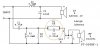
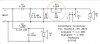
I re-capped some Altec Lansing Bolero 890C speakers several months ago and I just mapped out what this crossover is doing and there is one strange thing:
The tweeter has a 6uf cap which is normal then after that (in parallel) is a 3uf cap and a 15 ohm resistor. The resistor makes sense since it's part of a switchable L-Pad attenuation circuit but the 3uf cap is new to me. It seems to almost operate like a bypass capacitor. My guess is that it's filtering even high frequencies and bypassing the resistance to make those frequencies be more prevalent. Is this correct?
 
Register to hide this ad
The 3uF cap and parallel 15 ohm resistor are the HF compensation network. Basically tones down/flattens the midrange of the horn so it does not overwhelm the higher frequencies.
 
The 3uF cap and parallel 15 ohm resistor are the HF compensation network. Basically tones down/flattens the midrange of the horn so it does not overwhelm the higher frequencies.
Does it do this by allowing the higher filtered frequencies to pass through the second capacitor and those bypass the resistor (since they're in parallel) and then combine back with the frequencies that go through the resistor and into the tweeter? This makes sense, but I'm surprised at how rare this is in a crossover. I also imagine that it could cause some phasing problems and might change the crossover points somewhere. I doubt that it's straight forward and simple. There might be some compromise in doing this.
 
I have only a relatively lay understanding but this is it (and similar to what you said)...

The 3uf capacitor provides less resistance to higher frequencies so they pass relatively freely through the cap and resistor in parallel. At lower frequencies, relative to the 3uf but higher than relative to the 6uf, the 3uf cap is higher resistance in parallel with 15 ohms so more of that range is attenuated.

I think this type or similar is fairly common for horns/compression drivers.
 
I have only a relatively lay understanding but this is it (and similar to what you said)...

The 3uf capacitor provides less resistance to higher frequencies so they pass relatively freely through the cap and resistor in parallel. At lower frequencies, relative to the 3uf but higher than relative to the 6uf, the 3uf cap is higher resistance in parallel with 15 ohms so more of that range is attenuated.

I think this type or similar is fairly common for horns/compression drivers.
Cool. That's what I was thinking it would do but I have never seen it before. I also don't have a whole lot of experience with this kind of thing so........
Thanks for chiming in on this.
 
I'm no expert, but on your phasing question, I would think there is an effect any time you add a capacitor in series with a driver. Phasing doesn't change like a light switch though. It should gradually change with frequency. If you look at any phase diagram it's always a curve. Although they can get pretty steep at certain points. What this says about the sound, I am not qualified to say, but someone here will surely have some knowledge.

There is something to be said for 'less components is best in the crossover'. However there are great sounding speakers of all stripes, including those with complex crossovers.
 
Back
Top Bottom