• The move to the new server is done. There are some software and database maintenance updates in process. This has us passing the hat around to help out. We appreciate any donations. Seriously, even a dollar helps. The payment page may be found here - https://www.audiokarma.org/support.html

SX-1010 Rebuild Questions

jahmadeus

New Member
Hello all,

I recently acquired an SX-1010 in fairly good condition from a friend who is upgrading their system. My friend was the original owner of the unit and said it has never displayed any problems. Serial number indicates it was manufactured in November of 1974.

Visually inspected the unit, everything looked good, power supply board looks a little toasty as others have reported but overall not too bad. Tested the unit, all functions working, controls not too dirty, speaker A and FM indicator lights are out. Sounds very nice as is.

I have done some research on this forum into what others have done with this unit and had some questions.

I've noticed it's common to replace most of the transistors in the unit while rebuilding, with most being modern substitutes instead of the original part. Is it recommended to take this type of shotgun approach if the unit isn't displaying any obvious symptoms? And is the use of modern substitutes due to lack of easy availability of the original parts or because they offer a worthwhile improvement over the original?

Second, I have noticed that there is a redesigned blank power supply PCB for sale which appears to be designed by an AK user. I would love to get some opinions on if this is preferable to just rebuilding/tweaking the stock board.

Any advice is greatly appreciated.
 
Register to hide this ad
IMHO If it ain't broke, don't fix it. Just enjoy it !!! (You should clean the noisy potentiometers and switches though)
 
Generally if it's running good, I'd agree with BOB up to a point. But the SX-1010 is known to have problems( that whole x3x series of receivers have most of the same problems) that if not corrected at this point in it's life(according to your post you got it from the original owner, it's never been touched internally), can result in a BIG DOORSTOP! 1st step is cleaning of the pots and switches (function switches on the SX-838, SX-939,& SX-1010 are known to be finicky.) then test all voltages. If everything looks ok, then go ahead and play it for a while. But plan on a rebuild in the near future.

Answers in order of questions;

1.)Transistors; Replace only those that are KNOWN "Shoot on sight, problem Children". There are threads that have most all of the transistors listed that are on the AK "Ten most Wanted" List. The BIG 3 in the SX-1010 are the 2sc1451, and the sibling 2sa726 and 725. These 3 warrant a Pre-Emptive Strike, at ALL TIMES! They WILL, when they break down (it's a When they do, not If they do) they can and WILL take out up to a full board with them. This is one of the best lists on AK.
https://audiokarma.org/forums/index...ilure-prone-whatever-and-replacements.731653/

As the originals are generally not available (not made anymore) over the years newer transistors with better spec's and ratings have been substituted in with outstanding results. I did a 1010 in 2009 and the SAME transistors are still being used for replacements. Along with the transistors, capacitors are pushing 48 years old and are way beyond recommended service life. Especially the Robin Egg BLUE Sanyo Aluminum electrolytic caps under 4.7uf. These have a very nasty tendency to go resistive. Hence the term "CAPSISTORS" coined by Echowars (EDIT: Fred Longworth not Echowars). IT's loaded with them. You can replace most all of them with WIMA film caps unless size of cap and location prevents installation. Then a Nichicon UKL is generally a good bet for them.

2.) If the P.S. board is just a little toasty,(slightly brown), it's probably not been used much. In that case it would be preferable to rebuild it (lifting power resistors off the board to lessen further toasting of the board). Pictures help. As for RCS16's Power supply board, I've heard very good things about it. It runs cooler for one (BIG PLUS on the 1010) regulation and layout are way better than the original. And it'll take the loads generated by the 1010 and just loaf along (where the original was working hard.)
Again, if it's slightly toasty and the voltages are good, rebuild it. If the board looks like a casserole left in the oven at 400 for 4 hours, replace it.

For peace of mind (you aren't worrying about playing it for the next 30 years) and to bring this 1010 back to spec, do a complete rebuild. Right now you're listening to a Tired unit which most likely isn't up to snuff. Parts about $200-250 with the p.s. board (you can re-coup some of it by selling the working P.S. board). If you keep the original output transistors, make sure you pull of each one in turn and clean heatsink, and back of transistor, add a mica insulator (PIONEER used a clear spray on) with Heatsink grease.

There are tons of threads on the 1010 (rebuilds, problems, etc.).
 
Last edited:
Larry, just for your general hoard of information, the term capsistors came from member Fred Longworth, a very talented guy who kept a bricks and mortar store (Classic Audio Repair, Inc.) going in San Diego for years and years. His last posting was Aug 4, 2019 but his last activity was April 16, 2021. IIRC jdurban1 worked for him - but I could be wrong.
 
Personally I’m a fan of replacing the dial lamps with LEDs. It’ll lower the heat a bit and take a load off of the dimmer switch - which is a problem area.
 
Thanks Mark. I was under the impresion it was Echo. Fred still has the shop in S.D. and from what I understand jdurbin1 is still there too. Edit made.
 
Larry's advice is spot on as is Bob's.
I'll add:
Re-paste all the mounted transistors and blow the dust off.
I like Rick's PS board but you can rebuild the original using the techniques Larry mentioned and have a reliable unit. Rebuilding the original PS over Rick's board is almost a wash if you do the work yourself.
 
Wow, I really appreciate the fast response you guys. This was exactly the input I was hoping for.

I definitely agree with the sentiment of "If it ain't broke don't fix it." I work professionally as a repair tech and have seen a lot of headaches caused by not leaving well enough alone.

However I can already see that there are some caps that need replacing, and I want to re-do the lighting with LEDs and clean the controls. So I figure while I have it on my bench, why not give the entire thing a careful rework.

It is very good to know about the 'shoot on sight list', that was pretty much my next question.

As for replacing the small elec caps with WIMAs. I am a fan of doing this in certain cases, but does this alter the original sound of the unit?

I think my first order of business will be cleaning any dirty switches/controls. Then I will rebuild the original power supply and go from there. Definitely plan on reapplying heatsink paste and mica's to all mounted transistors.

Thanks to everyone who has responded!

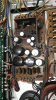
(Attached is a picture of the power supply for reference. Doesn't seem too toasty but definitely has seen some heat. Seems like it could be cleaned up as there aren't any badly burnt parts of the pcb, no carbon, etc. Would you guys agree?)
 

Attachments

  • IMG_9631.PNG
    IMG_9631.PNG
    850.1 KB · Views: 64
As for replacing the small elec caps with WIMAs. I am a fan of doing this in certain cases, but does this alter the original sound of the unit?

The crappy, poorly aging, Sanyo sky blue 1uf and smaller caps are used in many of the Pioneer circuits. The films are a good replacement for those. You’ll see some of those Sanyo’s are used as coupling caps. This is where you might notice a difference. There are e-caps that can be used as a replacement. The Nichicon KZ series is one.
 
The crappy, poorly aging, Sanyo sky blue 1uf and smaller caps are used in many of the Pioneer circuits. The films are a good replacement for those. You’ll see some of those Sanyo’s are used as coupling caps. This is where you might notice a difference. There are e-caps that can be used as a replacement. The Nichicon KZ series is one.

I will try the WIMA route as I have a nice supply of them laying around in those values. I guess it wouldn't be too difficult to do some trial and error to see if it effects the sound negatively.

Thanks for your input on the matter!
 
https://audiokarma.org/forums/index.php?threads/project-pioneer-sx-1010.907688/

Different strokes for different folks.

Best of luck with one of Pioneer’s best ever.

I had seen this post when researching the unit. Love the aesthetics of your unit with the lighting and epoxy. Very nice work!

With all that you have done to the unit, do you feel like it has a different sound than an all original, but healthy, 1010/x3x series? (I am aware this is a highly subjective thing and am also making the assumption you have heard this unit in its natural state)
 
My unit wasn’t working…. so I will reserve comments.

@tillmbil 1010 got the same treatment - was working and in amazing shape - maybe he might provide insight.

He has also heard a 1250 after a restoration as well.

It is not uncommon for folks here to say my rebuilds are too deep. My thoughts are if there are good modern replacements for the SEMIs (small & medium ones) - I generally replace while I am in there.

Your unit / your choice.
 
My unit wasn’t working…. so I will reserve comments.

@tillmbil 1010 got the same treatment - was working and in amazing shape - maybe he might provide insight.

He has also heard a 1250 after a restoration as well.

It is not uncommon for folks here to say my rebuilds are too deep. My thoughts are if there are good modern replacements for the SEMIs (small & medium ones) - I generally replace while I am in there.

If you are happy with the results and the unit is stable (and will remain stable for years to come), that's all that really matters.

Your unit / your choice.

Hence my posting here. Want to hear the experience others have had with this unit to gauge what my choice will be.

For certain, I will be rebuilding the PS, recapping the unit, cleaning the tuner and switches, switching to white LEDS (they looked great in your build), giving the mounted transistors some love, etc. Will live with the unit for a while after that and go from there with some trial and error. Might be worthwhile to take measurements with an audio analyzer between each step to see what effects the rebuild has on the SnR/THD/response/etc.


Still very interested to hear from anyone who has heard (or measured) an SX-1010 before and after this type of shotgun rebuild.

Thanks again to all who replied.
 
Last edited:
Hence my posting here. Want to hear the experience others have had with this unit to gauge what my choice will be.

For certain, I will be rebuilding the PS, recapping the unit, cleaning the tuner and switches,

Still very interested to hear from anyone who has heard (or measured) an SX-1010 before and after this type of shotgun rebuild.

Thanks again to all who replied.

l completely rebuilt my 1010 (with lots of help and support of fellow AK members) and I love it. It did work before I did the rebuild but had some issues. You may have reviewed my thread so I won’t go into detail on the issues. Did it sound good before the rebuild? Yes. After the rebuild? Yes, more robust and it just seems to sound better each time I listen to it.

My main point with this reply though is to address the “cleaning of the switches” you plan to do on yours. The push button switches can be disassembled pretty easily however I don’t recommend doing so unless you have an unlimited supply of the little contacts. I disassembled a couple of mine and was able to get one reassembled but not without a lot of patience. So on those my recommendation is to get them out to where you can get to them with D5 and F5. To do that you have to get the board disconnected from the mounting. In my opinion a good cleaning is difficult without doing this.

The flip switches on the other hand should be disassembled and cleaned. They are not too difficult to disassemble but harder than the push switches. After disassembling them, I shot a little D5 on them an let it sit awhile. I then cleaned them (the contacts on the pin board) with a pink pearl eraser. The small contacts I relied on the D5 and sliding (very carefully) a piece of copy paper through them. Applied F5 for reassembly. A desoldering tool would be a good investment if you don’t already have one.

I wish you luck with your 1010. It is a great receiver and to my ears sounds better than the one 1250 I’ve had opportunity to compare with.
 
At this point I refuse to work on 1010s unless I can do a complete rebuild. There's just too much crap that goes wrong on them. I went through the amp and power supply on one and it was fine except the phono wasn't working properly--turned out a shorted cap in the preamp section was pulling down the phono voltage. Very silly. The 1010 needs a complete rebuild--new caps, transistors, pretty much everything except the outputs, drivers, and tuner board transistors.
 
l completely rebuilt my 1010 (with lots of help and support of fellow AK members) and I love it. It did work before I did the rebuild but had some issues. You may have reviewed my thread so I won’t go into detail on the issues. Did it sound good before the rebuild? Yes. After the rebuild? Yes, more robust and it just seems to sound better each time I listen to it.

My main point with this reply though is to address the “cleaning of the switches” you plan to do on yours. The push button switches can be disassembled pretty easily however I don’t recommend doing so unless you have an unlimited supply of the little contacts. I disassembled a couple of mine and was able to get one reassembled but not without a lot of patience. So on those my recommendation is to get them out to where you can get to them with D5 and F5. To do that you have to get the board disconnected from the mounting. In my opinion a good cleaning is difficult without doing this.

The flip switches on the other hand should be disassembled and cleaned. They are not too difficult to disassemble but harder than the push switches. After disassembling them, I shot a little D5 on them an let it sit awhile. I then cleaned them (the contacts on the pin board) with a pink pearl eraser. The small contacts I relied on the D5 and sliding (very carefully) a piece of copy paper through them. Applied F5 for reassembly. A desoldering tool would be a good investment if you don’t already have one.

I wish you luck with your 1010. It is a great receiver and to my ears sounds better than the one 1250 I’ve had opportunity to compare with.

Yes I have seen your thread, very nice work.

I agree with your methodology on cleaning the controls. I do repair professionally and have had close to 30 or so of this style of pioneer on my bench (although funny enough, not one 1010... yet) and have learned that these units can require more effort that usual when cleaning the controls. So far I have gotten away with not disassembling the flip switches but I reckon that is probably the best way to completely renew the performance of the switch. I am fortunate that the previous owner of this unit was mindful of keeping it in a relatively dust-free environment (almost no dust in the unit when I first opened it up) and, according to him, cleaning the controls every few years (although, I'm sure he just blasted them with electronics contact cleaner and then applied some deoxit, no disassembly of any kind). Most of the push-button switches aren't too bad on this unit but the less used ones (HPF, LPF, pad, etc) are definitely in need of a thorough cleaning.

Much thanks for your input!
 
At this point I refuse to work on 1010s unless I can do a complete rebuild. There's just too much crap that goes wrong on them. I went through the amp and power supply on one and it was fine except the phono wasn't working properly--turned out a shorted cap in the preamp section was pulling down the phono voltage. Very silly. The 1010 needs a complete rebuild--new caps, transistors, pretty much everything except the outputs, drivers, and tuner board transistors.

Yeah, I will definitely be going through all the boards and giving them a complete once over. Recapping is my starting point but it seems many people I talk to that have experience with these units say the transistors are bound to fail. I have repaired a few dozen of these era pioneers (no 1010's though) and have probably just gotten lucky as the issues have usually been power supply (caps, damaged pcb traces, cooked resistors, etc), intermittent relays and dirty controls/tuning cap.

Hearing everyone's experience with this unit, I am definitely starting to consider shotgunning some of the active devices for preventative maintenance, although I may try to stick with NOS original parts when possible (unless the original is known to be particularly fault-prone).

Thanks for your reply!
 
Hello there. I have the 1010 rebuilt by Supernoob and I must say the sound is awesome. My unit was operational when I bought it, and I was extremely fortunate to have Bob (Supernoob) rebuild it for me. Bob is not a electronics repair man, just an audio enthusiast. Having many vintage electronics I am a believer in bringing them back up to spec. While they may perform great for awhile, I have had them develop issues while using that can be rather permanent depending on the unit.
I had a pioneer sx1250 that was repaired twice by Pro Electronics in Tampa for various issues. It was in perfect working order when purchased. Both times the issues were fixed but no further work performed. At the time I had a SX780 that I strongly felt sounded better. When the 1250 started showing signs of issues for the third time I got rid of it. Years later I heard Bob's rebuilt 1250 and there was very little comparison between the one I sold and his rebuilt unit. Difference was like night and day. It is not always the case but one thing is for sure. If you rebuild it you will get the same or better sound, and a unit that should not fail you for a long time.
Just my two cents. I only own vintage gear to include speakers, and have a large amount of them. Not as many receivers a Bob, but that is a whole other issue.
 
At this point I refuse to work on 1010s unless I can do a complete rebuild. There's just too much crap that goes wrong on them. I went through the amp and power supply on one and it was fine except the phono wasn't working properly--turned out a shorted cap in the preamp section was pulling down the phono voltage. Very silly. The 1010 needs a complete rebuild--new caps, transistors, pretty much everything except the outputs, drivers, and tuner board transistors.

I totally agree on a rebuild if you were doing the work for a client or even a friend.
If the receiver is a guys own, I think a deluxe service is the minimum, considering he could fix on whatever comes up. There's a ton of components in there but replacing the known trouble makers and having a original set to keep going is perfectly fine (And kind'a cool)
A good warm up to the hobby.
 
Back
Top Bottom