• The move to the new server is done. There are some software and database maintenance updates in process. This has us passing the hat around to help out. We appreciate any donations. Seriously, even a dollar helps. The payment page may be found here - https://www.audiokarma.org/support.html

Tannoy Lynx Restoration

GabeD

Active Member
Hi all! I have been restoring a set of Tannoy Lynx speakers from the Wildcat line from the mid/late '80s. It actually took me a while to figure out what I had as there are no model names on the cabinets and no part numbers on the drivers. Google image search helped a lot. The drivers are the K series - either K3149 or K3148 - I'm not sure which or what the difference is. (EDIT: It turns out they aren't. See later in the thread, these are 3169G) Can anyone shed more light on what I have?

More about the system here:

http://www.preservationsound.com/wp-content/uploads/2010/12/TannoyWildcats1984Catalog.pdf

Apparently the Lynx was designed to work with a sub called Leopard in PA applications. They appear to share drivers with the Little Gold monitors of the same era. (EDIT: they are actually closer to the DC 4000 speaker of the same era with the 3149 that has fabric surrounds). I have the grilles for the cabinets as well, not pictured.
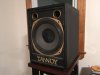
IMG_9316.JPG

My dad got these speakers in the mid '90s. As a kid I remember helping him paint them black and refresh the cabinets. They were painted white with a very thick paint when he got them and he wanted them to be black and Tannoy gold. My guess is that they were used in a church. He also added the cups in the back with binding posts in addition to the XLR jacks.
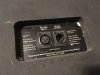
IMG_9229.JPG

He liked to listen to the Beatles on them as he wanted to hear the music "the way it was heard in the studio" - on Tannoys.

I never really liked them. They sounded very lacking in bass with shrill midrange. They ended up with me recently and I was curious to check them out again after quite a few years.

I pulled the drivers and inspected the wiring that was added for the new the terminals only to discover that the two cabinets were wired out of phase and had been since the mid '90s!

IMG_9230.JPG

With a little more checking I discovered an open resistor in the woofer section of one of the crossovers. They are Tannoy Type 1047.
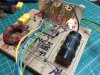
IMG_9252.JPG

I have no idea how long the resistor had been open. Perhaps since he got them. With that discovery I decided to rebuild the crossovers with new components as I don't know the early history of the speakers, what they were subjected to or why they were removed from service. I found suitable Dale 25 watt resistors in the same package as the originals. They were riveted to the heat sink/mounting plate and had to be drilled out. I went with Dayton caps, touched up the solder joints and used deoxit on the pins of the terminals to connect the crossover and drivers.
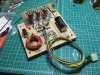
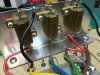
IMG_9257.JPG
IMG_9258.JPG

With the crossovers sorted I checked out the drivers only to find that one of the HF diaphragms was open. Everything else checked out ok. I inspected the open diaphragm and saw that there was a tiny hole in the winding at the very edge. I was able to use a tiny amount of solder to bridge the gap and repair the winding. It measures 9.1 ohms, the same as the good diaphragm. I put a little super glue over the repair. Hopefully it will hold!
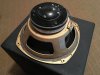
IMG_9237.JPG

I re assembled everything and started listening. They sound incredible! So much different from what I had heard in the past but of course they would be with functional crossovers and tweeters! The sound is very revealing and detailed with a broad stereo image. The bottom end, however, is lacking.

I started researching more information about the lack of bass and the internet suggested that the surrounds could have hardened with age causing the movement of the driver to be restricted. The surrounds are a doped fabric.

There is one person out there that I was able to find - Zen Mod - that has reconditioned the surround of a Tannoy. He has a page which details the procedure to remove the old dope and re apply a new dope. He is working on the 15" version of the drivers but it looks like it should apply to the 12" versions as well. The details are at the bottom third of the page:

https://www.zenmod.in.rs/loudspeake...n-3-previous-episodes-cumulative-with-finish/

While that sounds straight forward, the new dope that he uses is "rat glue". I assume this is what you would find in a mouse/rat glue trap. I'd rather use something purpose made so I began researching surround dope and came across a lot of people repairing KLH and Sansui drivers with various things such as Permatex and PVA. The KLH guys seem to recommend a product from vintage-ar on ebay that is close to what KLH used. Would this be appropriate for the Tannoys?

I wanted to get any thoughts on how best to proceed with freshening up the surrounds. I understand that the bottom end will likely not be earth shaking with these speakers designed to be used with a sub, but any improvement will help. Thanks for your help!
 
Last edited:
Register to hide this ad
I started researching more information about the lack of bass and the internet suggested that the surrounds could have hardened with age causing the movement of the driver to be restricted.
Before undertaking any restoration work on the surrounds I would measure the free air resonant frequency. If it is to spec., I'd leave them alone.
 
Before undertaking any restoration work on the surrounds I would measure the free air resonant frequency. If it is to spec., I'd leave them alone.

Looking at the specs here:

https://www.hilberink.nl/codehans/tannoy61.htm

The Fs should be 32hz for the K3148.

Zen Mod mentions that "And poor old boomer’s surround is looking pretty lousy …… resulting in Fs of ~60Hz, for both of them . K3808/K3809 is having 35Hz fresh from Tannoy , somewhere in mid of 1980-ies."

That's one of my questions - is this a systemic issue with the K series drivers of this era?
 
I have a pair of the 15“ drivers from that series, I believe Puma model. They're really great sounding, worth a restore. I have them stored at away currently, but I had to go though the whole hardened surround glue removal. I never got around to recoating the surrounds with anything, but it's probably a good idea. I'll be watching your thread!
 
I had to go though the whole hardened surround glue removal. I never got around to recoating the surrounds with anything, but it's probably a good idea.

What solvent did you use to remove the glue? Zen Mod used isopropyl alcohol. The KLH guys mention toluene a lot. I really don't want to de laminate the surround from the cone or basket.

Did removing the old dope affect the sound?
 
That's one of my questions - is this a systemic issue with the K series drivers of this era?

I can't tell you about your Tannoy drivers, but many of the treated surrounds from various manufacturers dating probably from the 1950's have hardened over time. Finding any documentation as far as the ingredients for the numerous types used is next to impossible. I would only recommend the sealant sold by vintage AR on eBay that was developed by @RoyC. I also agree with @rothwellaudio, measure your driver's prior to considering any repairs that may or may not be needed.

Nice background story and progress so far, good luck with the completion of your project!
 
Nice background story and progress so far, good luck with the completion of your project!

Thanks! Dad got these around the same time that I got my first Dremel for Christmas. I was so excited to have it (and still works and use it to this day) and used it to clear the thick white paint out of the Tannoy logo. There was so much paint that you could barely make out the lettering. I used a small grinding bit and a lot of patience to remove it.

IMG_9318.JPG

The lettering was filled in with gold paint. It's not perfect but it has my fingerprints on it from many years ago.

I also agree with @rothwellaudio, measure your driver's prior to considering any repairs that may or may not be needed.

Looks like I have some homework to do!
 
It's been a few years, I forget if I used water or alcohol to soak the glue. It's pretty durable fabric material, just don't go too hard and crack it. The brush and alcohol method looks good from his website. Yes, removing the glue means more excursion and more bass. Putting them in a larger cabinet helps also.
 
The drivers are the K series - either K3149 or K3148 - I'm not sure which or what the difference is. Can anyone shed more light on what I have?

Is this info labeled on the drivers themselves?
I saw another discussion about the Lynx speakers here on AK that said the drivers were 3169G types. Just curious.

In any case, whatever sealant is put on the surrounds affects the midrange as well as Fs.
It acts to terminate the edge of the cone. When the crossover is 1k-2k this is an issue.

I would only recommend the sealant sold by vintage AR on eBay that was developed by @RoyC. I also agree with @rothwellaudio, measure your driver's prior to considering any repairs that may or may not be needed.

RoyC's sealant is THE stuff for KLHs and ARs because it is known what the original sealant was made from. RoyC had to figure out the correct proportions which he did. Who knows what Tannoy used?

I think the termination issue isn't as big a deal on KLH and AR woofers because they were pretty heavy, low efficiency types with decent self damping. The general consensus on using it on KLH midranges is to thin it out a lot.

Assuming you know what the original Fs was, measuring the driver pre-treatment and discovering the Fs is still correct doesn't necessarily say anything about it's termination properties.

I talked to the folks at Great Plains Audio about the goop on my Altec woofers. They said that they didn't know what the original black goop was, they did know that MEK was the solvent, they now use the PVA based sealants on their new woofers and finally they said that you can't put the PVA type on to a surround with the old type on it.

If there are any old Jensen employees lurking around, I would love to know what they used on the FlexAir accordian surrounds. I have Six of them and they aren't getting any newer. EV and CTS people are also welcome.
 
Assuming you know what the original Fs was, measuring the driver pre-treatment and discovering the Fs is still correct doesn't necessarily say anything about it's termination properties.
This is true. However, if the free air resonance has changed significantly at least you know that surround treatment has definitely deteriorated and you're not wasting your time by re-doing it.
 
I almost think there should be a whole separate thread devoted to the topic of old surrounds.
KLH and AR woofers have been well covered over at The Classic Speaker Pages but cared and feeding of other cloth surrounds seems haphazard. There are also some questions about old British rubber surrounds.
 
Is this info labeled on the drivers themselves?
I saw another discussion about the Lynx speakers here on AK that said the drivers were 3169G types. Just curious.

Photos of one of the drivers are below. There is a long quality assurance label across the magnet structure but no model info. There are notes from techs in the past scrawled in a few places.

IMG_9319.JPG
IMG_9320.JPG
IMG_9321.JPG
IMG_9322.JPG


I assume that this is a serial number as it is different on each driver.

IMG_9323.JPG

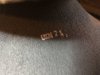
This is the only marking on the back of the cone.

IMG_9324.JPG

Looks like UKM 21?
 
Last edited:
Here is some info.
https://www.hilberink.nl/codehans/tannoy125.htm

All things considered I think I would be looking at the drivers as the prize here and determine if they could be repurposed into different cabinets successfully for home use. The goal being to achieve a wider frequency response in the lower ranges too.
 
Last edited:
In any case, whatever sealant is put on the surrounds affects the midrange as well as Fs.
It acts to terminate the edge of the cone. When the crossover is 1k-2k this is an issue.

Interesting, I had not considered how the midrange would be affected by the surround but for sure should be given consideration in this 2 way system.

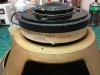
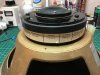
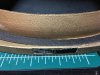
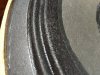
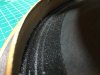
Some closeups of the surrounds. They are very stiff and sound hard when tapped on. The dope is not sticky and appears to be clear as you can see light through the surround.

IMG_9326.JPG

IMG_9325.JPG
 

Thanks for that. The link I had in the first post did not have the rest of the brochure you linked. Mine are toward the bottom with the grill style that does not cover the Tannoy logo. It looks like the model name was printed or was a sticker on the grill. Mine have at least two coats of paint over it, hence my initial trouble figuring out what these were.
 
In any case, whatever sealant is put on the surrounds affects the midrange as well as Fs.
It acts to terminate the edge of the cone. When the crossover is 1k-2k this is an issue.

Assuming you know what the original Fs was, measuring the driver pre-treatment and discovering the Fs is still correct doesn't necessarily say anything about it's termination properties.

If the cone is currently terminated with old hardened sealant and lets say twice the Fs, I would think that the midrange is more adversely affected than a rejuvenated surround that more closely matches the original Fs. I'm just thinking to myself???

Please provide more information that might explain your thoughts further, or feedback on my thoughts. I'm not disagreeing with you, it surely has an effect.
 
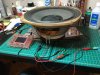
I did a little testing with my elcheapo scope made of the finest grade of Chineseium and a tone generator on my phone. I don't have one of those speaker analyzer tools so I used a 10 ohm resistor with the scope measuring across it the old school way.

IMG_9340.JPG


Driver 1
Sweeping the frequency up and down the lowest Vmax on the scope was .19v at 72hz
Fs of 72hz

IMG_9339.JPG


Driver 2
Sweeping the frequency up and down the lowest Vmax on the scope was .18v at 117hz
Fs of 117hz

IMG_9342.JPG

So there is definitely something holding these drivers back. I'm not totally sure what model they are but as mentioned in an earlier post the Fs of the K3148 is 32hz.
 
Last edited:
So there is definitely something holding these drivers back. I'm not totally sure what model they are but as mentioned in an earlier post the Fs of the K3148 is 32hz.

Over on the DIYAudio site, someone else also got a set of Lynx's and it was there that I saw the reference to the 3169. It was also there where there is talk about the 3169 being the PA version with a higher Fs. If they were to be used with a separate woofer, that would allow them to squeeze some more efficiency out of them. Not a bad thing in the PA world.
Look here:

https://www.diyaudio.com/forums/mul...storing-tannoy-12-dc-drivers-3149-3169-a.html

and here:

http://www.gbaudio.co.uk/data/3169g.htm
 
Please provide more information that might explain your thoughts further, or feedback on my thoughts.

I have always been interested in how drivers actually work. In the early 80's when I started actually building speakers, I bought a copy of Martin Collom's book "High Performance Loudspeakers". I always thought that big JBLs, QUADs, Spendors and KEFs were the best speakers I ever heard so 3 out of 4 were British, Martin is British, he should know.
Now the book is considered a reference. Expensive but worth it if you want to know.

You can see a bit of him talking about surrounds here:

https://books.google.com/books?id=L...q=colloms driver surround termination&f=false

The KEF people are big on engineering and publish a brochure about their Q series which while a far cry from old Tannoys but has some interesting stuff about their current take on surrounds.

http://www.kef.com/uploads/files/en/series_pdf/q_tech_explained_010910_en.pdf

If the goop on the surrounds is hardening not only will the Fs go up but it can't absorb anything for termination.
If one knew what the original solvent they used was, you might be able to loosen the surround by painting a small amount of it back on. I know this works on KLHs because we know it was Toluene. It should work on Altecs with MEK. The problem is we don't know what Tannoy used.

Careful experimentation might be in order. The surrounds in their current condition are pretty useless so putting a couple dots of solvent on one to see if it gets a bit tacky won't wreck them. Don't get it on the cone or frame joint because if it works it might well dissolve the glue: very bad. I would probably start with lacquer thinner before trying the really nasty stuff.

As I said, putting modern PVA goop over old goop just makes things worse.
 
Over on the DIYAudio site, someone else also got a set of Lynx's and it was there that I saw the reference to the 3169. It was also there where there is talk about the 3169 being the PA version with a higher Fs. If they were to be used with a separate woofer, that would allow them to squeeze some more efficiency out of them.

https://www.diyaudio.com/forums/mul...storing-tannoy-12-dc-drivers-3149-3169-a.html

That thread had some interesting clues to look for in determining what the drivers are. The poster C37 had a miss matched set of drivers but showed that the 3169G driver had a black inner former of the woofer voice coil. I ended up joining the forum so I could see the pictures. It is too bad that C37 was literally hit by a car and the thread abruptly ends. The one below was gently lifted from that thread:

C37-BlackTannoyFormer.jpg

His had a small rub which you can see. I didn't want to go as far as removing the magnet structure from the basket but I was able to gently life up on the cone creating an excursion where you can see the black inner former:

IMG_9356.JPG


C37 also took pictures of the surround of the 3169G, again lifted from his thread:

C37-TannoySurround.jpg

And how mine looks:

IMG_9354.JPG


Another good resource was the page here:

https://www.hilberink.nl/codehans/tannoy52.htm

In the section about the Wildcat series it talks about the Lynx and that it had 3169G drivers.

Specially adapted Duals were designed that had more power handling and greater sensitivity than had ever been produced before by Tannoy. These were fitted to a range of very robustly made cabinets with reinforced handles and corners suitable for mobile cabaret or fixed contractor installation work.

and further on
Lynx using 3169G two 12" high sensitivity Dual Concentrics in a double cabinet.

Looking at the sales literature the dual cabinet setup was an option to grow into with the modular system.

So, I think it is safe to say that I have a set of Tannoy Lynx PA system speakers from the contractor line with 3169G drivers from 1988 looking at the date codes on the original resistors.
 
Back
Top Bottom