

You are using an out of date browser. It may not display this or other websites correctly.
You should upgrade or use an alternative browser.
You should upgrade or use an alternative browser.
Testing transistors
- Thread starter avionic
- Start date


tmsears
Active Member
Just wanted to say this is the best how-to for checking transistors that I have seen to date-at least for me. I am still trying to figure out how to transistors work- I haven't got the whole "electron-hole" thing down in my brain just yet but this certainly helps this amateur troubleshoot in the interim. 

Karl vd Berg
Super Member
I need to buy one of these Peak Atlas meters... There are a couple of them really good, but probably need more advise for most common use...If your going to be testing a lot of transistors. Which I do. I love my little DCA.

Question: how do Darlington transistors measure on DMM? Not in the usual 0.45V to 0.65V, I guess?

audiodummy
Well-Known Member
Everything should be similar except the B-E junction. The B-E junction should be approximately double what you would expect in a similar bipolar junction transistor because there are now two transistors in series. The number isn't perfect as they can have different characteristics, along with the possible built-in resistor will throw off results.
I tested one of my spare parts darlingtons and got 1.1 volts on the B-E junction.
I tested one of my spare parts darlingtons and got 1.1 volts on the B-E junction.
Last edited:

Soundork
Super Member
I know you like being challenged...Testing BJT transistors for shorts or opens.
The majority of "Bad" transistors are due to shorted junctions. This is my attempt to simplify the routine for those that may not already know the process.
Photo 1
Transistor lead identification - If this is unknown you will need to find a spec sheet on the transistor under test.Sometimes it is provided on the schematics " legend" or even silkscreened on the printed circuit board.
Photos 2 & 3
Testing the Base-Collector Junction***With your DMM in the Diode Check function -Attach test leads as shown.One direction should show -OL(open) - and in the other direction a similiar value to the one depicted in the photo ,depending on whether its a PNP or NPN determines the direction of conduction.
Photos 4 & 5
Testing the Emitter-Collector Junction*** As seen in photo. Both directions should show (open) in a good transistor reguardless of NPN or PNP.
Photos 6 & 7
Testing the Emitter-Base Junction*** Again depending on NPN or PNP. One direction will show (open) and the other direction a similiar value to the example depicted in the photo.
NOTE:The transistor in the photo is a " serviceable " example. ONsemi MJL4302A PNP
If your meter at any time - beeps continuously - and/or reads a low value close to zero . First verify your test leads are not touching.If they are not touching ---You have identified a faulty junction and a unserviceable transistor.
Good luck..I hope this is helpful..
Dave

How do you do this with the transistor being "in circuit"?
Best
Soundork

Easy answer.. I don't !How do you do this with the transistor being "in circuit"?
I know you like being challenged...
How do you do this with the transistor being "in circuit"?
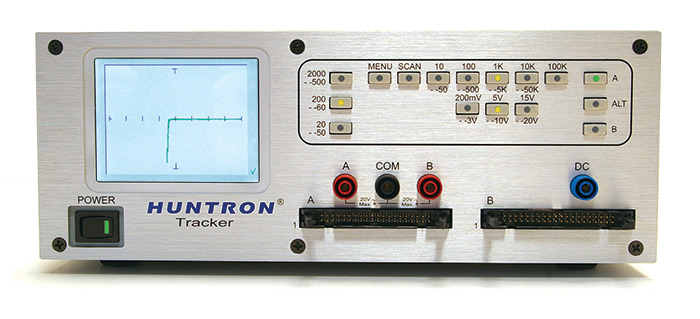
Soundork
Super Member
Yeah, I give up. I am just going to buy something that would work for the next 20 years. Then, I would ponder if its going to be fixed or replaced...
Soundork
Super Member
Just to substantiate my statement above...parts seem to be hard to find.Yeah, I give up. I am just going to buy something that would work for the next 20 years. Then, I would ponder if its going to be fixed or replaced...
Karl vd Berg
Super Member
I tested the two 2SD1953's - off circuit - I have here and got these values (red probe on Q lead):Everything should be similar except the B-E junction. The B-E junction should be approximately double what you would expect in a similar bipolar junction transistor because there are now two transistors in series. The number isn't perfect as they can have different characteristics, along with the possible built-in resistor will throw off results.
I tested one of my spare parts darlingtons and got 1.1 volts on the B-E junction.
B-C = .609
B-E = .725
E-C = .551
That looks bad.E-C = .551
Probably because 2SD1953 is a darlington transistor..They will test out a little differently.

Karl vd Berg
Super Member
That's what I was expecting! Maybe found the problem in an amp!
Now I need only to find a substitute for the 2SD1953. I have a BD683 (also a Darlington), need to check pinout.
Now I need only to find a substitute for the 2SD1953. I have a BD683 (also a Darlington), need to check pinout.

petehall347
the brandy coffee man
Darlington NPN Silicon + Diode https://english.electronica-pt.com/components-cross-reference?ref=2SD1953
best check datasheet
best check datasheet
petehall347
the brandy coffee man
Karl vd Berg
Super Member
It reads "OL". But in the datasheet, there's a diode between C and E.What does it read E - C ?