• The move to the new server is done. There are some software and database maintenance updates in process. This has us passing the hat around to help out. We appreciate any donations. Seriously, even a dollar helps. The payment page may be found here - https://www.audiokarma.org/support.html

The Fisher XP-1 Questions

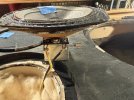
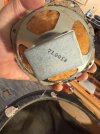
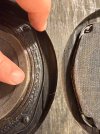
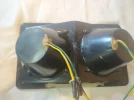
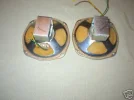
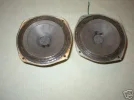
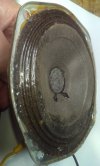
OK Folks! Any thoughts on this midrange? The paper cone on this one looks warped. I am guessing it will either need to be re-coned or replaced. Look at the back side, I have never seen a driver with material like this under the cone and inside the basket. For me this is all uncharted territory! I appreciate everyones input as I work through this restoration.
IMG_0086.JPG
 

Attachments

  • IMG_0090.JPG
    IMG_0090.JPG
    112.5 KB · Views: 6
Why no close-up pic of the tweet? And was there fiberglass wedged in between the basket and cone of the 5"? If so, it's a direct rip of the AR2. Kinda looks like you mighta tore that brittle paper cone ... whoops! I've got a couple if you feel like replacing.
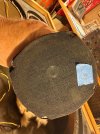
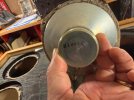
Yes, the 5" did have the fiberglass between the basket and the cone. I was thinking of having it re-coned but definitely might be interested if you have good replacements. Not that it would be out of the question that I did the damage, in this case this is the way it was when I purchased. On the tweeter, here is a pic of the tweeter but I have not pulled that cover off to be able to see much. I am hoping it is intact. I have not tested any of the drivers yet. The connection to the tweeter had a resister soldered inline right at the connection to the driver.
 

Attachments

  • IMG_0096.JPG
    IMG_0096.JPG
    198 KB · Views: 4
  • IMG_0098.JPG
    IMG_0098.JPG
    107.5 KB · Views: 4
Did it play clearly?

You should not look to replace it if it works, nothing of the shelf new will likely sound correct. An oem replacement is preferred. Likely cheaper too.

And yes I would have the mid sealed completely. Why the cap is flexible i don't know, maybe they thought it did something.
 
Why no close-up pic of the tweet? And was there fiberglass wedged in between the basket and cone of the 5"? If so, it's a direct rip of the AR2. Kinda looks like you mighta tore that brittle paper cone ... whoops! I've got a couple if you feel like replacing.
Just talked to my re-cone guy and he said the probably a no go on re-coning the midranges. DM me if you have some of the AR2 mids that might be a good replacement.
 
Just so ya know, the warping is "normal" for the AR2-type 5" at this point in time. They were made 50 to 60 years ago so humidity and pressure from the fiberglass damping material has pushed the cones out and stretched the spider (the stiff cloth material that centers the voice coil) to an extreme degree. Honestly, these things would probably be best just left as is. My comment about tearing the cone was based on seeing the blue painter's tape on the cone itself. These speakers have become VERY brittle and they were made of relatively thin paper to begin with. One shouldn't really handle the cones themselves if possible, let alone put tape on them. The ones I have look just like the one(s) in your pictures so, if yours "work" at this point, there's probably not much to be gained by swapping them out.

As you said in your first entry in this thread that all the drivers were working, my recommendation would be to check the crossover caps and address any failures there while you have them disassembled, then try and carefully get them back together without causing any damage.

"First, do no harm."
 
Just so ya know, the warping is "normal" for the AR2-type 5" at this point in time. They were made 50 to 60 years ago so humidity and pressure from the fiberglass damping material has pushed the cones out and stretched the spider (the stiff cloth material that centers the voice coil) to an extreme degree. Honestly, these things would probably be best just left as is. My comment about tearing the cone was based on seeing the blue painter's tape on the cone itself. These speakers have become VERY brittle and they were made of relatively thin paper to begin with. One shouldn't really handle the cones themselves if possible, let alone put tape on them. The ones I have look just like the one(s) in your pictures so, if yours "work" at this point, there's probably not much to be gained by swapping them out.

As you said in your first entry in this thread that all the drivers were working, my recommendation would be to check the crossover caps and address any failures there while you have them disassembled, then try and carefully get them back together without causing any damage.

"First, do no harm."
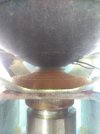
Copy that. The tape was just me quickly labeling the drivers before I removed them from the cabinets. I figured gentle application of the painters tape would be gentle enough. I will carefully remove the tape off when I get home and move to the back magnet! I was concerned also about a little bubble where the cone meets the surround. Here is a better picture of that. Now that they have been removed I will put a meter on them as well as testing them individually with a tone generator.
 

Attachments

  • IMG_0084.JPG
    IMG_0084.JPG
    178.2 KB · Views: 9
On all the AR2 examples I've seen, the rubbery compliance/edge treatment appears to have been crudely brushed on with little care for where it went and how evenly it was applied. If I understand what you were pointing at in the picture, it just looks like they "missed a spot." Certainly not the worst example I've seen ... running tones 1kHz to 10kHz at low levels should tell you what you need to know. The AR versions typically read 3 to 4 ohms DCR.
 
I am really curious to see what that tweeter looks like once the gauze has been removed from the front. The center pole piece appears to be exposed which was unusual back then except for the highly regarded GE "bullet" tweeters also used by Ampex that still sound great even by today's standards.
 
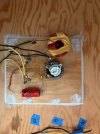
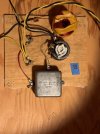
The rebuild is coming along quite well. The original caps and resisters had drifted so they have been replaced. I was able to source a couple of mid '60's Carbonneau midranges that I am hoping will be good replacement for the originals with the warped cones. I am almost done with the refinishing of the cabinets and they look fantastic. I am getting ready to start putting them back together. Here is a before and after pic one one of the crossovers.

I did save the original insulation but I was thinking about replacing the old stuff with something fresh. The original was very dense and I am guessing that it was fiberglass based. I was thinking of using rockwool and then putting a fabric divider in to keep any fibers from making their way to the drivers. Or is there something else I should consider? Should I match the weight and placement to what I removed or does changing the material change how it should be applied. The original basically filled the cabinet and was separated from the drivers with a cloth stapled to the inside walls of the cabinet.

I also completely sealed the isolation compartment for the midrange. They did have sonotubes from the factory but they were not completely sealed. The new mids I am going to use do not have the fiberglass stuffing in the basket so I wanted to make sure that they were separated from the rest of the cabinet. The tweeters are closed back but the mids are not.

Really appreciate any tips!
 

Attachments

  • IMG_0181.JPG
    IMG_0181.JPG
    107 KB · Views: 3
  • IMG_0159.JPG
    IMG_0159.JPG
    142.1 KB · Views: 3
Crossover work looks good! Remember that ANY changes you make in materials (rock wool/fiberglass) or treatment (fiberglass packing of mids) will potentially change the system in unknown ways, maybe good, maybe not. Have you considered doing these things to just one of the speakers, leaving the other one stock, so that you could compare?
 
Crossover work looks good! Remember that ANY changes you make in materials (rock wool/fiberglass) or treatment (fiberglass packing of mids) will potentially change the system in unknown ways, maybe good, maybe not. Have you considered doing these things to just one of the speakers, leaving the other one stock, so that you could compare?
Great advice! But being the person that I am I of course dove in headfirst with completely dismantling everything before I ever even put a signal through these things. My main first attraction to them was their esthetics. From the very beginning my thought was that the drivers looked so sloppy with warped cones on the mids and all of that goop on the woofers that I assumed I would replace them all and just build out a resto-mod basically using only the cabinets.

After digging in on researching I fell in love with the story and thought I owed it to them and myself to see what they were all about in their original form. This has included shopping for a late '50's tube amplifier to complete the package. I have lots of '50's jazz vinyl in my collection and I am ready to sit back and here what my parents might have heard back in the day! Anyway, at this point I have only brought the crossovers back to spec. I did search for orginal replacements for the mid but landed on a pair from the the same manufacturer and time period. I was interested in the AR2's but it was your comment that they also suffered from the cone warping. Seems like the backloading of the basket with the fiberglass probably contributes to that. The originals do still work and the read right at 3.3 DCR. but I have to assume that with the cone warping they do not sound as intended. To your point maybe I will put one of them in one cab and the replacement in the other and see where I land! My guess is the AR2 mids are where I would have to go to find something closer. My understanding is that the fiberglass backing was only there to protect the mids from being impacted by the changing internal cabinet pressure driven by the woofers. The mids were already in a "semi" sealed enclosure but it just seemed like no real care had been made to really lock that enclosure down. For instance where the cable penetrated the enclosure had zero caulking.

Stopping now. Realizing how long winded I get... Thanks for the input!
 
RE: "My understanding is that the fiberglass backing was only there to protect the mids from being impacted by the changing internal cabinet pressure driven by the woofers. The mids were already in a "semi" sealed enclosure but it just seemed like no real care had been made to really lock that enclosure down."

Actually, in the AR2 there was a molded plastic piece that contained the two 5" drivers as below (not my pics):

AR2Midrange2PairWithMounts_1.webpAR2Midrange2PairWithMounts_4.webp

These "cans" were stuffed with fiberglass and the drivers themselves were also "damped" with fiberglass wedges inserted in the backside between the basket and cone (again, not my pics):

AR2-AngledTweetPairDrivers_2.webpAR2-AngledTweetPairDrivers_1.webp

Since these drivers were completely sealed off from the main cabinet, they never received ANY back-pressure from the woofers. I'm pretty sure the added damping had nothing to do with that and was more of a frequency response modification.

 
RE: "My understanding is that the fiberglass backing was only there to protect the mids from being impacted by the changing internal cabinet pressure driven by the woofers. The mids were already in a "semi" sealed enclosure but it just seemed like no real care had been made to really lock that enclosure down."

Actually, in the AR2 there was a molded plastic piece that contained the two 5" drivers as below (not my pics):

View attachment 3836658View attachment 3836659

These "cans" were stuffed with fiberglass and the drivers themselves were also "damped" with fiberglass wedges inserted in the backside between the basket and cone (again, not my pics):

View attachment 3836661View attachment 3836662

Since these drivers were completely sealed off from the main cabinet, they never received ANY back-pressure from the woofers. I'm pretty sure the added damping had nothing to do with that and was more of a frequency response modification.
But am I right in assuming that a deformed cone has likely changed the original performance of the driver? If I could find a pair of these AR-2's that were not deformed I would likely pick them up as they sure look to be very likely to be a close equivalent to what I found in my XP-1's
 
In the AR2a saga I was involved with, I ended up just swapping the whole assemblies out and doing an upgrade to a different midrange driver that was a factory approved kinda deal in the 60s. This swap converted them to AR2ax models. If you actually found a pair of real Carbonneau drivers of the same exact type that haven't ever been "stuffed", you'll be in the best position to determine whether the stuffing, age and fatigue has caused the originals to deteriorate. Like I said earlier, try running 1kHz to 10kHz tones at a VERY LOW level to verify that the stuffed ones still work without rattle and buzz and then compare to the unstuffed ones for level. Of course the unstuffed ones are likely to be louder but you should get an idea ... I removed the stuffing from one of mine and found that it still "worked" in spite of being deformed and having the spider stretched but I had no un-messed-with example to compare it to:

AR2a-Mid-PostMortem-Unstuffed-SpiderExtended_2.JPG AR2a-Mid-PostMortem-Unstuffed-SideView_2.JPG
 
try running 1kHz to 10kHz tones at a VERY LOW level to verify that the stuffed ones still work without rattle and buzz and then compare to the unstuffed ones for level. ...
After testing the original midranges I think I will start there. I found them to sound surprisingly good with no discernible issues of any kind. I also found that the replacements I purchase read at 7.3 DCR. The replacements are much more efficient and would definitely require me to add a resister to the mix if I did choose to use them. Thanks for pushing me to dig in deeper on that issue! if I end up replacing them I will likely look for a pair of AR-2's as they seem like they might be a very close relative.
 
I am in the process of restoring a pair of 1960 Fisher XP-1's. They are really coming along well and I am looking forward to hearing what these things sound like after brining them back from the dead! I would like to replace the old insulation. The original was very dense and I am guessing that it was fiberglass based. It was not in batts, it was pulled chunks of stuffing held in place by a fabric internal wall stapled to the cabinet side walls. I was thinking of using the denim batting available on Parts Express. Since I retained the original I can weigh it to try to match that metric. Or is there something else I should consider?

The way the original was installed left about 1/3rd of the top, bottom and side walls completely untreated, just bare wood. If I go to batting I would think that I would completely cover all of the internal surfaces other than the front baffle. Again, I was thinking of using the 2" denim as my material. I hate working with fiberglass in general! I am trying to retain as much of the original character of speakers as possible. I have never heard these speakers or even similar models so I may regret that decision, but that will be my starting place.

I have re-capped the crossovers and replaced the resisters that were on the feeds to the tweeters but otherwise they will be dead stock. All drivers have been tested and seem to be in good working order but of course have 60+ years of use behind them. The cabs had water damage so at some point the cones probably were in a high humidity environment. At this point the drivers meter out correctly and do not have any issues playing back test tones without any distortion or obvious sonic problems.

Looking for helpful information from any of you experienced restoration folks!
Thanks in advance!
 
Moderator note: 2 threads on the same speakers merged. Per the rules, one thread per subject - and it's impossible for members to keep track of what you've done with multiple threads going on.
 
Moderator note: 2 threads on the same speakers merged. Per the rules, one thread per subject - and it's impossible for members to keep track of what you've done with multiple threads going on.
Sorry about that! Thanks for pulling it back together.
 
Back
Top Bottom