• The move to the new server is done. There are some software and database maintenance updates in process. This has us passing the hat around to help out. We appreciate any donations. Seriously, even a dollar helps. The payment page may be found here - https://www.audiokarma.org/support.html

The Idiot's Guide to Using DeOxit (revisited)

Has anyone tried these products? they seem like they would be a good/cheaper/more available substitute to Deoxit. The CRC site says it "Leaves a fine, microscopic corrosion proof and lubricating film."

I use the CRC in the blue can (QD Contact Cleaner). Good stuff ! I also use their 2-26 lubricant after using the QD. The QD has no lubricants. Clean then lube !
As far as I know Caig Deoxit doesn't make a cleaner w/out lube.
 
Thank you for your responses! I just want to be clear you guys are talking about the CRC contact cleaner and protectant not the regular CRC QD contact cleaner? Because the one with "protectant" has a lubricant in the formula.
 
Last edited:
Has anyone tried these products? they seem like they would be a good/cheaper/more available substitute to Deoxit. The CRC site says it "Leaves a fine, microscopic corrosion proof and lubricating film."

Two different products for two different purposes.

The CRC contact cleaner with or without protectant is good for cleaning contact surfaces, such as interconnects, connectors, and switches. If there is corrosion, the CRC is the better product.

DeOxit contains a lubricant, which is good for cleaning and lubing pots, that is, pots that have a contact point riding on a resistive surface. For wire-wound pots and L-Pads, CRC is better because of the metal-to-metal sliding contact. FaderLube has even more lubricant and is my preferred chemical for final pot touchup work. I do not use nor recommend using DeOxit for cleaning interconnects, connectors, or switches.

So, you are OK with using it on pots? It sounds like it. I certainly less expensive than Deoxit. I have been afraid to try it. Sounds like you got good results. Which particular flavour of CRC have you been using on carbon resistive pots?
 
Two different products for two different purposes.

The CRC contact cleaner with or without protectant is good for cleaning contact surfaces, such as interconnects, connectors, and switches. If there is corrosion, the CRC is the better product.

DeOxit contains a lubricant, which is good for cleaning and lubing pots, that is, pots that have a contact point riding on a resistive surface. For wire-wound pots and L-Pads, CRC is better because of the metal-to-metal sliding contact. FaderLube has even more lubricant and is my preferred chemical for final pot touchup work. I do not use nor recommend using DeOxit for cleaning interconnects, connectors, or switches.
So, you are OK with using it on pots? It sounds like it. I certainly less expensive than Deoxit. I have been afraid to try it. Sounds like you got good results. Which particular flavour of CRC have you been using on carbon resistive pots?

How did you get that from what I wrote? DeOxit is good for pots with resistive tracks, such as those with carbon or resistive-polymer tracks. CRC is good for wire-wound pots and L-pads, which are typically wire-wound.

I would not use CRC contact cleaner on old carbon track posts because you run the risk of washing away the track, thereby ruining the pot. I also do not like spraying chemicals with aggressive solvents on newer, plastic pots. DeOxit is less aggressive and includes lubricant.
 
Hi to all,
Just thought I'd share my DeOxit'ing procedure..
Here in Australia I've only found the small bottles of deoxit that come in a handy kit. D100L which is the cleaning solution with a touch of lubricant and G100L which is lubricant with a touch of cleaner.

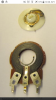
If its easy get to the wiper of a pot, I will just add a very light smear, with the applicator brush, onto a piece of white paper that I've cut up into a thin strip. That piece is then gently slid under the wiper, as the wiper is rotated, the crud will be left behind to see on the paper. I'll re-do this a few of times or until the paper is no longer dirty. Then I just rotate it back and forth while having a little cleaner on the wiper as to clean the portion of the track the wiper runs on. Also there are the other sprung contracts that are made to the wiper that can be difficult to reach. I found that a very fine artist brush (not too cheap that it loses its bristles) that's lightly coated with cleaner is good to apply here, just avoid contacting with the shaft. All cases where I've slipped a thin piece of paper under the wiper I've not felt that I could be widening its gap to much for firm contact to the carbon disk, it feels unstressed and there is, I've seen, enough tension for it return and operate again normally, but do take care.

Once dried I will then add a tiny amount of the lube to the wiper(s) and rotate. You will notice things are smooth and you haven't disrupted the shaft grease at all. Let dry and then test if able, chances are in most normal cases that'll be sufficient.

Attached is a random Google picture of the parts I've described cleaning.
This way has kept me from loosing the "feel" of a pot, as can happen if the cleaning chemical and methods (aerosols come first to mind) have washed out the "once only" shaft grease. Yes, it's a slow way but also a sure way. Hope I've helped.

 

Attachments

  • 2019-05-18 09.45.15.png
    2019-05-18 09.45.15.png
    223 KB · Views: 69
  • 2019-05-18 10.10.17.png
    2019-05-18 10.10.17.png
    195.3 KB · Views: 56
Last edited:
Dumb question: Does Deoxit D5 or Deoxit Gold G5 spray contain H2O (water)?

I ask this because I am concerned about trapped excess Deoxit inside a stereo component over a long period of time. Will it cause rust or some other defect?
 
Hi to all,
Just thought I'd share my DeOxit'ing procedure..
Here in Australia I've only found the small bottles of deoxit that come in a handy kit. D100L which is the cleaning solution with a touch of lubricant and G100L which is lubricant with a touch of cleaner.

If its easy get to the wiper of a pot, I will just add a very light smear, with the applicator brush, onto a piece of white paper that I've cut up into a thin strip. That piece is then gently slid under the wiper, as the wiper is rotated, the crud will be left behind to see on the paper. I'll re-do this a few of times or until the paper is no longer dirty. Then I just rotate it back and forth while having a little cleaner on the wiper as to clean the portion of the track the wiper runs on. Also there are the other sprung contracts that are made to the wiper that can be difficult to reach. I found that a very fine artist brush (not too cheap that it loses its bristles) that's lightly coated with cleaner is good to apply here, just avoid contacting with the shaft. All cases where I've slipped a thin piece of paper under the wiper I've not felt that I could be widening its gap to much for firm contact to the carbon disk, it feels unstressed and there is, I've seen, enough tension for it return and operate again normally, but do take care.

Once dried I will then add a tiny amount of the lube to the wiper(s) and rotate. You will notice things are smooth and you haven't disrupted the shaft grease at all. Let dry and then test if able, chances are in most normal cases that'll be sufficient.

Attached is a random Google picture of the parts I've described cleaning.
This way has kept me from loosing the "feel" of a pot, as can happen if the cleaning chemical and methods (aerosols come first to mind) have washed out the "once only" shaft grease. Yes, it's a slow way but also a sure way. Hope I've helped.

I am going to be very unpopular by saying that residue free contact cleaner is just as effective and much more easy to apply. It is rare a pot is exposed, most of the time pots are buried behind PCB's and wires. Sometimes the access hole is not directly accessible, simply bend the straw tip 90 degrees at the tip to reach around. When there is not apparent access to the pot's wiper and wafer, flush method is called for...and works.
 
Thanks for commenting, I see your point. In most cases the pots are difficult to reach and without going to the lengthy effort this would be the best way.
I've had luck with loosening pots from panels to get at them, few gentle twists and turns etc, then apply a dab with a fine brush. I'm really just trying to add another approach on keeping the pots from accidental over spray of cleaner, and also my amps are keepers hence the extra alowable work time. Next job will is a Sansui 2000x reciever, all pots are bad, I know this will need a thorough going over, I'll update this post with pics.
 
After reading this long post a couple of times, it is still so confusing to me.
So you clean switches, pots with Deoxit D5 spray (red can) then faderlube spray F5 (green can) on pots only. Or F100? Do they sell F100 spray can? Or did I miss something. I am totally new here.
 
After reading this long post a couple of times, it is still so confusing to me.
So you clean switches, pots with Deoxit D5 spray (red can) then faderlube spray F5 (green can) on pots only. Or F100? Do they sell F100 spray can? Or did I miss something. I am totally new here.

There seems to be lots of differing opinions on Deoxit use. It also doesnt help that they keep changing the names of their products.
Here is another good thread https://audiokarma.org/forums/index.php?threads/tldr-deoxit-guide.850968/
Yes F100 is sold in spray cans....
 
Yes F100 is sold in spray cans....
Speaking of....

I have just started using a spray can of F100. Can anyone tell me is it supposed to be anything like D5, an oily liquid? Or is it supposed to evaporate almost immediately?

When I spray this F100, it comes out cold and evaporates within a couple seconds. What good does that do?
 
Call me a believer.
Lately my system had been sounding pretty lackluster so yesterday I decided I would undertake the chore of breaking all the connections and cleaning them some D-5 and gauze pads.
Got a little black on the pads as I was cleaning but I was blown away by what a dif it has made - it is not subtle.
I'm unsure whether it was the cleaning or merely breaking all the connections but I know using the D-5 didn't hurt. This is definitely on my list of yearly things to do.
 
Well then i am a complete idiot, I just used CC Red Can, on my pots to clean them, one good blast, rolling the volume knob back and forth as instructed....now I have a fully working Volume knob no noise jumping and smooth volume, but after reading these posts, I wonder at what price :(
 
You know audiorook it comes down to what works. There are a lot of ideas here posted as facts. You have to weigh them in your mind. Which are true and which are just a theory. Often, theory is posted as fact. I am not denigrating those posters, I am sure they believe what they have posted. It is like anything else on the internet, it is not fact until you have good corroboration. And even then.........
BTW, I too have a couple of cans of CC Red. Often very handy. I have found it very useful when deoxit did not work on some connectors, but the Red worked very well. I prefer to manually clean connectors when it is possible. Sometimes the connector makes it impossible. I only clean gold connectors with paper. I us a pencil eraser with a patch of paper towel on the end to clean gold. The gold is so thin that any normal abrasive will just remove all the gold. Again, do not use the pencil eraser itself. It will immediately grind off the all the gold.
There once was a product in the 70s that I really miss. It was called "Blue Stuff". it was kind of gooey and contained abrasive grit in it that was conductive. It could make switch contacts and other such things work perfectly and for a very long time. That grit just kept on working. Back then I tried using it on potentiometers. It worked immediately. However, I would often get the radio (marine transceivers) back with the pot having dead spots. The grit was working too much. I quit using it on potentiometers and just replaced the pots. These are just examples of my experience, not gospel.

O.T. Back in the 70s I often worked on submarines. I would never use a spray to fix anything. Reliability was something that was paramount. If you suspected a part or knew a part was bad, you replaced it with new. My experience early on with submarines was how easily it was to suffer a nasty embarrassment if something failed at 600 meters. I have never forgotten a look a got from a captain when some software I wrote caused a very nasty glitch in the control room. I guess that is why they have sea trials. That captain did not speak to me again until I fixed the software and it was proven out in a second sea trial. One word from him, "finally". I determined to never let that happen again.


BubbleHead!? Cool I'm ex Navy too, Radiomen, which you would think that I would know about this stuff, but honestly like you said when it fails you replace it. I was the lead in my Radio Shack and as I was on an Oiler replenshesment ship AOR5 CannonBall baby! Like you, any failing components are not an option, so if it did anything but worked it, and it was a danger to the mission, it got replaced. In this new world of HiFi though i am a rookie as my name says and I am learning about vintage equipment and their handling. Thank you for pointing out that if it works and its not being done all the time i imagine it could be OK. I will make sure to get a can of DeOxit it for future use, but I was using my receiver and the volume was all over the place, so I just tried it with the red can CC. It worked like a charm, not one crack not one volume jump like brand new so I will be happy it worked but mindful going forward....I really appreciate your help in this Ironcoder...Love the handle name, I am a system engineer myself operational day to day stuff...
 
O. T. Yes audiorook I too am a rookie at stereo repair. I have only been doing it for a few years. I keep learning. I have worked on everything else since the 60s. I am retired and can afford to repair peoples stereos for cost. It is fun for me. I started in the Navy in 1959 Dec. I just turned 17. I enlisted as an ET3 because I had a commercial license. I learned military discipline from making mistakes. When I walked aboard my first ship did not know how to salute properly. Wish I had stayed there, but the Navy moved me on to other less pleasant duties. I left active duty in 1964 and was given a job at a Naval base and served in reserves on a Minesweeper. So, I still worked for the Navy. I finally left for Raytheon for more money in 1970. But, Raytheon had read my resume and immediately sent me back out on ships and submarines to work. I finally left the Navy entirely in 1980.
Of course there is a serious problem with replacing pots in stereos. They are almost always double ganged and finding a replacement is not very easily done. So we spray away :-)
BTW, I kept up in reserves because our minesweeper was mostly used on weekends for fishing and crabbing. USS Ruff MSCO-54. On the Ruff I served as signalman, radioman, radarman, ET, sonarman, and navigator. Just did what was necessary at the time. We had no other crew member who knew how to do any of those things. The captain and I were both crappy at navigation. I never did get our loran A to work. Sounds like you had a good experience in the navy audiorook. My only method of navigation was RDF and dead reckoning. Neither of us was worth a damn with the sextant. If we were out to sea, I would call any other vessel in sight and ask them their position. Aha a good point on the chart. Let someone else navigate for you if you can get away with it. I realize my seamanship sounds awful, but it was what it was, what can I say.
 
Back
Top Bottom