• The move to the new server is done. There are some software and database maintenance updates in process. This has us passing the hat around to help out. We appreciate any donations. Seriously, even a dollar helps. The payment page may be found here - https://www.audiokarma.org/support.html

Thorens TD 165 running slow

Crestwood23

He said touch it in the back
Subscriber
Got a nice 165 from a neighbor, but can’t seem to get it to run faster than 32.3 on my RPM app. My TD126 is dead on at 33.3.

Here’s what I’ve done so far:

-Cleaned subplatter and motor pulley with alcohol

-removed the subplatter and cleaned the spindle and platter bearing with alcohol, lubed spindle and bearing

-replaced the old belt with a genuine Thorens belt from Lp gear

-placed a drop of oil on the underside of the motor by the spindle, as well as a drop from above.

-cleaned and powdered all springs and managed to get a fantastic 15 second “bounce” (was very proud of myself for this as a good Thorens bounce has eluded me thus far).

BUT IT STILL RUNS SLOW! :(

So what’s next? Do I need to take the motor apart?
 
Register to hide this ad
Weird. Does the platter spin smoothly and free when spinning by hand? Does the motor run smoothly and quietly? Are you sure the belt does not rub against the speed-change bracket? I ask these questions because my machine made a very soft rubbing sound that I could only hear when I put my ear right next to the platter when the motor ran. When I investigated, the belt rubbed a tiny bit at one point in its turn against the upper edge of the speed change bracket. Almost imperceptible, although easily remedied by a small change in motor tilt angle.
 
Weird. Does the platter spin smoothly and free when spinning by hand? Does the motor run smoothly and quietly? Are you sure the belt does not rub against the speed-change bracket? I ask these questions because my machine made a very soft rubbing sound that I could only hear when I put my ear right next to the platter when the motor ran. When I investigated, the belt rubbed a tiny bit at one point in its turn against the upper edge of the speed change bracket. Almost imperceptible, although easily remedied by a small change in motor tilt angle.

Yes the platter spins smoothly by hand. With my ear up to the table motor is silent. The belt does not rub.

:dunno:
 
Azimuth screw is as tight as possible.
That means the lean is fully forced to one side. For the azimuth adjustment to work, there must be some tolerance on the other two screws as well. It really does affect those small annoying fractions of an RPM so best rework it.
 
That means the lean is fully forced to one side. For the azimuth adjustment to work, there must be some tolerance on the other two screws as well. It really does affect those small annoying fractions of an RPM so best rework it.

I fiddled with all of the screws, loosening the other two a bit, then loosening the third too. They were all set with a dab of paint at the factory until now. I’ve tried different settings on the screws - no change in the speed.
 
Make sure the belt doesn't rub on the belt guard. You could prolly hear the whoosh if it does, but don't count on it. Then go back to the azimuth. It may take more than 30 minutes of fiddling to get right, especially the first time.
 
How are you measuring this? Any chance the measuring whatsit is full of malarky? A sanity check with a basic strobe disc to confirm if its slow would be worth doing.


Try running it with the outer platter flipped upside-down to see what the belt is doing. It should run in the center of the step on the motor and not rub on anything. The platter inverted will load it to normal weight but let you see whats going on.
 
Make sure the belt doesn't rub on the belt guard. You could prolly hear the whoosh if it does, but don't count on it. Then go back to the azimuth. It may take more than 30 minutes of fiddling to get right, especially the first time.

I can see a tiny amount of space between the top of the belt and the guard (the metal piece that moves the belt when 45 is selected) - definitely no rub there. Any tips on how to adjust the azimuth? Is there a process like adjusting the bounce? I’ve just been randomly loosening and tightening here and there, then measuring to see if there’s any impact on the speed or belt position. So far I’ve seen neither but there’s a high chance I’m doing it wrong.


How are you measuring this? Any chance the measuring whatsit is full of malarky? A sanity check with a basic strobe disc to confirm if its slow would be worth doing.


Try running it with the outer platter flipped upside-down to see what the belt is doing. It should run in the center of the step on the motor and not rub on anything. The platter inverted will load it to normal weight but let you see whats going on.

I’m measuring with the RPM speed app on my phone. I though the same thing - maybe the app is wrong. But, the same app measures 33.3 on my TD 126 - granted the 126 is a “beefier” table and seems to deal with the weight of the phone better. I removed the phone case, and it’s an iPhone 7 so it’s pretty light and thin to begin with. I did try a paper strobe which also shows it running slow - listening to a record is audibly slow as well.

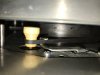
Here’s a pic with the platter flipped:

F07372AB-873A-4693-9208-6ACDA993CE84.jpeg

And here’s a little video of the motor running with the platter off:

 
That looks and sounds good to me but would bet there is friction somewhere in the chain. I asked this previously, but without the belt on, does the platter spin freely and smoothly? Is the spindle in smooth, clean condition? Did you clean out the well when lubricating? Can you hear or feel any point of sticking within the main bearing?
 
That looks and sounds good to me but would bet there is friction somewhere in the chain. I asked this previously, but without the belt on, does the platter spin freely and smoothly? Is the spindle in smooth, clean condition? Did you clean out the well when lubricating? Can you hear or feel any point of sticking within the main bearing?

Here is the platter spinning without the belt - it’s smooth and quiet:


The spindle is smooth and looks great. I cleaned the spindle and well very thoroughly with qtips and denatured alcohol. I don’t hear or feel any sticking.

It does get noisy when I run the motor without the belt though:

 
I'm sure @tnsilver or someone else with deep Thorens experience will chime in, but I've got two Thorens motors and neither makes those noises when running without load. I wonder if there is a fault in the shaft (small bend?) or corrosion or ??? that is causing that noise, which sounds like 'friction' to me.
 
I'm sure @tnsilver or someone else with deep Thorens experience will chime in, but I've got two Thorens motors and neither makes those noises when running without load. I wonder if there is a fault in the shaft (small bend?) or corrosion or ??? that is causing that noise, which sounds like 'friction' to me.

Agreed. The table was dusty when i got it and had not been used in a very long time, the bearing well was bone dry. Maybe the motor dried out too? I did add a drop or two where the shaft runs through the motor - but maybe it needs a deeper cleaning and lube?
 
I'm not sure where that buzz comes from. It could be the clutch running berzerk without load, which isn't a real problem - but it could be the shaft riding on some gunk accumulation on the base of the bottom bushing, which may turn into one. Can you try to get a drop of oil onto the rotor shaft from right under the pulley using the long nozzle of the can?

Here's some azimuth adjustment 101 imagery:

7BWa2gG.jpg


Don't over do the release of the azimuth screw or the motor mount would become detached from the screw by the force of the spring underneath.
 
I'm not sure where that buzz comes from. It could be the clutch running berzerk without load, which isn't a real problem - but it could be the shaft riding on some gunk accumulation on the base of the bottom bushing, which may turn into one. Can you try to get a drop of oil onto the rotor shaft from right under the pulley using the long nozzle of the can?

Here's some azimuth adjustment 101 imagery:

7BWa2gG.jpg


Don't over do the release of the azimuth screw or the motor mount would become detached from the screw by the force of the spring underneath.

Thanks for this - super helpful! And thanks to everyone for all the tips so far - hopefully I can figure this out. I did originally put a drop or two of oil in the area you mentioned. I used a long thin wood awl pointing at the area directly under the bushing, then let the oil slowly deep down the awl for precise placement. There is a bit of visible gunk in that area, but is tough to reach and clean without pulling the spindle off.
 
Back
Top Bottom