
• Please note that Audiokarma will be offline briefly for updates early on Monday morning, September 28th.

To Equalize or Not to Equalize

I EQ in the digital domain, as that is where 99.9% of my music comes from anyway. Many of the drawbacks associated with analog EQs aren't present in my case. There are quite a few variables associated with how and when I EQ. One of the things I often consider is the fact that our ears don't hear "flat". The threshold of pain, and hearing-damage itself, occurs at different levels at different frequencies. Human hearing is most sensitive in the vocal frequencies, for obvious reasons. Those are the frequencies that I usually bring down a bit via EQ, and that usually gives me the option of further increasing the overall volume. I realize that might not be everyone's cup of tea, but it's what I enjoy.
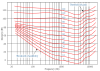
714px-FletcherMunson_ELC.svg.png
 
I'v had many EQs over the yrs and built some kits.
Liked using them.
Do not use them anymore cause equipment is good enuf not to need one. rarely use tone controls either.
 
This topic has beat the proverbial dead horse many times, hopefully it'll be respectful this time.

EQ should be used to adjust the interaction of the speakers and the room. It doesn't matter how nice your system and room are, there will always be some need for EQ. EQ for preference is fine, however not scientifically proper (i.e. it won't be truly flat in the measurements).

I EQ in the digital domain as well. I use a MiniDSP 2x4 along with Room EQ Wizard (REW). One of the cheapest ($125 for DSP + $10 for a plug-in and REW is free) upgrades but one that I will always keep in the system. (I also use it as a crossover and digital delay.)

In secondary systems, I use ADC equalizers mainly, which perform well but lack the digital flexibility. If you must use analog, the more bands the better (with the exception being parametrics).
 
Last edited:
I use an Audiosource Moel EQ Fourteen. Works great. I only tweak a small amount, no major adjustments. But it does have output level controls for both channels which come in very handy. The TV box doesn't put out as much volume as the other sources so I turn up those controls for watching TV and then turn then down to listen to other sources. It looks great and it sounds great as well. If you like using one then do so. If you don't like the way they work the don't. It's simple.
 
I heard it's easier to just move to a new house than try and get an EQ to ~adapt~ your system to it's surroundings! :rflmao:
 
I'm wondering what are people's thoughts on using an equalizer in their system.
The use of room treatments and optimized speaker placement (via measurements) obviates the need in the main system, but do apply some parametric EQ with the processor in the HT system to attenuate some bass modes.
 
When using my Cerwin Vegas, listening to Rock and Metal at very high volume, I almost always EQ some frequencies (Parametric DSP Plugin), to take the bite out of the highs and add some punch to the bass.

When listening to classical music at more sane volume (90- 92 dbA peaks) and using my Grundig 5600 speakers, no EQ is necessary.
 
I used one before I quadrupled the power I was feeding my speakers. I went from 45wpc to 200, and I didn't feel the need for an EQ after the amp upgrade. Like others have said, do what makes your ears happy. Get a decent used eq cheap and try it, if you don't like it pull it out of your system.
 
The equalizer does bring another set of potential issues into consideration. Though the idea of omitting it appeals to me, I have kept the equalizer because:

1. My system has evolved to be better than the room it's in. There are some things I plan to try that should offer a worthwhile improvement, but it is foremost a living area.

2. Not all of my source material sounds good when played "flat." Quality varies, as does the intent of the mastering engineer.

I plan to give the pots a cleaning soon and continue using it. They have become a little scratchy, which is the only detriment to sound quality I have noticed with the equalizer.

For the record, I have an AudioControl TEN Series Two from 1985. I bought it from the original owner at a yard sale for $20 a few years ago, complete with the humorous instruction manual! "Power Switch - Self explanatory. It allows the TEN to nourish its circuits from the vast dynamos and generators of your local monopolistic power company."
 
Last edited:
2. Not all of my source material sounds good when played "flat." Quality varies, as does the intent of the mastering engineer.

I told myself I wouldn't comment on this thread but this really bears repeating. The source material varies extremely in my experience. So even if you managed to get all of your hardware and room acoustics perfect, which is (shall we say) an obscure goal, the source material throws curve balls every day.

Now granted, this also means you'll be tweaking pretty often, which would drive some people crazy. But that's life imho. Being driven crazy I mean
index.php
 
Have used EQ in a car and played with it on other peoples systems. Never had it in my own system though.

I might be tempted to have a go with one that could do a bit of room analysis first but since I don't detect any obvious room issues from my chair the motivation to do this would be just curiosity based rather than to address a problem.
 
I just picked up a JVC R-S77 receiver at a Goodwill and it has their "SEA" built in EQ. When I got it cleaned I fired it up (with the EQ set flat) and it sounded pretty mediocre. After a few moments of fiddling with the EQ, it sounded pretty good. I think virtually every room needs at least some adjustment to sound best. I find that treble/bass controls are enough for me (my Marantz 2220B has a "Mid" control as well) so I dont have an EQ for any of my systems. In the last six months I have been listening to Spotify about 75% of the time and have found there is some variance in how, especially the older ones, recordings sound.......I tend to boost the older recordings and run the newer ones more flat. There are so many variables that to say there is no need for at least some way to adjust how a system sounds seems a bit silly IMO.
 
I don't normally use full-band EQ but I do like to adjust sub-woofer levels with my Magnepan/Velodyne setup. I think that would qualify as basically EQing the bottom end. I find the music sources that I enjoy contain widely varying bass levels. The newer recordings are usually very stout in the bass department while older ones vary. I rigged up a wired remote for the Velodyne so I can fine-tune bass levels from my listening chair. It has to be just right, with that full sound that bass adds to the overall experience without sounding like there's any bass boast.

I occasionally use a software Parametric EQ add-on with Foobar2000. N6 by RAZ audio is free and very powerful. You have to setup Foobar2000 to work with VST plugins which is slightly painful but heck, its all free.

In you're using EQ in either analog or software, I'd recommend checking out something with parametric capabilities. Parametric gives you full control over the sound shaping.
 
Since the sound quality and tone/EQ of recorded music varies so widely depending on how it was engineered and mastered, applying some corrective EQ to suit your listening preferences during playback is certainly acceptable IMHO

For example, classic rock sometimes doesn't have the punch and drive of more recent recordings, so enhancing the lows (and perhaps the highs) during playback is fine if it sounds better to you that way.

Even different releases or remasters of the same album can sound sound quite different from each other.
 
Back
Top Bottom