

You are using an out of date browser. It may not display this or other websites correctly.
You should upgrade or use an alternative browser.
You should upgrade or use an alternative browser.
To Equalize or Not to Equalize
- Thread starter Te-Te
- Start date

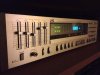
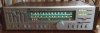
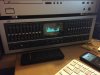

We like EQ's in our family!
I usually have the settings flat these days, but I like the options beyond just bass & treble.View attachment 999922
View attachment 999914 View attachment 999918
I finally found a decent example of the 77, far better than the one I had before........a pretty decent receiver actually. Funny, I found it in a Goodwill for $20.
There is nothing wrong with wanting more control of the sound in one's own system.......


RobRoy
It's just stuff - but fun
There is a site on youtube (SMG, I believe) run by a guy in Canada who has a recording studio. He has an excellent video on building your own bass traps.Adjust tone controls, move speakers to optimal position, manufacture some acoustic panels in the garage, adjust the EQ for each song/album; heaven forbid you're a vinyl listener (clean stylus, clean, de-static record). ALRIGHT, You have exactly 3 minutes of listening time till the end of day! I'm not saying an EQ can't be beneficial, I'm saying there's a ton of AK'ers who fart around to the point that listening to actual music becomes secondary. I think the EQ, on both sides, has been positive and instructional (won't disagree with either)....but for Christ's sake, just listen and enjoy!!!! I will receive "hate mail" from a bunch of folks, but much like hoarding, once you release and just focus on the tunes it's a GD life changer!
RobRoy
It's just stuff - but fun
On a side note, I remember when ADC came out with those very small aluminum speakers. At Magnolia hi-fi they invited customers in to a demo. They had four of them in the room on camera stands and played an album by a group I'd never heard of. It was simply amazing.Tune to a dead spot is exactly what I would have done.
In the late 70's I used a microphone, an LP with test tones and an ADC Sound Shaper MKII to flatten my in room response. I was impressed with the results. Since then my impetus for using any kind of equalization has been directed toward flattening in room response.
The song they used to highlight the speakers was called "ChocolateFudge", the album was "Fresh Aire" and the band was Manheim Steamroller. Yeah, that was our introduction to that band. I bought the album that day. And I eventually ended up with ADC L810's, which I chose over stacked Advents.


NH-MAN
Addicted Member
BUT, BUT there're not in the middle!!I finally found a decent example of the 77, far better than the one I had before........a pretty decent receiver actually. Funny, I found it in a Goodwill for $20.
There is nothing wrong with wanting more control of the sound in one's own system.......
BUT, BUT there're not in the middle!!
Ummmmm, wellllll, uuuuuuuummmmmmm. OK OK I admit it! Actually I had just got through cleaning it and fired it up (in my dining room with the speakers on chairs) and was moving the SEA and volume and balance sliders up and down after deoxiting them. And YES, I just put it into the smiley face for the classic "in your face" EQ. And it sounded pretty good like this. Please dont tell anybody that I liked it this way...........I am telling you this in confidence ok?

This is how I use the EQ in our bedroom for one of our systems.

Last edited:
My first and only experience with an EQ is with my new Yamaha Dolby Atmos AVR. There is a HUGE improvement in overall SQ both in stereo and SS modes when I activate the EQ. When I use Pure Direct mode, which bypasses all audio processing and the EQ, It doesn't sound nearly as good.
That said, My living room Onkyo AVR has no EQ, And I must say, It sounds Really Good too. I think different speakers, Room, Placement, and more all play a role in the importance of an EQ. Sometimes we just stumble onto a combo that needs nothing more than tweaking tone controls, and using loudness at low volume (which can also be tweaked with the tone controls).
I never had the patience to manually adjust an EQ, But Yamaha makes it so easy to set their parametric EQ, In 2 minutes once the mic is set it is done. And I can tweak the settings if I choose.
For HT, the use of systems like MRAC (Marantz) is almost necessary for a really good sounding HT system. I have far from the optimal placement of speakers because of our small living room and it is amazing how well the older Marantz (SR 4002) sounds.

JoeESP9
ESL's & tubes since 83
My system serves double duty. It's a "good" (IMO) two channel system to which I've added an HT pre/pro and the necessary surround speakers and amplifiers. First I used REW, a DSP and a calibrated microphone to flatten the in room response for two channel sound. I then turned on the HT processor which is connected to my two channel preamp via a pass through. When I ran the auto Eq for the processor it made little to no change for the front speakers beyond what the DSP was already set to do. Very interesting. That to me says good things about the auto Eq function on current AV gear.

Bill Ferris
Lunatic Member
FWIW folks, my experience in many hours of "voicing" (via 1/3 octave equalizers & pink noise) sound systems, both PA and playback starting in 1978..
That when properly done results in a very smooth and balanced sound..
The sound system must be properly set up and configured for the best non equalized(voiced) SQ as possible first, to have any real benefit .
As "voicing" the system is the icing on a well baked cake..
Also in doing manually "voicing" the frequency peaks as seen on the RTA are, starting on the low bands are systematically reduced by small amounts of adjustment on the equalizer working your way slowly from the low octaves to the higher ones..
It is never good to try to boost any equalizer to chase a frequency dip in the RTA`s display for various reasons, one is the mindset of trying to achieve a super flat frequency response from 20~20k..
It`s highly unlikely that the room and speaker system will allow it..
And trying too boost the bottom and top octaves will eat up your amp`s power, stress the speakers, raise electronic noise, & will not sound as well as it can by just going through the spectrum and taming(reducing) the peaks and let the system naturally roll off the upper and lower octaves.. It is best to bore sight the measurement mic towards the high frequency drivers from the desired sweet spot/area for each L/R side for best results.
The goal here is to smooth out the spectrum by reducing the coloration peaks, and it is also best to when chasing a peak when tuning to also try to mildly reduce the frequency on either side of the problem peak instead of concentrating on the usually problematic lower frequency single peaks that need to be tamed
And when you have properly finished tuning the equalizer with the lowest background noise, the equalizer`s gain control should be set to compensate for the gain losses from the now attenuated electrical signal level through the equalizer when engaged to be the same loudness with it switched out for proper system gain structure..
This procedure I`ve presented here is not as detailed as it could be, but mostly a general outline..
When the audio system is carefully hooked up, and placed in the room as carefully installed for best sound as practical it always sounds better after "voicing" to the majority of listeners by flipping the gain matched equalizer in and out..
Just my experience folks..
These days with DSP with 1/8 octave voicing capability equipment it is so much more easily to tune sound systems after setting them up for the best sound possible first..
Take care folks.. Time for me to get back to watching Irma !! I believe she`s going to kick my states ass !!
Kind regards, OKB
That when properly done results in a very smooth and balanced sound..
The sound system must be properly set up and configured for the best non equalized(voiced) SQ as possible first, to have any real benefit .
As "voicing" the system is the icing on a well baked cake..
Also in doing manually "voicing" the frequency peaks as seen on the RTA are, starting on the low bands are systematically reduced by small amounts of adjustment on the equalizer working your way slowly from the low octaves to the higher ones..
It is never good to try to boost any equalizer to chase a frequency dip in the RTA`s display for various reasons, one is the mindset of trying to achieve a super flat frequency response from 20~20k..
It`s highly unlikely that the room and speaker system will allow it..
And trying too boost the bottom and top octaves will eat up your amp`s power, stress the speakers, raise electronic noise, & will not sound as well as it can by just going through the spectrum and taming(reducing) the peaks and let the system naturally roll off the upper and lower octaves.. It is best to bore sight the measurement mic towards the high frequency drivers from the desired sweet spot/area for each L/R side for best results.
The goal here is to smooth out the spectrum by reducing the coloration peaks, and it is also best to when chasing a peak when tuning to also try to mildly reduce the frequency on either side of the problem peak instead of concentrating on the usually problematic lower frequency single peaks that need to be tamed
And when you have properly finished tuning the equalizer with the lowest background noise, the equalizer`s gain control should be set to compensate for the gain losses from the now attenuated electrical signal level through the equalizer when engaged to be the same loudness with it switched out for proper system gain structure..
This procedure I`ve presented here is not as detailed as it could be, but mostly a general outline..
When the audio system is carefully hooked up, and placed in the room as carefully installed for best sound as practical it always sounds better after "voicing" to the majority of listeners by flipping the gain matched equalizer in and out..
Just my experience folks..
These days with DSP with 1/8 octave voicing capability equipment it is so much more easily to tune sound systems after setting them up for the best sound possible first..
Take care folks.. Time for me to get back to watching Irma !! I believe she`s going to kick my states ass !!
Kind regards, OKB
It is, however, possible to eliminate those below 200 hz - which I find to be the most significant.It's impossible to get rid of them all passively, sometime we have to get a proper balance.
Bill Ferris
Lunatic Member
It is, however, possible to eliminate those below 200 hz - which I find to be the most significant.
Yes I concur Sir. with taming of the bass coloration, in that area is most beneficial..
Though, I have had a few people over the past 3 decades who didn`t like those LF nodes removed from their playback systems !!
So, I just wiped out my tuning and said no charge, have a good day, and to enjoy their system as they like !!
SQ Subjectivity... To each their own mind`s ear..
NH-MAN
Addicted Member
just teasing, personally have no issues with what people do and my little Sony shop radio has the "classic" smiley face on it as we speak. It has it because it sounds better which is why its "classic" and millions of others agree or it would not be so prevalent; "right or wrong". I mean geez it only cost 50 bucks 25 years ago what am I supposed to do?Ummmmm, wellllll, uuuuuuuummmmmmm. OK OK I admit it! Actually I had just got through cleaning it and fired it up (in my dining room with the speakers on chairs) and was moving the SEA and volume and balance sliders up and down after deoxiting them. And YES, I just put it into the smiley face for the classic "in your face" EQ. And it sounded pretty good like this. Please dont tell anybody that I liked it this way...........I am telling you this in confidence ok?
This is how I use the EQ in our bedroom for one of our systems.

People really need to recognize that the popular "smiley face" is just a result of the way in which the human ear perceives sound (Fletcher/Munson curve).
If one listens at the playback levels typically used in the recording studio (loud and clean), they don't need the smiley face.
If one listens at the playback levels typically used in the recording studio (loud and clean), they don't need the smiley face.
Not for me. I don't dispute the sensitivity chart content, but don't find it useful for managing levels. Another way the human sensory system uses level is in the determination of distance. When I'm running, I can usually estimate the distance of an oncoming car from the rear by virtue of its level and the rate of the doppler effect. Similarly, the impact of bass notes varies with distance.If one listens at the playback levels typically used in the recording studio (loud and clean), they don't need the smiley face.
When you artificially boost the low end, it "moves" the location of the source forward relative to everything else. It would be like hearing a symphony with the bass drum sitting in the middle of the audience. For me, lower levels simply mimic the notion of a more distant listening position. Which is why I've never used "loudness" controls as they sound artificial to me.
Hence the popularity of speakers like the JBL L100 with its pronounced midbass peak. In my last house, the dedicated listening room was large, but with unfortunately even dimension multiples - 28 x 14 x 7.5. Towards the rear, there was an entertaining mode centered around 35 hz. The bass drum found in the Yulunga track from the Dead Can Dance album "Into the Labyrinth" shook the room!Yes I concur Sir. with taming of the bass coloration, in that area is most beneficial..
Though, I have had a few people over the past 3 decades who didn`t like those LF nodes removed from their playback systems !!
Alas, it was not natural sounding. I'm currently blessed with a room dimensions having a nearly perfect Fibonnaci ratio and employ a small forest of DIY bass traps. Although I get a slight and gradual room boost curve, the result is exceptionally linear. And it sounds just right.
Last edited:

Good Luck with IRMA, Hope all will be good for Your State. Be Safe and as Alway's check on the Elderly. I thoroughly enjoyed your Post.FWIW folks, my experience in many hours of "voicing" (via 1/3 octave equalizers & pink noise) sound systems, both PA and playback starting in 1978..
That when properly done results in a very smooth and balanced sound..
The sound system must be properly set up and configured for the best non equalized(voiced) SQ as possible first, to have any real benefit .
As "voicing" the system is the icing on a well baked cake..
Also in doing manually "voicing" the frequency peaks as seen on the RTA are, starting on the low bands are systematically reduced by small amounts of adjustment on the equalizer working your way slowly from the low octaves to the higher ones..
It is never good to try to boost any equalizer to chase a frequency dip in the RTA`s display for various reasons, one is the mindset of trying to achieve a super flat frequency response from 20~20k..
It`s highly unlikely that the room and speaker system will allow it..
And trying too boost the bottom and top octaves will eat up your amp`s power, stress the speakers, raise electronic noise, & will not sound as well as it can by just going through the spectrum and taming(reducing) the peaks and let the system naturally roll off the upper and lower octaves.. It is best to bore sight the measurement mic towards the high frequency drivers from the desired sweet spot/area for each L/R side for best results.
The goal here is to smooth out the spectrum by reducing the coloration peaks, and it is also best to when chasing a peak when tuning to also try to mildly reduce the frequency on either side of the problem peak instead of concentrating on the usually problematic lower frequency single peaks that need to be tamed
And when you have properly finished tuning the equalizer with the lowest background noise, the equalizer`s gain control should be set to compensate for the gain losses from the now attenuated electrical signal level through the equalizer when engaged to be the same loudness with it switched out for proper system gain structure..
This procedure I`ve presented here is not as detailed as it could be, but mostly a general outline..
When the audio system is carefully hooked up, and placed in the room as carefully installed for best sound as practical it always sounds better after "voicing" to the majority of listeners by flipping the gain matched equalizer in and out..
Just my experience folks..
These days with DSP with 1/8 octave voicing capability equipment it is so much more easily to tune sound systems after setting them up for the best sound possible first..
Take care folks.. Time for me to get back to watching Irma !! I believe she`s going to kick my states ass !!
Kind regards, OKB

ev13wt
Super Member
FWIW folks, my experience in many hours of "voicing" (via 1/3 octave equalizers & pink noise) sound systems, both PA and playback starting in 1978..
That when properly done results in a very smooth and balanced sound..
The sound system must be properly set up and configured for the best non equalized(voiced) SQ as possible first, to have any real benefit .
As "voicing" the system is the icing on a well baked cake..
Also in doing manually "voicing" the frequency peaks as seen on the RTA are, starting on the low bands are systematically reduced by small amounts of adjustment on the equalizer working your way slowly from the low octaves to the higher ones..
It is never good to try to boost any equalizer to chase a frequency dip in the RTA`s display for various reasons, one is the mindset of trying to achieve a super flat frequency response from 20~20k..
It`s highly unlikely that the room and speaker system will allow it..
And trying too boost the bottom and top octaves will eat up your amp`s power, stress the speakers, raise electronic noise, & will not sound as well as it can by just going through the spectrum and taming(reducing) the peaks and let the system naturally roll off the upper and lower octaves.. It is best to bore sight the measurement mic towards the high frequency drivers from the desired sweet spot/area for each L/R side for best results.
The goal here is to smooth out the spectrum by reducing the coloration peaks, and it is also best to when chasing a peak when tuning to also try to mildly reduce the frequency on either side of the problem peak instead of concentrating on the usually problematic lower frequency single peaks that need to be tamed
And when you have properly finished tuning the equalizer with the lowest background noise, the equalizer`s gain control should be set to compensate for the gain losses from the now attenuated electrical signal level through the equalizer when engaged to be the same loudness with it switched out for proper system gain structure..
This procedure I`ve presented here is not as detailed as it could be, but mostly a general outline..
When the audio system is carefully hooked up, and placed in the room as carefully installed for best sound as practical it always sounds better after "voicing" to the majority of listeners by flipping the gain matched equalizer in and out..
Just my experience folks..
These days with DSP with 1/8 octave voicing capability equipment it is so much more easily to tune sound systems after setting them up for the best sound possible first..
Take care folks.. Time for me to get back to watching Irma !! I believe she`s going to kick my states ass !!
Kind regards, OKB
Thank you for taking the time to write that up.
Everyone should read this. Slowly and carefully.
Bill Ferris
Lunatic Member
Good Luck with IRMA, Hope all will be good for Your State. Be Safe and as Alway's check on the Elderly. I thoroughly enjoyed your Post.
Thanks Te-Te, I`m glad you liked my post.
I`m in pretty good shape here with all my beefing up my house for over three decades.
And a 25 kw automatic Generac genset fed by (4) 100 gal. LP fuel tanks that will be topped off tomorrow..
"Home defense" capabilities, if need be..

Plenty of frozen, frig. & back up canned food, beer, smokes, ect. with even a irrigation artesian well available for water if need be..
All three car`s fuel tanks filled.. Heck! I even have a backup to the stand by backup with a 7 kw electric start gasoline generator as well !!
No elderly to watch out for anymore, as none of them are above ground ...

And when my excellent elderly neighbors were alive, they were more concerned about my physical well being, being that I`m partially paralyzed(left side hemi paresis) like I had a stroke..
There`s a reason I`m called Over Kill Bill by my friends & neighbors

I`m in for the duration, so we`ll see what happens..
Kind regards, OKB
Last edited:
Bill Ferris
Lunatic Member
Thank you for taking the time to write that up.
Everyone should read this. Slowly and carefully.
That`s very kind of you Sir. Thank you very much..
Take care ev13wt.
Kind regards, OKB