• The move to the new server is done. There are some software and database maintenance updates in process. This has us passing the hat around to help out. We appreciate any donations. Seriously, even a dollar helps. The payment page may be found here - https://www.audiokarma.org/support.html

Tonearm improvements for a Thorens TD 160?

I find it interesting that a lot of people say the first thing you have to do with a Thorens is throw the stock arm away. I really have no complaints with mine. Maybe its no Unitrack, but its not exactly a Crosley arm either.

totally agree. I was able to do an AB comp a few years back between a TD 150 witha a rega arm and a TD 150 with the standard TP 13A. Except that the rega looks cooler.. I heard non difference ( a Stanton cart was used both times).. but just me.
What does really make a difference IMHO is the cart. I had a stanton and now have a grado. Both were great to my ears but very different.
 
The best things you can honestly do with these tables are just getting them setup properly. Proper suspension, genuine belt and pulley position, polished and oiled bearings, VTA, VTF, alignment. Just the basic ABCs and these tables without any mods sound great.

Don't get me wrong, I experienced some big big improvements with new bottom board, dampening, acrylic outer platter, better platter mat and whatnot. But the stock tonearm really is not that bad, certainly should not be the first thing you do. At some point I would agree that upgrading the arm has its benefits. Common arms people use are the Regas (251, 301, etc), vintage SME 3009s, Black Widows, Linns here and there. I personally would not put an upgraded arm on a Thorens without a solid wooden plinth. IMO that is a big bottleneck of these tables.
 
Last edited:
ok, a question for you since you've obviously had some experience on the maligned TP16 arm. If you sight down the top of the arm from the front, there is a raised "fin" where the arm tube attatches to the vertical bearing pivot. Should that fin be centered under the line where the stock VTF readout is? Mine is to the right (away from the platter) of the VTF marker and I'm not sure if thats correct, or if it indicates the bearings aren't properly adjusted. Any tips you have on setting up the bearings would be appreciated. I haven't touched mine, but its an old table and I won't swear its perfect.
 
That was really the answer I was hoping to hear. I don't want to monkey with it if its not necessarily indicating some sort of major fault. I'm not running the Thorens at the moment. I haven't gotten around to mounting my wall bracket yet and the floors in here are so terrible that the table is absolutely unusable. It skips if I belch too loudly. Even my old Garrard, which would normally track through a minor earthquake without a hitch, will occasionally skip if I move walk too quickly in here. Once I mount the shelf (maybe this weekend) I'll give the arm a good checkout and hope that I don't actually have to putz with it.
 
If you are not a tweaker by nature, find a good audio store, buy a nice cartridge, and have them mount it. Maybe do a clean and lube. Not a thing wrong with enjoying a stock Thorens. I would replace the arm only if there was a serious issue with it.
 
I recently decided on an Audiomods arm with a Dynavector 10x5 for my 160. I did tweak it before using mods found on the analogue dept site and had fun doing it. I had never done anything like it before. Now I find myself wanting to understand and fiddle with everything that has a motor.

You have a great table that sounds wonderful stock. With a little TLC your table can battle the best!

I tried to post some stuff as I did it. Start reading 6 posts down. Lots of good info from many AKrs

http://www.audiokarma.org/forums/showthread.php?t=485879&page=2
 
Tweaking it isn't the issue, but I don't want to damage it either. I'll check the bearings as they are, and if all seems happy, then I'm perfectly content to leave it alone. I find thats true more as I get older. At one time I was fully about taking things apart, and damn the consequences. Now, I just want things to work properly. I'll make it right if its not, but I just don't have the ambition to rip something apart for no good reason.

Not going to change the arm though. I have considered getting another stock arm and replacing the aluminum arm tube with something lighter though. I was thinking of swapping it with some sort of carbon fiber, maybe stolen from a fishing rod or something else. Maybe converting it to use an ADC type headshell as well, but retaining the original Thorens bearing and pivot assembly in the back. Just sounds like something that might be fun to play with, though it would require getting a near-free stock arm, and ideally one that had a damaged tube so I wouldn't feel bad about tinkering with it.
 
I am waiting for the arrival of my first Thorens deck, coming on Friday.It's a TD160 B MkII.
I expect it will need a bit of a service and set up. I read a lot on forums about people removing the foam from the springs.
Can anyone tell me why that is?
Also, what does the B refer to in the model name.
I got this deck with a tonearm (possibly a TP 21) and a Shure cartridge (stylus of indeterminate condition) a couple of days ago on Ebay for £111
PLEASE Tell me it was a bargain. :-)
 
The foam is there to make the suspension less sensitive. It's a setup thing, if you have very steady floors or the turntable is on a wall shelf, you might get away with losing the foam. The suspension tuning is such that it's sensitive to foot falls. The foam helps a bit with that.
 
At least the TP-16mkI seems a pretty capable arm with nice bearings. The stock TD-160 arm board is plastic if I recall correctly. When you upgrade the arm you upgrade the board usually, making comparisons partially apples to oranges. TD-125 users who have tried different arms might have done fairer comparisons.

Of course it might be plastic arm board is the greatest thing ever but somehow i doubt it. Whether it makes much of a difference either way i have no idea, never experimented with that.
 
B means it has a base according to the earlier TD-125/TD-150 brochure.

TD-125 was the table to be dropped into a cutout
TD-125B was with a base
TD-125AB was with an arm and base
TD-125LB was with the long wheelbase for the 12" arms
The dust cover was optional.

Haven't seen this much model detail for the TD-160 but they had the C version and the -V model. So I don't know if the letter B meant base as it did with the 125.

I got this deck with a tonearm (possibly a TP 21) and a Shure cartridge (stylus of indeterminate condition) a couple of days ago on Ebay for £111
PLEASE Tell me it was a bargain.
We can't talk value except in the dollars and sense forum. You can say what you paid but we not supposed to comment on value. But when you get the table, fire up your very own thread about it with pictures and we'll follow along as you make this "very well bought" Thorens an even better table with a refresh and maybe some Super upgrades you can do. theanalogdepartment talks about this.
 
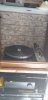
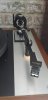
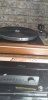
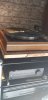
20200725_122907.jpg 20200725_122920.jpg 20200725_122907.jpg 20200725_122920.jpg 20200725_122942.jpg 20200725_123016.jpg s-l1600.jpg Thanks for the replies. The deck has arrived and I have set it up (I think correctly). It is mounted on an isolation board with sorbothane feet, an Apollo steel and glass hifi stand, and a concrete floor, so I think I'll get away without the foam.
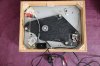
Can anyone confirm the model of the tonearm from the attached pics?
There is a low hum which is audible when the volume is turned up. I'm going to investigate the cause of it. Any tips or suggestions would be appreciated.
Note the improvised arm rest. I have removed the cue lift as the deck doesn't have a cue lift control and it was disconnected anyway. I'll be looking out for something suitable as I have shaky hands.
Thanks to all.20200725_122907.jpg
 
The TA is a TP-11 Mk-II/III "IsoTrak" with a TP-63 wand. The "B" model comes stock w/o a TA.
The hum is a grounding issue. Remove the wand, clean both ends of the connector with contact cleaner.
In the TP-63 headshell, there's a grounding pin that's suppose to hook up to a split green lead that also
connects to the right channel ground pin on the cart. Make sure it's connected.
Leave the foam dampers where they are if they're there inside the springs. Thorens knew what they were
doing with those. You have a solid floor so there should be no issue and all the hi-fi racks and damping butcher
blocks in the world, won't make a difference.

I don't know about the sub-chassis damping. It may do little, it may do nothing but it sure is as ugly as f%$k.
I'm keeping it in my "R" rated imagery collection of why noobs should never DIY a Thorens and I'd be using
it to scare off the public in the future. I'd rip it out on general principal.
 
:rflmao:Thanks for the reply tnsilver. The isolation board certainly is a home made affair. Not by me I might add.
It's two layers of plywood with a sorbathane sheet inbetween each layer and it sits on sorbathane feet.
I believe that beauty is in the eye of the beer holder and I like it as a fingers up gesture to everyone who spent a small fortune on a designer bread board.
The tt arrived minus the foam rubber in the springs.
I assume that by "wand" you are referring to the tone arm that disconnects from both ends?
Many thanks. JG
 
Yes, by some Harry Potter convention that detachable armtube w/ the integrated headshell is referred to as a "wand".

Dang! How did you know about the beer?
 
I checked the wand. All the connections are correct and I also cleaned the connection onto the cartridge and at the point where the wand connects to the rest of the arm. No change. In fact it seems worse. Since this is all I've touched, I think the problem must be in this area. I will solder everything i can to ensure a good join with no hairline breaks. Any idea where to check next? I'm thinking just to follow the wire checking every connection along the way. The (now loud) hum is on both channels. i'm still suspicious of a bad earth somewhere.
 
Re foam - the original service manual tells you to add cotton wadding into the coils of the springs in case of problems with foot falls. I always kinda assumed this was NOT in addition to the foam, but that the foam was a more eloquent factory solution they started doing once they realized without it the suspension is too sensitive in many cases. I might have assumed wrong though. I thought mine performed better without the foam but I got ridiculously long bounce times for the suspension, but it stays stable in normal conditions.
 
Back
Top Bottom