I searched the web hi and lo for an answer of when fiber optical Toslink was first introduced into home receivers. I understand Toshiba invented it to pair their CD players to their receivers, but I never found any toshiba receiver with Toslink. Any clue what year and what amp or receiver first utilized Toslink optical inputs?


You are using an out of date browser. It may not display this or other websites correctly.
You should upgrade or use an alternative browser.
You should upgrade or use an alternative browser.
Toslink and receivers ?
- Thread starter Lossless
- Start date
-
- Tags
- fiber optic toshiba toslink
Register to hide this ad

Audioraven
Well-Known Member
My guess would be around 1989. Sony ES and Mitsubishi receivers/amps were the first units I saw utilizing Toslink connections. Toshiba invented the Toslink connection, but I'm not sure what exact purpose they had in mind for it.
That is good to know. My main reason for asking the question is because my 1989 Fisher RS-Z1 has Toslink and a Burr Brown internal DAC. That would make this receiver cutting edge for the time period.My guess would be around 1989. Sony ES and Mitsubishi receivers/amps were the first units I saw utilizing Toslink connections. Toshiba invented the Toslink connection, but I'm not sure what exact purpose they had in mind for it.

Audioraven
Well-Known Member
Wow! A Fisher RS-Z1, that's something you don't see everyday. 

cpt_paranoia
Addicted Member
TOSlink carries S/PDIF (Sony/Philips Digital Interface). Which was specified in the CD Red Book.
https://www.audioholics.com/audio-video-cables/toslink-interconnect-history-basics
Wouldn't like to speculate on the first receiver with digital inputs...
https://www.audioholics.com/audio-video-cables/toslink-interconnect-history-basics
Wouldn't like to speculate on the first receiver with digital inputs...
TOSlink carries S/PDIF (Sony/Philips Digital Interface). Which was specified in the CD Red Book.
https://www.audioholics.com/audio-video-cables/toslink-interconnect-history-basics
Wouldn't like to speculate on the first receiver with digital inputs...
Thanks for the link. I love this place audiokarma.org!

Putterman
Super Member
TBH reading the article with all the possible limitations of Toslink vs. SPDIF makes me wonder why it was utilized. It apparently required a lot of refinement before it was comparable to SPDIF and finally requires ; in actual application the practical limit was often under 5 meters, constructed from very high purity quartz, a highly polished and properly fitted termination, degradation of performance due to even mild bending of the interconnect assembly!
All these and other issues mentioned in the article make me want to throw out the inexpensive optical cables and replace them if practible with SPDIF which can be as simple as using any quality audio cable.
All these and other issues mentioned in the article make me want to throw out the inexpensive optical cables and replace them if practible with SPDIF which can be as simple as using any quality audio cable.

restorer-john
Addicted Member
That is good to know. My main reason for asking the question is because my 1989 Fisher RS-Z1 has Toslink and a Burr Brown internal DAC. That would make this receiver cutting edge for the time period.
Toslink was common prior to 1989. Plenty of integrated amplifiers, digital preamplifiers, CD players employed the TosLink connector as well as coaxial. It came into being in 1983.
Your Fisher RS-Z1 is part of a series, including some rare power amplifiers. Basically, Sanyo wanted as a last ditch effort to stay relevant, some profitable top models to compete with Sony, Nakamichi, Akai, Pioneer, Technics, Denon etc.

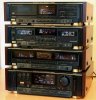
And in incredibly rare CD recorder using the magneto optical system. I've never seen one anywhere:
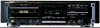
The exterior of the Z series is more impressive than the interiors. The CD player for instance looks great but apart from an outsourced D/A board is extremely cheap on the inside. It was all about marketing. Notice the PCM-58 is just the lowest tier grading with only a single MSB trimpot at a time when other brands were using at least selection K, J or S with up to 4 MSB THD adjustments in their top models. Here's a few shots of the insides of the CD player pictured. IIRC, there was also another model CD player produced in that series too.
http://lampizator.eu/LAMPIZATOR/REFERENCES/fisher_ad-z1/Fisheradz1.html
Last edited:
Well fortunately I don’t own a RS-CD player as I see it has cheaply made innards. The RS-Z1 receiver on the other hand ROCKS!!!Toslink was common prior to 1989. Plenty of integrated amplifiers, digital preamplifiers, CD players employed the TosLink connector as well as coaxial. It came into being in 1983.
Your Fisher RS-Z1 is part of a series, including some rare power amplifiers. Basically, Sanyo wanted as a last ditch effort to stay relevant, some profitable top models to compete with Sony, Nakamichi, Akai, Pioneer, Technics, Denon etc.
View attachment 1338155
View attachment 1338156
The exterior of the Z series is more impressive than the interiors. The CD player for instance looks great but apart from an outsourced D/A board is extremely cheap on the inside. It was all about marketing. Notice the PCM-58 is just the lowest tier grading with only a single MSB trimpot at a time when other brands were using at least selection K or J with up to 4 MSB THD adjustments in their top models. Here's a few shots of the insides of the CD player pictured. IIRC, there was also another model CD player produced in that series too.
http://lampizator.eu/LAMPIZATOR/REFERENCES/fisher_ad-z1/Fisheradz1.html

cpt_paranoia
Addicted Member
It apparently required a lot of refinement before it was comparable to SPDIF
It is SPDIF, only using an optical, rather than coax, bearer.
To achieve good jitter performance, you need fast edges and low noise. Slow LEDs, lossy, smeary, polymer fibres and cheap receivers don't give you fast edges. All those things can be improved. Led technology has improved significantly since 1980.

Something like this?It is SPDIF, only using an optical, rather than coax, bearer.
To achieve good jitter performance, you need fast edges and low noise. Slow LEDs, lossy, smeary, polymer fibres and cheap receivers don't give you fast edges. All those things can be improved. Led technology has improved significantly since 1980.
I switch back and forth between the Toslink optical and 75 ohm coax inputs and the coax seems to have a better sound. The only disadvantage I find with the coax is ocassional electrical interference from appliances.
Last edited:
I think Toshiba was anticipating satellite digital radio broadcast to utilize optical inputs.My guess would be around 1989. Sony ES and Mitsubishi receivers/amps were the first units I saw utilizing Toslink connections. Toshiba invented the Toslink connection, but I'm not sure what exact purpose they had in mind for it.
cpt_paranoia
Addicted Member
Something like this
I was thinking more about the transmitters and receivers than the cables. And the clock regeneration/recovery.
Audioraven
Well-Known Member
Well fortunately I don’t own a RS-CD player as I see it has cheaply made innards. The RS-Z1 receiver on the other hand ROCKS!!!
At a weight of 46 pounds with a big 'ol pair of Nichicon caps, giant transformer and some serious heat sinking, it's built very nicely indeed.
I was thinking more about the transmitters and receivers than the cables. And the clock regeneration/
It is SPDIF, only using an optical, rather than coax, bearer.
To achieve good jitter performance, you need fast edges and low noise. Slow LEDs, lossy, smeary, polymer fibres and cheap receivers don't give you fast edges. All those things can be improved. Led technology has improved significantly since 1980.
I wouldn’t classify a Fisher RS-Z1 as a “ cheap receiver”
Toslink was common prior to 1989. Plenty of integrated amplifiers, digital preamplifiers, CD players employed the TosLink connector as well as coaxial. It came into being in 1983.
Your Fisher RS-Z1 is part of a series, including some rare power amplifiers. Basically, Sanyo wanted as a last ditch effort to stay relevant, some profitable top models to compete with Sony, Nakamichi, Akai, Pioneer, Technics, Denon etc.
View attachment 1338155
View attachment 1338156
And in incredibly rare CD recorder using the magneto optical system. I've never seen one anywhere:
View attachment 1338169
The exterior of the Z series is more impressive than the interiors. The CD player for instance looks great but apart from an outsourced D/A board is extremely cheap on the inside. It was all about marketing. Notice the PCM-58 is just the lowest tier grading with only a single MSB trimpot at a time when other brands were using at least selection K, J or S with up to 4 MSB THD adjustments in their top models. Here's a few shots of the insides of the CD player pictured. IIRC, there was also another model CD player produced in that series too.
http://lampizator.eu/LAMPIZATOR/REFERENCES/fisher_ad-z1/Fisheradz1.html
What is that BA-Z1?
Toslink was common prior to 1989. Plenty of integrated amplifiers, digital preamplifiers, CD players employed the TosLink connector as well as coaxial. It came into being in 1983.
Your Fisher RS-Z1 is part of a series, including some rare power amplifiers. Basically, Sanyo wanted as a last ditch effort to stay relevant, some profitable top models to compete with Sony, Nakamichi, Akai, Pioneer, Technics, Denon etc.
View attachment 1338155
View attachment 1338156
And in incredibly rare CD recorder using the magneto optical system. I've never seen one anywhere:
View attachment 1338169
The exterior of the Z series is more impressive than the interiors. The CD player for instance looks great but apart from an outsourced D/A board is extremely cheap on the inside. It was all about marketing. Notice the PCM-58 is just the lowest tier grading with only a single MSB trimpot at a time when other brands were using at least selection K, J or S with up to 4 MSB THD adjustments in their top models. Here's a few shots of the insides of the CD player pictured. IIRC, there was also another model CD player produced in that series too.
http://lampizator.eu/LAMPIZATOR/REFERENCES/fisher_ad-z1/Fisheradz1.html
You also stated that Toslink was common in receivers prior to 1989 and plenty of receivers and amplifiers used them. Could you please be more specific on a particular stereo that utilized this technology prior to 1989 for I have not been able to find any.
Last edited:
restorer-john
Addicted Member
You also stated that Toslink was common in receivers prior to 1989 and plenty of receivers and amplifiers used them.
Go research the top models from just about every major Japanese manufacturer. Putting D/A converters in amplifiers and calling them Digital Amplifiers was all the rage.
I have a pile of them myself:
Pioneer A-91D (1988)
Akai AM-M939 (1987)
Sony TAF-303ESD (1988)
Sony TAE-77ESD (1988)
Yamaha CX-1000 (1987)
Denon's DAP-2500 and 5500 preamplifiers (1988)
Go research the top models from just about every major Japanese manufacturer. Putting D/A converters in amplifiers and calling them Digital Amplifiers was all the rage.
I have a pile of them myself:
Pioneer A-91D (1988)
Akai AM-M939 (1987)
Sony TAF-303ESD (1988)
Sony TAE-77ESD (1988)
Yamaha CX-1000 (1987)
Denon's DAP-2500 and 5500 preamplifiers (1988)
How come none of these are available in the United States? They seem to be a dime a dozen in Germany? We always seem to get the crap.What’s gives?
restorer-john
Addicted Member
How come none of these are available in the United States?
The Yamaha CX-1000 and the Sony TAE-77ESD were sold in the US in decent numbers. I know there were A-91Ds sold in small numbers in the US.
Those models were just ones that came to mind or are floating around in my loungeroom. There were plenty, trust me. The Japanese economy was going gangbusters and R&D budgets were massive. Then it all crashed and by 1991 all this stuff was being dumped on the world markets cheaply (in real terms).
I'm not sure who built your Fisher (Sanyo) unit, but it's likely it was an OEM, based on the internals of other pieces in the series I have seen. If you pull the covers and take some closeups of boards and components, we can date it more accurately and possibly determine who actually made it.