• The move to the new server is done. There are some software and database maintenance updates in process. This has us passing the hat around to help out. We appreciate any donations. Seriously, even a dollar helps. The payment page may be found here - https://www.audiokarma.org/support.html

transmission line stuffing question

gadget73

junk junkie
Subscriber
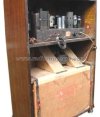
I'm assembling what is effectively a transmission line box. Its more specifically a Stromberg-Carlson acoustic labyrinth for a 1940 console radio. The original was cardboard, and from what I can gather it seemed to have a blanket of some sort of stuffing material applied to the flat surfaces only.

I'm building one out of 1/8" masonite, which is a rather sub-optimal material but should be good enough for this job. Planning to use wool stuffing because I've got a bunch of it.

Question is basically one of layout. Do I make a blanket of the stuff for the flat surfaces and leave a clear path through the whole thing, or would I be better off just loose filling the entire path through?
 
Register to hide this ad

TL Damping materials and techniques​


The damping of the line is an important step in achieving a successful transmission line speaker design. The purpose is to eliminate the anomalies caused by the upper frequencies. As the line gets more complex, and factoring the numerous types of damping materials available, we can conclude that the damping possibilities are endless. Regardless of that, we can make a few observations that happen consistently, when adding more damping material.
Increasing the density of the damping material has several effects :
  • Smoother frequency response (as the high frequencies are absorbed).
  • Exhaust output decreases.
  • Impedance becomes progressively damped.
  • F3 increases.

This is somewhat similar to the effects of damping a sealed box. Using damping material in a sealed box, alters the speed of sound, which is similar to making the box bigger. This decreases Qtc, which makes roll-off smoother and increases the f3. If we make a quick analogy, we can conclude that by damping the line, we are changing the speed of sound, thus we can make the line shorter for similar results. While this is true to some degree, in practice it is better to keep the line length at the original dimensions.


Types of damping materials​


There are various materials which can be used to damp the line. Depending on the material, you will have to use different quantities, because they have different densities. The whole point of the damping material is to reduce the ripple as much as possible. Considering ±1 dB of ripple acceptable, here are the quantities needed to reach this effect, for different materials and different path lengths. This data was confirmed to have some consistency over various trials with tapered lines.


damping material quantities transmission line


All of these materials will work well in suppressing the upper frequencies. If you use the correct quantities they will have a similar effect. What is not so similar is the effect they have on the overall frequency response. This is the part that is hard to predict, because there are a lot in inconsistencies in overall frequency response when using damping material. Because of this, the conclusion about which material is better is purely subjective. Experienced transmission line builders will rank long-fiber wool as one of the best damping materials for TL, followed by Acousta-stuf. Polyester fill and fiberglass will yield inferior results. Again, these are all subjective conclusions.


Another variation of damping is to place different materials along the line. Starting with lower density near the speaker, and progressively increasing the density of the damping material as we reach the exit. Not uncommon is to leave the last 20% of the line without damping. Final tuning will result in just making adjustments to the last few feet of the transmission line.

Buck
 
Yes, The T line looks like a series of "Pi" network filters with varying absorption at different points.

I doubt it's critical in your application more of an interesting thought experiment...
 
Last edited:
Cool, appreciate it. This whole thing is going to be far from ideal but I'm just trying to get back some of the missing bass from this dinosaur. Someone tossed the original enclosure and very badly tacked in a 12" coax Jensen to the cabinet. Luckily didn't hack up the baffle any, but to connect it they simply tied it across the original field coil speaker's voice coil, running both in parallel. The field speaker was sitting in the bottom of the cabinet to complete the circuit. The board that the amp should have been mounted to is also MIA, but thats just a chunk of plywood.

It doesn't sound awful as-is but its very lacking on the bottom end. I figure if I can knock something together using a $13 sheet of material and some other bits and pieces I've got laying around its worth a go.
 
My one real experience with a transmission line project was to build some six foot very slender paths behind 5 " Phillips woofers. I used fiber glass and stuffed the very circuitous path somewhat tightly. I had to do it before the cabinet was done so there was no adjusting. Just let me say I was astounded at the bass I got. It was really deep and not puffy or loose at all. I wish I had kept that project.
 
Impedance becomes progressively damped
What does this mean? That the peaks in the electrical impedance curve are flattened?

Naively, stuffing the path would seem to increase the "impedance" of the "air" and thus possibly improve coupling from the driver (in addition to other effects). But... :dunno:
 
Last edited:
This is more of a rectangle, not my model but this is basically what these things look like from the rear. I think its double wall cardboard originally, but mine is masonite with some off-cuts from ripping 1xsomething lumber in each corner, glued and nailed to give it some structure. I didn't think I was going to have much luck trying to edge-glue a 1/8" thick piece of material and not have it just self-destruct.

The triangular things are what couple the speaker into the box. The frame of the speaker is only open on the sides so they don't have to enclose the whole thing.


1732818813277.jpeg

and some rather hilarious advertising for it

1732818956515.jpeg

Mine has 3 internal baffles and a large exit port on the bottom.


I forgot to get one critical measurement last I had the thing in front of me though so I'm sort of on a pause until I get that. Need to make the cutout on the front panel. Going to get a large sheet of paper or cardboard cut to the size of the front panel and just stuff it inside the cabinet so I can trace the speaker on it directly. At that point I can cut it out and use it as a marking template.
 
I've seen poly fill used. You can experiment with how much to add.
I don't think you use felt pads or bathing like you would with a rear loaded horn? Even though they can look like a maze inside.
I've always thought a transmission line design had a compression section somewhere inside. Something like the chamber behind the driver starting out wide and getting narrower as it goes and opening up again at the end?
I wouldn't mind giving what you have there a try. I've got a new table saw inbound soon. :idea:
 
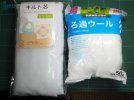
The line terminus should have some bugscreen across it to keep insects out irrespective of wool (but definitely required for wool). You don't want things laying eggs in there or moths eating it. Personally, I'd get a bag of polyester pillow stuffing (aka polyfill)...or a pillow from Walmart. Maybe two. Upholstery batting works great, too. There are other similar (aquarium) or quilt-batting products, too (see attachments). Fiberglass is a pretty big hammer--more resistive than what a line needs (but it Will hammer the lowest harmonic in your line if you stick a full cross-section halfway down a straight line--tapering lines changes that).

Tease (not kidding) the polyfill apart (it is dense as shipped if just sold as filling). It's even pretty dense as shipped in a pillow. It will take some experimentation if you can't characterize the drivers.

Labyrinths were usually just lined (unlike TL's) but I'd fill the thing, too. The only questions are the density and the quantity (ie it doesn't have to be distributed uniformly everywhere in the line--in fact you might want only the top 60% or so filled...or not.

Get the length of a string that would wind it's way (shortest dist) from the speaker to the terminus. Make a straight cardboard tube of that length and bung-together a cardboard (or masonite) baffle to use to test with the real speaker. This way, you can run it live and screw with filling that you can reach-in with your arm and figure out where it sounds best. Acoustical resistance of materials is frequency-dependent. Try stuff (tm).

I hate how masonite sounds, but it'd be better than cardboard UNLESS the cardboard is truly packed pretty tight with dense polyfill. That used to be how we proto'd little single driver TL's (with packing tape and cardboard) with new drivers in the late 80's :) That can sound really good in a short line--better than you'd think.

The deep cardboard baffle voodoo I figured-out was to line the rim of the hole with packing tape, too, so it had a good sealing surface. Then put a ring of mortite around that and set the driver frame on the mortite. What's more, sheet metal screws can sort of "hold" with the packing tape (vs. raw/bare cardboard). The rest of the cardboard "line" (folded square/manual/tapered whatever) is also sealed with packing tape. In this way, one can utility-knife-up and tape-up various configs very fast and the results are far more reliable than one would think (and vastly better than one blind shot and hope/faith).

All that said, the Strombergs I knew about had one LF driver and one HF driver so not sure which one you want to play what. If you do experiment with a straight tube and if you are trying for low freqs, it's worth trying one with stiff walls--that loss comes right off the bottom of the bottom of freq response of the lines.

The other thing is that the partitions shouldn't leak, if you can find a way to do that. I'd just lay a bead of whatever if you can get at it. I know you're not as intense about this as this post sounds, but it's worth it--it defeats the purpose if the runs leak.

If you want to positively enchant the bar denizens, you could swap-in some contemporary widerangers that don't need care and feeding of field coils. There are many small Markaudio drivers that are quite good and a couple that aren't expensive, as one example (if the impedance can be worked-out).

Fun project--please drop some updates if you feel like it. Think of it as an excuse to listen to music and mess with filling. Your ears will notice things. If you can, balance heavy percussion (likes a lot) vs big soundbodies (don't like much) and somewhere that voices don't sound like they're coming out of a tunnel :)

 

Attachments

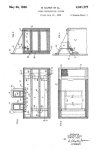
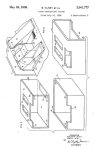
  • StrombergCarlson440MPatent2.jpg
    StrombergCarlson440MPatent2.jpg
    73.4 KB · Views: 14
  • StrombergCarlson440MPatent1.jpg
    StrombergCarlson440MPatent1.jpg
    67.2 KB · Views: 15
  • Stromberg440mAcousticalLabyrinth.jpg
    Stromberg440mAcousticalLabyrinth.jpg
    121.5 KB · Views: 16
  • polyfill_lining_dacron_batting_from_uphostery_store_.png
    polyfill_lining_dacron_batting_from_uphostery_store_.png
    105.2 KB · Views: 11
  • pillow_best_3usd44_ever_spent_walmart_aka_polyester_pillow_stuffing_filling.png
    pillow_best_3usd44_ever_spent_walmart_aka_polyester_pillow_stuffing_filling.png
    74.7 KB · Views: 6
  • polyfill_family_filling_quilt_batting_aquarium_filtration_wool_photo3.jpg
    polyfill_family_filling_quilt_batting_aquarium_filtration_wool_photo3.jpg
    78.6 KB · Views: 7
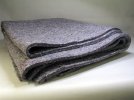
The original cardboard had what looked like a blanket attached to the flat surfaces, it wasn't stuffed. Thats why i asked the question in the first place.


A screen was on the list but i might save my wool and just get a cheap pillow. For what this is, its just not that crucial. The amp and driver just don't have incredibly wide response. Smallish transformer and just a pinch of local feedback
 
The original cardboard had what looked like a blanket attached to the flat surfaces, it wasn't stuffed. Thats why i asked the question in the first place.


A screen was on the list but i might save my wool and just get a cheap pillow. For what this is, its just not that crucial. The amp and driver just don't have incredibly wide response. Smallish transformer and just a pinch of local feedback

Yeah, labyrinths were lined, not filled. Felt or even denim insulation from the building store (or the upholstery batting etc) works... Follow your ears. I've found filled lines can be made cleaner than lined pipes, but YMMV.

Again, very fine project.
 

Attachments

  • lining_felt_eg_8MM-FELT.jpg
    lining_felt_eg_8MM-FELT.jpg
    57.7 KB · Views: 1
That video had a good view of the front that I hadn't seen. Looks as usual I'm making it more complex than I need to. A rectangular cutout on the front for speaker clearance rather than tracing the radius of the speaker will be easier to make.


Stuffing it will certainly be easier to do than lining it.
 
You might want to take a look at US Patent 2,031,500 which describes the aims of the thing. The later patent, 2,041,777 (from which grindstone's drawings are taken) is about the implementation.
 
Some info: http://www.antiqueradio.com/Sep06_Schecter_Choose.html
And: https://community.classicspeakerpages.net/topic/9715-stromberg-carlson-identificationinfo/
I posted the early technical documents published in the 1930s from Stromberg Carlson over
25 years ago online. I did a senior project about TL speakers and my advisor was the first to
inform me about this design, and then I informed people on the Internet in the 1990s.

I would suggest lining the walls to start, copy what was done in the original speaker. If the bass
is boomy, add more behind the woofer. You can fill up to about the first half of the line but
further down will tend to kill the bass.
 
Last edited:
Back
Top Bottom