• The move to the new server is done. There are some software and database maintenance updates in process. This has us passing the hat around to help out. We appreciate any donations. Seriously, even a dollar helps. The payment page may be found here - https://www.audiokarma.org/support.html

Tri Amping JBL 4435

MarioGharios

New Member
Hello, I am looking for recommendations for tri amping my JBL 4435s.

After considering using a modified passive crossover at length with Zonker, I was advised by an engineer friend of mine to use an active solution and to tri amp, to remove inefficiencies and losses of the passive configuration. Truth is, I no longer trust my crossover/L pads and building a new crossover is expensive.

I use my system for listening and moderate volume dance parties. What I have noticed with my speakers is that at high volume, the mid range woofer starts to bottom out on both speakers, while the low range woofer does its job perfectly well. Which brings me to my plan.

I am considering using a K231 crossover:

https://sublimeacoustic.com/products/k231-stereo-3-way-active-crossover

with 2 chips configured for

40hz-100hz/100hz-1000hz/1000hz+

one with slope 12db
the other with 24db

Opinions much wanted! thanks
 
Register to hide this ad
Perhaps you should address why the 2234 is bottoming.
Also there is response shaping / compensation on the HF that your proposed X/o does not address ( unless I missed something ).
Perhaps you should consider a DBX 260 or similar DSP as being a more powerful speaker management tool.
 
Perhaps you should address why the 2234 is bottoming.


Also there is response shaping / compensation on the HF that your proposed X/o does not address ( unless I missed something ).


Perhaps you should consider a DBX 260 or similar DSP as being a more powerful speaker management tool.

I am using the 4435s to party levels IE 102db SPL average with bass heavy material. My thinking is to basically free up the midrange 2234 of low frequencies and dedicating the other 2234 to them.

There is volume adjustment knobs on the front plate of the K231. won't they do the job?

I want to remain analog in my audio chain.
 
If you havn't done so already you should study the 4435 passive and either research the aims of this network or understand the circuit with you own knowledge.
You can accomplish the filters for the bass drivers but as far as I can see with a quick look you cannot dial in the compensation that the HF requires.
I accept fully your desire to remain analog but would only add that modern DSP units run at high processing speeds and are not like CD audio with all of its flaws. Plus you can dial in changes of slopes/ shelving/ frequency/ phase alignment on the fly.

I wonder whether the 2234 that is making noises ( a spider that is coming loose ? ) , try swapping the drivers in each cabinet.
 
I would think that the 2234 carrying the midrange should be moving far less than the one carrying the lows, something is not right in my opinion. I restored my 2235's and pretty much kept everything stock, I get no bottoming out of the woofers at any volume or music type. I'm not a huge fan of modifying these gems, I would simply add a sub for more deep colored bass if more was needed.
 
BSS x/o allow you to download the correct settings for many JBL pro products. I couldn't attest as to whether settings are available for 4435 but JBL are pretty good in that respect.
 
I would think that the 2234 carrying the midrange should be moving far less than the one carrying the lows, something is not right in my opinion. I restored my 2235's and pretty much kept everything stock, I get no bottoming out of the woofers at any volume or music type. I'm not a huge fan of modifying these gems, I would simply add a sub for more deep colored bass if more was needed.

the mid range woofer carries the whole signal from under 1000hz. The low range woofer only under 100hz.

it's only by testing out without the horn that you can hear that bottoming out effect on my speakers. IE it's not audible 98% of times or so when the horn is active.

If you havn't done so already you should study the 4435 passive and either research the aims of this network or understand the circuit with you own knowledge.
You can accomplish the filters for the bass drivers but as far as I can see with a quick look you cannot dial in the compensation that the HF requires.
I accept fully your desire to remain analog but would only add that modern DSP units run at high processing speeds and are not like CD audio with all of its flaws. Plus you can dial in changes of slopes/ shelving/ frequency/ phase alignment on the fly.

I wonder whether the 2234 that is making noises ( a spider that is coming loose ? ) , try swapping the drivers in each cabinet.

I've tried swapping the driver and cabinets. Same results. What gives it away is the exact same behavior on both speakers.

You're right about studying the network, but I'm afraid I just don't have the technical skill.
 
Do you have a large enough amp"

If so, maybe you could lower the value of the 18mH inductor so that the helper woofer plays up to 300Hz. You would get doubling in the volume from 300Hz down and the two woofers would share the "weight" or put a steep roll-off filter somewhere in the 30-40Hz range or add a subwoofer and cross at 80Hz.
 
first of all a 4435 is a 2.5 way speaker with the second woofer coming on at 100 hz., but I can see you using it with subs as a 3 way system. They are 96 db 4 ft 1 watt so all you need is 100 watts to get the levels you need in a room. You might want to elevate them near the ceiling and invert them like they do in recording studios to spread the sound and not have it absorbed by furniture and party goers. The closer to a corner the more bass. I would be using a Mac MC 2155, 7200, 7150, or MC 152. They all put out close to or just over 200 watts and with power guard will protect your drivers from clipping and being strained too far. Yes all JBL crossovers are a pain. They will need to be totally recapped and connections soldered well and all switching options hard wired . Trim control for the tweeter should be up graded.
 
Last edited:
hey y’all.

@damacman That’s exactly what I’ve done in the past with placing a double 18 sub under each 4435, but crossing over at 100 hz. Basically rendering the second woofer useless. I just bought 4430s to do that exact same thing now. I will use them in another room.

I want to avoid using subs when using the 4435s, hence this thread.

@Macaroonie What could go wrong with the tweeter if I power it straight from an amp in your opinion?
 
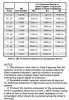
The "lower" woofer would appear to be on a 1st order low pass with a crossover frequency of 46 Hz based on an impediance of 5.2 ohms for the woofer and four parallel resistors.

The "upper" woofer appears to be on a 2nd order low pass crossover with a frequency of ~700 Hz. There is no attenuation for its bass (i.e., it is not a band pass filter).

attachment.php
 
@Macaroonie What could go wrong with the tweeter if I power it straight from an amp in your opinion?[/QUOTE]

Assuming you are filtering either passively or active it becomes a judgement call. If you are sure of your amp , regarding switch on thumps spikes etc then in general you are OK however the approved way of doing things is to have a blocking cap in line with the tweet. JBL publish a chart , essentially one cap tuned at least one octave below the lowest operating frequency of the tweet.
PROTECTION CAPS.JPG
 
The "lower" woofer would appear to be on a 1st order low pass with a crossover frequency of 46 Hz based on an impediance of 5.2 ohms for the woofer and four parallel resistors.

The "upper" woofer appears to be on a 2nd order low pass crossover with a frequency of ~700 Hz. There is no attenuation for its bass (i.e., it is not a band pass filter).

attachment.php

thanks! I thought the frequency breakdown was

less than 100 Hz for the second woofer
less than 1000 Hz for the first woofer
more than 1000 Hz for the tweeter

as per the brochure http://www.jblpro.com/pub/obsolete/443035.pdf

@Macaroonie What could go wrong with the tweeter if I power it straight from an amp in your opinion?

Assuming you are filtering either passively or active it becomes a judgement call. If you are sure of your amp , regarding switch on thumps spikes etc then in general you are OK however the approved way of doing things is to have a blocking cap in line with the tweet. JBL publish a chart , essentially one cap tuned at least one octave below the lowest operating frequency of the tweet.
View attachment 1527014[/QUOTE]

wow, thanks so much for this @Macaroonie. one octave under 1000hz would be 500hz. At 8 ohms, I'd need a 72 microF cap basically.
 
Thats it. 4435 provides for bi amping as I recall , this leaves the HF filter in place so the protection cap is redundant under those circumstances. However if you are going fully active ie. direct on to the driver then yes you should use the protection cap.
Having said that I run fully active direct on to the drivers BUT I am not pushing the system hard. There is an argument that suggests that the blocking cap has a negative effect in the sound. It certainly introduces a phase shift. Also remember that there is response shaping / compensation for the Bi Radial horn. Given that the HF driver + horn combo is a lot more efficient than the bass drivers , if you want to use the analog active X/o I would think that your best solution would be to keep the HF filter in place. ( thereby no protection cap required )
What does concern me is that in your application where there is talk of introducing subs , then the 2234's will play happily much louder and hence the HF will need to get louder also.
It is the case that the 2425/6 driver is very efficient it is nonetheless still only a 1" driver with a 1.75" dia. They are relatively fragile compared to 4" drivers , but of course that opens the door to quite the rabbithole.
Just be careful.
I had a thought that the cracking noise you hear could be down to the Bi Amp switch having less than clean contacts ( 30+ years old ) , try some de oxit on that switch if you can < might help , won't do any harm.
 
No subs, well then corners are your best friends. And unless you are going in for room equalization and have a spectrum or FFT analyzer to balance your system. I would just make the speakers the best that can be with the factory crossover and for get bi-amping. I am surprised you don't want to add a super tweeter. Thats another challenge I would for get.
 
Mario, I apologize for sort of disappearing on your crossover project; as I mentioned, I'm still feeling a little burned by the last guy I tried to help and it's a pretty big job. Anyway, it sounds like you're on to the next level of your endeavor. Some thoughts:

I agree with the others above that the mid-woofer bottoming thing seems bizarre, and I have no theories there. But it does not sound normal to me.

One interesting active crossover system for the 4435 that I was recently considering is a Hypex Fusion plate amplifier. This three-way model includes DSP and three Class-D amplifier modules (500 + 500 + 100 watts):

https://www.hypex.nl/product/fusionamp-fa503/160

I love the fact that instead of a stack of amps and DSP crossovers with cables snaking everywhere, it's all in one box per speaker. Also, I think the prices are well within three figures.

You can download the free software and tailor the settings to your drivers. Maybe mount the plate in a ventilated box behind the speaker, direct-wiring each driver to its respective amp.

The device can be used with a microphone to optimize them to your listening room. I suspect the software also allows you to dial in the CD EQ required for our horns.

One nice thing is you can download the software now, read the instructions and try to get started on the settings. That would give you an idea of whether it's a job that you're comfortable tackling.

This FusionAmp can be the basis of e.g. a powerful two- or three-way monitor.

The FA503 has two 500 Wrms Ncore® amplifiers which can also be bridged to form one powerful 1000 Wrms amplifier. Additionaly, a 100 Wrms Ncore® tweeter channel is added.

Dimensions: 420 * 150 x 90 mm

Weight: 2275 gram


Connections

  • Analogue balanced XLR in and through
  • Analogue unbalanced RCA input
  • Digital AES in and through
  • Digital S/PDIF in and through
  • Digital Optical TosLink input
  • USB 2.0 configuration interface
Features

  • 15 biquads per amplifier
  • Three selectable presets for filters
  • Source selection
  • Signal detect
  • Auto shutdown
  • BTL capable
  • Clip protect
  • Thermal protect
  • Filter protection
Meet the family
The Fusion Amp family consists of the following models:

FusionAmp One-Way models:
FA251, 1x250W
FA501, 1x500W

FusionAmp Two-Way models:
FA122, 2x125W
FA252, 2x250W
FA502, 2x500W

FusionAmp Three-Way models:
FA123, 2x125W + 100W Tweeter
FA253, 2x250W + 100W Tweeter
FA503, 2x500W + 100W Tweeter

What is included in the box:
  • The FA503
  • A printed copy of the user guide
  • Speaker connection cables
What is not included in the box:
Basically anything else, so additionally order, if you need:

Fusion IR Receiver Kit
All modules can be extended with the Fusion IR Receiver Kit. This set contains a PCBA with IR receiver and bi-colour LED, and the necessary cable (125cm). This set is available for separate purchase

Hypex Remote
The Hypex Remote which can be used in combination with the Fusion IR Receiver Kit to control volume, source and put the system into standby.

Fusion Mounting Screws
The Fusion Amp must be mounted into the speaker cabinet with 8 or 10 screws. This set contains 10 self-tapping, black, Pozidriv screws, 3.9x20mm.

USB 2.0 Cable
USB Type A Plug - Mini USB Type B Plug,

Powercord EU
IEC 60320 C13 - IEC Type F
Used in: Germany, Austria, the Netherlands and Spain among others.

Powercord UK
IEC 60320 C13 - IEC Type G
Used in: UK, Ireland, Cyprus, Malta, Malaysia, Singapore, Hong Kong.

Powercord AU/NZ
IEC 60320 C13 - IEC Type I
Used in: Australia, New Zealand, Papua New Guinea, Argentina, China.

Powercord USA
IEC 60320 C13 - IEC Type B / NEMA 5-15P
Used in: North and Central America, Japan.

Hypex Filter Design
If you need a physical copy of Hypex Filter Design, you can order a CD containing HFD from our webshop. HFD is also available for free download.
 
Last edited:
Thats it. 4435 provides for bi amping as I recall , this leaves the HF filter in place so the protection cap is redundant under those circumstances. However if you are going fully active ie. direct on to the driver then yes you should use the protection cap.

Yes, but not quite right. Look at the schematic.

When using the internal crossover, the horn is fed from a 12 mfd cap. But when you switch to an external crossover, this is replaced with a 20 mfd cap (not quite an octave) to serve as a blocking cap without "getting in the way" as much.

Furthermore, it doesn't do the user any good to have the horn frequency selectable using an external crossover/amp if the internal cap still limits the horn to whatever lower frequency is dictated by the internal blocking cap.

But, it can save the horn driver in the event that the user sets the external crossover to a frequency that is too low.
 
I agree with the others above that the mid-woofer bottoming thing seems bizarre, and I have no theories there. But it does not sound normal to me.

You can purchase "Woofer Tester from Parts Express and check the T/S parameters on the questionable drivers. They do need to be removed to run the test.
 
Back
Top Bottom