

You are using an out of date browser. It may not display this or other websites correctly.
You should upgrade or use an alternative browser.
You should upgrade or use an alternative browser.
TT suggestion for my system.....?
- Thread starter williwoods
- Start date


williwoods
Active Member
Thank you all so much for the great input.
I am going to keep my eye out for all of the TT's suggested sofar, even another DD TT, because I like the idea of having 2 or more wildly different TT's to work with. Eventually I will find out for myself what works/sounds best to me.
I also need a piece of furniture for all this stuff. The wife will not allow a wallshelf unfortunately. I currently have a wood cabinet and a very uneven floor.......
Any ideas for bargain furniture that performs well? Pretty sure I am past any Ikea solution unless there is something I haven't seen before. What do you do for hardwood floors?
I am going to keep my eye out for all of the TT's suggested sofar, even another DD TT, because I like the idea of having 2 or more wildly different TT's to work with. Eventually I will find out for myself what works/sounds best to me.
I also need a piece of furniture for all this stuff. The wife will not allow a wallshelf unfortunately. I currently have a wood cabinet and a very uneven floor.......
Any ideas for bargain furniture that performs well? Pretty sure I am past any Ikea solution unless there is something I haven't seen before. What do you do for hardwood floors?

Hey- the [British Isles] also are home to Lucas Electronics!
But I do like some of their beers.....:thmbsp:
It's a well-known fact that the reason the British drink warm beer is that they have Lucas refrigerators ...


williwoods
Active Member
Lucas Electrics= "Prince of Darkness"
Belt or DD, either is fine, If you have hardwood floors no amount of table suspension will work as good as isolation in my findings.
Please be specific.....what would I need for this? Sorry if I am asking newb questions....
KentTeffeteller
Gimpus Stereophilus!
If you have wood floors, gimpy feet, and live in a house which can't get a wall shelf, you get a massive broadcast turntable and transcription arm, and mount it in the heaviest plinth your floors will accept, and enjoy your music.

thedelihaus
Nocturnal transmissions
Please be specific.....what would I need for this? Sorry if I am asking newb questions....
Do you have springy floors? This can lead to some issues with suspended TTs.
Good ways to avoid this is with a wall-mount shelf, or a large base of granite, or a wood box of sand, or a rubber air bladder platform (sometimes a DIY inner-tube platform can be built).
williwoods
Active Member
Do you have springy floors? This can lead to some issues with suspended TTs.
Good ways to avoid this is with a wall-mount shelf, or a large base of granite, or a wood box of sand, or a rubber air bladder platform (sometimes a DIY inner-tube platform can be built).
I do have a springy floor that is not level. Its an old old house. Wall mount is out (wife wont have it. unless its semi pretty) I used to use a granite base/cutting board for making pastries under the TT, but the wife stole it away from me.......
so where would you put the granite, wood sand box or inner-tube platform? Under the TT or under everything? Help me understand this...
thedelihaus
Nocturnal transmissions
I do have a springy floor that is not level. Its an old old house. Wall mount is out (wife wont have it. unless its semi pretty) I used to use a granite base/cutting board for making pastries under the TT, but the wife stole it away from me.......
so where would you put the granite, wood sand box or inner-tube platform? Under the TT or under everything? Help me understand this...
On top of the rack and under the TT. Can't elaborate at the moment but do a search here at AK for the topic.
With an old old house's non-level, springy floor, you sure are going to have a challenge ahead of you.
If your wife is stealing your belongings then is dictating she won't allow you to have a TT shelf, I'd not make her any more pastries.

melofelo
Addicted Member
Please be specific.....what would I need for this? Sorry if I am asking newb questions....
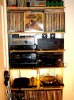
a diy wall shelf can help if you have masonry walls and suspended wooden floors... works a treat on both a fixed plinth rega and a 3 point suspended ariston..
Attachments

thedelihaus
Nocturnal transmissions
1980 Sansui SR-838 with a $250+ Ortofon cart.
???
A Sansui SR-838 makes for a terrible TT platform!!!
williwoods
Active Member
LOL
I am sort of interested in this unit from samson. A bit more expensive than I like but damn is it sexy.
http://shop.mapleshadestore.com/Equipment-Racks/departments/16/
I like the 3 2" shelf version with nickel legs. anyone have experience with these? I think its pretty reasonable for $800 bucks. I would more than likely buy a 4" platform for the TT for on top as well.
I am sort of interested in this unit from samson. A bit more expensive than I like but damn is it sexy.
http://shop.mapleshadestore.com/Equipment-Racks/departments/16/
I like the 3 2" shelf version with nickel legs. anyone have experience with these? I think its pretty reasonable for $800 bucks. I would more than likely buy a 4" platform for the TT for on top as well.

so where would you put the granite, wood sand box or inner-tube platform? Under the TT or under everything? Help me understand this...
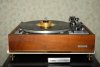
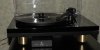
I use a piece of marble that I bought for about $13 on the internet from a kitchen supply website. I then added brass cones by super glueing the female ends to the bottom of the "rolling board".
I use those brass footers from Mapleshade as a replacement for the stock rubber/plastic feet on my other table.
Attachments
Last edited:

DougMac
Super Member
Shelvine
How handy are you? I found maple cutting boards that are 20"wx15"dx 1 3/4" thick for less than $50 a board. Three boards and ~$50 in hardware and you're set for less than $200.LOL
I am sort of interested in this unit from samson. A bit more expensive than I like but damn is it sexy.
http://shop.mapleshadestore.com/Equipment-Racks/departments/16/
I like the 3 2" shelf version with nickel legs. anyone have experience with these? I think its pretty reasonable for $800 bucks. I would more than likely buy a 4" platform for the TT for on top as well.

a diy wall shelf can help if you have masonry walls and suspended wooden floors... works a treat on both a fixed plinth rega and a 3 point suspended ariston..
oohh... Turntables on the bottom shelf, under all that equipment. I would not be comfortable with that. The "what if" factor would drive me nuts. When I use shelves like that, the tables always go on top.
As a fellow JVC QL-Y5F owner.....
I chose the Y5f as my 2nd table because I wanted something different.
My first table is a Revox Linear tracking B795... Linear Tracking, Direct Drive, Suspended, Ultra light arm (4g)
I wanted a damped (for flexibility with many differently compliant cartridges), pivoted (cos its different to Linear..!), s-arm with exchangeable headshells (because I wanted to experiment with different cartridges and that made my life easier).
Along the way, I filled the JVC plinth with plasticine, swapped the feet, placed it on an isolated rack.... and have collected a range of different weight headshells and counterweights so I can "tune" the arm mass for best results with different cartridges before involving the damping.
The Revox (like some other turntables) is great for set and forget playing - but changing cartridges is a serious pain with that design.
On the other hand it is brilliant with ultra high compliance designs suited to the 4g arm.
My suggestion is:
1) Forget about belt vs direct drive vs idler - a well implemented drive system is important, and one that does what it is supposed to do.... there are lots of top end tables from yesteryear that do the job very very well in each category - the drive system is not a good selection criteria....
2) Given your wooden floor and the likelihood of floor vibrations working their way to the turntable it should be damped/isolated - this could be by being sprung, or by being on damped feet (like many unsprung turntables) - the spring types do tend to a bit more immunity from external vibration.
The plasticine I added into the JVC plinth helped it quite a bit - added mass but also vibration damping .... without springing...
3) A real criteria for choice would be the arm - choose something different - that way you can experiment with the part of the system that really makes a substantive sonic difference - your current arm is mid mass - you might want to go ultra light - and try out high compliance designs - or perhaps look for something with a linear tracking arm.
4) experiment with differing cartridges.
As an aside the JVC were it new today would be selling in the $1500 to $2500 bracket.... and properly set up that is its current competition too.
Any other turntable you want to try out needs to be a fairly serious TT to give the JVC a run for its money.... For good value with a different approach investigate the JVC's competitors when it was new - TT's from that period often go for a song (less than $100) even if they would be selling for 10x that amount if they were new. It is a buyers market.
The Revox I own was in a shootout in an Australian magasine alongside the JVC in the early 80's.... They are very different but both high quality tables.
Vive la difference!
Another comment - one of the fantastic things about the JVC is how versatile it is.... the counterweight thread is the same as the very common Technics SL1200 series - this means you can easily adjust arm mass up or down by around 30% or maybe more at minimal cost. I have counterweights at 147g, 110g, 97g, 85g - and am still hunting for a 70g one
Headshells are available in all weights between 5.5g (my lightest) up to 18g (and perhaps more).
So you have an arm that can go from an effective mass (including cartridge and fixings) of 32g down to an effective mass of 15g. (also including cartridge and fixings)
That means for a resonant frequency of 10Hz you can go from an 8cu cartridge (arm at 32g) to a 17cu cartridge (arm at 15g)
If you widen the permissible resonant frequency to 7hz-13hz this takes you to cartridge cu's from 34 to 5.
The damping facilitates the wider range of permissible resonant frequencies...
Not a lot of arms or tables that have this kind of flexibility.... and there are very very few cartridges that fall outside of the JVC's arm parameters.
In any case - if you opt for a different table to try out, don't get rid of the JVC.... just get a 2nd table that is as different as possible - so you can get to know how the other half lives (so to speak.)
bye for now
David
I chose the Y5f as my 2nd table because I wanted something different.
My first table is a Revox Linear tracking B795... Linear Tracking, Direct Drive, Suspended, Ultra light arm (4g)
I wanted a damped (for flexibility with many differently compliant cartridges), pivoted (cos its different to Linear..!), s-arm with exchangeable headshells (because I wanted to experiment with different cartridges and that made my life easier).
Along the way, I filled the JVC plinth with plasticine, swapped the feet, placed it on an isolated rack.... and have collected a range of different weight headshells and counterweights so I can "tune" the arm mass for best results with different cartridges before involving the damping.
The Revox (like some other turntables) is great for set and forget playing - but changing cartridges is a serious pain with that design.
On the other hand it is brilliant with ultra high compliance designs suited to the 4g arm.
My suggestion is:
1) Forget about belt vs direct drive vs idler - a well implemented drive system is important, and one that does what it is supposed to do.... there are lots of top end tables from yesteryear that do the job very very well in each category - the drive system is not a good selection criteria....
2) Given your wooden floor and the likelihood of floor vibrations working their way to the turntable it should be damped/isolated - this could be by being sprung, or by being on damped feet (like many unsprung turntables) - the spring types do tend to a bit more immunity from external vibration.
The plasticine I added into the JVC plinth helped it quite a bit - added mass but also vibration damping .... without springing...
3) A real criteria for choice would be the arm - choose something different - that way you can experiment with the part of the system that really makes a substantive sonic difference - your current arm is mid mass - you might want to go ultra light - and try out high compliance designs - or perhaps look for something with a linear tracking arm.
4) experiment with differing cartridges.
As an aside the JVC were it new today would be selling in the $1500 to $2500 bracket.... and properly set up that is its current competition too.
Any other turntable you want to try out needs to be a fairly serious TT to give the JVC a run for its money.... For good value with a different approach investigate the JVC's competitors when it was new - TT's from that period often go for a song (less than $100) even if they would be selling for 10x that amount if they were new. It is a buyers market.
The Revox I own was in a shootout in an Australian magasine alongside the JVC in the early 80's.... They are very different but both high quality tables.
Vive la difference!
Another comment - one of the fantastic things about the JVC is how versatile it is.... the counterweight thread is the same as the very common Technics SL1200 series - this means you can easily adjust arm mass up or down by around 30% or maybe more at minimal cost. I have counterweights at 147g, 110g, 97g, 85g - and am still hunting for a 70g one
Headshells are available in all weights between 5.5g (my lightest) up to 18g (and perhaps more).
So you have an arm that can go from an effective mass (including cartridge and fixings) of 32g down to an effective mass of 15g. (also including cartridge and fixings)
That means for a resonant frequency of 10Hz you can go from an 8cu cartridge (arm at 32g) to a 17cu cartridge (arm at 15g)
If you widen the permissible resonant frequency to 7hz-13hz this takes you to cartridge cu's from 34 to 5.
The damping facilitates the wider range of permissible resonant frequencies...
Not a lot of arms or tables that have this kind of flexibility.... and there are very very few cartridges that fall outside of the JVC's arm parameters.
In any case - if you opt for a different table to try out, don't get rid of the JVC.... just get a 2nd table that is as different as possible - so you can get to know how the other half lives (so to speak.)
bye for now
David
melofelo
Addicted Member
oohh... Turntables on the bottom shelf, under all that equipment. I would not be comfortable with that. The "what if" factor would drive me nuts. When I use shelves like that, the tables always go on top.
makes it easier to play records while sitting down