• The move to the new server is done. There are some software and database maintenance updates in process. This has us passing the hat around to help out. We appreciate any donations. Seriously, even a dollar helps. The payment page may be found here - https://www.audiokarma.org/support.html

Tube amp topologies

but generally speaking, the voltages involved in solid state amps are low, and there is no reasonable failure of a SS amp that is going to put lethal voltages on the speaker terminals (or any place else that a user may come in contact with).

It's not about voltage, it's about current. And it is lethal for the speaker above all... Trust me, I saw many solid state amp power stages from different brands gently and silently smoking the moving coil of a loudspeaker ! Ampeg V6B, Peavey PAs come to my mind, among others...

1. Capacitor output coupling will definitely protect unless 40 years old. Make sure the output capacitor has voltage rating above the B+ DC supplied voltage.

Yes. At least for Solid-State output stage. My 1975 Marantz 2015 still have its original ones, working flawlessly - on that point, at least !

Speaking about OTL, there's a bunch of them which doesn't work very properly and are unsafe by design - oh, OK : I am not annoucing a revolution, right ? But by my personal experimentations on OTL circuits, I draw these conclusion or... Evidences :

- The more they are powerful with numerous tubes, the more delicate and critical they perform, and are in need of regular servicing.

- The simpler the circuit, the more reliable it is, the less serviving it needs to be checked, notably if the circuit operates in a reasonable working conditions versus the tube datasheets.

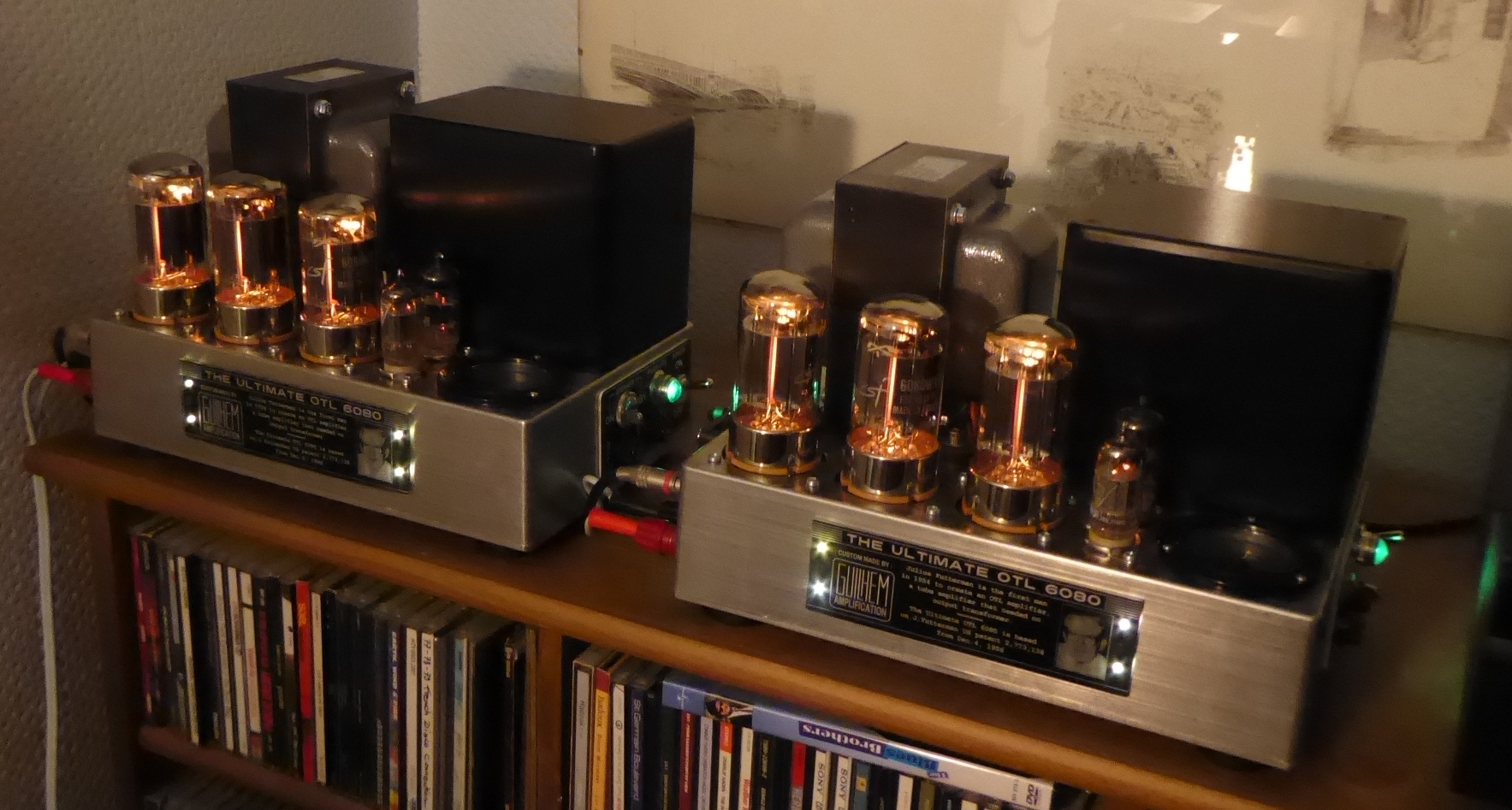
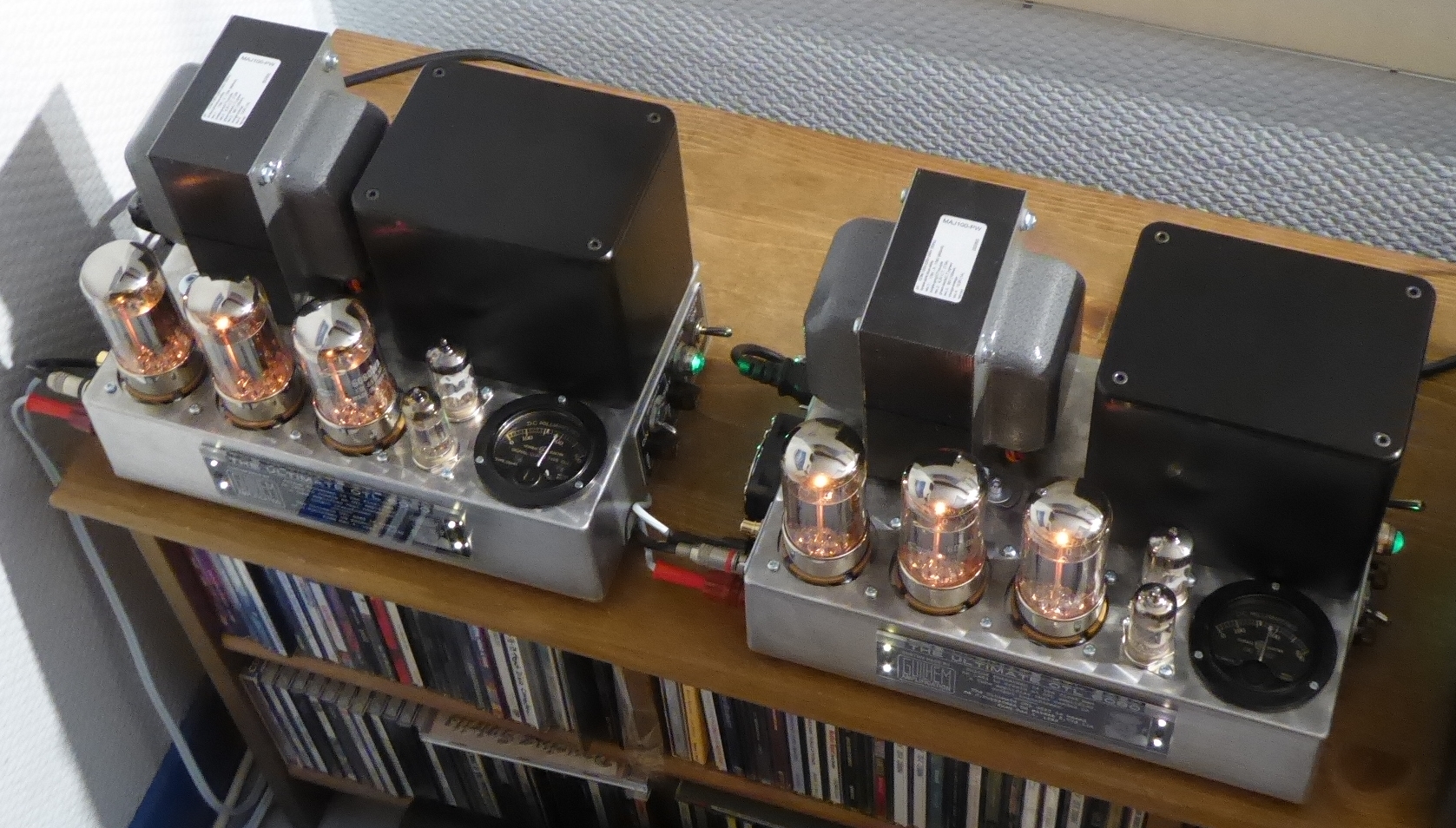
My little Ultimate OTL (I wrote Ultimate because it's the latest I built, and probably won't go further... Probably doesn't mean certainly ! :D;)) :

LUvYJb-P1100328.jpg

ddZXJb-P1100318.jpg


... Offer those modest specifications :

- nominal power output 10WRMS 16R. (12-13WRMS at onset of clipping).
- input sensivity = 0.675V @10W.
- THD = to be measured soon... When I'll have reassembled my measurement rig !
- bandwidth = 1Hz-200KHz @-3dB 10WRMS 16R.
- no general feedback loop.
- output stage circuit based on the original Julius Futterman 1956 OTL design patent.
- compact die-cast aluminium chassis : 275x175x66mm par block.

The ULTIMATE OTL6080 also consists in 2 compact mono block amps, each using 3x 6080WA in OTL configuration (Output Transformer Less), driven by a SRPP 12AX7/ECC83 preamp stage, followed by a Cathodyne 12AU7/ECC82 phase inverter. The 6080WA are indeed directly coupled to the speaker output.

If we speak about protection :
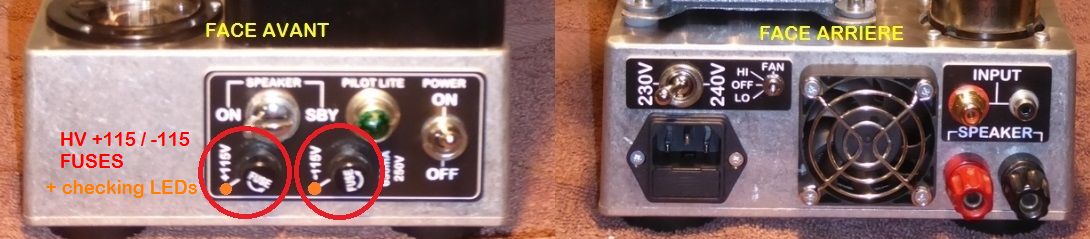
BeMiOb-M1-Copie.jpg


Among the regular main fuse :

- The HV supply power stage rails are each fused.
- The SBY switch directly shorts the speaker output to GND in SBY mode.

This proved - after being duly tested - to be the best design compromise between simplicity and efficiency for protecting both the amp, the speakers and the user, if one of the 6080WA went bad (short or cut, upper or lower half of tube). This is also due to the topology of the OTL output stage itself - mine is from the 1st schematic above (as devise by Mr Futterman), not from the 2nd schematic, which can be dangerous by design at least for the speakers - and which is often saw on Solid-State amps, by the way :
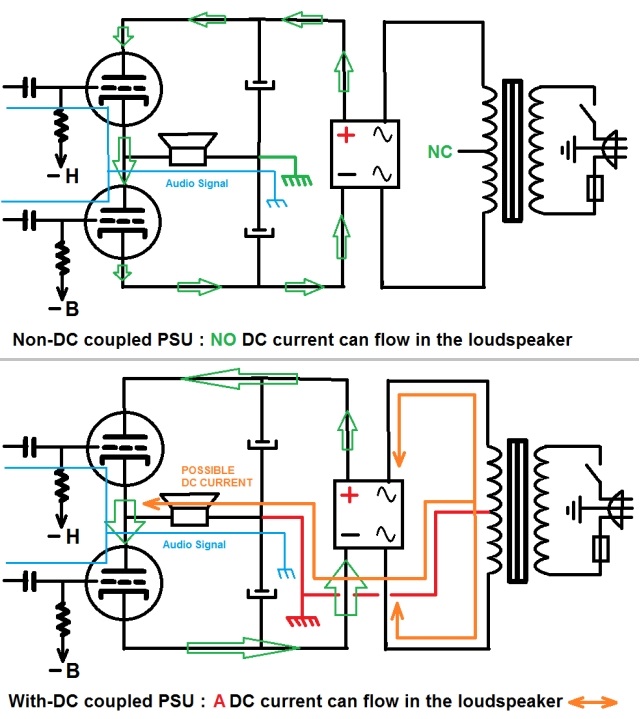
4UyvJb-OTL-PSU-DC-and-non-DC-coupled.jpg


Aw, sorry : I may have already exposesd all that in an earlier post... My apolpogies ! :rolleyes:

T
 
I'm writing this for a few friends, it's meant to be an entry level primer on tube amp topologies. I'd like to keep things very general, so that a newbie to the hobby can gain some vocabulary for the various tube types and output topologies. There are exceptions to probably everything I will say, but I wanted to share what I could in as general language as possible. There are other threads for hard-core techies, this one is for the novice.

Triodes have one and only one "control grid". Triodes can be used in Single Ended Triode (SET) circuits, and in push-pull circuits. If a true triode is used in any circuit as an output tube, it can not utilize "pentode" or "ultra-linear" mode.

Pentode tubes have three control grids, and the addition of the extra grids allows the pentode to be run in various different output modes: triode, pentode, and ultra-linear. Triode mode mimics a true triode tube, is often of a lower power than the others, but is popular because of it's sonics. Pentode mode usually uses a tube to more of it's maximum output potential, and often gets the highest power ratings out of a tube. It's generally fallen out of favor, but making a comeback in certain DIY circles. Ultra-linear mode is sort of a compromise between the two, with power ratings between triode and pentode. Ultra-linear mode is only possible if the output transformer has a special tap that supports this use.

There are three basic output topologies for tube amps: Single Ended (SE), Push-Pull (PP), and "Output Transformer-Less" (OTL). OTL amps do not use an output transformer, are fairly exotic due to the number and size of tubes requires, and other factors. They are worthy of mentioning, but beyond the scope of a document aimed at a novice. As both SE and PP amps require an output transformer (OPT), the characteristics of that transformer will dictate many factors about the amp. Generally speaking, an output transformer will be either a single ended OPT, or a push-pull OPT. Either PP or SE OPTs can have an ultra-liner (UL) tap. If your output has it, you can optionally use it. One could argue that the output transformer is the most critical part in a tube amplifier.

A Single Ended amp uses a single output tube. If the tube is a native triode (300B, 2A3, etc.) this is a SET amp. You can run a pentode in Single Ended Pentode (SEP) mode as well, but it's not a SET amp. Using a pentode, you can have a Single Ended Pentode (SEP), and if your transformer supports it a Single Ended Ultra-Linear (SEUL) mode as well. It is possible to switch between these modes.

Push Pull uses a pair of tubes to power the speaker. Triode, Pentode, and UL modes are all available here, too, depending on the choice of tube and transformer.

Parallelism is also possible, usually for more power. A Parallel Single Ended (PSE) amp will use more than one tube run in single ended mode. A Parallel Push Pull (PPP) amp will use two or more pairs of outputs. While it's usually easy to spot a Parallel Push Pull amp because of the number of output tubes (4, 6, 8, etc.), the most common Parallel Single Ended amps can resemble a Push-pull amp, as each have 2 output tubes. Generally speaking, parallel amps are not as common as non-parallel. Vintage parallel push pull amps were often PA type amps. Parallel Single Ended amps seem to be more common in modern times, as people want more power while trying to retain some single ended sonic characteristics.

Single ended amps are generally prised for their sonics, but put out less power than push-pull amps. They are generally simpler and have less parts than a push-pull amp. They tend to be fussier about hum and noise, so particular attention must be paid to the quality of the power supply, amplifier layout, careful heater wiring, and other factors that induce noise. In some ways, parts selection becomes more critical because there are fewer of them to begin with. This can work to a DIYers economic advantage too, as sometimes it's possible to use a budget for fewer but higher quality parts. While circuit choice is still very important, due to the simplicity of the design, most SE circuits resemble each other to a great degree.

Push-pull amps generally have more power than SE amps for any given tube. Generally speaking, they tend to be more complex then SE amps, with a higher parts count and more tubes. They have some noise-rejection qualities inherent in their topology, and sometimes this can present less of a problem to get noise free. Choice of circuit can be of particular importance in a push-pull amp, some can really sound better than others. There is also a greater number of circuits to choose from, as different designs handle the more complicated push-pull circuitry in different ways. Parts selection is still important, but perhaps circuit choice is even more critical in a push pull amp.
I've had very good luck using pentodes strapped as triodes. See https://www.audiodesignguide.com/New2A3/ETF06TS.pdf
 
I'm writing this for a few friends, it's meant to be an entry level primer on tube amp topologies. I'd like to keep things very general, so that a newbie to the hobby can gain some vocabulary for the various tube types and output topologies. There are exceptions to probably everything I will say, but I wanted to share what I could in as general language as possible. There are other threads for hard-core techies, this one is for the novice.

Triodes have one and only one "control grid". Triodes can be used in Single Ended Triode (SET) circuits, and in push-pull circuits. If a true triode is used in any circuit as an output tube, it can not utilize "pentode" or "ultra-linear" mode.

Pentode tubes have three control grids, and the addition of the extra grids allows the pentode to be run in various different output modes: triode, pentode, and ultra-linear. Triode mode mimics a true triode tube, is often of a lower power than the others, but is popular because of it's sonics. Pentode mode usually uses a tube to more of it's maximum output potential, and often gets the highest power ratings out of a tube. It's generally fallen out of favor, but making a comeback in certain DIY circles. Ultra-linear mode is sort of a compromise between the two, with power ratings between triode and pentode. Ultra-linear mode is only possible if the output transformer has a special tap that supports this use.

There are three basic output topologies for tube amps: Single Ended (SE), Push-Pull (PP), and "Output Transformer-Less" (OTL). OTL amps do not use an output transformer, are fairly exotic due to the number and size of tubes requires, and other factors. They are worthy of mentioning, but beyond the scope of a document aimed at a novice. As both SE and PP amps require an output transformer (OPT), the characteristics of that transformer will dictate many factors about the amp. Generally speaking, an output transformer will be either a single ended OPT, or a push-pull OPT. Either PP or SE OPTs can have an ultra-liner (UL) tap. If your output has it, you can optionally use it. One could argue that the output transformer is the most critical part in a tube amplifier.

A Single Ended amp uses a single output tube. If the tube is a native triode (300B, 2A3, etc.) this is a SET amp. You can run a pentode in Single Ended Pentode (SEP) mode as well, but it's not a SET amp. Using a pentode, you can have a Single Ended Pentode (SEP), and if your transformer supports it a Single Ended Ultra-Linear (SEUL) mode as well. It is possible to switch between these modes.

Push Pull uses a pair of tubes to power the speaker. Triode, Pentode, and UL modes are all available here, too, depending on the choice of tube and transformer.

Parallelism is also possible, usually for more power. A Parallel Single Ended (PSE) amp will use more than one tube run in single ended mode. A Parallel Push Pull (PPP) amp will use two or more pairs of outputs. While it's usually easy to spot a Parallel Push Pull amp because of the number of output tubes (4, 6, 8, etc.), the most common Parallel Single Ended amps can resemble a Push-pull amp, as each have 2 output tubes. Generally speaking, parallel amps are not as common as non-parallel. Vintage parallel push pull amps were often PA type amps. Parallel Single Ended amps seem to be more common in modern times, as people want more power while trying to retain some single ended sonic characteristics.

Single ended amps are generally prised for their sonics, but put out less power than push-pull amps. They are generally simpler and have less parts than a push-pull amp. They tend to be fussier about hum and noise, so particular attention must be paid to the quality of the power supply, amplifier layout, careful heater wiring, and other factors that induce noise. In some ways, parts selection becomes more critical because there are fewer of them to begin with. This can work to a DIYers economic advantage too, as sometimes it's possible to use a budget for fewer but higher quality parts. While circuit choice is still very important, due to the simplicity of the design, most SE circuits resemble each other to a great degree.

Push-pull amps generally have more power than SE amps for any given tube. Generally speaking, they tend to be more complex then SE amps, with a higher parts count and more tubes. They have some noise-rejection qualities inherent in their topology, and sometimes this can present less of a problem to get noise free. Choice of circuit can be of particular importance in a push-pull amp, some can really sound better than others. There is also a greater number of circuits to choose from, as different designs handle the more complicated push-pull circuitry in different ways. Parts selection is still important, but perhaps circuit choice is even more critical in a push pull amp.
I followed parts of the discussion, but it would seem that PPP (parallel push-pull) would be the equivalent of solid state class AB.
 
Cool Dave.. thanks.. I understand better now.. guess I should read up more about how tubes are made, and how they work to really understand..
. plus you can find electronics classes on you tube for tube amps....youtube has some excellent videos on tubes and how the work,
 
This brought back my memories of Futterman OTL amps. A different kind of sound and they were very demanding on the pocket book. In the beginning when purchased and all during their life.
 
The only stock capacitors in my tubed Eros phono stage are the power supply caps. That might change. The output caps are V-Cap Teflon,
 
Last edited:
Back
Top Bottom