• The move to the new server is done. There are some software and database maintenance updates in process. This has us passing the hat around to help out. We appreciate any donations. Seriously, even a dollar helps. The payment page may be found here - https://www.audiokarma.org/support.html

Unity coupled circuit destroying tubes/valves?

Do you have play with the model of the VDV transformer ? I am not sure of my modelling regarding the capacitors. I investigate this point.

Hope everybody has got a merry Christmas and wish you have an happy new year 2016 with a lot of pleasure with your HIFI gears !
 
I'm putting this in the McIntosh forum because the question involves a unity coupled output stage similar to the type used in McIntosh amplifiers.

I recently got a copy of Ir. Menno van der Veen's book "Modern High-end Valve Amplifiers: Based on Toroidal Output Transformers". I paid $38.99 for the book. I don't know why they have auctions where they're selling the book for a lot higher price right now. Maybe I just bought it on time. Anyway, in chapter 19 there is a paragraph referring to a unity coupled circuit which says:


You can see the circuit refered to here http://plitron.com/wp-content/uploads/Atcl_4.pdf
more here http://www.plitron.com/news/audio-articles-2/

Circuit 4 has unity coupled output. I'm wondering why the tubes were destroyed and how McIntosh amps can use this type of circuit without destroying the tubes. The schematic shown in Atcl_4.pdf (fig. 2) is the same one shown in chapter 19 of the book.


I think that note you mentioned above only applies to toroid transformers. There it is hard to reach complete symmetry of windings. That is why all high quality amplifiers use conventional multi-part core structure and sectioned windings.
 
Thanks,
Very interesting article. I wasn't aware of such design to replace a single unity coupled OT.
 
I bought the VDV-1070-UC unity coupled transformers. They are made in Serbia by Trafco. With shipping added in, they were about $450 for the pair. Not cheap but about half the cost of what they used to be.

I dropped one into a MC30 with the only modification changing the 470 pf compensating feedback capacitor to 100 pf.

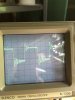
First take a look at the McIntosh output transformer. Here is a square wave at 10khz with 2.2k feedback resistor and 470pf compensating cap removed:
mc trans 10khz  2.2k no comp cap.JPG

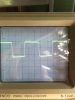
Here it is with the 470pf comp cap in circuit:
mc trans 10khz 470pf parallel 2.2k.JPG

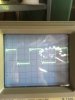
Here is the VDV output transformer 10khz 2.2k feedback resistor with no comp cap:
vdv 10khz 2.2k no comp cap.JPG

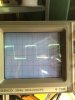
Here is the VDV 2.2k feedback resistor with 100pf comp cap:
vdv 10khz 2.2k 100pf parallel 2.2k.JPG

Here is the setup:
vdv mc30.JPG

I measured approx 17db global feedback in the MC 30.

The Mc OPT measured 39 watts before clipping into 8 ohms. It is approximately 3600 ohms impedance into 8 ohms.

The VDV OPT measured 31 watts before clipping into 8 ohms. It is rated 4000 ohms into 5 ohms or 6400 into 8 ohms.
 
Last edited:
Interesting.

Some of the ringing you see with the VDV OPT could be induced by the long leads.

And have you done some listening?

Thanks
 
I haven't listened to the VDV in the MC30. I just got done restoring them and before I hooked up the original OPT I hooked up the VDV to it.

I'm trying to replicate the MC225. I have one here and will hook up the VDV to it and do some listening. The VDV at 6400 into 8 ohms is a closer match to the MC225 McIntosh OPT as I measured it at 4600 into 8 ohm load.

Subjectively, to me, it is amazing how much more engaging the MC225 sounds than the MC30.
 
Yes the little MC 225 and the little MC 3500 are my favorite tube amps. 34 watts versus 480 watts on a good day. But both have superb reproduction value. Just think 50. years ago I could lift a 3500 with no sweat. Today I wouldn't dream of doing such a thing.
 
I haven't listened to the VDV in the MC30. I just got done restoring them and before I hooked up the original OPT I hooked up the VDV to it.

I'm trying to replicate the MC225. I have one here and will hook up the VDV to it and do some listening. The VDV at 6400 into 8 ohms is a closer match to the MC225 McIntosh OPT as I measured it at 4600 into 8 ohm load.

Subjectively, to me, it is amazing how much more engaging the MC225 sounds than the MC30.
There is something very special about the 7591s ... it's why I keep mine. Interestingly enough, I also had a Sherwood S5000 II integrated amp years ago (the ex took it). It used 7868s, a variant of the 7591 family, and had an equally engaging presentation. Magical these tubes.
 
Rust -- As confirmation of your measurements, of the various MC225 OPTs I've measured, they effectively return a 4800Ω reflected load based on a 16Ω load applied to the 16Ω tap.

Dave
 
I'm putting this in the McIntosh forum because the question involves a unity coupled output stage similar to the type used in McIntosh amplifiers.

I recently got a copy of Ir. Menno van der Veen's book "Modern High-end Valve Amplifiers: Based on Toroidal Output Transformers". I paid $38.99 for the book. I don't know why they have auctions where they're selling the book for a lot higher price right now. Maybe I just bought it on time. Anyway, in chapter 19 there is a paragraph referring to a unity coupled circuit which says:


You can see the circuit refered to here http://plitron.com/wp-content/uploads/Atcl_4.pdf
more here http://www.plitron.com/news/audio-articles-2/

Circuit 4 has unity coupled output. I'm wondering why the tubes were destroyed and how McIntosh amps can use this type of circuit without destroying the tubes. The schematic shown in Atcl_4.pdf (fig. 2) is the same one shown in chapter 19 of the book.
Hello Guys,

the Vanderveen book is full of intersting information and experiments;
I wrote to him once because I disagree with the experiment on the 'unity coupled output stage' : he reversed the connection to g2; that is
when the anode voltage goes down, the g2 voltage goes up; output power is very high but : by doing so g2 is incredebly overloaded,
until desctrucion of the tube;
greetings from Belgium
Ben
 
Is this your understanding of the Unity Coupled circuit's operation, or Vanderveen's? Either way, if I may, it is incorrect and a classic misunderstanding of how the circuit actually operates.

If you strip away the unity coupled connection, all vintage Mac amplifiers operate the output stage in a classic pentode configuration. Take the MC40, or MC240 amplifiers for example. They operate the plates and the screens of two 6L6 family tubes from a 435 volt B+ source into (effectively) a 4,000Ω load plate-to-plate, and achieve (typically) 50 watts RMS of power output. This is no different than Leo Fender did in about a bazillion guitar amps back in the 60s.

But with the Unity Coupled connection, the screens are cross connected to the opposite tube's plate -- giving the appearance that the screen voltage then goes very high on positive going swings of the opposite tube's plate. But it must be remembered that the Unity Coupled connection places exactly one half of the load in the plate circuit, and one half in the cathode circuit of each tube. Therefore, when the screen voltage of one tube is swinging very high, so is its cathode voltage by the same amount. Effectively then, whether under quiescent conditions, or during any level of power output production, there is no overload; the screen to cathode voltage within each tube remains utterly constant -- which is the very definition of pentode operation. And, because the B+ voltage used and the loading conditions are virtually identical, whether it's either of the Mac amps used in this example, or a classic 6L6 pentode output stage used in a Fender Bassman amplifier, they both produce 50 watts of power.

The bottom line then is that the cross connected screens don't overload the output tubes or make the power output go way up -- it just prevents power output from being lost were the cross connection not made when Mac's split load transformers are employed.

I hope this helps!

Dave
 
Back
Top Bottom