

You are using an out of date browser. It may not display this or other websites correctly.
You should upgrade or use an alternative browser.
You should upgrade or use an alternative browser.
The Series 2 Capacitor C35, C135 suppresses high-frequencies.The DH107 upgrade kit
Hafler issued an upgrade kit to convert Series 1 to Series 2. It consisted of
1. Replacement resistors for R18, R25, and R118, R125 (original=47.5K, new=22.1K)
2. Replacement resistors for R20, R21 and R120, R121 (original=475, new=1.1K)
3. Two 47pf caps (new C35, C135) to be added across R15 and R115
4. Set of three 5532 opamps to replace the TL082s in IC2-4 positions
The only difference left after the upgrade is that the single chip dual-voltage regulator (5553) remains in the system.
This part is now obsolete and if it fails then it will be time to consider a dual VR system.
One important note is that Hafler redesigned the circuit (#1, #2, #3 above) to be able to use the 5532s.
This was not your usual op-amp rolling “I-hear-that-XXXX-sounds-better”.
So before you replace the 5532s with 2604s, 2134s, 4562’s or whatever
boutique-op-amp-du-jour, check the circuit against the datasheets,
and apply good sound engineering in understanding what has to be done. Or your rolling is on the floor laughing.
BTW the 47pf caps stops oscillations in the feedback loop (R15/R115) – this means the only thing in your house that rings should be your telephone.
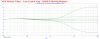
Upgrade steps 1 and 2 (old and new values on the second line in each box)
View attachment 887273
The Series 2 Resistor Values Correct the TREBLE Shelving Response

dshoaf
That high voltage buzz
Bob, your posts are excellent - makes me want to go and find an old DH-100 again. Built one back in the 80s along with the DH power amps. Still have Haflers in the stable these days although I've switched to DAC/Preamp units for switching and control these days.
Cheers,
David
Cheers,
David
Thanks for the information in this thread! A friend of mine complained of a very audible hiss from the output when the volume was turned all the way down. When he bought the unit new, the dealer that sold it to him said that "they all do that" and offered no recourse.
After popping the hood I found that it contained TL082 opamps as opposed to the NE5532 that the schematic listed. After some digging on the internet and threads like this one, I learned that his unit was V1 and my schematic was V2. I'm happy I found this thread since I was unable to locate a V1 schematic.
I changed the tone control resistors and added 47pF caps to the feedback loop of all the opamps except the tone control (maybe it needs it too?) since I intended to replace all of them with modern amps. IC3, and IC4 were replaced with LME49720, IC1 was replaced with LM4562, and IC2 was replaced with an AD823. I chose LM4562 & AD823 because my Cambridge Audio 640P phono EQ runs the same configuration (LM4562/AD823) and I had the parts on hand already.
While I was in there I replaced all the electrolytics. The bipolars are Nichicon MUSE. Bulk caps are Nichicon UHD. The 470uF are Nichicon UPJ. The latter two are low impedance, high lifetime (5000 hr / 105°C) parts. I noticed that IC4 didn't have any local bypassing so I added 0.1uF caps to the rails near the opamp (square grey caps on top) and also a 0.1uF across the +/- 15VDC.
With the new parts the preamp is practically silent. I can hear just a tiny bit of hiss with my ear pressed up against my ribbon tweeter. The hiss is gone more than a few inches away.
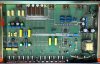
47pF added to IC3:
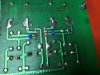
47pF added to IC1 and IC2:

After popping the hood I found that it contained TL082 opamps as opposed to the NE5532 that the schematic listed. After some digging on the internet and threads like this one, I learned that his unit was V1 and my schematic was V2. I'm happy I found this thread since I was unable to locate a V1 schematic.
I changed the tone control resistors and added 47pF caps to the feedback loop of all the opamps except the tone control (maybe it needs it too?) since I intended to replace all of them with modern amps. IC3, and IC4 were replaced with LME49720, IC1 was replaced with LM4562, and IC2 was replaced with an AD823. I chose LM4562 & AD823 because my Cambridge Audio 640P phono EQ runs the same configuration (LM4562/AD823) and I had the parts on hand already.
While I was in there I replaced all the electrolytics. The bipolars are Nichicon MUSE. Bulk caps are Nichicon UHD. The 470uF are Nichicon UPJ. The latter two are low impedance, high lifetime (5000 hr / 105°C) parts. I noticed that IC4 didn't have any local bypassing so I added 0.1uF caps to the rails near the opamp (square grey caps on top) and also a 0.1uF across the +/- 15VDC.
With the new parts the preamp is practically silent. I can hear just a tiny bit of hiss with my ear pressed up against my ribbon tweeter. The hiss is gone more than a few inches away.
47pF added to IC3:
47pF added to IC1 and IC2:

b. turgidson
New Member
Bob,
Re:
"one idea I didn't talk about is to decouple the Vcc/Vee to ground and from Vcc to Vee. Research
the internet for this."
I can't find online information that would make clear what to do on the Hafler DH-100 circuit board. Can you describe in unambiguous terms how to decouple the Vcc/Vee to ground and from Vcc to Vee? I would be most grateful indeed.
Jim
Re:
"one idea I didn't talk about is to decouple the Vcc/Vee to ground and from Vcc to Vee. Research
the internet for this."
I can't find online information that would make clear what to do on the Hafler DH-100 circuit board. Can you describe in unambiguous terms how to decouple the Vcc/Vee to ground and from Vcc to Vee? I would be most grateful indeed.
Jim
decoupling is what's necessary to ensure proper operation of an opamp. there are technical
details that are covered in the technical descriptions for each opamp. read these documents
thoroughly before using a particular opamp. If you are looking at several opamps, read the
documentation for ALL of them.
choosing a different opamp than what the original designer used means you know more than
they did or you have newer opamps than were originally available OR BOTH.
you cannot willy nilly replace opamps, for one example, there are opamps that are NOT
unity-gain stable. and most folks don't know that the RIAA curve dips to 0 and the circuit
causes a unity gain scenario.
but you want to simply opamp-roll, there are a number of factors you need to be aware
that I won't get into here.
if you do want to do this, to decouple, solder small film caps (try .1ufd up to 2-3ufd
any voltage above the rail voltages is OK, add margin),from where the socket
pins tie to the + side of the rails to a ground, and another from - side of the supply
rails to ground, and some folks add one from the + to the -.
you solder them as close as you can to the socket pin. you can use electrolytic caps
if you have them. then you'll have to polarize them correctly. which is where problems
can occur (if you don't understand ecap polarity then wiring them in backwards causes
explosions - small but none the less, explosions) so I recommend film caps for their
lack of polarity and therefore ABSOLUTELY NO explosions no matter how you wire
them in.
so step by step
wire cap from Vcc to ground at socket
wire cap#2 from Vee to ground at socket
wire cap#3 from Vcc to Vee.
you'll need a very fine point pencil to get in there and not solder adjacent socket pins.
and before you pull the various ICs, mark pin 1 orientation position in the socket or
refer to my earlier posts.
I also suggest you do one section/both channels at a time,
if you don't use a phono input then skip everything mentioned (eg leave it alone)
test by listening, after burn-in.
while you're at it, I'd upgrade the caps first before this opamp rolling. the main reason
is that the dh100 dates back to the early 80s - and ecaps need replacement every 15-20
years.
good luck
PS I'd send you the caps but too many folks have taken the free stuff (I pay postage)
and you never hear from them again here on AK.
details that are covered in the technical descriptions for each opamp. read these documents
thoroughly before using a particular opamp. If you are looking at several opamps, read the
documentation for ALL of them.
choosing a different opamp than what the original designer used means you know more than
they did or you have newer opamps than were originally available OR BOTH.
you cannot willy nilly replace opamps, for one example, there are opamps that are NOT
unity-gain stable. and most folks don't know that the RIAA curve dips to 0 and the circuit
causes a unity gain scenario.
but you want to simply opamp-roll, there are a number of factors you need to be aware
that I won't get into here.
if you do want to do this, to decouple, solder small film caps (try .1ufd up to 2-3ufd
any voltage above the rail voltages is OK, add margin),from where the socket
pins tie to the + side of the rails to a ground, and another from - side of the supply
rails to ground, and some folks add one from the + to the -.
you solder them as close as you can to the socket pin. you can use electrolytic caps
if you have them. then you'll have to polarize them correctly. which is where problems
can occur (if you don't understand ecap polarity then wiring them in backwards causes
explosions - small but none the less, explosions) so I recommend film caps for their
lack of polarity and therefore ABSOLUTELY NO explosions no matter how you wire
them in.
so step by step
wire cap from Vcc to ground at socket
wire cap#2 from Vee to ground at socket
wire cap#3 from Vcc to Vee.
you'll need a very fine point pencil to get in there and not solder adjacent socket pins.
and before you pull the various ICs, mark pin 1 orientation position in the socket or
refer to my earlier posts.
I also suggest you do one section/both channels at a time,
if you don't use a phono input then skip everything mentioned (eg leave it alone)
test by listening, after burn-in.
while you're at it, I'd upgrade the caps first before this opamp rolling. the main reason
is that the dh100 dates back to the early 80s - and ecaps need replacement every 15-20
years.
good luck
PS I'd send you the caps but too many folks have taken the free stuff (I pay postage)
and you never hear from them again here on AK.
b. turgidson
New Member
Bob,
I should have been more clear. I am only doing the Hafler upgrade as discussed in this thread. 5532 chips all around. I have already replaced all electrolytics with high quality Panasonics and added the two 47pf caps across R15/115 and changed the selected tone control resistors. Do I need to: decouple the Vcc/Vee to ground and from Vcc to Vee ?
Jim
I should have been more clear. I am only doing the Hafler upgrade as discussed in this thread. 5532 chips all around. I have already replaced all electrolytics with high quality Panasonics and added the two 47pf caps across R15/115 and changed the selected tone control resistors. Do I need to: decouple the Vcc/Vee to ground and from Vcc to Vee ?
Jim
IOW no two units will sound the same due to everything else in the sound chain
and the environment - so I cannot say absolutely you will or will not need
to do this. if done right, it will not harm, however the sound might change,
or it will not.
in my unit (that I now longer have) I did not have any problems.
for you to come to a conclusion,
and the environment - so I cannot say absolutely you will or will not need
to do this. if done right, it will not harm, however the sound might change,
or it will not.
in my unit (that I now longer have) I did not have any problems.
for you to come to a conclusion,
then consider reading all the 5532 documentation.
and all the experiences of others in de-coupling opamps.
Last edited:
b. turgidson
New Member
Thanks immensely!
boney finger
New Member
Would 47pf silver micas work across r15,115?by the way, if your DH100 has sound quality or volume balance (one channel louder than the other) problems
then the muting circuit is suspect - this is a common problem with DH110s which uses the same circuit
for muting. Maybe after 20 or 30 years the JFETs get tired.
see post 24 onwards
http://audiokarma.org/forums/index.php?threads/hafler-dh-100-issue.759730/page-2
the test is to remove the j112s, if the problem goes away then voila
if it happens more than once, either not use the J112s (permanent removal) or socket them
and buy a dozen. also replace the LM393 just in case. Socket that one, too.
Bob
the 47pf caps across R15/R115 are only for compensation and if and only if you
switch the opamps from the older tl082s to the "newer" 5532s. socket is advisable
for future changes (makes it a one minute change counting case screw removal)
and at 47pf you only have two choices, micas (usually silver) and ceramics
(use only c0Gs - they're the current A-listers)
whether you choose micas or ceramics - it is very unlikely that someone will complain
and if they do, then have them do a full spectrum analysis on both and then a
sound quality test, etc.
switch the opamps from the older tl082s to the "newer" 5532s. socket is advisable
for future changes (makes it a one minute change counting case screw removal)
and at 47pf you only have two choices, micas (usually silver) and ceramics
(use only c0Gs - they're the current A-listers)
whether you choose micas or ceramics - it is very unlikely that someone will complain
and if they do, then have them do a full spectrum analysis on both and then a
sound quality test, etc.

sansuibutch
Super Member
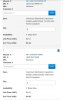
Hello everyone and thank you very much for all the info on this preamp. I have one of these and one channel acts funny and I'm blaming it in the muting circuit. While I'm in there I decided to upgrade like you guys did. I put a parts list together at mouser and would appreciate any help. I'm pretty sure everything is on the list I just want some reassurance about the caps I selected. There is just so many to pick from and I dont know wich ones would be the best. If someone can look over my list and confirm they are decent that would be awsome.
https://www.mouser.com/Cart/
https://www.mouser.com/Cart/
sansuibutch
Super Member

sansuibutch
Super Member
Also would this be the correct 112 for the muting circuit?
sansuibutch
Super Member
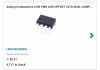
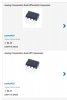 I also want to replace the Lm393 as suggested and also because its part of the muting circuit where I'm sure my issue lies. I'm just not sure with one is the appropriate replacement.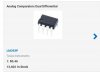
Last edited:
sansuibutch
Super Member
Here is before and after pics. It definetly sounds better. Wel worth the few bucks and little work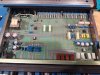


elitopus
Addicted Member
I think a recap and removing/replacing the muting circuit is almost mandatory for these units. I don’t know if it will fix all your problems though.
Try sending AK member Bob a message. It looks like he hasn’t logged on for a while, but maybe a message will go to his email. He’s the one that helped me sort out my DH100 preamps. He is very knowledgeable about these Hafler units
Try sending AK member Bob a message. It looks like he hasn’t logged on for a while, but maybe a message will go to his email. He’s the one that helped me sort out my DH100 preamps. He is very knowledgeable about these Hafler units