• The move to the new server is done. There are some software and database maintenance updates in process. This has us passing the hat around to help out. We appreciate any donations. Seriously, even a dollar helps. The payment page may be found here - https://www.audiokarma.org/support.html

Using CPU thermal paste for amplifier transistors

sh0t

Active Member
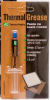
Hello , i was wondering if i can use CPU thermal paste (I ll have a photo posted bellow) to replace the old silicone thermal paste from my transistors-heatsink.upload_2021-10-5_18-20-25.png
 
Register to hide this ad
I've actually wondered the same thing. Thermally it should work, especially the types that conduct heat more readily, (they are not all equal), but there may be other issues that I haven't thought about.

Shelly_D
 
There are quite a few threads about thermal paste/heatsink compound. A search should reveal several with discussions about processor compounds.
 
If its not electrically conductive its fine. Most of them aren't but check the datasheet to confirm. If it doesn't specifically say that it is not conductive, assume it is and get something else.
Ditto..
 
The white CPU heat sink paste should (check the data sheet VERY carefully!!!!) be safe. Some hardware stores still carry the heat heat sink paste with a Western Electric KS number on it. Arctic Silver is very popular with Gamers for CPUs and GPUs and should be avoided (as should anything with a metal in its name or grey in color for Audio Applications). The grey stuff dries out worse than the white stuff and I've had to chisel the grey stuff off with a tack hammer and a putty knife in a couple situations.
 
As noted, in amplifier applications the thermal compound MUST be completely non-conductive or you will short the collector of the transistors to ground, with obviously bad results.

CPU and GPU cases are electrically isolated from the chips, and conductivity of the thermal paste is irrelevant. Which means if not clearly stated to be non-conductive I strongly suggest you don't use it for transistors. They can short through the compound around the mica sheets if the thermal compound is at all conductive.
 
As others have said as long as it is non-conductive it should be fine. However be aware that cpu paste really needs to be changed every few years or less as it dries out more quickly than most paste designed for transistors. Try to use a good quality compound designed for amplifiers if possible, or use it as a temporary measure. I recently had trouble with shorting because I reused the mica on my AU-517, if you are reusing check the mica for cracks and use a multimeter to test for a short between the transistor and the heatsink before final assembly.
 
When the correct stuff is readily available from Mouser, why use anything else?

"Conventional" thermal grease is easily removable with rubbing alcohol. I worked on a (non-functional) amp that had the Grey stuff on it, and I had to use acetone to remove it.

Going on what @Alex22 said about micas. I usually order 4 or 8 for the job I'm doing with my order for caps, etc. If the original ones are fine, I reuse them. But if there are any cracks, I will replace it with a new one.

Lee.
 
The last several amps with TO-3 output transistors I restored I eliminated the paste altogether. I used Aavid thermasil III insulators.

They also make them for TO-220's
 
Pcs run a maximum 12v power iirc and much if it is 5vdc.

Solid state power amps typically run 50 or 70 volts.

Perhaps 12v is not sufficient to punch through a slightly conductive compound, but I'd be reluctant to try it at 70 volts.
Just be sure its non conductive, and get on with life...
 
Back
Top Bottom